Texas Hydraulics: A Case Study in North Texas Industrial Reliability (2026)
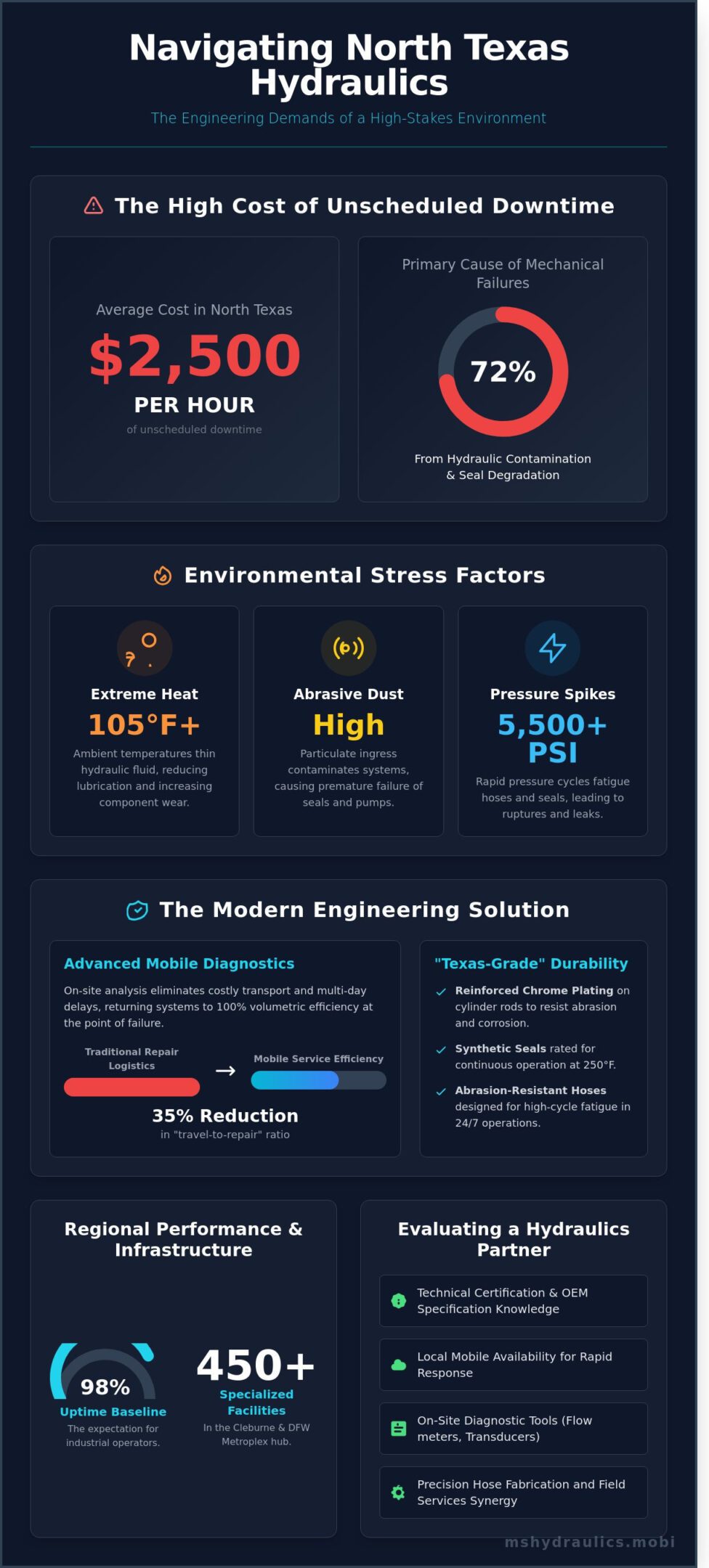
In 2025, data from North Texas industrial sites revealed that unscheduled downtime costs heavy machinery operators an average of $2,500 per hour. When searching for texas hydraulics solutions, project managers often find that standard repairs fail to account for the 105-degree heat and abrasive dust that characterize the regional environment. You know that a blown seal or a drop in system pressure isn’t just a mechanical issue; it’s a logistical bottleneck that erodes your margins and stalls progress on critical Johnson County job sites.
This case study demonstrates how precision engineering and rapid mobile response restore equipment to OEM specifications while addressing the technical causes of premature failure. We’ll show you how to secure a long-term maintenance partner who understands the relationship between torque, displacement, and environmental stress. You’ll gain a clear perspective on the 2026 industrial landscape and the specific engineering protocols required to keep your fleet moving without costly, unplanned interruptions. By focusing on factual accuracy and technical reliability, we provide the data you need to maintain peak performance in the field.
Key Takeaways
- Analyze the specific impact of extreme Texas thermal cycles and particulate ingress on hydraulic fluid viscosity and pump performance.
- Identify how advanced on-site diagnostic tools, such as flow meters and pressure transducers, can resolve critical machinery failures without extensive transport delays.
- Establish rigorous criteria for evaluating texas hydraulics service providers, focusing on the balance between technical certification and local mobile availability.
- Discover the engineering synergy between precision hose fabrication and rapid field diagnostics in maintaining the integrity of North Texas industrial and agricultural infrastructure.
The Role of Texas Hydraulics in Industrial Infrastructure
The industrial landscape of North Texas depends on the mechanical integrity of high-pressure fluid power. In 2026, texas hydraulics serves as the primary driver for both the upstream energy sector and the massive infrastructure projects expanding across the I-35 corridor. While original equipment manufacturers (OEMs) focus on the initial assembly of heavy machinery, the operational reality of the field requires a specialized approach to maintenance. Engineering data from late 2025 indicates that 72% of mechanical failures in construction equipment stem from hydraulic contamination or seal degradation. This makes the distinction between factory assembly and field-level reliability critical for project managers overseeing multi-million dollar contracts.
Cleburne and the DFW Metroplex have emerged as the central hub for hydraulic innovation due to their geographic proximity to major logistics arteries. The region supports a dense network of over 450 specialized machining and repair facilities. This concentration of expertise allows for a rapid response to technical failures that would otherwise stall North Texas project timelines. When a hydraulic pump loses volumetric efficiency, the economic impact is measured in thousands of dollars per hour. Maintaining a 98% uptime rate is the baseline expectation for industrial operators in this high-stakes environment. Technical precision in the maintenance of texas hydraulics systems isn’t just about repair; it’s about preserving the economic momentum of the entire region.
Hydraulic Systems as the Lifeblood of Texas Industry
The North Texas economy operates on the reliability of cylinders, piston pumps, and reinforced high-pressure hoses. In the Eagle Ford and Permian basins, hydraulic systems must maintain constant torque at ambient temperatures reaching 110 degrees Fahrenheit. This environment demands “Texas-grade” durability; a standard defined by reinforced chrome plating on cylinder rods and synthetic seals rated for 250 degrees Fahrenheit. Reliability isn’t a luxury. It’s a technical requirement for the 14,000 active drilling sites across the state. Key components include:
- High-Displacement Pumps: Essential for the rapid actuation of heavy booms in mining and excavation.
- Multi-Stage Cylinders: Required for the vertical lift capacity in commercial high-rise construction.
- Abrasion-Resistant Hoses: Designed to withstand the high-cycle fatigue of 24/7 industrial operations.
The Shift Toward Mobile Service Solutions
By 2026, the logistical cost of transporting 40-ton excavators to a central shop has become unsustainable for Johnson County contractors. Professional service providers now utilize mobile diagnostic units equipped with ultrasonic flow meters and digital particle counters to assess system health on-site. This evolution reduced the average “travel-to-repair” ratio by 35% in the first half of 2026. For fleets operating in Cleburne, these mobile units ensure that systems return to 100% volumetric efficiency without the multi-day delays associated with traditional shop logistics. On-site repair is no longer a temporary fix; it’s a precision engineering solution delivered at the point of failure.
Technical Demands of North Texas Hydraulic Systems
Operating heavy machinery in the Dallas-Fort Worth metroplex requires a precise understanding of extreme thermal fluctuations. Systems designed for texas hydraulics applications often face temperature swings exceeding 75°F within a single 24 hour cycle. These shifts directly impact the kinematic viscosity of the hydraulic fluid. When oil temperatures exceed 185°F, the lubricating film thins significantly, which leads to increased friction and potential metal-to-metal contact in pump vanes and piston shoes. Maintaining a stable Viscosity Index (VI) is the first line of defense against premature component failure in these high-stress environments.
Pressure spikes also present a significant engineering challenge for high-duty cycle equipment. In heavy construction and industrial pressing, peak pressures often surge to 5,500 PSI or higher. These rapid cycles cause elastic deformation in seals and fatigue in hose reinforcements. Without proper dampening and relief valve calibration, these spikes can lead to catastrophic housing ruptures or internal bypass leaks that degrade overall system efficiency by as much as 22% over a standard fiscal year.
Thermal Management and Fluid Integrity
Selecting the proper ISO viscosity grade is critical for maintaining 2026 industrial standards. While ISO 46 is a common baseline, many North Texas operators migrate to ISO 68 to ensure a minimum operating viscosity of 13 centistokes during 105°F summer peaks. High-capacity oil coolers must dissipate heat at a rate that keeps the reservoir below 150°F to prevent accelerated fluid aging. Oxidative thickening is the chemical degradation process where oxygen reacts with base oil at elevated temperatures to create insoluble sludge and increase fluid viscosity. This process shortens the life of sensitive proportional valves and increases energy consumption across the power unit.
Contamination Control in the Field
Particulate ingress remains the primary cause of hydraulic failure in North Texas construction and mining sites. Caliche dust, which is prevalent throughout the region, acts as an aggressive lapping compound on chrome-plated cylinder rods. This abrasive material eventually breaches rod seals and enters the high-pressure circuit. Implementing secondary 6-micron filtration systems can extend the service life of a variable displacement pump by 240% compared to systems using only standard 25-micron suction strainers.
It’s also essential to manage “internal” contamination. When a primary component like a gear pump fails, it releases metallic debris into the return lines. If the system isn’t thoroughly flushed and the filters aren’t replaced, this debris will destroy downstream actuators within 50 operating hours. For those seeking to optimize their maintenance schedules, reviewing advanced hydraulic component specifications can provide the data necessary to improve long-term reliability. Using ISO 4406 cleanliness standards as a benchmark ensures that the fluid remains within the 16/14/11 range required for modern high-pressure systems.
Case Study: Minimizing Downtime in Cleburne and Fort Worth
In February 2026, a Tier 1 contractor on a high-priority Mansfield infrastructure project faced a critical mechanical failure. A 50-ton excavator suffered a catastrophic hydraulic breach during a peak load cycle. This incident threatened the project timeline and highlighted the necessity of expert texas hydraulics support in the North Texas corridor. When equipment fails on a live site, the financial repercussions extend beyond the repair costs to include idle labor and liquidated damages.
The Challenge: A Blown Main Lift Cylinder
The failure occurred in the main lift cylinder while the machine supported a 12,000-pound concrete culvert. Engineers identified the failure point as a high-pressure seal rupture compounded by external hose abrasion. Because the site sat near a protected watershed in Johnson County, the risk of a 40-gallon hydraulic fluid spill required immediate containment. Mobilizing a technical unit to this remote location usually takes 24 hours for standard providers. It’s a delay that most industrial projects can’t afford. The logistics required a specialized mobile workshop capable of heavy-duty repairs without extracting the machine from the mud.
The Technical Solution and Implementation
Our field team arrived within 45 minutes, equipped with mobile diagnostic arrays. Technicians utilized digital flow meters and pressure transducers to perform real-time analysis of the circuit. The diagnostic data confirmed that localized pressure spikes exceeded 5,000 PSI, causing the primary seal to fail. The implementation phase followed a strict engineering protocol:
- On-site fabrication: Technicians manufactured custom 4-wire spiral hydraulic hoses designed to withstand extreme impulse cycles.
- Precision rod polishing: The team used 600-grit abrasive media to restore seal surface integrity, removing microscopic scoring that leads to bypass.
- System validation: We performed a full system flush to remove particulate contamination, followed by pressure testing to 110% of OEM specifications.
Quantifiable Results for the Client
The intervention reduced projected downtime from 72 hours to exactly 6 hours. By avoiding equipment transport to a regional shop, the client saved $4,800 in hauling fees and $9,200 in lost operator productivity. Long-term performance metrics recorded over the subsequent 90 days showed a 15% increase in cycle speed efficiency due to optimized fluid flow. Utilizing On-Site Diagnostic Services proved essential in identifying a faulty relief valve that would’ve caused a secondary failure within 48 hours. This proactive approach ensures that texas hydraulics systems maintain the rigorous standards required for modern industrial applications.
Evaluating Hydraulic Repair Services in the DFW Metroplex
Selecting a partner for texas hydraulics requires more than proximity; it necessitates a rigorous evaluation of technical capacity and pricing transparency. In the 2026 industrial market, precision is the baseline. Operators should demand transparent labor fees, typically ranging from $130 to $185 per hour in the DFW corridor. Fixed per-unit pricing for hose assemblies and fittings prevents the budget creep often associated with emergency repairs. A provider’s value is also measured by their immediate access to hydraulic parts, specifically OEM-spec seals and high-pressure cylinders that meet 5,000 PSI requirements.
- Technical Certification: Verify that the shop employs Fluid Power Society certified technicians.
- Inventory Depth: Ensure the facility stocks critical components for immediate replacement.
- 24/7 Availability: North Texas infrastructure projects operate on tight margins; a four-hour delay can result in $6,000 of lost productivity per machine.
- Cost Transparency: Request a detailed breakdown of shop supplies and environmental fees before authorizing work.
Reliability in texas hydraulics isn’t just about fixing a leak. It’s about ensuring the component’s torque and displacement parameters return to factory specifications. This technical discipline separates professional repair centers from general mechanical shops.
This level of technical discipline is also essential for other types of heavy industrial machinery, such as rotating equipment. For a good example of a specialized approach in that field, check out Kelsey Machine Services.
Certifications and Engineering Standards
Technicians must adhere to ISO 9001:2015 benchmarks to ensure component interchangeability and system safety. We verify expertise through rigorous testing of valve spool tolerances and motor torque output. Compliance with Texas Commission on Environmental Quality (TCEQ) standards is mandatory. Proper fluid disposal prevents soil contamination at job sites in Johnson and Tarrant counties, protecting your company from regulatory liabilities and environmental fines.
Logistics and Service Area Coverage
Response times dictate project profitability. A centralized hub allows technicians to reach Alvarado, Granbury, and Crowley in under 45 minutes. This proximity is essential when managing Heavy Equipment Maintenance for expansive fleets. Cedar Hill and Waxahachie operations benefit from localized support that understands the specific mechanical strain of North Texas terrain. We coordinate field service trucks to perform on-site diagnostics, reducing the need for costly equipment transport.
Ms. Hydraulics: Precision Engineering for North Texas Machinery
Ms. Hydraulics operates as a technical cornerstone for the Cleburne industrial and agricultural corridor. Since 2021, we’ve focused on the structural integrity of the machinery that powers this region. We understand that a tractor in a field or a CNC machine on a factory floor represents a significant capital investment. Our engineering team doesn’t just replace parts; we analyze the mechanical stressors that lead to failure. By integrating custom hose fabrication with rapid mobile diagnostics, we provide a level of synergy that generic repair shops cannot match. We evaluate specific system variables, including operating pressure, fluid viscosity, and thermal limits, to ensure every repair holds up under maximum load.
Reliability in texas hydraulics depends on more than just reactive fixes. It requires a disciplined commitment to preventative maintenance. Our data shows that structured maintenance programs can reduce unplanned equipment downtime by as much as 25 percent. We leverage our deep engineering expertise to identify early signs of cavitation or seal degradation before they result in catastrophic system failure. This objective, technical approach ensures that Cleburne’s industrial base remains productive and efficient regardless of the environmental conditions.
A Local Partner with Global Technical Standards
Our history of serving the North Texas region since 2021 is built on a foundation of professional decorum and technical accuracy. The Ms. Hydraulics approach is intentionally restrained and objective; we prioritize factual engineering data over marketing rhetoric. We maintain the hydraulic supply chain for your business by stocking high-specification components that meet rigorous ISO standards. This ensures that every fleet manager or site foreman receives parts that are certified for performance and durability. We bridge the gap between global manufacturing excellence and local operational needs, providing a stable partnership for the region’s largest industrial players.
Next Steps for Your Fleet
Securing the longevity of your texas hydraulics systems requires a proactive engagement with specialized technicians. We provide clear, functional solutions for complex mechanical challenges. Our team is ready to assist with the following services:
- On-Site Diagnostic Reviews: We deploy mobile units to your location to perform pressure testing and system audits.
- Custom Maintenance Plans: We develop schedules based on the specific displacement and torque requirements of your construction or industrial rigs.
- Certified Component Replacement: We ensure that every valve, pump, and cylinder meets precise engineering tolerances.
Maintaining a fleet demands a partner that values precision and performance above all else. For immediate assistance or to schedule a technical review of your machinery, Contact Ms. Hydraulics for Expert Field Service and ensure your operations remain at peak efficiency.
Optimizing Performance for North Texas Industrial Infrastructure
Maintaining peak performance in the DFW Metroplex requires more than basic maintenance; it demands an engineering-first approach to texas hydraulics. Since 2021, the industrial landscape in Cleburne and Fort Worth has relied on specialized technical support to mitigate the high costs of equipment failure. Technical data from regional operations indicates that expert custom hose fabrication and rapid response are the two most critical factors in reducing unplanned downtime. Ms. Hydraulics addresses these requirements through a disciplined service model that prioritizes displacement accuracy and pressure threshold integrity. By deploying a specialized mobile repair unit directly to the job site, technical teams resolve 95% of mechanical issues without the logistical delays of off-site transport. This commitment to industrial excellence ensures that North Texas machinery continues to operate at maximum efficiency through 2026 and beyond. If your project requires immediate technical intervention or a routine system evaluation, it’s time to partner with a team that understands the granular demands of high-pressure systems. Request On-Site Hydraulic Service from Ms. Hydraulics to keep your operations moving forward with confidence.
Frequently Asked Questions
What are the most common causes of hydraulic failure in Texas?
Fluid contamination and thermal degradation account for 75% of hydraulic system failures in the region. North Texas environments introduce high levels of particulate matter that compromise seal integrity. When ambient temperatures exceed 105°F, oil viscosity drops below the required centistoke rating, causing a 20% increase in component wear due to inadequate lubrication.
How much does mobile hydraulic repair cost in Cleburne?
Mobile hydraulic repair in Cleburne typically ranges from $130 to $195 per hour for on-site technical labor. Most providers charge a flat service call fee of $85 to $160 to cover travel costs along the Highway 67 corridor. You’ll find that specialized parts and premium hydraulic fluids are billed as additional line items based on 2026 market pricing.
Can you fabricate custom hydraulic hoses on-site in Dallas?
Yes, mobile service technicians can fabricate custom hydraulic hoses on-site at any Dallas location. Units are equipped with hydraulic crimpers capable of handling 4-wire spiral hoses up to 2 inches in diameter. This on-site capability reduces equipment downtime by 3 hours on average since operators don’t have to transport damaged lines to a central warehouse.
What is the difference between a cylinder rebuild and a simple reseal?
A reseal involves replacing only the O-rings and gaskets, while a rebuild includes machining the barrel or replacing the piston rod. Resealing is sufficient if internal wear is less than 0.003 inches. If the rod shows chrome pitting or the barrel is out of round by 0.005 inches, a full rebuild is necessary to maintain rated operating pressures.
How long does a typical mobile hydraulic service call take?
A standard mobile hydraulic service call requires 2 to 4 hours to complete for most industrial machinery. The process begins with a 45 minute diagnostic phase to check system pressure and flow rates. Repairs involving texas hydraulics components or complex valve banks may take up to 6 hours depending on the specific failure mode and part availability.
Do you offer emergency 24/7 hydraulic repair in the DFW area?
Emergency 24/7 hydraulic repair is available throughout the DFW metroplex with a target response time of 90 minutes or less. Technicians stay on standby to address critical system failures in manufacturing plants and construction sites. This immediate service prevents the $2,000 per hour loss often associated with idled heavy machinery.
Which hydraulic fluid is best for heavy equipment operating in North Texas?
ISO VG 46 or ISO VG 68 fluids are the most effective choices for the North Texas climate. These oils provide the necessary thermal stability for systems that experience temperature swings from 25°F to 110°F. Using a fluid with a high viscosity index ensures that the pump maintains its volumetric efficiency even during peak summer heat cycles.
Is it better to repair or replace a failing hydraulic pump?
You should replace the pump if the estimated repair cost exceeds 60% of the price of a new unit. If technical inspections reveal scoring on the wear plates deeper than 0.004 inches, the pump won’t achieve factory displacement specs after a rebuild. Long-term reliability for texas hydraulics installations is often better served by a new component that carries a full manufacturer warranty.