Mobile Hydraulic Cylinder Repair in Granbury and Rebuild Timing
A cylinder rebuild has no dependable one-size turnaround. For mobile hydraulic cylinder repair in Granbury, the schedule depends on inspection findings, the extent of damage, and the parts required. A bent or damaged mobile shear cylinder rod should not simply be resealed and returned to service; the underlying damage must be addressed.
If a hose also needs replacement, it can be included in the service plan when both repairs are coordinated. The cylinder and hose are separate components, so rebuilding the cylinder alone will not resolve a hose fault.
This article explains what affects rebuild timing, which hydraulic components and equipment may be serviced, and what to expect during diagnosis and repair. It also covers how cylinder, hose, pump, motor, and valve work can fit into a broader equipment repair plan, helping you understand the scope before work begins.
Key Takeaways
- Learn which signs help distinguish a repairable cylinder from one that needs a full rebuild or replacement.
- See how teardown, component inspection, honing, and reassembly fit into a professional rebuild.
- Understand how cylinder issues can relate to hose, pump, motor, or valve problems across equipment.
- Find out what information helps a mobile repair service assess the job and plan the next steps.
How long does a hydraulic cylinder rebuild take?
A hydraulic cylinder rebuild has no fixed turnaround time. The schedule depends on the damage found, the parts required, and whether the cylinder can be repaired on-site or needs workshop work. A leaking seal may call for a different scope than a scored barrel, damaged piston, or bent rod. Inspection, not the symptom alone, determines the next step.
To discuss a repair, provide the equipment make and model, cylinder identification details, and machine location. Describe the symptoms, such as leakage, drift, or loss of force, and include clear photos if available. These details help define the job before inspection.
Choosing between repair, rebuilding, and replacement depends on the component’s condition:
- Repair: A localized fault may be addressed when inspection finds the main components serviceable.
- Rebuild: Teardown allows seals and worn or damaged components to be assessed and replaced as needed.
- Replacement: This may be considered when damage makes a reliable rebuild impractical or the cylinder does not suit the machine’s needs.
On-site work can avoid moving equipment when the fault and working conditions allow repairs at the machine. Workshop repair is more suitable when the cylinder needs full teardown, detailed inspection, honing, or extensive component work. If a rod is bent or damaged, resealing it does not address the underlying problem. Depending on the cylinder design and inspection findings, rod replacement or manufacturing may be part of the repair.
A custom replacement mobile shear cylinder may be considered when the original is unsuitable for rebuilding. The fit, mounting points, stroke, and operating requirements must match the application. Rebuilding can retain a serviceable cylinder body, while replacement may be appropriate when the body’s condition or configuration rules out rebuilding. Inspection findings, parts availability, and the repair scope all affect the schedule.
Cylinder teardown, inspection, honing, and rebuild process
A professional rebuild begins with removing the cylinder from the equipment when bench work is needed. The technician records its configuration and checks the exterior for impact damage, corrosion, leaks, or damaged ports. The cylinder is then disassembled so the rod, piston, seals, barrel, and end components can be inspected individually. This reveals wear that an external leak may not show.
Inspection defines the repair scope. A technician checks the rod for bending, scoring, and surface damage, then examines the barrel for wear or scratches. The piston, gland, and seal grooves are also assessed for damage that could affect sealing or movement. These findings show which parts can be reused and which need repair or replacement.
- Teardown: The technician separates the cylinder components and keeps parts organized for inspection.
- Inspection: The rod, barrel, piston, gland, ports, and seal surfaces are examined for wear or damage.
- Honing: If barrel condition calls for it, honing restores its internal surface as part of the repair plan. It cannot correct every form of damage.
- Reassembly: Serviceable and replacement components are fitted, and the cylinder is reassembled for operational checks.
Honing is not required in every rebuild. Whether it is suitable depends on the barrel’s condition and the cylinder’s design. A damaged rod also needs more than new seals: its condition must be addressed so the original fault is not carried into the rebuilt assembly. Inspection findings guide the work scope.
After reassembly, functional checks assess cylinder movement and leakage. If performance remains abnormal, the technician can review the assembly and component findings before returning it to service. Hydraulic cylinder rebuilds follow this inspection-led approach, with the repair scope based on the cylinder’s actual condition.
Hydraulic cylinder, hose, pump, motor, and valve repair
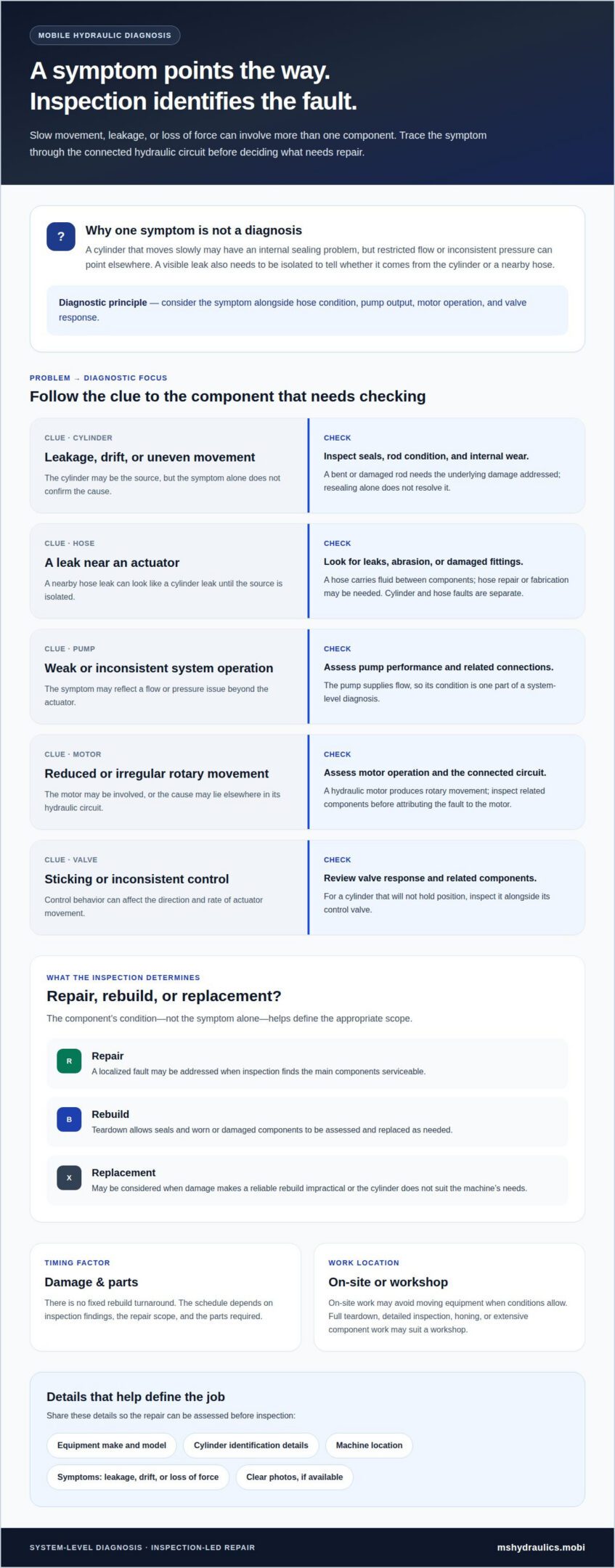
A hydraulic fault can involve several components, so diagnosis should follow the system’s flow path. A cylinder that moves slowly may have an internal sealing problem, but restricted flow or inconsistent pressure can point elsewhere. A technician considers the symptoms alongside hose condition, pump output, motor operation, and valve response. This avoids treating one visible symptom as proof that a particular part has failed.
Each component has a distinct role. A cylinder converts hydraulic pressure into linear movement. A hose carries fluid between components, while a pump supplies flow. A hydraulic motor produces rotary movement, and valves direct or regulate flow. Because a fault in one area can affect another component, inspection should account for the connected circuit.
- Cylinder: Leakage, drift, or uneven movement can guide inspection of seals, rod condition, and internal wear.
- Hose: Leaks, abrasion, or damaged fittings can interrupt flow and require hose repair or fabrication.
- Pump: Weak or inconsistent system operation can prompt assessment of pump performance and related connections.
- Motor: Reduced or irregular rotary movement can indicate a motor issue or a problem elsewhere in its hydraulic circuit.
- Valve: Sticking or inconsistent control can affect the direction and rate of actuator movement.
For example, a cylinder that will not hold position may need to be inspected alongside its control valve. A leaking hose near an actuator can also look like a cylinder leak until the source is isolated. The technician traces the symptom, checks related components, and identifies whether one repair or several are needed. This system-level approach helps prevent replacing a component while leaving the underlying fault unresolved.
Mobile service is useful when diagnosis or repair can be done at the equipment’s location. A component that needs teardown or specialized workshop work may require a different setting. The key is to assess the hydraulic circuit as a connected system, then match the repair to the fault found.
Who provides mobile hydraulic cylinder repair in Granbury, TX?
For equipment in Granbury, a suitable provider needs to assess the cylinder and its hydraulic circuit, not just the visible leak. Mobile diagnosis can identify whether the issue is isolated to the cylinder or involves a hose, pump, motor, or valve. That distinction matters because repairing one component won’t resolve a separate fault elsewhere in the system.
Before planning service, a technician needs practical details about the machine and its failure. Provide the equipment make and model, cylinder identification markings, machine location, and a clear description of the symptoms. Photos of the cylinder, connections, and leak area can help clarify the initial scope. For example, slow movement and fluid around a hose fitting point to different areas for inspection.
A professional assessment typically follows a logical sequence:
- Review symptoms: Relate leakage, drift, or inconsistent movement to the machine’s operation.
- Inspect the system: Examine the cylinder and connected hydraulic components for visible damage or leakage.
- Define the work: Determine whether on-site repair is suitable or whether the cylinder needs workshop teardown.
- Plan the repair: Identify the affected components and explain the work needed to restore function.
Mobile service is most useful when diagnosis and repair can be performed safely at the equipment’s location. A cylinder that needs extensive teardown, honing, or component work may require workshop handling. Inspection findings, rather than location alone, determine the appropriate setting.
When comparing repair approaches, focus on the diagnosis, the components included in the proposed work, and how the repair addresses the reported symptom. For instance, a quote for a leaking cylinder should distinguish cylinder work from a separate hose fault. Clear scope helps you understand what the repair is intended to resolve. To discuss a hydraulic issue affecting Granbury equipment, request a mobile hydraulic assessment.
Ms. Hydraulics LLC: Hydraulic Cylinder Rebuilds
Ms. Hydraulics LLC rebuilds hydraulic cylinders that are leaking, worn, or damaged. When an equipment fault occurs in the field, mobile hydraulic repair and on-site diagnostics can help determine whether the cylinder or another hydraulic component needs attention.
A cylinder problem may also involve a damaged hose or broader equipment condition. Hydraulic hose fabrication and heavy equipment maintenance can address related needs, helping align the repair scope with the issue found. The appropriate next step depends on the symptoms, equipment, and inspection findings.
For cylinder or related hydraulic concerns in Granbury, contact Ms. Hydraulics LLC to discuss your equipment and repair needs.
Set the Next Repair Step in Motion
Equipment downtime can disrupt work planning beyond the machine itself. A clear repair decision gives operators and managers a practical basis for coordinating next steps. For mobile hydraulic cylinder repair in Granbury, start with the equipment’s symptoms and operating needs. This helps frame the repair around the actual job rather than assumptions about the fault.
The next step is to move from diagnosis to a defined scope of work. A technician can assess the issue, identify affected components, and determine whether the cylinder work belongs on-site or in a workshop. This gives you a clearer basis for planning the repair around what the equipment needs.
If a hydraulic problem is affecting your operation, contact Ms. Hydraulics LLC about your repair. A direct conversation is a practical way to begin resolving the issue and get your equipment moving toward its next task.
Frequently Asked Questions
Do you really pick up and reinstall the cylinder for me?
Mobile hydraulic repair takes place at the equipment location when the work is suited to field service, but that does not mean cylinder removal is part of every job. A cylinder may need to be removed for a rebuild that involves extensive teardown or machining. The repair scope and work setting determine whether removal and reinstallation are needed. On-site diagnosis can help identify the practical approach for your equipment.
Repair, Rebuild, or Manufacture New?
A localized fault may call for a repair, while a rebuild involves disassembling and servicing worn or damaged cylinder components. Manufacturing a new cylinder is a separate replacement option, not another name for rebuilding. The existing assembly’s condition and suitability for the equipment guide the decision. Ms. Hydraulics LLC rebuilds cylinders, with the appropriate scope determined by inspection findings.
What if my cylinder is old, custom, or the manufacturer is gone?
An old or custom cylinder can be assessed even if its original manufacturer is no longer operating. Identification markings, equipment make and model, photos, and details about the cylinder’s movement help explain the application. Mounting arrangement, ports, and operating function are useful context. A technician can use these details to assess the cylinder’s condition and determine a suitable rebuild approach.
Which Granbury-area hydraulic repair shops offer on-site service?
Ms. Hydraulics LLC provides mobile hydraulic repair and on-site diagnostic services for equipment in the Granbury area. Its services include hydraulic cylinder rebuilds and repairs, hydraulic hose fabrication, and other hydraulic component work. For example, a technician can assess whether a machine’s hydraulic issue involves the cylinder or another part of its system. This connects diagnosis to the equipment’s actual operating conditions.
How quickly can a mobile hydraulic repair technician reach Granbury locations?
Arrival timing depends on the service location, travel route, site access, and work already underway. Equipment at a remote worksite may require different travel planning than a machine at an accessible facility. Clear directions, the equipment type, and a concise description of the fault help define the service request and support scheduling for a Granbury-area visit.
Can hydraulic cylinders be repaired on-site, or do they need shop service?
Some cylinder issues can be diagnosed or repaired at the machine, while work requiring extensive teardown is better suited to a workshop. For example, a visible leak near a connection may be assessed in the field, while internal wear may require disassembly for a full rebuild. The cylinder’s condition, required work, and access to the equipment determine the appropriate setting.