How to Manage a Fleet’s Hydraulic Maintenance Schedule
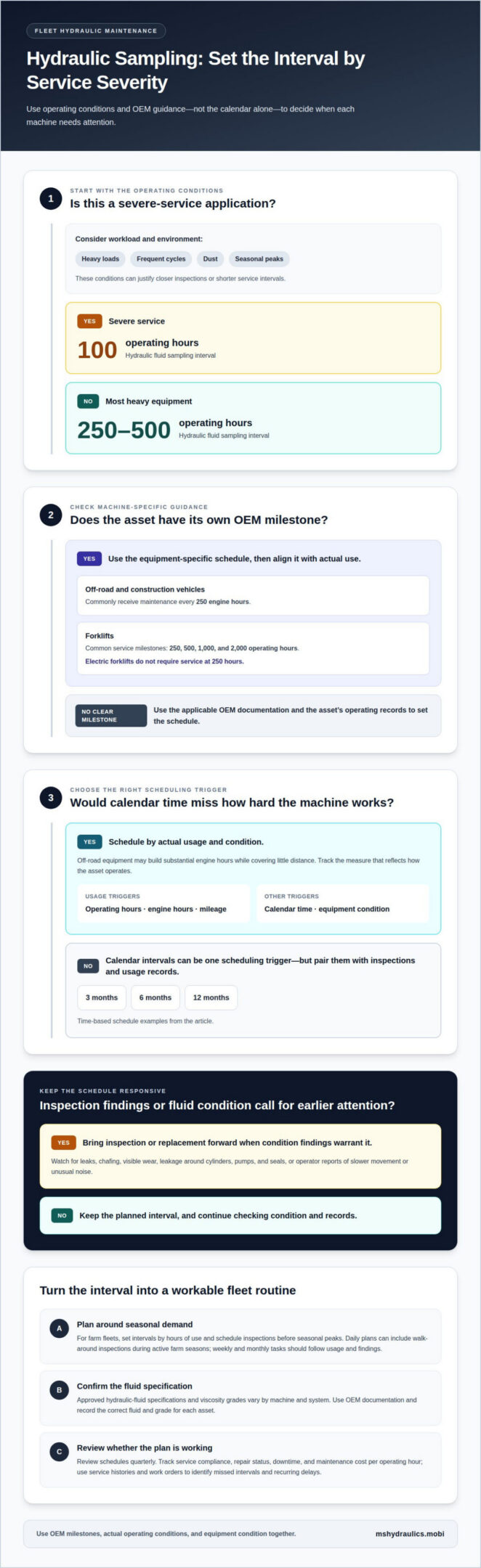
A fixed calendar interval can leave heavily used equipment under-serviced and lightly used assets over-serviced. For most heavy equipment, hydraulic fluid sampling is recommended every 250-500 operating hours, with sampling every 100 hours for severe-service applications. Knowing how to manage a fleet’s hydraulic maintenance schedule means adjusting those intervals to OEM guidance and actual operating conditions.
It makes sense to want a schedule that protects equipment without adding unnecessary downtime. The right interval depends on more than the calendar: operating hours, workload, working conditions, and fluid condition all help determine when inspections, sampling, and maintenance are due.
This article explains how to set intervals around OEM recommendations and equipment use, coordinate maintenance with operating demands, and use service records to track compliance, downtime, and costs.
Key Takeaways
- Build intervals around each machine’s OEM milestones, utilization, workload, and operating environment rather than relying on a calendar alone.
- Use fluid condition, inspection findings, and service records to identify developing issues and plan work before failures disrupt operations.
- Track maintenance compliance, repair status, and cost per operating hour to see whether the schedule is supporting fleet availability.
- Separate planned service from urgent repairs, and adjust maintenance timing as seasonal demand and equipment use change.
How often should hydraulic fluid be sampled in heavy equipment fleets?
Most heavy equipment needs hydraulic fluid sampling every 250-500 operating hours. Severe-service equipment needs sampling every 100 hours.
Time, Mileage, Usage, and Condition Triggers
Maintenance intervals use calendar time, mileage, engine hours, and equipment condition as scheduling triggers. The relevant measure depends on how each asset operates. For example, off-road equipment may accumulate substantial engine hours while covering little distance. Time-based schedules can use 3, 6, or 12 months, while condition findings can bring inspection or replacement forward. Tracking actual usage prevents calendar dates from masking demanding workloads.
Operating Conditions and Service Intervals
Load, driving patterns, and environmental conditions affect how quickly hydraulic systems experience wear or contamination. Heavy loads, frequent cycles, dust, and seasonal peaks can justify closer inspections or shorter intervals than ordinary service. Farm equipment fleets should set intervals by hours of use, not calendar dates alone, and schedule inspections before seasonal peaks. A technician can use operating records and inspection findings to identify assets needing earlier attention.
Equipment-Specific and OEM Hour Intervals
Equipment type and OEM recommendations determine which hour-based milestones belong on the maintenance calendar. Most heavy equipment calls for hydraulic fluid sampling every 250-500 operating hours, while severe-service applications use 100-hour sampling. Off-road and construction vehicles commonly receive maintenance every 250 engine hours. Forklift service milestones commonly include 250, 500, 1,000, and 2,000 operating hours, but electric forklifts do not require service at 250 hours. A fleet technician aligns each asset’s schedule with its OEM intervals and use.
For U.S. fleets, OSHA, EPA, and state requirements depend on workplace conditions, spill circumstances, and waste classification. Follow applicable site procedures and environmental requirements for handling and disposing of hydraulic fluid.
Daily schedules can include walk-around inspections during active farm seasons. Weekly and monthly tasks should follow usage and inspection findings; annual planning should align with OEM milestones and time-based intervals such as 12 months.
Approved hydraulic-fluid specifications and viscosity grades vary by machine and system. Use the OEM documentation to identify the correct fluid and grade, and record them for each asset to guide sampling and replacement.
Fleet maintenance compliance, downtime, and operating costs
Effective fleet planning connects maintenance records, asset utilization, and repair decisions. Reviewing schedules quarterly helps identify missed service intervals and recurring downtime patterns.
Reactive and Predictive Maintenance Tradeoffs
Reactive maintenance addresses a component after failure, while predictive maintenance uses trends to anticipate problems before symptoms appear. That distinction matters because an unplanned hydraulic failure can take equipment out of service during active work. Fleet teams can compare usage hours, telematics, and inspection history to identify recurring failure patterns. For example, a component that tends to fail around 4,000 hours across a fleet can be flagged for predictive attention before malfunction.
Downtime Prevention and Operating Costs
Downtime prevention means scheduling service before a developing fault stops an asset from working. Construction fleets that fall behind on preventive maintenance can experience unplanned downtime rates of 20-30%. Separating urgent repairs from scheduled maintenance helps preserve planned service windows and makes equipment availability easier to manage. Comparing utilization with downtime also shows whether service timing is supporting operational demand or leaving assets unavailable when needed.
Maintenance Costs per Operating Hour
Cost per operating hour measures maintenance spending against the hours an asset works. This view makes comparisons more useful than calendar totals alone, especially when equipment has different workloads. Track labor, parts, and scheduled service against each asset’s operating hours, then review the trend quarterly. A rising cost per hour can prompt closer review of repeat repairs, component condition, or whether current service intervals match actual use.
Fleet Maintenance Compliance
Compliance management means keeping maintenance, inspection, and repair records complete and organized for review. Work orders can document repair status and labor, while service histories show whether each asset met its planned intervals. Retain inspection records for compliance reviews, and record overdue work with its status and resolution. Quarterly schedule reviews help identify repeated delays and distinguish urgent repairs from preventive work, supporting clearer decisions about availability and operating costs.
When recurring faults or downtime complicate fleet planning, on-site hydraulic diagnostics can help identify equipment issues and inform repair decisions.
What Is Fleet Hydraulic System Maintenance and Why Does Contamination Kill Silently?
Hydraulic maintenance brings together condition checks, fluid monitoring, and planned component service. Contamination may circulate through a system before operators notice a change in performance.
Hydraulic Maintenance Triggers and Watch Points
Use inspection findings, fluid condition, operating trends, and changes in performance as maintenance triggers. These indicators can reveal defects before they disrupt the schedule. Check hoses and fittings for leaks, chafing, and damage, and look for visible wear or leakage around cylinders, pumps, and seals. Operator reports of slower movement or unusual noise can also guide inspection and diagnosis.
Telematics-Driven Preventive Scheduling
Telematics can support preventive maintenance by combining usage data with inspection history and equipment trends. A fleet record can flag assets nearing a scheduled interval or show a component’s performance changing as operating hours accumulate. Service providers can use that information to plan inspections around equipment use, rather than waiting for a breakdown to interrupt work and increase repair demands.
Driver Reports of Emerging Issues
Pre-trip and post-trip reports capture changes noticed during normal equipment operation. Drivers can record leaks, damaged hoses, unusual cylinder movement, or changes in fluid level, along with the affected asset and when the issue appeared. Photos can help maintenance teams assess visible defects and prioritize follow-up. Consistent reporting turns observations into useful service history, supporting timely inspection before a problem worsens.
Filter Intervals and Differential Pressure
Filter replacement intervals and differential-pressure limits depend on the equipment’s OEM schedule and filter specifications. The provider uses those limits with operating conditions and inspection results to plan replacement; no single differential-pressure value applies across every system. Refuse-truck hydraulic filters are listed for replacement every 500 operating hours, while dump-truck filters are listed every 1,000 hours. The correct schedule preserves the intended filtration without applying one interval fleet-wide.
Maintenance schedules based on OEM recommendations and vehicle use
A fleet schedule works best when it follows both OEM intervals and each vehicle’s actual duty cycle. A practical approach to how to manage a fleet’s hydraulic maintenance schedule connects service triggers to asset-use data. Calendar dates alone can miss high-use equipment; engine hours or cycle counts may better reflect the workload.
For liftgates in one common range, inspection is due quarterly or after 1,250 cycles, whichever comes first. Annual service is due after one year or 5,000 cycles and includes a hydraulic fluid change. This illustrates how to manage a fleet’s hydraulic maintenance schedule when cycle counts differ between trucks: a truck averaging 40 cycles daily can approach its inspection threshold sooner than one averaging 10. Without counters, delivery activity can help estimate use.
Different systems in the same fleet may need separate service triggers. For mixer fleets, chassis maintenance can follow mileage and driver inspection reports, drum and hydraulic maintenance can follow run-hours, and water-system maintenance can follow calendar intervals. This matches checks to each component’s use instead of applying one interval to every vehicle, while helping teams plan downtime around work demands.
OEM guidance is the baseline; operating data helps apply it to assets with different workloads. Group equipment by model and duty cycle, record due milestones, and adjust the schedule when usage or inspection findings change. Seasonal demand can help determine when planned work fits, but it should not override an OEM requirement. Reviewing completed work and emerging faults helps refine future schedules and plan component care.
For fleet equipment requiring scheduled service or repair, schedule heavy equipment maintenance around OEM requirements and operating demands.
Ms. Hydraulics LLC: Heavy Equipment Maintenance
Ms. Hydraulics LLC provides heavy equipment maintenance for fleets managing hydraulic service intervals, developing faults, and repair needs. Its technicians can diagnose issues identified during inspections, carry out planned work, and respond when hydraulic problems disrupt equipment use.
For specific system issues, Ms. Hydraulics LLC provides hydraulic hose fabrication, hydraulic cylinder rebuilds, and mobile hydraulic repair. These services address hose and cylinder problems, while mobile repair brings support to equipment in the field. Matching the work to the observed fault helps maintenance teams move from a reported issue to the appropriate repair.
When discussing a repair, share the affected equipment, its operating conditions, and the issue you observed. Contact Ms. Hydraulics LLC to discuss heavy equipment maintenance for your fleet.
Make Your Maintenance Plan Operational
A schedule is most useful when it informs daily fleet decisions. Treat it as a working control system: maintenance records, operator observations, and repair findings should shape upcoming service plans. This gives teams a clearer basis for prioritizing assets, coordinating work, and spotting patterns a calendar alone may miss.
Knowing how to manage a fleet’s hydraulic maintenance schedule also means recognizing when a plan needs professional support. If recurring faults, equipment condition, or repair requirements are affecting maintenance planning, discuss the situation with Ms. Hydraulics LLC to identify a practical next step for your fleet.
Contact Ms. Hydraulics LLC to discuss fleet maintenance support and move toward a plan that fits your equipment and operating demands.
Frequently Asked Questions
At what point do cycles matter more than the calendar?
Cycles matter when an asset reaches its manufacturer’s cycle limit before the scheduled calendar date. Liftgates are a clear example: repeated raising and lowering can use service allowances quickly, even on trucks with limited mileage. If the maintenance plan specifies both time and cycles, use whichever trigger comes first. This prevents low mileage or a recent service date from disguising intensive equipment use.
How often should fleet hydraulic systems be inspected and serviced?
Set inspection and service timing from each machine’s OEM schedule, then account for operating severity and condition reports. A heavily used asset may need attention sooner than a lightly used machine of the same type. Set separate triggers for routine condition checks, fluid sampling, filter service, and repairs, since each task may follow a different interval. Review inspection findings and maintenance history to see whether the planned frequency remains appropriate.
How do equipment type, operating hours, and duty cycle affect hydraulic service intervals?
Equipment design determines which usage measure best represents hydraulic workload. An engine-hour meter can track machines that work for long periods while stationary; a cycle counter may better reflect repeated liftgate operation. Duty cycle adds context: sustained heavy work and frequent movement put different demands on a system than intermittent use. Group comparable assets by model and work pattern while preserving each manufacturer’s service requirements.
How can a service provider monitor hydraulic fluid condition and determine when to change it?
A service provider can sample fluid, review analysis results, and compare them with the equipment’s maintenance history and OEM criteria. Interpret each result alongside prior samples and recent repairs: the record can help distinguish a developing condition from a one-time reading and inform fluid-change decisions based on equipment requirements. For fleets around Cleburne and Dallas-Fort Worth, Ms. Hydraulics LLC provides on-site diagnostic services.
What are the costs of scheduled hydraulic maintenance versus unplanned hydraulic repairs?
Scheduled maintenance is easier to plan, while an unexpected failure can add lost operating time and urgent repair needs. Compare the approaches by tracking labor, parts, fluid service, and equipment downtime in work orders. Review records by machine and operating hours to spot repeat failures or rising maintenance demands. This helps fleet managers assess the total operating impact rather than relying on a single repair invoice.
What warning signs indicate hydraulic contamination, overheating, cavitation, or component failure?
Cloudy or foaming fluid may indicate a fluid-condition concern. Excessive heat, unusual pump noise, jerky movement, or slow response can signal system trouble; leaks, damaged hoses, and inconsistent cylinder movement also warrant prompt reporting. These signs can have different causes, so a technician should assess fluid condition and system performance together. Record when symptoms occur and which equipment function is affected to support diagnosis.