Skid Steer Hydraulic Repair in Cleburne: Technical Solutions for Heavy Equipment
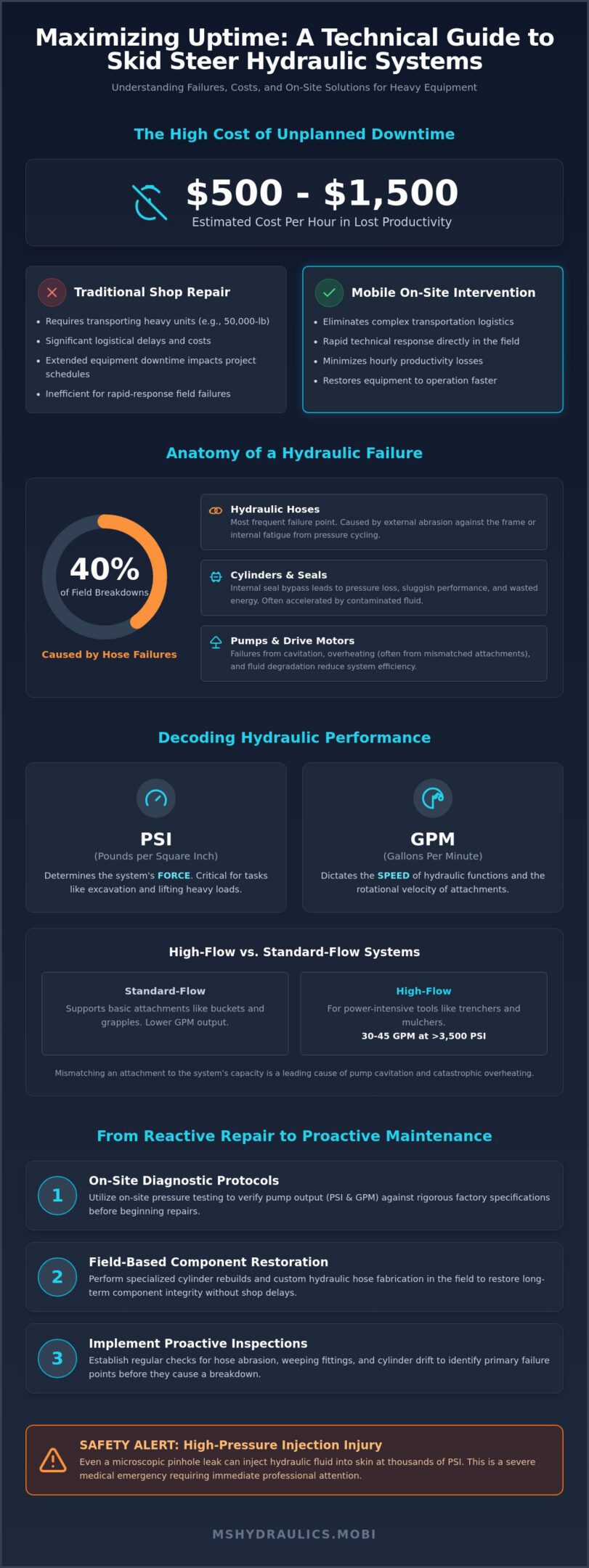
Unplanned downtime for heavy earthmoving equipment is estimated to cost between $500 and $1,500 per hour in lost productivity and schedule delays. For operators in North Texas, these figures represent more than just statistics; they’re direct threats to project viability and operational efficiency. When a machine fails in the field, the logistical challenge of transporting a 50,000-lb unit to a shop often compounds the initial loss. Securing professional skid steer hydraulic repair Cleburne services that offer mobile technical precision is the most effective strategy for mitigating these risks.
We understand that equipment reliability is the foundation of your industrial performance. This guide provides a comprehensive technical overview of diagnosing and maintaining complex hydraulic systems to ensure rapid restoration and long-term component health. You’ll gain insights into on-site diagnostic methodologies, specialized cylinder rebuild processes, and the critical role of custom hose fabrication in preventing recurring failures. By focusing on engineering-led solutions, you can eliminate inefficient repair cycles and maintain the rigorous standards required for heavy equipment operations.
Key Takeaways
- Quantify the economic benefit of mobile technical intervention over traditional shop logistics to minimize the high hourly costs of equipment downtime.
- Identify primary mechanical failure points, such as hydraulic hose abrasion and cylinder seal bypass, before they cause catastrophic system failure.
- Learn how specialized skid steer hydraulic repair Cleburne services utilize on-site pressure testing to verify pump output against rigorous factory specifications.
- Understand the technical requirements for field-based hydraulic hose fabrication and cylinder rebuilds to restore long-term component integrity.
- Implement proactive inspection protocols to maintain the precise PSI and GPM parameters necessary for both drive and auxiliary hydraulic functions.
The Role of Hydraulic Integrity in Skid Steer Performance
The hydraulic system of a skid steer functions as the primary power transmission medium, converting engine torque into fluid energy to power both drive motors and auxiliary attachments. This architecture relies on the principles of hydraulic machinery, where incompressible fluid under pressure facilitates the movement of heavy loads with extreme precision. In the industrial and construction sectors of North Texas, the hydraulic circuit is the lifeblood of the machine; any compromise in its integrity leads to a total loss of operational capability.
Operational performance is governed by two critical physical parameters: Pounds per Square Inch (PSI) and Gallons per Minute (GPM). PSI determines the force exerted by cylinders, such as the breakout force required for excavation. GPM dictates the speed of these movements and the rotational velocity of attachments. Maintaining these metrics is difficult in Cleburne, where environmental factors like extreme summer heat and pervasive limestone dust accelerate component wear. Heat reduces fluid viscosity, while dust acts as an abrasive that destroys seals. Maintaining high-level skid steer hydraulic repair Cleburne standards involves ensuring fluid purity and seal strength remain within tight manufacturer tolerances.
High-Flow vs. Standard-Flow Systems
Auxiliary hydraulic options are categorized based on their GPM output to match specific work tools. Standard-flow systems typically support basic attachments like buckets, while high-flow systems are required for power-intensive tools like trenchers or mulchers. As of 2026, high-flow hydraulic systems are technically defined as those providing a flow rate between 30 and 45 GPM at pressures often exceeding 3,500 PSI. Improperly matching an attachment to the host machine’s hydraulic capacity is a leading cause of pump cavitation and catastrophic system overheating.
The Mechanical Cost of Hydraulic Inefficiency
Hydraulic inefficiency creates a measurable drain on project resources. When internal leaks occur within valves or cylinders, the engine must consume more fuel to compensate for the lost pressure. These pressure drops result in sluggish cycle times, which can stall progress on major projects across Johnson County. Beyond the immediate fuel costs, inefficient systems generate excessive heat that degrades hydraulic fluid and shortens the lifespan of every connected component. Consistent Heavy Equipment Maintenance is necessary to identify these parasitic losses before they require a full system overhaul. Expert skid steer hydraulic repair Cleburne restores the volumetric efficiency of the pump, ensuring that every drop of fluid contributes to productive work rather than wasted heat.
Common Hydraulic Failure Points: Hoses, Cylinders, and Drive Motors
Hydraulic hose failures account for 40% of all sudden field breakdowns in heavy equipment. This high frequency of failure makes skid steer hydraulic repair Cleburne a critical service for local operators who cannot afford extended project delays. While hoses are the most visible failure point, the complexity of skid steer loaders involves several other high-stress components. Identifying whether a failure stems from external abrasion, internal seal bypass, or pump cavitation is the first step in a professional diagnostic process.
Hydraulic Hose Vulnerabilities in the Field
Hose failures are typically categorized by their wear patterns. External cover abrasion occurs when hoses rub against the machine frame or other lines, eventually exposing the wire reinforcement. Reinforcement fatigue, however, is an internal failure caused by constant pressure cycling and high-velocity fluid flow. Operators must remain vigilant regarding skid steer hydraulic safety standards because even a microscopic pinhole leak can lead to high-pressure injection injuries. These injuries occur when fluid penetrates the skin at thousands of pounds of pressure, requiring immediate medical intervention. For equipment currently showing signs of weeping or frayed covers, professional hydraulic hose repair is necessary to secure the site and prevent catastrophic rupture.
Cylinder and Valve Bank Diagnostics
Cylinder seal bypass is a common technical issue that manifests as “drift” in the lift arms or bucket tilt. This occurs when the internal piston seals fail, allowing pressurized fluid to leak from the high-pressure side of the cylinder to the low-pressure side. Often, this is caused by rod scoring, where physical debris or limestone dust creates deep scratches on the chrome rod surface. These scratches act as a file, shredding the seals every time the cylinder cycles. A hydraulic relief valve protects the system by opening at a predetermined pressure threshold to divert excess fluid flow back to the reservoir, preventing catastrophic component failure. If this valve fails or is set incorrectly, the entire circuit is at risk of over-pressurization.
Drive motor cavitation and valve bank contamination represent more severe failure modes. Cavitation occurs when the pump is starved of fluid, creating vacuum bubbles that implode with enough force to pit metal surfaces. This creates a distinct rattling sound, often described as marbles in a tin can. Simultaneously, microscopic debris from the North Texas environment can enter the system and destroy precision-machined valve spools. These spools have clearances measured in microns; even small particles can cause the valves to stick or leak internally. If your machine exhibits sluggish movement or erratic attachment control, an on-site diagnostic assessment can pinpoint the specific mechanical failure before it escalates into a total system overhaul.
Economic Impact of Downtime: Mobile Repair vs. Traditional Shop Logistics
The financial repercussions of equipment failure extend far beyond the direct cost of replacement parts. Unplanned downtime for heavy earthmoving machinery typically incurs losses between $500 and $1,500 per hour in lost productivity and project schedule delays. When a machine becomes non-operational on a job site, the traditional response involves transporting the unit to a specialized facility. However, the logistical complexity and associated costs of this move often exceed the actual repair bill. Opting for professional skid steer hydraulic repair Cleburne services that prioritize mobile technical intervention is a strategic necessity for maintaining project momentum.
The Logistics of Transporting Heavy Equipment
Transporting a 50,000-lb piece of machinery is a significant undertaking. Hiring a lowboy trailer involves costs ranging from $4.00 to $8.00 per mile, with additional loading and unloading fees often exceeding $500. Beyond the direct expense, loading a machine with a compromised hydraulic system presents severe safety risks. Without functioning drive motors or lift circuits, the machine may lack adequate braking or steering control during the loading process. Utilizing mobile hydraulic repair Cleburne TX eliminates these transportation hazards by bringing the necessary diagnostic and repair equipment directly to the job site. This approach is particularly tactical for high-stakes construction projects in Alvarado and Grandbury, where site access can be restricted and transport windows are narrow.
On-Site Fabrication Benefits
On-site technical services provide a level of precision that traditional shop repairs often struggle to match in a field environment. When a technician performs hydraulic hose fabrication at the machine, they can ensure an exact fit, accounting for specific routing paths and abrasion points that may have caused the original failure. This eliminates the “parts run” delay, a common occurrence in shop environments where incorrect fittings or lengths require multiple trips to a warehouse. Integrating on-site diagnostic services allows fleet managers to receive immediate, accurate reports on system health. This clarity enables faster decision-making regarding component rebuilds versus replacements. By performing these high-integrity repairs in the field, operators maintain the reliability of their hydraulic components without the secondary costs of machinery transport.
The technical integrity of an on-site repair is maintained through the use of fully equipped service trucks that function as mobile workshops. These units carry the specialized tooling required for cylinder disassembly and pressure testing, ensuring that skid steer hydraulic repair Cleburne meets the same rigorous standards as a fixed facility. For modern industrial players, such as Born Integrated Construction, the transition from shop-based logistics to mobile technical support represents a shift toward higher operational efficiency and reduced overhead.
Field Diagnostic Protocols and Preventative Maintenance
Systematic diagnostics convert operational guesswork into actionable engineering data. Effective skid steer hydraulic repair Cleburne relies on a methodical protocol that begins with a comprehensive visual inspection. Technicians identify “wet” spots where fluid weeps from fittings or seals, indicating the early stages of pressure loss. Beyond external leaks, fluid analysis provides a window into the internal health of the system. Hydraulic oil that appears dark or emits a burnt odor typically signifies advanced oxidation, while a metallic “glitter” in the reservoir indicates catastrophic wear within the pump or drive motors. Interpreting these physical markers allows for the identification of component failure before it results in a total machine seize.
Professional diagnostic processes utilize pressure testing to verify pump output against factory specifications. By connecting high-accuracy gauges to the system’s test ports, technicians can measure the volumetric efficiency of the hydraulic circuit under load. Localized heat is another critical indicator of internal bypass. Using infrared thermometers, a technician can scan valve banks and motors to find “hot spots” that suggest fluid is escaping through worn internal seals rather than performing work. This targeted approach ensures that only the failing components are serviced, reducing unnecessary parts expenditure and labor hours.
Establishing a Preventative Maintenance Schedule
Maintaining hydraulic integrity requires a structured schedule of daily, weekly, and monthly checkpoints. Daily inspections should focus on fluid levels and the integrity of visible hoses, while weekly reviews must include the cleaning of hydraulic coolers to prevent thermal degradation of the oil. Monthly intervals are ideal for deeper system checks, including filter replacements and mounting bolt torque verification. For a detailed breakdown of these service intervals, consult our Heavy Equipment Maintenance guide. Adhering to these rigorous standards prevents the accumulation of limestone dust and contaminants that characterize the North Texas work environment.
Diagnostic Tools Used by Professionals
Modern skid steer hydraulic repair Cleburne involves advanced tools such as flow meters and pressure transducers. These devices capture real-time data on fluid velocity and pressure spikes that manual gauges might miss. For newer skid steer models, software-based diagnostics are becoming essential to communicate with electronic control modules and identify sensor-related faults. Regularly inspecting and replacing case drain filters is essential for preventing the back-pressure build-up that causes catastrophic drive motor failure. If your equipment requires a technical evaluation to restore factory-level performance, contact our team for on-site diagnostic services today.
Ms. Hydraulics: Specialized Mobile Repair for Cleburne and North Texas
Ms. Hydraulics LLC serves as the primary technical partner for industrial operators requiring precision-led skid steer hydraulic repair Cleburne services. Founded in 2021, the organization focuses on technical excellence and integrity to address the specific mechanical challenges of the North Texas heavy equipment sector. By providing a comprehensive mobile workshop, we eliminate the logistical failures associated with traditional shop-based repair models. Our technicians possess the specialized expertise required for complex hydraulic cylinder rebuilds and on-site hose fabrication, ensuring that every machine returns to its factory-specified performance parameters.
Custom Solutions for Construction and Agriculture
The demands of the construction and agricultural sectors in Johnson County require repair strategies that account for high-cycle usage and harsh environmental stressors. We tailor our technical interventions to meet these specific needs, offering advanced heavy equipment cylinder rebuild Texas services that address rod scoring and seal failure at the job site. This engineering-led approach ensures that repairs aren’t merely temporary fixes but long-term restorations of component integrity. As a locally owned and operated industrial entity, Ms. Hydraulics leverages years of experience to support the regional economy, positioning itself as a dependable partner for local contractors and fleet managers.
Emergency Response and Service Capabilities
Operational efficiency depends on the rapid restoration of non-functional equipment. Ms. Hydraulics maintains a fleet of mobile repair units designed for immediate deployment across a broad service area, including Alvarado, Grandbury, Crowley, and Waxahachie. Each unit carries a full inventory of high-specification hydraulic parts, including various fittings, seals, and hose stock, to facilitate immediate field repairs. This capability minimizes the “parts run” delays that frequently extend downtime in traditional service environments.
Requesting a mobile service call is a structured process designed for maximum efficiency. Operators can initiate a technical assessment by providing machine specifications and failure symptoms to ensure the responding technician is fully equipped for the specific task. This methodical approach ensures that our skid steer hydraulic repair Cleburne solutions are both rapid and technically accurate. For immediate on-site support and professional diagnostic verification, Contact Ms. Hydraulics for Expert Skid Steer Repair today.
Optimizing Fleet Reliability Through Technical Precision
Maintaining the hydraulic integrity of a skid steer is essential for preventing the high costs associated with equipment downtime and transport logistics. By implementing rigorous diagnostic protocols and addressing failure points like hose abrasion and cylinder bypass early, operators ensure long-term component reliability. Professional skid steer hydraulic repair Cleburne services provide the technical precision required to restore system pressure and volumetric efficiency directly in the field.
Ms. Hydraulics has been serving Johnson County since 2021, focusing on technical excellence and engineering-led solutions. Our mobile units are equipped for expert on-site diagnostics and custom mobile hose fabrication, allowing for immediate restoration of machine functionality without the need for shop transport. This approach minimizes project delays and maintains the high operational standards required for North Texas industrial projects.
If your machine exhibits signs of hydraulic inefficiency or failure, it’s time to secure a professional intervention. Request Emergency Mobile Hydraulic Repair in Cleburne to restore your equipment’s performance and protect your operational momentum. Your project’s success depends on the dependable performance of your heavy machinery.
Frequently Asked Questions
How much does mobile hydraulic repair cost for a skid steer in Cleburne?
Mobile repair costs are determined by a combination of technician labor hours, service vehicle mobilization fees, and the specific hydraulic components required for the restoration. While mobile rates reflect the specialized nature of on-site technical support, they eliminate the significant expense of heavy equipment transportation. This makes skid steer hydraulic repair Cleburne an efficient alternative for operators focused on minimizing total project downtime.
How long does a typical skid steer hydraulic hose repair take on-site?
A standard hydraulic hose failure can typically be resolved within 1 to 2 hours after a technician arrives on-site. This timeframe includes the removal of the compromised line, custom fabrication of a new high-pressure assembly, and system pressure testing. While complex routing or multiple hose failures may extend the service window, on-site fabrication remains significantly faster than traditional shop logistics.
Can you rebuild a skid steer hydraulic cylinder in the field?
Specialized mobile units are fully equipped to perform hydraulic cylinder rebuilds in the field, provided the cylinder rod and barrel haven’t suffered structural damage. Technicians can disassemble the unit, inspect for scoring, and install new high-specification seals at the job site. If the rod requires re-chroming or machining, that specific component is processed at a facility before being re-installed in the field.
What are the signs that my skid steer hydraulic pump is failing?
A failing hydraulic pump often manifests as a noticeable loss of breakout force or sluggish cycle times during auxiliary attachment operation. Operators should listen for high-pitched whining or rattling sounds, which indicate aeration or cavitation within the pump housing. The presence of metallic particles in the hydraulic filter or reservoir is a definitive sign of internal mechanical degradation requiring immediate technical intervention.
Do you provide mobile hydraulic services to Alvarado and Grandbury?
Mobile technical services are available throughout Johnson County and the surrounding regions, including Alvarado, Grandbury, Crowley, and Waxahachie. Service trucks are deployed to provide rapid response for skid steer hydraulic repair Cleburne and surrounding industrial sites. This ensures that operators across North Texas have access to specialized technical support without the need for machinery transport.
Is it better to repair or replace a leaking hydraulic hose on a skid steer?
Replacing a leaking hydraulic hose is the only safe and reliable option for high-pressure systems. Attempting to repair a damaged hose with patches or sleeves is ineffective because the internal reinforcement layers have been compromised. A newly fabricated hose ensures the assembly can withstand the thousands of PSI required for modern skid steer operations without risking a catastrophic rupture or injection injury.
What type of hydraulic fluid is best for North Texas summer temperatures?
Selecting the correct hydraulic fluid for North Texas requires balancing viscosity with ambient operating temperatures. In the extreme heat of a Cleburne summer, many operators utilize ISO VG 46 or ISO VG 68 fluids to maintain adequate lubrication and system pressure. It’s essential to verify these selections against your machine’s OEM requirements to ensure compatibility with pump seals and internal clearances.
Just as extreme heat impacts industrial machinery, it also tests the limits of residential comfort systems; for those seeking reliable home climate control, Caribbean Heating & Cooling provides the specialized HVAC maintenance and repair needed to handle the Texas summer.
How often should I have my skid steer hydraulic system professionally inspected?
Professional hydraulic inspections should be conducted at least once per year or every 500 operating hours. For machines working in high-dust environments or high-cycle applications, semi-annual pressure testing and fluid analysis are recommended. These technical evaluations identify internal wear in valve banks and pumps before they escalate into total system failures that stall project momentum.