Skid Steer Hydraulic Repair in Cleburne: Mobile Technical Solutions (2026)
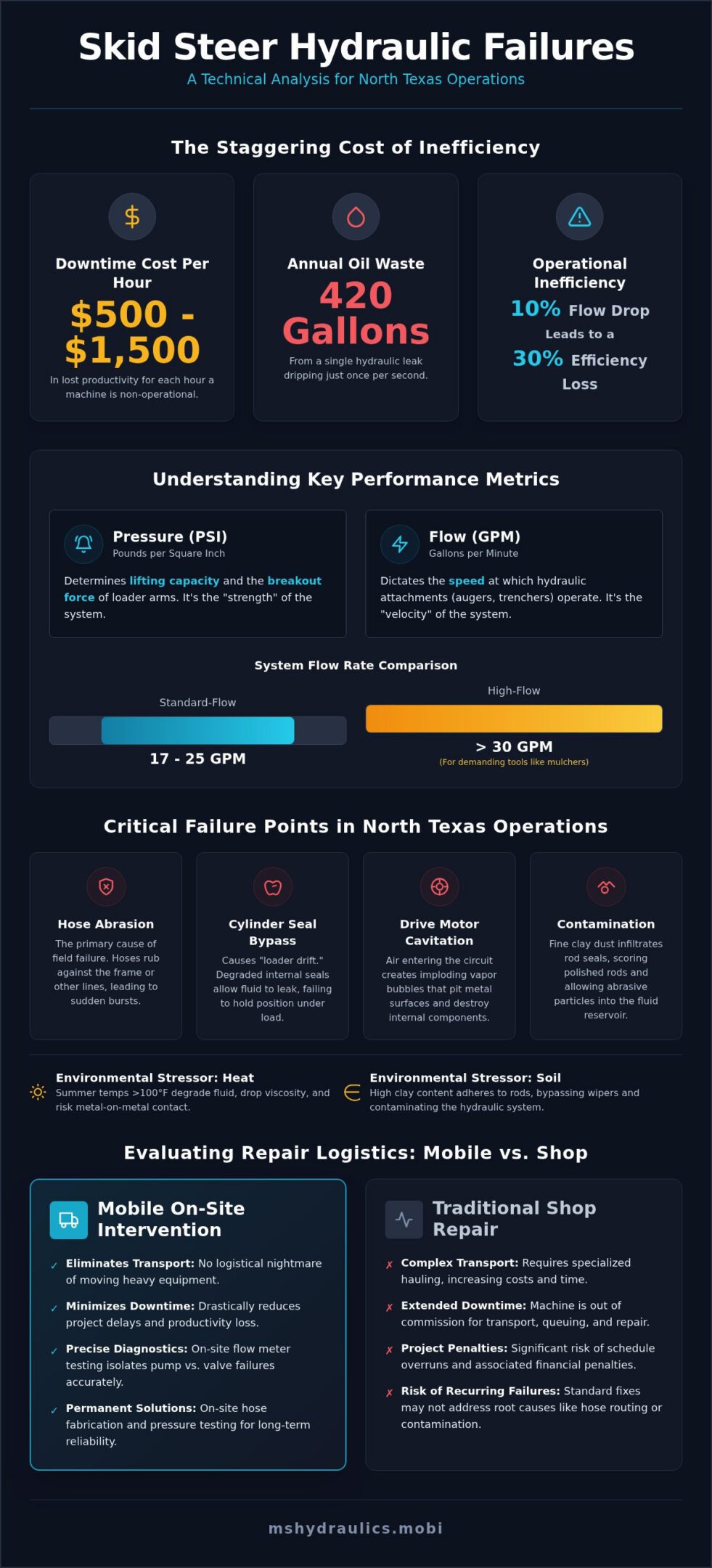
A single hydraulic leak dripping just once per second wastes 420 gallons of oil annually; however, that environmental impact is secondary to the immediate financial damage of equipment failure. For operators in North Texas, machine downtime is not just an inconvenience. It’s a specialized crisis that costs between $500 and $1,500 per hour in lost productivity. You shouldn’t have to choose between the logistical nightmare of transporting heavy machinery and the risk of low-quality, recurring failures. Accessing reliable skid steer hydraulic repair Cleburne services on-site is the most efficient way to protect your margins and your project schedule.
This engineering-led guide focuses on eliminating the bottlenecks of traditional repair models through mobile technical precision. We will detail the diagnostic processes required to restore machine function and verify system pressure to original factory specifications. By prioritizing technical accuracy over temporary fixes, you can ensure the long-term reliability of your hydraulic pumps, motors, and cylinders. We’ll explore how on-site hose fabrication and disciplined pressure testing provide a permanent solution to the recurring failures that often plague standard maintenance routines, keeping your equipment operational in the demanding North Texas environment.
Key Takeaways
- Technical analysis of hydrostatic drive systems and the specific requirements for high-flow auxiliary attachments.
- Effective diagnostic protocols for skid steer hydraulic repair Cleburne that utilize flow meter testing to isolate pump versus valve failures.
- Identification of internal cylinder seal bypass to address loader arm drift and restore factory-spec lifting capacity.
- Cost-benefit analysis of mobile technical intervention versus the logistical complexities and project penalties of heavy equipment transport.
- Implementation of on-site hose fabrication and industrial-grade fitting replacement to mitigate frequent failures caused by field abrasion.
Technical Architecture of Skid Steer Hydraulic Systems
The mechanical performance of a skid steer depends entirely on its fluid power transmission. Understanding the Technical Architecture of Hydraulic Systems is essential for diagnosing why a machine fails under load or loses its precision. In most modern units, the hydrostatic drive system serves as the core, converting engine torque into hydraulic energy through variable displacement pumps. This energy is then transferred to high-torque drive motors that facilitate movement and steering. For operators seeking skid steer hydraulic repair Cleburne, recognizing the distinction between the drive loop and auxiliary circuits is the first step in effective technical troubleshooting.
The charge pump is a critical, often overlooked component within this architecture. It maintains a constant supply of pressurized fluid to the main pump inlet, preventing cavitation and ensuring the system remains cool during high-intensity operations. Without adequate charge pressure, the main drive pumps can suffer catastrophic failure due to air ingestion or excessive heat. Hydraulic integrity is the maintenance of precise PSI and GPM parameters.
Understanding PSI and GPM Parameters
The performance of a skid steer is dictated by two primary variables: pressure and flow. Pressure, measured in Pounds per Square Inch (PSI), determines the lifting capacity and the breakout force of the loader arms. Flow rate, measured in Gallons per Minute (GPM), dictates the speed at which attachments like augers or trenchers operate. Standard-flow systems typically range from 17 to 25 GPM, while high-flow systems exceed 30 GPM to power demanding auxiliary tools like mulchers or cold planers. A mere 10% drop in flow can lead to a 30% loss in operational efficiency, which often indicates internal pump wear or valve bypass.
The Hydrostatic Drive Loop
Modern skid steers utilize a closed-loop hydrostatic system where fluid circulates directly between the pump and the motor without returning to the tank. This configuration allows for instantaneous changes in direction and speed. However, internal leakage within the drive motor can compromise this loop, manifesting as “creeping” or a noticeable loss of power on one side of the machine. In the North Texas climate, fluid viscosity is paramount. High summer temperatures can thin hydraulic oil, reducing its lubricating properties and increasing internal bypass. Maintaining the correct viscosity grade ensures that the drive loop maintains its volumetric efficiency despite extreme external conditions in Cleburne and the surrounding areas.
Critical Failure Points in Johnson County Operations
Operational reliability in Johnson County is frequently compromised by environmental variables that accelerate component fatigue. Hydraulic hose abrasion remains the primary cause of field failure on North Texas job sites, often occurring where lines rub against the machine frame or other hoses during high-pressure cycles. This mechanical wear eventually compromises the outer jacket and reinforcement layers, leading to sudden bursts. Operators requiring skid steer hydraulic repair Cleburne often find that these failures stem from a combination of high-cycle use and inadequate hose routing.
Cylinder seal bypass is another technical challenge that manifests as “drift,” where loader arms or attachments fail to maintain their position under load. This occurs when internal piston seals degrade, allowing pressurized fluid to leak across the piston head. Additionally, drive motor cavitation represents a severe risk to the machine’s drivetrain. Cavitation occurs when air enters the hydraulic circuit, creating vapor bubbles that implode with enough force to pit metal surfaces and destroy expensive internal components. The fine North Texas clay dust acts as a persistent abrasive, infiltrating hydraulic rod seals and wipers, which eventually scores the polished rods and allows contaminants into the fluid reservoir.
Environmental Stressors in North Texas
Texas summers exceeding 100°F lead to the rapid thermal degradation of hydraulic fluid. As temperatures rise, the fluid’s viscosity drops, reducing its protective film strength and increasing the risk of metal-to-metal contact within pumps and motors. Local soil, characterized by high clay content, adheres to exposed cylinder rods during operation. As these rods retract, the particulate matter can bypass the wipers and score the internal seals. Adhering to Virginia Tech skid steer maintenance standards involves rigorous cooling system inspections. Keeping cooling stacks clear of Johnson County dust is essential to prevent the pump seizure often caused by sustained overheating.
Hydraulic Hose Vulnerabilities
While extreme heat challenges your heavy equipment, it also puts immense strain on building infrastructure; for those managing facilities in the region, Comfort Boys Air and Heating offers specialized residential and commercial HVAC services to ensure your indoor environments remain as reliable as your machinery.
Identifying “wet spots” on hose jackets serves as an early warning sign for pinhole leaks. These small failures often precede catastrophic blowouts that can dump gallons of fluid in seconds. The danger of mismatched fittings in high-pressure auxiliary lines cannot be overstated, as improper seating creates localized stress points. Custom-fabricated hoses outperform generic off-the-shelf alternatives because they’re engineered to match the exact pressure ratings and bend radii of your specific machine. If you’ve noticed a drop in attachment speed or visible leaks, scheduling a professional mobile hydraulic repair can prevent a minor leak from becoming a total system failure on the job site.
Evaluating Mobile Technical Intervention vs. Shop Logistics
Traditional shop-based repair models often fail to account for the compounding costs of equipment inactivity. While a mechanical failure is the immediate concern, the logistical bottleneck of moving a non-functional unit across Cleburne or Alvarado introduces significant operational friction. Choosing on-site skid steer hydraulic repair Cleburne optimizes this process by deploying diagnostic capabilities directly to the machine’s location. This strategy eliminates the need for heavy haulage and reduces the total time to restoration.
Downtime ROI Analysis
Calculating the “True Cost” of downtime requires an analysis of labor loss and potential project penalties. Industry data indicates that heavy equipment downtime can result in productivity losses exceeding $1,000 per hour when considering idle crews and delayed schedules. Utilizing Expert Mobile Hydraulic Repair in Cleburne allows operators to bypass the 2-4 day wait periods typical at regional dealerships. This immediate restoration of function ensures that project milestones remain on track and avoids the accumulation of liquidated damages on commercial contracts.
The Logistics of Transportation
Transporting heavy machinery involves more than just a trailer. In Johnson County, units weighing up to 50,000 lbs often require specific permits and specialized hauling equipment. Loading a machine with a compromised hydraulic system, where drive motors or brakes may be locked, introduces a significant risk of secondary mechanical damage. On-site technical solutions mitigate this risk. By performing on-site pressure testing, technicians can verify that the system meets factory specifications before the machine is returned to service, ensuring operational integrity without the hazards of transport.
Determining whether to rebuild or replace a hydraulic component is a critical engineering decision. For drive motors and pumps, this decision depends on the degree of internal wear. If a case drain test reveals excessive flow, it typically indicates internal bypass that necessitates a rebuild. However, if the housing is scored or metal contamination has permeated the circuit, a full component replacement is often the more reliable path. Mobile diagnostics provide the data necessary to make this distinction immediately, preventing the repair cycle loops common in less disciplined maintenance environments. Bringing the shop to the machine represents the modern standard for industrial efficiency.
Field Diagnostic Protocols for Rapid System Restoration
Achieving rapid restoration of a stalled machine requires a disciplined diagnostic sequence. Technicians must move beyond guesswork to identify the root cause of pressure loss or mechanical sluggishness. The first step involves a comprehensive visual inspection for external leaks and hose routing issues. This process often reveals physical damage to the outer jackets or loose fittings that compromise system integrity. For operators seeking skid steer hydraulic repair Cleburne, this initial survey sets the foundation for more complex testing.
Following the visual check, technicians utilize flow meter testing to isolate pump performance from valve failures. By measuring Gallons Per Minute (GPM) at specific pressure levels, we can determine if the pump is meeting factory output specifications. If the pump performs within parameters, the diagnostic focus shifts to the control valves or auxiliary circuits. Case drain testing follows to assess drive motor health. High fluid volume in the case drain line is a definitive indicator of internal wear and volumetric inefficiency. Finally, thermal imaging allows us to detect internal bypass and friction points. Excessive heat localized around a valve bank or cylinder head suggests fluid is leaking past seals, even if no external oil is visible.
Advanced Diagnostic Tools
Modern troubleshooting relies on high-precision electronic flow indicators. These tools provide real-time data on system performance under various load conditions. We also utilize fluid analysis, which serves as a technical blood test for hydraulic health. By examining the particulate count and chemical composition of the oil, we can identify early signs of component fatigue before catastrophic failure occurs. You can learn more about these specialized procedures through our On-Site Diagnostic Services in Cleburne.
Preventative Maintenance Schedules
Reliability is built on a structured maintenance framework. We recommend establishing a 500-hour fluid and filter replacement interval to mitigate the risk of contamination. Operators should also utilize daily inspection checklists that cover hoses, fittings, and fluid levels. This proactive approach prevents the abrasive North Texas dust from entering the sensitive hydrostatic loop. Our Heavy Equipment Maintenance in Cleburne guide provides a detailed breakdown of these technical requirements. If your machine shows signs of decreased breakout force or erratic movement, schedule an On-Site Diagnostic Service to verify your system’s operational parameters immediately.
Specialized Mobile Hydraulic Solutions by Ms. Hydraulics LLC
Ms. Hydraulics LLC, established in 2021, addresses the specific mechanical needs of the North Texas industrial sector with a focus on technical verification. Our approach to skid steer hydraulic repair Cleburne relies on engineering precision rather than symptomatic treatment. By deploying mobile workshops directly to job sites, we eliminate the delays associated with third-party logistics and traditional shop backlogs. Every intervention is guided by rigorous technical standards to ensure that system pressure and flow rates return to original equipment manufacturer specifications.
On-Site Fabrication and Rebuilds
Our mobile service units function as fully integrated technical facilities, equipped to handle complex mechanical restorations in the field. We provide custom hydraulic hose fabrication using industrial-grade fittings and materials that meet the exact material requirements of your machinery. This on-site assembly ensures a precise fit and proper routing, which significantly reduces the risk of the abrasion failures common on high-cycle job sites. Additionally, our cylinder rebuild expertise includes specialized resealing and rod polishing performed without the need for machine transport. For comprehensive details on our technical restoration processes, see our Heavy Equipment Cylinder Rebuild in Texas guide.
Technical precision in hose assembly is paramount for long-term reliability. We don’t just replace failed components; we analyze the specific failure point to determine if a different fitting or reinforced material is necessary for the application. Our technicians are trained to manage high-pressure auxiliary lines that power demanding attachments, ensuring that every connection is verified through pressure testing before the unit is released for operation. This methodical flow ensures that repairs are both rapid and permanent.
Integrity-Based Service in North Texas
The mission of Ms. Hydraulics LLC is to build long-term partnerships through consistent reliability and factual accuracy. We understand that a stalled machine in Cleburne, Alvarado, or Granbury represents a critical break in the project timeline. Our response capabilities prioritize rapid restoration for Johnson County job sites, with a specialized focus on construction and agricultural machinery. By maintaining high professional decorum and focusing on mechanical parameters, we position ourselves as a dependable technical partner for operators across the DFW region. If your equipment requires a technical consultation or an on-site diagnostic call, our team is prepared to provide the engineering-led solutions your operations demand.
Maximizing Operational Reliability Through Technical Precision
Operational efficiency in the North Texas construction and agricultural sectors depends on the mechanical integrity of your hydraulic systems. By implementing disciplined field diagnostic protocols and utilizing on-site fabrication, you can eliminate the logistical bottlenecks that typically result in days of lost productivity. Addressing the specific environmental stressors of Johnson County, from extreme thermal degradation to abrasive clay dust, ensures that your machinery maintains its factory-specified breakout force and lifting capacity throughout the most demanding project schedules.
Ms. Hydraulics LLC has focused on technical integrity and minimizing downtime since its founding in 2021. Our mobile units provide full on-site diagnostic and fabrication capabilities, serving Cleburne, Alvarado, Granbury, and the wider DFW area. This engineering-led approach to skid steer hydraulic repair Cleburne ensures that every repair is verified through pressure testing for long-term reliability. We’re committed to restoring your machine’s function with the precision required for industrial excellence. Restoring system pressure is our priority.
Request Expert Mobile Hydraulic Repair in Cleburne
Frequently Asked Questions
How much does mobile skid steer hydraulic repair cost in Cleburne?
Total costs for hydraulic restoration are determined on a per-job basis depending on the technical complexity and specific components required. Factors influencing the final assessment include diagnostic labor, material requirements for custom hose fabrication, and the extent of component rebuilds. We focus on providing engineering-led solutions that prevent recurring failures, which helps operators avoid the high cost of equipment downtime that often impacts project margins.
Can you fabricate high-pressure hydraulic hoses on-site?
Yes, our mobile units are equipped for full hydraulic hose fabrication directly at your location. We utilize industrial-grade fittings and materials that meet specific pressure and bend radii requirements for your machinery. This on-site capability ensures a precise fit and eliminates the logistical delays of transporting equipment to a shop. Every assembly is verified for technical integrity before being integrated into your machine’s high-pressure auxiliary circuits.
How long does a typical hydraulic cylinder rebuild take in the field?
A standard on-site cylinder rebuild, including resealing and rod polishing, typically requires several hours to complete. The exact duration depends on the cylinder’s size and the degree of internal wear or contamination. By performing these specialized rebuilds in the field, we bypass traditional shop backlogs and restore machine function faster. Our technicians utilize on-site pressure testing to verify that the cylinder meets factory specifications before concluding the service.
Do you provide 24/7 emergency hydraulic service in Johnson County?
Service availability for emergency repairs in Johnson County is based on current technician scheduling and workload. While we prioritize rapid restoration for local job sites in Cleburne and Alvarado, operators should contact us directly to verify our current response times. We’re committed to providing technical integrity and minimizing downtime for construction and agricultural machinery throughout North Texas during our standard operational service windows.
What are the signs that my skid steer pump is failing?
Primary indicators of pump failure include a significant drop in breakout force, sluggish attachment speed, or unusual mechanical noise during operation. Technical diagnostics, such as flow meter testing, can isolate whether the pump is failing to meet factory GPM specifications. Excessive heat localized at the pump housing also suggests internal wear. Identifying these signs early during skid steer hydraulic repair Cleburne inspections can prevent catastrophic system contamination.
Can you repair drive motors for major brands like Bobcat or CAT?
We provide technical repair services for hydrostatic drive motors across all major industrial brands, including Bobcat, CAT, and John Deere. Our process involves assessing volumetric efficiency and identifying internal bypass that leads to creeping or power loss. By utilizing specialized diagnostic tools in the field, we can determine if a motor requires a technical rebuild or full component replacement to restore the integrity of your machine’s drive loop.
Is it better to rebuild or replace a leaking hydraulic cylinder?
The decision to rebuild or replace depends on the physical condition of the rod and barrel. If the rod is scored or the barrel is internally pitted, a full replacement is often necessary to ensure long-term reliability. However, most leaks caused by seal degradation can be corrected through a specialized cylinder rebuild. This process involves resealing and rod polishing to restore factory-spec performance without the high cost of new component procurement.
What areas of North Texas do your mobile technicians cover?
Our mobile technicians provide skid steer hydraulic repair Cleburne and surrounding areas, including Alvarado, Granbury, and the wider Johnson County region. We also extend our technical services to the greater DFW area to support large-scale construction and agricultural operations. Our units are equipped to reach remote job sites, bringing specialized diagnostic and fabrication capabilities directly to your equipment to minimize logistical friction and restore operational efficiency.