Expert Skid Steer Hydraulic Repair in Cleburne: Minimizing Downtime
Every hour a skid steer sits idle on a job site isn’t just a scheduling delay; it’s a direct depletion of your project’s profit margin. When a machine loses hydraulic pressure or blows a critical hose, the logistical bottleneck of transporting heavy equipment often costs more than the mechanical fix itself. Professional skid steer hydraulic repair Cleburne services eliminate this friction by bringing engineering expertise directly to the field, ensuring that diagnostics are accurate and repairs are durable.
You know that a temporary patch is never a substitute for a technical solution. This guide explains how to identify, diagnose, and resolve complex hydraulic failures using expert mobile repair services throughout Cleburne and Johnson County. We’ll examine the specific requirements for on-site custom hose fabrication, the precision needed for cylinder rebuilds, and the rigorous maintenance standards that prevent future pressure drops. By focusing on technical accuracy rather than quick fixes, you can secure a rapid return to operational status while maintaining the long-term integrity of your fleet’s hydraulic systems.
Key Takeaways
- Identify early indicators of hydraulic failure, such as diminished lift capacity and sluggish cycle times, to prevent total system breakdown.
- Evaluate the logistical and financial advantages of skid steer hydraulic repair Cleburne services that prioritize on-site diagnostics over costly shop transport.
- Understand the role of precision pressure and flow testing in isolating root causes within complex pump and valve configurations.
- Implement a rigorous preventative maintenance framework, including fluid analysis and filter replacement schedules, to ensure long-term operational reliability.
- Discover the efficiency of on-site custom hose fabrication and technical cylinder rebuilds for restoring hydraulic performance in the field.
Common Skid Steer Hydraulic Failures on Cleburne Job Sites
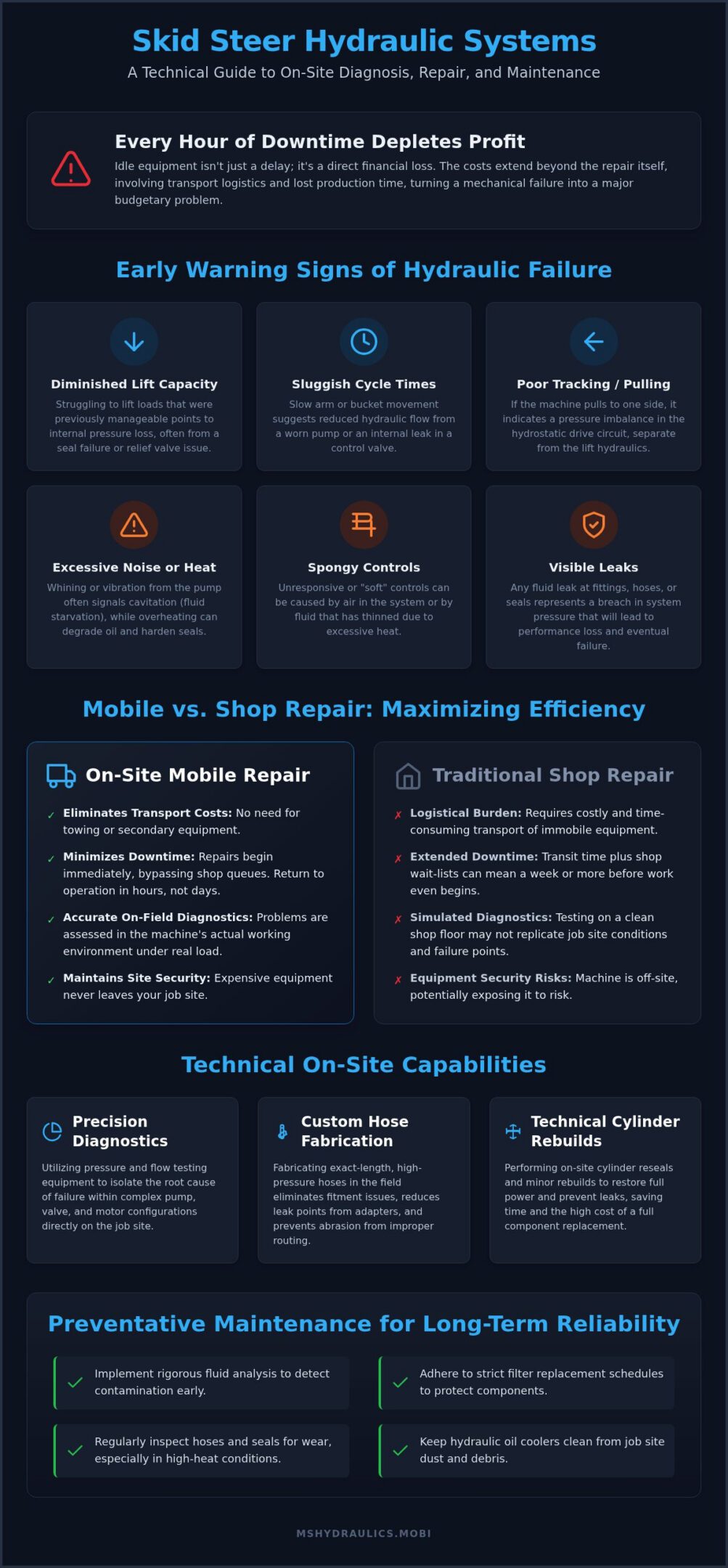
A skid-steer loader relies on a complex network of high-pressure circuits to perform heavy-duty tasks. When these systems fail, the symptoms are usually unmistakable. A sudden loss of lift or tilt capacity during heavy loads often points to a catastrophic seal failure within the cylinder or a primary relief valve that’s stuck open. Sluggish cycle times suggest that the pump’s volumetric efficiency has dropped, or there’s an internal leak in the control valve. If you hear excessive noise or feel high-frequency vibrations from the pump area, it’s likely cavitation, which occurs when the pump is starved of fluid. Visible leaks at hose fittings or cylinder seals aren’t just messy; they represent a breach in system pressure that can lead to total operational failure. Professional skid steer hydraulic repair Cleburne addresses these issues by identifying whether the fault is mechanical, such as a worn gear, or hydraulic, such as a failed O-ring.
Symptoms of Hydraulic Overheating in North Texas
The intense North Texas summer heat places a significant thermal load on hydraulic systems. As temperatures rise, hydraulic fluid viscosity decreases, causing the oil to thin beyond its specified operating range. This leads to spongy control responses because the thinner fluid is more susceptible to aeration. Clogged cooling cores are a primary culprit here. Dust and debris from Cleburne job sites frequently block the heat exchanger, preventing the system from shedding heat effectively. When the fluid stays too hot for too long, it degrades the chemical properties of the oil and hardens the seals, leading to premature failure.
Pressure Drops and Hydrostatic Drive Issues
It’s vital to differentiate between auxiliary hydraulic failures and hydrostatic drive motor issues. If your machine is tracking poorly or pulling to one side, the pressure imbalance is likely within the drive circuit rather than the lift circuit. Hydrostatic transmission failure in the context of load-sensing pumps occurs when the variable displacement pump fails to adjust its output to meet the specific torque and speed requirements of the drive motors under load. These imbalances often require precise pressure testing to isolate the specific component causing the drop. In these scenarios, specialized skid steer hydraulic repair Cleburne is necessary to recalibrate the system to factory specifications.
Mobile vs. Shop Repair: Maximizing Efficiency in Johnson County
Eliminating Transport Logistics and Towing Costs
This real-world diagnostic approach is invaluable for heavy-duty operations like Your Way Land Clearing LLC, where equipment must perform reliably during demanding land clearing and excavation tasks.
Transporting heavy machinery to a dealership often involves multi-day delays just for transit. Large facilities typically operate on a queue system, meaning your machine might sit for a week before a technician even begins the diagnostic process. Bringing the repair shop to the Cleburne job site bypasses this “wait-list” entirely. It also maintains site security. You don’t have to leave a project site vulnerable or deal with the risks associated with moving equipment on public roads. Professional skid steer hydraulic repair Cleburne technicians arrive with the necessary tooling to perform complex interventions without the machine ever leaving its tracks.
On-Site Custom Hose Fabrication
A common point of failure in North Texas is the hydraulic hose. Ordering a pre-made hose often leads to fitment issues or requires excessive adapters that create new leak points. On-site fabrication ensures that every hose is cut to the exact length required for the specific machine configuration. This precision is a core component of Preventative Maintenance for Skid Steer Hydraulics, as it reduces abrasion and stress on the fittings. Fabricating in a mobile unit also limits the exposure of sensitive hydraulic components to external contaminants. If you’re facing a critical failure, choosing mobile hydraulic repair can prevent environmental fluid spills by containing the issue immediately.
Immediate field interventions do more than just fix the machine; they preserve the project timeline. When a technician builds a hose or rebuilds a cylinder on-site, the machine returns to operational status in hours rather than days. This efficiency is vital for contractors in Johnson County who operate on tight margins and strict deadlines. By keeping the equipment on the premises, you retain control over your assets and eliminate the high cost of specialized towing services.
Technical Diagnostics: Identifying Root Causes of Hydraulic Failure
Precision diagnostics are the foundation of effective skid steer hydraulic repair Cleburne. Technicians utilize pressure transducers to isolate whether a failure originates in the pump or the control valve. While pressure indicates the system’s ability to overcome resistance, flow testing determines component efficiency by measuring the volume of oil delivered over time. A pump might reach the required PSI but fail to maintain the necessary GPM. This discrepancy indicates internal wear that leads to sluggish performance under load.
Visual inspection protocols focus on rod scoring and seal degradation. Even microscopic scratches on a cylinder rod can compromise the hydraulic seal. This leads to external leaks or internal pressure loss. Analyzing hydraulic fluid for metallic particulates provides a window into the health of internal components. Bronze or steel shavings in the oil often signal that a pump or motor is in the process of a catastrophic failure. Catching these particulates early can save the entire system from contamination.
Hydraulic Pump and Motor Diagnostics
Internal pump cavitation often manifests as a high-pitched whine. It occurs when air bubbles form and collapse within the fluid, eroding metal surfaces and compromising system longevity. Testing case drain flow is a critical diagnostic step for evaluating motor wear. High flow levels in the case drain line suggest that internal clearances have widened, allowing pressurized oil to bypass the working group. In modern skid steers, troubleshooting the charge pressure system is equally important. This ensures the main hydrostatic loop remains replenished and cooled during operation.
Cylinder and Valve Troubleshooting
Identifying internal bypass leaks in hydraulic cylinders requires isolating the piston seal. If a cylinder drifts under load, it’s often because oil is leaking past the piston from the high-pressure side to the low-pressure side. Control valve spools must be tested for proper centering and pressure relief settings to ensure precise attachment movement. Utilizing On-Site Diagnostic Services prevents the “parts cannon” approach, where components are replaced based on guesswork rather than data. This methodical verification ensures that every skid steer hydraulic repair Cleburne is necessary and addresses the actual engineering failure.
Preventative Maintenance for Cleburne Skid Steer Operators
Rigorous maintenance protocols are an engineering requirement for machine longevity in North Texas. A standard fluid and filter replacement schedule serves as the primary defense against internal component wear. Daily inspection checklists should prioritize high-wear hydraulic components, specifically looking for weeping fittings or frayed hose jackets. Managing heat dissipation is a technical challenge in the Cleburne industrial climate. High ambient temperatures require clean cooling cores and optimal fluid levels to prevent thermal degradation of the oil. Regular fluid analysis acts as a diagnostic tool, allowing operators to predict component failure by monitoring the concentration of wear metals before a total breakdown occurs.
Fluid Management in Dusty Environments
Particulate matter in Johnson County soil is exceptionally abrasive. Fine dust enters the system through compromised seals or during attachment changes, accelerating the wear of precision-machined surfaces. Choosing the correct hydraulic fluid weight is critical for year-round Texas operation. High-viscosity fluids provide better protection in summer heat, while multi-grade oils ensure flow during occasional winter freezes. Best practices include cleaning quick-disconnect fittings with a lint-free cloth before every connection. This simple step prevents the introduction of silica into the sensitive valve spools, reducing the need for emergency skid steer hydraulic repair Cleburne.
The Importance of Seal and Hose Integrity
UV degradation is a significant factor in North Texas. The intense sun causes the outer rubber jacket of hydraulic hoses to become brittle and crack over time. Identifying “wet” spots or slight oil dampness around fittings allows for proactive skid steer hydraulic repair Cleburne before a catastrophic blowout occurs. These early indicators often signal a failing O-ring or a loose compression fitting. For a full technical breakdown of these procedures, refer to our Heavy Equipment Maintenance guide.
Implementing these technical standards reduces the frequency of emergency repairs and extends the lifecycle of your pump and motors. If your machine shows signs of pressure loss or visible leaks, contact us for professional Mobile Hydraulic Repair to restore system integrity on-site. Maintaining these standards ensures your fleet remains a reliable asset on any Johnson County project.
Ms. Hydraulics: Specialized Skid Steer Support in Cleburne
Ms. Hydraulics LLC serves as a technical anchor for industrial and construction operations requiring skid steer hydraulic repair Cleburne. The company’s mobile units are configured to function as self-contained precision workshops, capable of high-specification hydraulic hose fabrication on-site. By utilizing materials that meet or exceed international performance standards, technicians ensure that every replacement component is engineered for the specific pressures and flow rates of the host machine. This technical rigor extends to cylinder rebuilds, where precision sealing and rigorous pressure testing are standard protocols. Whether the failure involves an auxiliary circuit or a primary lift cylinder, the objective remains a durable repair that restores the machine to its original engineering specifications.
Comprehensive mobile diagnostics are available for all major skid steer brands, ensuring that technical support is accessible regardless of fleet composition. The diagnostic process involves measuring physical and mechanical parameters to verify that every component, from the primary pump to the furthest actuator, is functioning at peak efficiency. This commitment to factual accuracy builds trust with professional operators who require a serious partner for their heavy equipment maintenance. It’s about providing a level of reliability that matches the scale of the operations we support.
Comprehensive Mobile Repair Capabilities
The service radius includes Cleburne, Alvarado, and Grandbury, providing localized support that minimizes the logistical burden on fleet managers. Technicians possess the expertise required to navigate both legacy mechanical systems and modern electronic control architectures. This dual capability is essential as skid steers increasingly integrate sophisticated sensors and load-sensing pumps with traditional hydraulic hardware. By utilizing data-driven diagnostic tools, such as flow meters and pressure transducers, the repair process is focused on identifying the specific failure point rather than replacing components based on general symptoms. This methodical approach ensures that downtime is reduced to the absolute minimum required for a professional intervention.
Partnering for Long-Term Equipment Health
Effective machinery management requires more than just reactive fixes. Ms. Hydraulics works with local operators to develop custom maintenance routines tailored to the specific environmental challenges of North Texas. Our focus on mobile hydraulic repair Cleburne TX ensures your fleet stays operational through technical precision and consistent verification. These partnerships are built on a foundation of integrity and a commitment to long-term reliability rather than temporary patches. By maintaining rigorous standards for fluid cleanliness and component integrity, we help operators avoid the high cost of catastrophic system failures. We invite professional operators to schedule a technical diagnostic call to verify system pressures and ensure all hydraulic parameters are within factory tolerances.
Securing Operational Continuity for North Texas Fleets
Technical precision in diagnostics and the elimination of transport logistics are the most effective strategies for maintaining project timelines. Addressing hydraulic failures on-site prevents the compounding costs of machine downtime and secondary transport labor. By prioritizing data-driven troubleshooting and rigorous preventative maintenance, operators in Johnson County can ensure their equipment remains a reliable asset under challenging industrial conditions. Professional skid steer hydraulic repair Cleburne provides the specialized engineering support required to resolve pressure drops and component wear without removing machinery from the job site.
Ms. Hydraulics LLC combines local Cleburne ownership with deep technical expertise to deliver high-specification solutions in the field. Our mobile units are fully equipped for on-site custom hose fabrication and specialized hydraulic cylinder restoration, ensuring that every repair meets factory performance standards. This methodical approach to maintenance and repair safeguards your machinery’s longevity while maximizing immediate productivity. When your equipment requires technical verification or emergency intervention, Contact Ms. Hydraulics for Expert Mobile Repair to restore your system’s integrity. We’re committed to helping you maintain a high-performance fleet that’s ready for any project.
Frequently Asked Questions
How much does mobile skid steer hydraulic repair cost in Cleburne?
Project costs are determined by the specific failure parameters and the technical requirements of the repair. Factors such as the quantity of high-pressure fluid lost, the specifications of replacement hoses, and the labor hours required for on-site diagnostics all influence the total. Because every mechanical failure is unique, a formal diagnostic assessment is the only accurate method for establishing the necessary investment to return a skid steer to its optimal engineering specifications.
Can you make custom hydraulic hoses on-site at my location?
Our mobile units are specifically equipped for on-site hydraulic hose fabrication using high-specification materials. This field capability allows for the immediate restoration of system pressure without the logistical delay of visiting a physical storefront. By cutting and crimping hoses to the exact lengths required for your machine’s configuration, we eliminate the need for excessive adapters and ensure that the replacement component meets the original equipment manufacturer’s technical standards.
What are the most common causes of skid steer hydraulic failure?
The primary causes of hydraulic failure in skid steers include fluid contamination, thermal degradation, and seal fatigue. In the Johnson County industrial climate, fine particulate matter often infiltrates the hydraulic loop through worn cylinder wipers, leading to internal component scoring. Additionally, high operating temperatures can cause hydraulic oil to lose its lubricating properties, resulting in pump cavitation and valve spool wear. Maintaining a rigorous filtration and cooling schedule is vital for mitigating these risks.
How long does a typical hydraulic cylinder rebuild take?
A standard hydraulic cylinder rebuild involving seal replacement is typically completed within a single service window to minimize machine downtime. If technical diagnostics identify more severe issues, such as rod scoring or internal barrel wear, the restoration process may require additional time for precision machining or component sourcing. Our skid steer hydraulic repair Cleburne service prioritizes technical accuracy and sealing integrity to ensure the rebuilt component can withstand the high-pressure demands of heavy-duty operation.
Do you provide emergency hydraulic repair services in Johnson County?
We offer mobile hydraulic repair services throughout Johnson County to assist operators facing critical equipment downtime. While we don’t provide a 24/7 service guarantee, our mobile technicians are optimized for rapid response to local job sites. Our goal is to perform on-site diagnostics and repairs that return the machine to its project schedule with minimal delay. Operators should verify current technician availability based on their specific location and the technical nature of the failure.
Is it better to repair or replace a failing hydraulic pump?
Choosing between repair and replacement requires a detailed analysis of the pump’s internal volumetric efficiency. If the wear is localized to replaceable components like seals or wear plates, a professional rebuild is a technically viable solution that restores performance. However, if the main housing exhibits significant scoring or damage from cavitation, a full replacement is required to ensure system stability. Our diagnostic process provides the data necessary to make a cost-effective and reliable engineering decision.
What areas around Cleburne do your mobile technicians cover?
Our mobile technicians provide service throughout Cleburne, Alvarado, Grandbury, and the surrounding North Texas region. This mobile reach is designed to eliminate the high transport costs of moving heavy machinery to a shop. By delivering professional skid steer hydraulic repair Cleburne directly to your job site, we ensure that specialized technical support is available wherever your fleet operates. This localized approach is a core part of our commitment to supporting North Texas industrial operations.
How often should I have my skid steer hydraulic fluid analyzed?
Hydraulic fluid should be analyzed every 500 operating hours or during bi-annual maintenance intervals to monitor for contamination and degradation. In the dusty and high-temperature conditions common in North Texas, more frequent sampling is often required to identify the presence of wear metals or silica ingress. This data-driven approach allows fleet managers to predict component failure and schedule repairs proactively, preventing the catastrophic system failures that result from operating with compromised or oxidized hydraulic oil.