Emergency Hydraulic Repair in Cleburne, TX: 24/7 Mobile Solutions
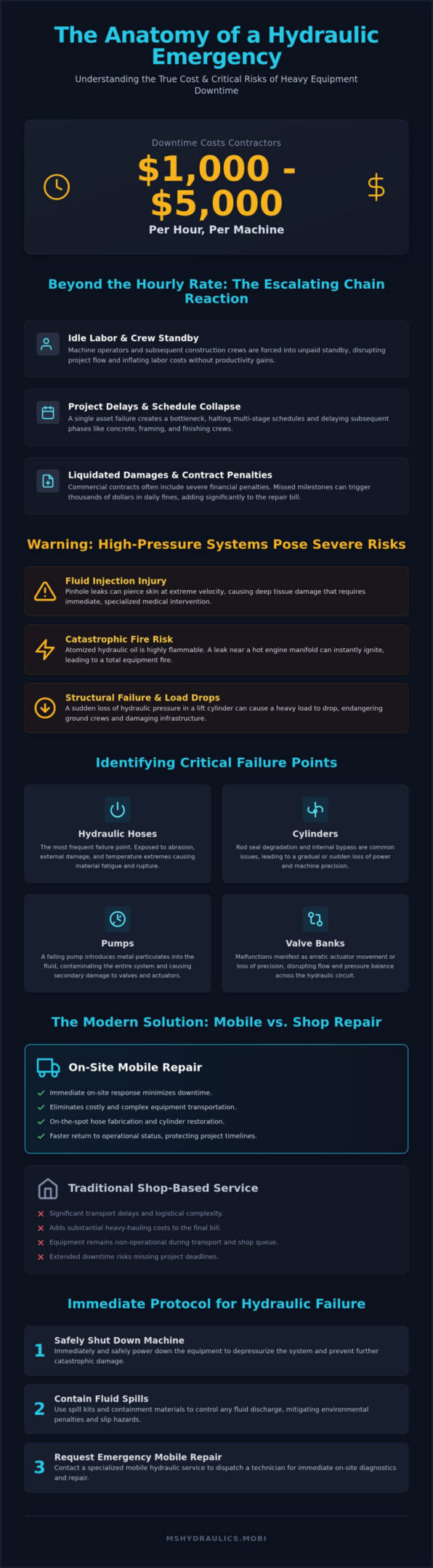
Downtime for a single piece of heavy equipment can cost a contractor between $1,000 and $5,000 per hour in lost productivity. When a high-pressure seal fails or a line ruptures on a drill rig, the financial impact accumulates every minute the system remains non-operational. For operators in North Texas, securing immediate emergency hydraulic repair Cleburne is the primary method to mitigate these compounding losses and prevent the safety risks associated with high-pressure fluid discharge.
You’re likely aware that transporting heavy machinery to a fixed facility is often logistically complex and adds significant expense to the repair process. It’s a challenge that requires a more efficient, site-based approach to maintenance and system restoration. This article provides a technical overview of how to handle catastrophic hydraulic failures using mobile diagnostic strategies and precision repair techniques that prioritize performance.
We’ll examine the mechanical requirements for on-site hose fabrication, the technical standards for cylinder restoration, and how mobile units restore system integrity. You’ll learn how to minimize equipment transport costs while ensuring your machinery meets operational specifications as quickly as possible. This guide focuses on the engineering expertise needed to return your assets to the field without compromising on quality.
Key Takeaways
- Calculate the true cost of equipment downtime and learn why it’s critical to prevent secondary damage to hydraulic components.
- Recognize the specific mechanical indicators of impending failure, including rod seal degradation and internal cylinder bypass.
- Analyze the logistical benefits of emergency hydraulic repair Cleburne, focusing on on-site hose fabrication that eliminates the need for heavy equipment hauling.
- Master the essential protocols for safe machine shutdown and fluid containment to mitigate safety risks and environmental penalties.
- Evaluate the technical advantages of mobile restoration for maintaining the operational life of excavators, skid steers, and drill rigs.
The Financial and Operational Impact of Hydraulic Failure
The operational continuity of hydraulic machinery is a fundamental requirement for any industrial project in North Texas. When a primary asset like an excavator or a drill rig fails, the immediate halt in production creates a fiscal deficit that extends beyond simple repair costs. Industry data indicates that downtime for a single piece of heavy equipment can cost a contractor between $1,000 and $5,000 per hour in lost productivity. In the high-stakes environment of Cleburne’s construction sector, these figures represent a direct threat to project solvency.
Ignoring minor leaks or pressure drops often leads to secondary damage. A compromised pump can introduce metal particulates into the system, which then contaminate valves and actuators. This escalation turns a simple seal replacement into a full system flush and component rebuild. Prompt emergency hydraulic repair Cleburne is not merely a convenience; it’s a strategic intervention to preserve the mechanical integrity of the entire fleet. Maintaining hydraulic integrity is the only way to adhere to aggressive Cleburne construction schedules and avoid the environmental penalties associated with high-pressure fluid spills.
The Hidden Costs of Equipment Downtime
The most visible cost is the idle labor of the machine operator, but the ripple effect is far more damaging to the bottom line. Large-scale projects in Johnson County often operate on multi-stage schedules. If a drill rig fails during the foundation phase, the subsequent concrete and framing crews are forced into unpaid standby or reassignment. Commercial construction contracts frequently include liquidated damages clauses. These penalties trigger when specific milestones are missed, adding thousands of dollars in daily fines to the existing repair bill. Efficient on-site diagnostics are required to stop these costs from mounting.
Safety Risks of High-Pressure Hydraulic Systems
High-pressure fluid release presents severe physical hazards to personnel on the job site. Fluid injection injuries occur when a pinhole leak pierces the skin at high velocity. These injuries are deceptive; they often appear as minor punctures but cause deep tissue necrosis that requires immediate specialized medical intervention. There is no room for error when managing high-pressure systems.
System failure also introduces fire risks. When hydraulic oil is atomized under pressure, it becomes highly flammable. A leak near a hot engine manifold can lead to a catastrophic equipment fire. Additionally, structural risks are a constant concern. A sudden loss of pressure in a lift cylinder can cause a heavy load to drop unexpectedly, endangering ground crews and damaging surrounding infrastructure. Rigorous maintenance and professional system restoration are the only reliable ways to manage these significant liabilities.
Identifying Critical Failure Points in Heavy Equipment
Hydraulic systems function under extreme pressure, making component fatigue an inevitable reality for heavy machinery. According to established standards in Hydraulic Failure Analysis, identifying the precise mode of failure is essential for preventing recurring downtime. While many operators focus on total system breakdowns, the most significant losses often stem from small, overlooked deficiencies in hoses, cylinders, or pumps. In many cases, a machine requiring emergency hydraulic repair Cleburne is suffering from a ruptured line that was preceded by visible “weeping” at the fittings.
Valve bank malfunctions represent another critical failure point, though they are often more subtle than a burst hose. These issues manifest as a loss of machine precision or erratic movement in the actuators. When a valve fails to shift correctly, it disrupts the flow and pressure balance of the entire circuit, potentially leading to overheating or pump cavitation. Maintaining a high level of system awareness allows operators to intervene before a minor leak escalates into a catastrophic failure.
Hydraulic Hose Wear and External Damage
Hydraulic hoses are the most frequent point of failure because they are the most exposed elements of the hydraulic circuit. In North Texas, the extreme temperature swings cause rubber compounds to expand and contract, which eventually leads to cover cracking and brittleness. Abrasion is the primary external threat; if hoses aren’t routed with precision, constant vibration rubs the outer jacket against steel edges. Once the wire reinforcement is exposed to the elements, corrosion accelerates, significantly reducing the burst pressure of the assembly. Identifying these abrasion patterns early is the best way to avoid an unplanned shutdown.
Cylinder and Pump Performance Issues
Internal cylinder bypass occurs when fluid leaks past the piston seal, causing the load to drift or “creep” during operation. This is often caused by rod seal degradation or a bent cylinder rod, which prevents the seal from maintaining a uniform contact surface. Pumps often signal impending failure through distinct audible cues. A high-pitched whining sound usually indicates cavitation, a condition where air bubbles collapse violently within the fluid, while a growling sound points to mechanical wear in the internal bearings or gears. Utilizing professional On-Site Diagnostic Services is the most efficient method for isolating these mechanical issues without the logistical burden of hauling equipment to a shop. If your machinery displays these symptoms, consulting an expert technician can help you verify system pressures and restore operational efficiency before a total component seizure occurs.
Mobile Repair vs. Shop-Based Service: A Comparative Analysis
Choosing between a mobile unit and a traditional shop requires a rigorous assessment of logistical variables and mechanical requirements. For many contractors in Johnson County, the traditional model of transporting a 40-ton excavator to a fixed facility is prohibitively expensive. The hauling fees alone, combined with the administrative burden of securing oversized load permits, can exceed the actual cost of the mechanical repair. This is where emergency hydraulic repair Cleburne becomes a strategic operational advantage. By deploying a mobile workshop directly to the point of failure, operators eliminate the transit time that typically paralyzes a project.
Mobile solutions effectively resolve the “two-trip” inefficiency. In a shop-based scenario, a technician must often travel to the site to measure a failed hose, return to the facility for fabrication, and then travel back for installation. A properly equipped mobile unit carries the necessary crimping technology and bulk hose inventory to manufacture custom assemblies on-site. However, certain complex procedures, such as a heavy equipment cylinder rebuild, may require a controlled environment. While field repairs are suitable for many scenarios, shop settings provide the contamination control and specialized machining tools necessary for restoring high-tolerance hydraulic components to OEM specifications.
The Logistics of On-Site Restoration
The primary metric for evaluating repair success is the time to restoration. Mobile repairs typically offer a significantly faster turnaround by bypassing the scheduling queues common in high-volume brick-and-mortar shops. A critical advantage of field service is the ability to perform real-world testing under actual load conditions. Once a repair is completed, the technician can observe the system’s performance as the machine engages in its specific work cycle. This immediate feedback loop ensures that the repair holds under pressure and prevents the need for follow-up calls. Professional mobile diagnostics and emergency hydraulic repair Cleburne ensure that the machine returns to service with minimal delay by identifying the specific point of failure rather than employing a trial-and-error approach to system maintenance.
Emergency Protocol: Steps to Take During a Hydraulic Failure
When a hydraulic component fails, the operator’s first priority is neutralizing the stored energy within the system. High-pressure leaks are active safety hazards that require immediate intervention to prevent fluid injection injuries or fire. Securing the perimeter prevents unauthorized access to pressurized lines, which often remain dangerous even after the engine is deactivated. Properly executing these steps before the arrival of emergency hydraulic repair Cleburne specialists can significantly reduce the total time required for system restoration. Documenting the failure with high-resolution photos of the rupture point and noting specific symptoms before shutdown provides the technician with essential diagnostic data.
Accurate documentation should include the machine’s hour meter reading and the specific function being performed at the time of failure. This data allows the repair team to determine if the failure resulted from long-term component fatigue or a sudden pressure spike within a specific circuit. By providing this information upfront, you enable a more precise diagnostic process that targets the root cause rather than just the visible symptoms.
Pressure Relief and Machine Stabilization
Operators must follow a disciplined shutdown sequence to ensure the equipment is safe for inspection. First, lower all implements, such as buckets, blades, or booms, to the ground to eliminate gravitational potential energy. This prevents accidental drops during the diagnostic process. Once the engine is off, cycle the control valves through all positions to bleed off residual pressure trapped in the lines and accumulators. This “zero-energy state” is a mandatory prerequisite for any physical inspection. Finally, implement lockout procedures to ensure the machine cannot be restarted while technicians are analyzing the failure points.
Containment and Environmental Protection
Texas environmental regulations mandate the containment of industrial fluid spills to prevent groundwater contamination and soil degradation. Use on-site spill kits, including absorbent socks and pads, to create a perimeter around the leak. This is especially critical on job sites near Johnson County storm drains or local waterways. Identifying the specific fluid type, such as biodegradable synthetic or standard mineral oil, helps the repair crew prepare the correct replacement stock. Effective containment minimizes environmental liability and reduces the total cost of site remediation. If you encounter a system failure, follow these safety steps and contact a professional for mobile hydraulic repair to restore your equipment’s performance and ensure full compliance with safety standards.
Professional Hydraulic Restoration in Cleburne and North Texas
Ms. Hydraulics LLC operates as a specialized provider of precision engineering solutions for the industrial sectors of Johnson County. Our technical framework is designed to address the specific mechanical requirements of heavy duty fleets through advanced mobile hydraulic repair. This service model extends across a comprehensive geographic radius, ensuring that assets from Cleburne to Fort Worth and Waxahachie receive expert intervention at the point of failure. By eliminating the logistical complexities of machine transport, we prioritize the restoration of operational capacity.
Long term reliability is achieved through a structured approach to Heavy Equipment Maintenance. Our technicians don’t just replace components; they analyze system performance to identify underlying mechanical stressors. This methodical focus on system health is essential for preventing the recurring failures that lead to emergency hydraulic repair Cleburne calls. We focus on the physical and mechanical parameters that define machine excellence.
Expertise in Diverse Industrial Sectors
The mechanical demands of North Texas vary significantly across different industries. We support Cleburne’s construction, agricultural, and industrial fleets with specialized expertise in complex hydraulic circuits. Drill rigs, in particular, require high precision diagnostics due to the extreme pressures and torque levels involved in their operation. Our mobile units are equipped with the specialized tooling necessary to analyze these systems in the field. Beyond reactive repairs, we develop custom maintenance plans tailored to the specific work cycles of your equipment. This proactive strategy is the most effective method for managing the lifecycle of hydraulic pumps, motors, and actuators. For fleet managers who also oversee projects in Southeast Texas, commercial diesel delivery Houston offers the same level of on-site reliability to keep your machinery powered and productive.
The Ms. Hydraulics Commitment to Integrity
Integrity in hydraulic service is defined by technical transparency and adherence to rigorous industry benchmarks. We maintain strict compliance with SAE and international hydraulic standards to ensure every repair meets or exceeds original equipment manufacturer specifications. Our technicians provide objective assessments regarding repair vs. replacement options, focusing on the most cost effective path to long term performance rather than short term fixes. This disciplined approach eliminates the ambiguity often associated with field diagnostics.
A data driven approach ensures that stakeholders can make informed decisions about their mechanical assets. When a catastrophic failure occurs, the speed and accuracy of the response determine the total project impact. You can contact our team for immediate field assistance and professional system restoration. We remain focused on delivering the technical excellence required to keep North Texas industries moving forward with minimal disruption.
Securing Operational Continuity in North Texas
Managing hydraulic failure requires a disciplined transition from emergency shutdown to technical restoration. We’ve analyzed how on-site diagnostics and custom hose fabrication eliminate the financial burden of equipment hauling. By addressing the specific mechanical stressors of your machinery, you prevent the secondary damage that often follows a temporary fix. It’s a strategic approach that prioritizes long-term reliability over short-term patches.
Maintaining the mechanical integrity of your fleet is a continuous process. For operators requiring emergency hydraulic repair Cleburne, immediate access to specialized field expertise is the most reliable method for meeting project deadlines. We provide comprehensive support across Cleburne, Burleson, and surrounding areas; our mobile units ensure your assets meet operational specifications under actual load conditions. This precision ensures that your equipment returns to service without the risk of recurring failure.
Don’t let a failed seal or ruptured line compromise your job site’s safety or profitability. You can Request Emergency Mobile Hydraulic Repair Now to restore your system’s performance with technical precision. Our team is ready to help you return to work with confidence.
Frequently Asked Questions
How quickly can a mobile hydraulic technician arrive in Cleburne?
Arrival times for a mobile technician vary based on the specific location of the job site and current technician proximity within North Texas. We prioritize emergency calls involving high-pressure leaks or complete system failures to mitigate safety risks and downtime. Our dispatch team coordinates the most efficient route to Cleburne and surrounding areas to ensure a prompt arrival for on-site diagnostics.
Can you make a custom hydraulic hose on my job site?
Yes, our mobile units are equipped with specialized crimping technology and a comprehensive inventory of bulk hoses and fittings for on-site hydraulic hose fabrication. This capability allows us to manufacture custom assemblies that meet SAE standards directly at the machine. It’s an efficient process that eliminates the need for multiple trips and reduces the downtime associated with traditional shop-based fabrication.
What information should I have ready when calling for emergency repair?
Please provide the machine make and model, the specific hydraulic function that failed, and any visible symptoms like fluid leaks or unusual noises. Identifying the hose size, pressure rating, and fitting types can also accelerate the preparation process. Providing high-resolution photos of the failure point helps our technicians arrive with the precise components required for an immediate and accurate system restoration.
Do you repair hydraulic cylinders on-site or in a shop?
On-site diagnostics allow us to address many cylinder issues, such as external leaks or seal replacements, directly in the field. However, a full hydraulic cylinder rebuild involving rod straightening or barrel honing typically requires the contamination control and specialized machinery of a shop environment. We evaluate each component’s condition to determine the most reliable method for restoring it to OEM performance standards.
What types of heavy equipment do you service in North Texas?
We provide emergency hydraulic repair Cleburne for a wide range of industrial machinery, including excavators, skid steers, and drill rigs. Our expertise extends to complex hydraulic circuits found in construction, agricultural, and industrial fleets. We focus on restoring the physical and mechanical parameters of high-pressure systems to ensure they meet original equipment manufacturer specifications for performance and safety.
Is it safe to temporarily patch a leaking hydraulic hose?
No, it’s never safe to patch a high-pressure hydraulic hose using tape, clamps, or sleeves. Hydraulic systems operate at pressures that can easily exceed 3,000 PSI; a temporary patch cannot contain this force and risks a catastrophic rupture or fluid injection injury. The only safe solution for a compromised line is a professional replacement that meets the system’s specific technical requirements.
What are the signs that my hydraulic pump is about to fail?
Common indicators of impending pump failure include high-pitched whining sounds, which signal cavitation, or growling noises that point to mechanical wear in the internal bearings. You may also notice a significant drop in cycle times or increased operating temperatures. If these symptoms occur, immediate on-site diagnostics are necessary to prevent a total system seizure and more extensive component damage.
Do you provide 24/7 emergency hydraulic services in Johnson County?
Critical hydraulic failures often occur outside of standard business hours, requiring a responsive technical partner. When seeking emergency hydraulic repair Cleburne, it’s essential to verify the current dispatch availability for your specific location in Johnson County. We focus on providing flexible support to meet the needs of industrial fleets, ensuring that technicians are available to address catastrophic system failures as they arise.