Skid Steer Hydraulic Cylinder Repair: The 2026 Guide to Rebuilds and Restoration
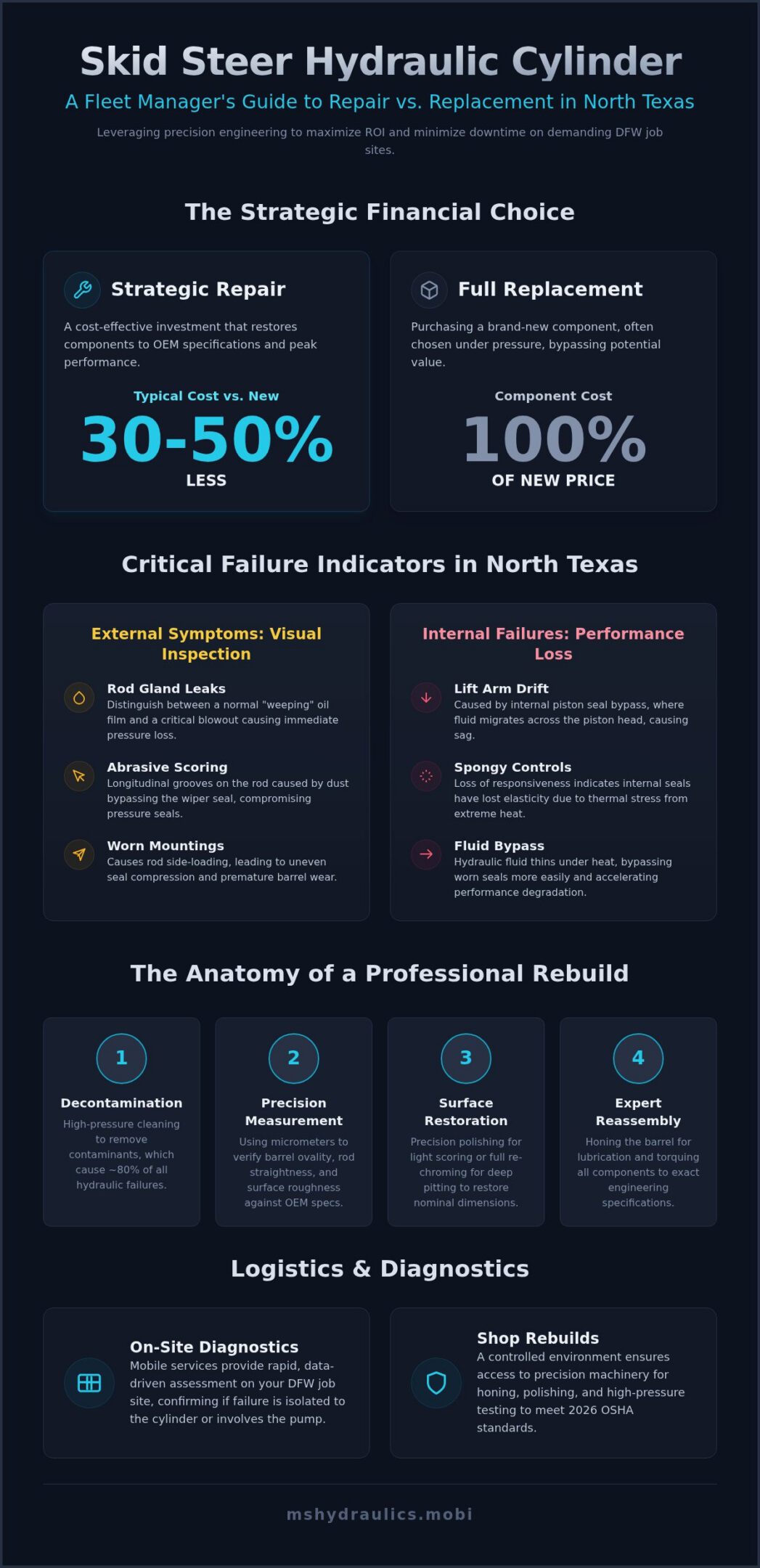
Purchasing a brand-new component the moment a seal fails is often an unnecessary expenditure that bypasses the inherent value of precision engineering. Industry data confirms that a professional rebuild typically costs 30% to 50% less than a full replacement, provided the internal components remain within salvageable tolerances. When a machine sits idle on a North Texas job site, the pressure to resume operations often leads to hasty decisions. This guide focuses on high-precision skid steer hydraulic cylinder repair as a strategic investment rather than a temporary fix.
You likely understand that the unforgiving combination of North Texas dust and extreme heat is the primary catalyst for premature seal degradation. It’s frustrating to manage the logistics of transporting heavy machinery when a simple mobile diagnostic could identify the failure point on-site. This 2026 guide provides the technical framework to diagnose, rebuild, and restore your cylinders to peak lift and tilt capacity. We’ll examine everything from rod polishing specifications to the latest 2026 OSHA safety standards, ensuring your equipment maintains its operational integrity without the cost of a total fleet overhaul.
Key Takeaways
- Identify critical failure indicators like rod gland leaks and abrasive scoring to prevent unplanned downtime on DFW job sites.
- Apply a rigorous cost-benefit analysis to determine when skid steer hydraulic cylinder repair provides superior ROI compared to full component replacement.
- Understand the technical parameters of a professional restoration, including barrel ovality measurements and precision rod polishing.
- Optimize operational efficiency by utilizing mobile diagnostic services for rapid on-site assessments in Cleburne and the DFW Metroplex.
Common Signs of Skid Steer Hydraulic Cylinder Failure in North Texas
The North Texas climate presents specific challenges for heavy equipment maintenance. High ambient temperatures exceeding 100°F combined with abrasive caliche dust create a high-friction environment that degrades mechanical components rapidly. Early detection of these environmental impacts is critical for a successful skid steer hydraulic cylinder repair. Neglecting minor symptoms leads to catastrophic failure, often at the most inconvenient phase of a project.
External Symptoms: Visual Inspection
The rod is the most vulnerable component of the Hydraulic cylinder. Microscopic scoring occurs when fine particulates bypass the wiper seal, acting as an abrasive medium against the rod’s surface. These longitudinal grooves eventually compromise the primary pressure seals. Operators must distinguish between a “weeping” seal, which deposits a thin oil film, and a critical blowout that causes immediate loss of lift capacity. Structural integrity also requires monitoring; worn mounting eyes or bushings create side-loading. This misalignment forces the rod to travel at an angle, resulting in uneven seal compression and premature barrel wear.
Internal Failure: Performance Degradation
Internal failures manifest through performance loss rather than visible fluid. When lift arms drift under load, the primary cause is usually piston seal bypass. This happens when fluid migrates across the piston head inside the barrel, equalizing pressure and causing the bucket to sag. If hydraulic controls feel “spongy” or lack the usual responsiveness, internal seals have likely lost their elasticity due to thermal stress. Extreme North Texas heat hardens these elastomers, making them brittle and prone to cracking. Thermal degradation doesn’t just affect the seals; it also impacts the hydraulic fluid’s viscosity. As the oil thins under heat, it bypasses worn seals even more easily, accelerating the drift.
Utilizing On-Site Diagnostic Services provides the data needed to verify system PSI. This diagnostic step confirms if the failure is isolated to the cylinder or if the hydraulic pump is underperforming, ensuring the repair strategy is based on technical facts rather than guesswork. Once the seal material reaches its thermal limit, it loses its “memory” and fails to return to its original shape, creating a permanent leak path that requires a professional intervention to restore.
The Technical Anatomy of a Professional Cylinder Rebuild
A professional skid steer hydraulic cylinder repair begins with a methodical disassembly and decontamination phase. Technical data from the National Fluid Power Association standards indicates that fluid contamination accounts for approximately 80% of hydraulic system failures. Consequently, high-pressure component cleaning is a prerequisite for any accurate assessment. Once cleaned, technicians measure the cylinder barrel for ovality using internal micrometers. A barrel that has lost its perfectly cylindrical geometry will inevitably cause uneven seal wear and internal bypass. Honing the interior surface is a critical step to restore the cross-hatch pattern. This texture is necessary to retain the thin oil film that provides essential seal lubrication during high-velocity cycles.
Inspection and Measurement Standards
Technical verification requires precise instrumentation. Technicians utilize outside micrometers to verify rod straightness and diameter against OEM specifications. Even a minor deviation in rod straightness leads to side-loading and accelerated gland wear. We inspect the piston and gland for galling or fatigue cracks under high magnification to identify stress points. The barrel surface must meet specific Roughness Average (RA) parameters. A surface that is too smooth cannot hold sufficient oil, while a surface that is too rough will shred new seals within a few hours of operation. This level of detail ensures that every hydraulic cylinder rebuild meets the rigorous demands of the 2026 project season.
Surface Restoration and Assembly
The restoration path depends on the depth of surface damage identified during inspection. Light imperfections often require only precision rod polishing to restore a mirror finish. However, deep pitting or scoring requires a full re-chrome to return the rod to its nominal dimension. During reassembly, the piston nut must be torqued to exact engineering specifications. Incorrect torque leads to catastrophic mechanical failure under high-pressure cycles. Every completed restoration undergoes a final pressure test on a dedicated bench to verify seal integrity at peak operating PSI before it returns to the field. Matching seal materials to specific industrial duty cycles ensures the component survives the abrasive conditions common in North Texas.
Rebuild vs. Replace: A Decision Framework for Fleet Managers
Fleet managers in 2026 must balance fiscal responsibility with high-uptime requirements. The decision to initiate a skid steer hydraulic cylinder repair versus purchasing a new unit depends on a lifecycle ROI analysis. A professional rebuild typically yields 40% to 60% savings compared to the procurement of a new OEM component. Beyond the immediate capital expenditure, lead time considerations often favor restoration. While global supply chains frequently experience delays for specialized heavy equipment parts, a local technical rebuild can return a machine to service in a fraction of the time. This approach also preserves the original “made-to-fit” components, ensuring that mounting geometries and hydraulic tolerances remain consistent with the machine’s factory specifications.
Economic Factors for Skid Steer Maintenance
Calculating the true cost of a failure requires looking beyond the repair invoice to the cost of unplanned downtime. When a machine is sidelined, project milestones slip and labor costs accumulate without production. Implementing comprehensive Heavy Equipment Maintenance protocols extends the service life of every cylinder in the fleet. Utilizing high-performance aftermarket seal kits, specifically those engineered with advanced polymers like Viton, often provides superior thermal resistance compared to standard factory seals. This technical upgrade ensures that the restored component can withstand the 100°F+ temperatures typical of North Texas summers without losing seal elasticity.
When Replacement is the Only Option
Structural integrity is the primary determinant of whether a component is “beyond economical repair” (BER). Technicians identify critical failures that necessitate a full replacement, such as “ballooned” barrels. This condition occurs when extreme pressure spikes cause the barrel wall to expand permanently, preventing the piston from maintaining a consistent seal. Similarly, cracked barrels or rods with deep structural fractures cannot be safely remediated. Severe metal fatigue in the internal ports also signals the end of a cylinder’s service life. While the market offers various low-quality “will-fit” replacement cylinders, these units often utilize inferior metallurgy and simplified seal designs. Choosing a high-integrity rebuild over a cheap replacement ensures the machine maintains its rated lift and tilt capacity under heavy industrial loads. If the barrel and rod remain within technical tolerances, restoration is almost always the more disciplined financial choice.
Logistics of Repair: On-Site Diagnostics vs. Shop Rebuilds
Logistical management for heavy equipment in the DFW Metroplex requires a strategic approach to minimize transport costs. Moving a non-operational skid steer from Mansfield or Arlington to a repair facility often incurs high haulage fees and significant labor hours. A professional skid steer hydraulic cylinder repair should begin with a mobility-first mindset to determine if the component requires bench work or if the failure is systemic. This distinction is critical for maintaining project timelines in high-demand sectors like construction and drilling.
The Mobile Advantage
Initial diagnostic assessments performed on-site eliminate the guesswork associated with hydraulic failures. Our Mobile Hydraulic Repair technicians identify systemic issues that often masquerade as cylinder failures, such as pump cavitation or valve body wear. Field repairs are highly effective for external components like hydraulic hose fabrication and minor seal replacements. In locations like Alvarado and Granbury, on-site diagnostics allow construction projects to maintain momentum by avoiding the multi-day delay of equipment transport. This mobile capability ensures that only the components requiring precision machining are moved to the shop, reducing the overall logistical burden on the fleet manager.
Precision Shop Restoration
Complex restoration procedures require a controlled environment that field conditions cannot provide. Honing a barrel to restore the Roughness Average (RA) specifications or performing a full re-chrome of a pitted rod requires specialized machinery. Shop-based skid steer hydraulic cylinder repair utilizes a dedicated clean-room environment for seal installation to prevent the North Texas dust from contaminating the internal assembly. Pressure testing is a mandatory shop protocol; technicians utilize high-pressure benches to verify seal integrity under peak operating loads before re-installation. This rigorous verification process ensures the component meets OEM performance standards upon its return to Mansfield or Cleburne job sites.
Every cylinder restoration is a technical investment in your fleet’s longevity. If your equipment is showing signs of performance degradation, request a mobile diagnostic assessment to identify the most efficient repair path.
Ms. Hydraulics: Expert Cylinder Restoration in North Texas
Ms. Hydraulics LLC operates as a disciplined industrial partner for the construction and drilling sectors throughout the DFW Metroplex. Our methodology for skid steer hydraulic cylinder repair prioritizes engineering integrity over temporary remediation. By adhering to rigorous Heavy Equipment Cylinder Rebuild Texas standards, we ensure that every component meets the physical and mechanical parameters required for high-uptime operations. Our technical focus remains on precision machining and rod polishing, serving as a reliable resource for major international players and local contractors alike.
Local Expertise in Cleburne and DFW
Our operational footprint covers Cleburne, Alvarado, Waxahachie, Cedar Hill, and Crowley. We understand the specific mechanical stresses imposed by North Texas clay and rock. These geological conditions increase the lateral loading on lift arms and tilt cylinders, leading to accelerated bushing wear and seal failure. Since 2021, we have built long-term partnerships through a data-driven approach to repair. This experience allows our technicians to anticipate failure patterns common to the region, providing a level of reliability that generic service providers cannot match. Our presence in the DFW area ensures a rapid response for job sites requiring technical verification of hydraulic integrity.
Get Your Equipment Back to Work
Minimizing project delays requires a structured approach to technical assessments. Every service call begins with an objective evaluation of the component’s condition, followed by a project-based quote that reflects the necessary engineering steps. We integrate cylinder restoration with comprehensive Hydraulic Parts management to ensure that peripheral components, such as seals and fasteners, meet current 2026 industrial specifications. This holistic view of the hydraulic system prevents secondary failures and ensures the longevity of the repair. We don’t just replace seals; we restore the component’s original design intent through precise mechanical verification.
Professional skid steer hydraulic cylinder repair is a critical component of fleet maintenance in 2026. If your machinery is exhibiting signs of performance degradation or fluid loss, a technical intervention is necessary to prevent structural damage. Contact Ms. Hydraulics to schedule a mobile diagnostic assessment or to arrange a precision shop rebuild. Our commitment to excellence ensures your equipment returns to the field with full operational capacity and verified reliability.
Securing Operational Integrity for 2026 Project Milestones
The structural integrity of your fleet depends on the precise verification of mechanical tolerances and seal performance. This guide has detailed the technical parameters necessary for a successful skid steer hydraulic cylinder repair, from barrel ovality measurements to the selection of high-performance elastomers. It’s a strategic investment that secures 40% to 60% ROI compared to component replacement. By identifying symptoms early and leveraging mobile diagnostic assessments, fleet managers bypass the high logistical costs of equipment transport.
Ms. Hydraulics remains a dedicated partner for the industrial sectors of Cleburne and the DFW Metroplex. Since our founding in 2021, we have focused on precision cylinder restoration and resealing to ensure your machinery withstands the rigors of the North Texas environment. Our expert technicians provide the technical discipline required to restore your equipment to OEM specifications.
Schedule On-Site Diagnostics or a Cylinder Rebuild with Ms. Hydraulics to minimize unplanned downtime and restore full lift capacity to your fleet. Your equipment’s reliability is our primary objective.
Frequently Asked Questions
How much does it typically cost to rebuild a skid steer hydraulic cylinder?
Total costs for restoration depend on the cylinder’s bore size and the extent of internal damage. Industry data indicates that a professional rebuild typically yields 40% to 60% savings compared to purchasing a new OEM unit. This estimate includes labor for disassembly, cleaning, and seal installation. We provide technical project-based quotes after a physical assessment to ensure all machining and polishing requirements are accurately accounted for.
Can a hydraulic cylinder be repaired on-site at a construction project?
On-site repairs are feasible for systemic issues like hose failures or basic external seal replacements. However, a comprehensive skid steer hydraulic cylinder repair involving barrel honing or precision rod polishing requires a controlled shop environment. Mobile diagnostic technicians can assess the failure in Cleburne or Arlington to determine if the unit can be serviced in the field or if bench testing is mandatory for safety.
How long does a professional cylinder rebuild usually take?
Turnaround times depend on part availability and the complexity of the damage. A standard reseal and pressure test can often be completed within 24 to 48 hours if seal kits are in stock. If the rod requires re-chroming or the barrel needs significant machining, the timeline may extend to several business days. Minimizing downtime is our priority for DFW job sites and drilling operations.
What are the most common causes of hydraulic cylinder seal failure?
Fluid contamination and thermal degradation are the primary catalysts for failure in North Texas. Abrasive particulates like caliche dust bypass the wiper seal and score the internal surfaces. Additionally, extreme heat exceeding 100°F causes elastomer seals to lose their elasticity and become brittle. This leads to internal bypass and a measurable loss of lift capacity during high-pressure cycles on the job site.
Is it better to rebuild an old cylinder or buy a new replacement?
Restoration is generally the superior choice if the barrel and rod remain within technical tolerances. A professional rebuild typically costs significantly less than a new OEM unit while restoring original performance levels. We recommend replacement only when the barrel is “ballooned” or the rod has suffered structural metal fatigue. Maintaining the original made-to-fit components ensures consistent performance without the risks associated with low-quality aftermarket cylinders.
How do I know if my hydraulic cylinder rod needs to be re-chromed?
Visual indicators such as deep longitudinal scoring, pitting, or rust on the rod surface suggest the need for re-chroming. If these imperfections are deep enough to catch a fingernail, they’ll shred new seals almost immediately. Technical verification using micrometers identifies if the rod has lost its nominal dimension. Precision rod polishing can remediate minor surface issues, but deep damage requires a full industrial chrome application to restore integrity.
What information do I need to provide for a cylinder repair quote?
Accurate project-based quotes require the equipment make and model, the specific cylinder function, and any visible part numbers. Describing the symptoms, such as visible leaks or lift drift, helps technicians estimate the labor requirements. For clients in Alvarado or Mansfield, providing the bore and rod diameters allows for faster identification of the necessary seal kits and machining parameters. This data ensures we provide a precise technical assessment.
Do you offer mobile hydraulic repair in the DFW area?
Our mobile hydraulic repair services cover the entire DFW Metroplex, including Waxahachie and Grandbury. We prioritize rapid response for job sites experiencing unplanned downtime. Technicians are equipped to perform on-site diagnostics and hose fabrication to address critical failures. For complex cylinder issues, we coordinate the logistics to move the component to our Cleburne facility for restoration. This mobile capability ensures that only the necessary components leave the field.