Preventative Maintenance for Construction Equipment in Texas: A 2026 Guide
In North Texas, relying solely on factory-recommended service intervals is often a direct path toward catastrophic hydraulic failure. The intersection of extreme thermal loads and abrasive particulate matter requires a more rigorous approach than standard manufacturer guidelines suggest. Implementing a specialized program for preventative maintenance for construction equipment Texas projects demand is no longer optional for firms targeting high operational availability. You’ve likely seen how the relentless summer heat thins hydraulic fluid until it loses its lubricating properties, leading to accelerated component wear and unexpected system shutdowns during your most critical project phases.
This guide provides a technical framework to protect your fleet from these regional environmental stressors while significantly reducing the risk of downtime. We will analyze the specific mechanics of heat-induced fluid degradation and the impact of North Texas grit on cylinder seal integrity. By adopting these expert hydraulic-focused protocols, you’ll transition from reactive repairs to a disciplined maintenance model that ensures an extended machine lifespan and a predictable operational budget for 2026.
Key Takeaways
- Understand how high ambient temperatures in North Texas accelerate hydraulic fluid oxidation and reduce lubricating efficiency.
- Identify specific visual markers of impending hose failure and cylinder seal degradation before they result in project delays.
- Compare the technical and logistical efficiency of mobile diagnostic services against traditional shop-based repair models.
- Apply a structured 2026 maintenance checklist focused on contamination control for excavators and other heavy machinery.
- Learn how consistent preventative maintenance for construction equipment Texas fleets ensures predictable repair budgets and maximizes operational availability.
Understanding Preventative Maintenance for Construction Equipment in Texas
A rigorous Preventative Maintenance program is a proactive engineering strategy designed to preserve system integrity and extend the operational life of heavy machinery. It isn’t merely a checklist of chores; it’s a disciplined approach to asset management. For fleet managers, implementing preventative maintenance for construction equipment Texas projects require means moving beyond simple oil changes. It involves a systematic analysis of mechanical wear and fluid health to prevent the catastrophic failure of expensive hydraulic pumps and motors.
The “Texas Factor” introduces unique variables that standard maintenance schedules often ignore. When ambient temperatures exceed 100°F, hydraulic fluid oxidation accelerates significantly. This chemical reaction creates sludge and varnish, which can clog small orifices in valves and lead to erratic machine behavior. Transitioning from scheduled maintenance, which relies solely on hour meters, to condition-based monitoring allows operators to detect these chemical shifts before they cause physical damage. This precision is vital for maintaining the tight profit margins typical of modern nonresidential construction, which saw input prices rise by 7.4% as of June 2026.
The High Cost of Equipment Downtime in North Texas
Downtime is an expensive logistical failure. When an excavator or drill rig sits idle on a DFW job site, the hourly loss extends beyond the operator’s wages to include project delays and potential contractual penalties. With the annual cost of owning heavy equipment reaching up to $50,000 in 2026, every hour of lost productivity impacts the bottom line. Utilizing On-Site Diagnostic Services provides a critical advantage by identifying hydraulic pressure drops or internal leaks before they force a machine out of service. Proactive detection ensures that minor issues are addressed during scheduled breaks rather than during peak construction windows.
Environmental Challenges: Heat, Dust, and North Texas Soil
The “Blackland Prairie” soil found across much of North Texas presents a specific threat to hydraulic systems. This expansive clay creates fine, abrasive dust that can bypass worn seals and contaminate hydraulic reservoirs. When this grit mixes with hydraulic fluid, it acts as a grinding compound, rapidly wearing down pump vanes and cylinder walls. Frequent filter inspections and fluid analysis are the only reliable defenses against this environmental wear. Thermal degradation in hydraulic systems is the irreversible chemical breakdown of fluid molecules caused by sustained exposure to temperatures exceeding the lubricant’s oxidation threshold. This breakdown reduces viscosity, leading to increased friction and heat, creating a destructive feedback loop that only a structured preventative maintenance for construction equipment Texas plan can break.
The Hydraulic Core: Hoses, Cylinders, and Fluid Analysis
Hydraulic systems function as the lifeblood of modern earthmoving equipment. The continuous circulation of pressurized fluid enables the precise movement of heavy loads, but it also makes the system highly susceptible to environmental contamination. For operators managing preventative maintenance for construction equipment Texas assets, the hydraulic circuit requires more frequent attention than the engine or drivetrain. This is due to the extreme operating pressures and the high thermal loads discussed in the previous section. Adhering to the principles found in Heavy Equipment Maintenance in Cleburne & North Texas: A Technical Guide ensures that these systems remain within their designed performance parameters.
A robust fluid analysis program is a cornerstone of preventative maintenance for construction equipment Texas operations. By measuring particulate counts and chemical composition, technicians can identify early-stage wear in pumps and valves before a total system collapse. In 2026, data-driven maintenance is the standard for high-performance operations, allowing for the early detection of water ingress or fluid oxidation that could otherwise go unnoticed until a failure occurs.
Hydraulic Hose Integrity and Replacement Cycles
Hydraulic hoses are the most vulnerable components in the system. Constant flexing under high pressure, combined with external abrasion from debris, eventually compromises the hose’s structural integrity. When outer covers show signs of fraying or wire reinforcement exposure, the risk of a burst increases significantly. Adhering to OSHA regulations regarding equipment safety is essential to prevent fluid injection injuries, which occur when high-pressure oil pierces the skin. Utilizing Custom Hydraulic Hose Fabrication on-site allows for immediate replacement, ensuring the machine returns to service without the delay of ordering pre-fabricated parts.
Cylinder Health: Seals, Rods, and Rebuilds
A leaking cylinder seal is rarely an isolated problem. It often indicates that the fluid has been contaminated or that the cylinder rod has suffered surface damage. In the humid seasons common to Central Texas, exposed rods can develop pitting and corrosion. These imperfections act like a file, shredding new seals as the rod retracts. Professional Heavy Equipment Cylinder Rebuild in Texas focuses on restoring the rod surface and housing to factory specifications. If your machine is showing signs of drift or external leakage, scheduling a diagnostic check is a prudent step to avoid catastrophic component damage.
Logistics Analysis: Mobile Repair vs. Traditional Shop Maintenance
Deciding where to perform preventative maintenance for construction equipment Texas assets requires a detailed analysis of logistical costs versus technical requirements. While a traditional shop provides a controlled environment for major overhauls, the secondary costs of transporting heavy machinery often outweigh the premium associated with field service. Mobile repair services in Texas typically carry a 7% to 10% premium on hourly labor compared to shop rates. However, when factoring in the elimination of hauling logistics and reduced downtime, on-site service frequently results in a lower total expenditure for routine hydraulic inspections and preventative hose replacements.
Mobile diagnostics significantly reduce the diagnostic downtime often found at large dealers. Instead of a machine sitting in a queue for days just to be inspected, a specialized technician can evaluate the hydraulic system in its actual working environment. This approach allows for the observation of pressure spikes and thermal patterns that only occur during active operation. It ensures that the maintenance plan is based on real-world data rather than theoretical wear charts.
The ROI of On-Site Maintenance Calls
Transporting an excavator or a large drill rig to a central dealer involves more than just fuel costs. Heavy-duty towing fees in North Texas can range between $500 and $1,500 for even short-distance hauls. By opting for Expert Mobile Hydraulic Repair in Cleburne, TX, these transport expenses and the associated logistics of securing permits are eliminated. On-site diagnostics also allow for immediate communication between the operator and the technician. This direct feedback loop helps identify intermittent hydraulic issues that might be difficult to replicate in a shop setting.
Dealer Backlogs vs. Specialized Independent Techs
Large equipment dealers in Texas often face significant service backlogs. In 2026, wait times at these facilities frequently span two to four weeks. For a construction firm, this delay represents a critical loss of operational availability. Specialized hydraulic technicians provide a more agile alternative, focusing exclusively on the hydraulic circuit rather than the entire machine. This specialization ensures faster turnaround times for valve repairs and pump diagnostics. While shop-based maintenance remains necessary for complex machining or rod polishing, most preventative tasks are more efficiently executed at the job site. Building a relationship with a technical partner ensures that your fleet remains active during peak construction seasons.
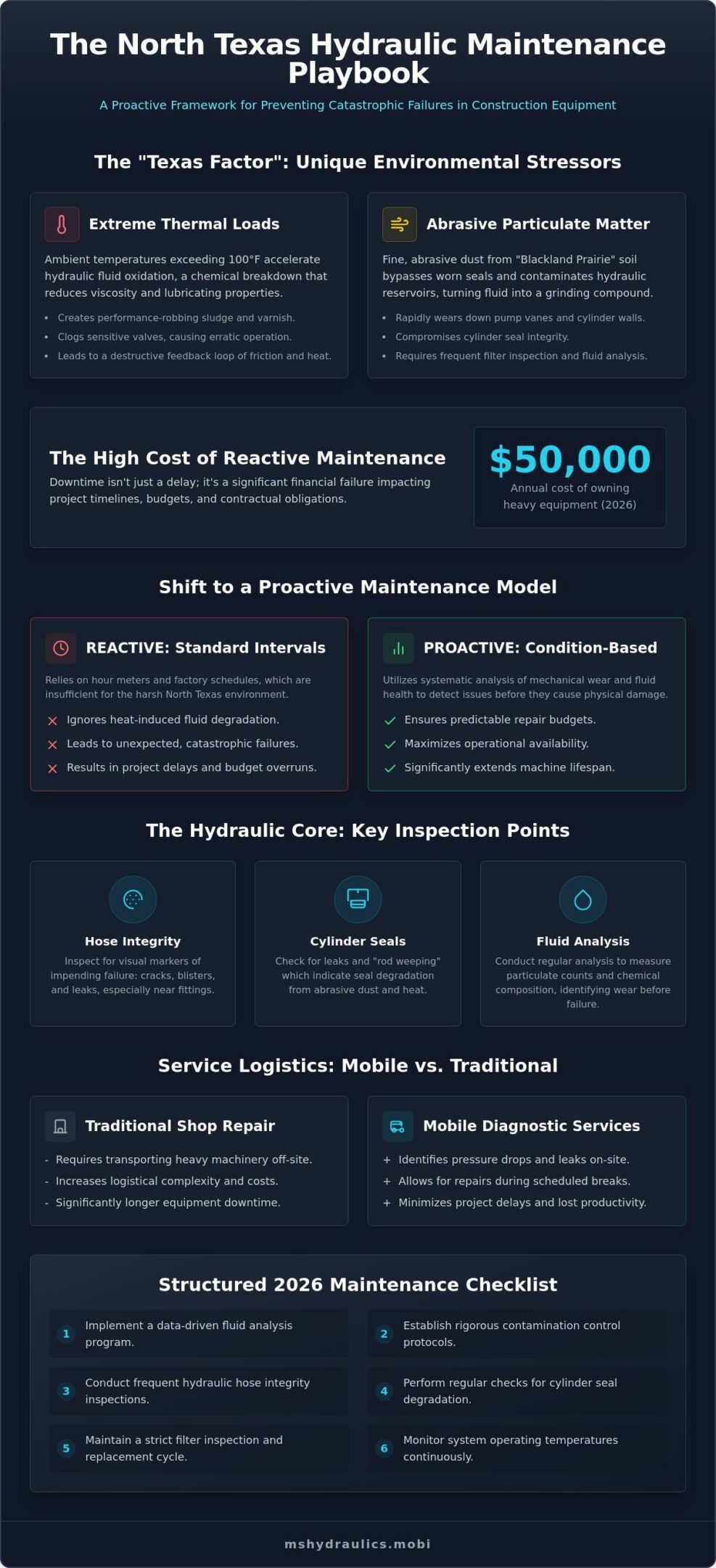
The 2026 Texas Construction Equipment Checklist
Operational reliability in the Texas construction sector requires a transition from reactive repairs to a structured, data-driven inspection protocol. A standardized checklist ensures that every asset, from a compact skid steer to a heavy-duty excavator, operates within its specified engineering parameters. Given the 2026 environmental forecast for North Texas, which includes sustained high-thermal periods and significant particulate movement, these checks are the primary defense against unplanned system failures. Implementing preventative maintenance for construction equipment Texas fleets rely on starts with empowering operators to identify mechanical deviations before they escalate into component meltdowns.
Daily Operator Inspections
The daily walk-around is a critical diagnostic event. Operators must inspect all hydraulic connections for “weeping” fittings. A weeping fitting is a precursor to a high-pressure leak and indicates that a seal or O-ring has reached the end of its functional life. Additionally, hoses should be inspected for swelling or localized heat buildup, which often signals internal structural failure. In the North Texas heat, hydraulic coolers act as the lungs of the machine. These units must be cleared of dust and debris daily. When Texas soil combines with minor oil residue, it creates an insulating layer that prevents efficient heat exchange, leading to the fluid oxidation issues discussed earlier. Listen for unusual pump whining or cavitation sounds during startup, as these are clear indicators of air ingress or suction line restrictions.
Technical Periodic Maintenance (PM) Intervals
Beyond daily visual checks, technical PM intervals focus on the internal health of the hydraulic circuit. Monthly performance testing should include cycle time verification and system pressure checks. If an excavator’s boom lift speed deviates by more than 10% from factory specifications, it typically indicates internal bypass in the pump or control valve. High-friction pivot points require consistent greasing with high-temperature lubricants to displace the abrasive “Blackland Prairie” dust that permeates DFW job sites. For precise replacement specifications and component identification, technicians should reference the Comprehensive Guide to Hydraulic Parts to ensure compatibility with 2026 system standards.
Seasonal adjustments are also mandatory. As Texas transitions from 100°F+ summers to occasional hard freezes, hydraulic fluid viscosity must be monitored. Cold-start procedures in winter months require longer warm-up cycles to prevent pump starvation, while summer operations may necessitate a shift to higher viscosity fluids to maintain film strength. If your fleet hasn’t undergone a professional hydraulic system evaluation this season, contact Ms. Hydraulics LLC today to schedule an on-site diagnostic service and secure your project timeline.
Implementing a Professional Maintenance Plan with Ms. Hydraulics LLC
Establishing a technical partnership is the final step in securing your fleet’s operational availability. Moving away from “emergency only” service calls toward a structured program for preventative maintenance for construction equipment Texas operators utilize creates a predictable cost structure. Ms. Hydraulics LLC develops maintenance protocols based on the specific load profiles of your machinery, whether you’re managing a fleet of excavators or high-torque drill rigs. By integrating these professional standards into your operations, you eliminate the volatility of catastrophic failures and the high interest rates associated with emergency equipment financing in 2026.
Custom Maintenance for Specialized Fleets
Integrity and Technical Excellence in Every Service Call
The Ms. Hydraulics LLC commitment centers on technical precision and minimizing client downtime through on-site diagnostic services. We don’t just replace parts; we analyze the root cause of hydraulic inefficiency to prevent recurring issues. Scheduling your first on-site preventative maintenance for construction equipment Texas assessment is a straightforward process designed to integrate seamlessly with your project timeline. A technician will evaluate your system’s current volumetric efficiency and identify any immediate vulnerabilities in your hydraulic circuit. Protecting your fleet and your project deadlines starts with a single diagnostic call to establish your baseline performance. The systematic preservation of hydraulic system integrity is the most effective method for ensuring long-term mechanical performance and fiscal stability in the Texas industrial sector.
Securing Operational Availability for the 2026 Season
The 2026 construction season in Texas demands a departure from reactive maintenance models. As analyzed throughout this guide, the thermal stresses of the regional climate and the abrasive nature of local soil necessitate a hydraulic-centric approach to equipment care. Prioritizing fluid analysis and proactive seal replacement ensures that your machinery remains within factory performance specifications. By utilizing mobile diagnostic services, you eliminate the logistical burden and high costs of transporting heavy assets to distant dealers.
Adopting a rigorous schedule for preventative maintenance for construction equipment Texas projects require is the most effective strategy for stabilizing repair budgets and extending machine lifespans. Ms. Hydraulics LLC provides the technical expertise needed to maintain this precision, offering specialized hydraulic hose fabrication and cylinder rebuilds across Cleburne, Dallas, and Fort Worth. Our mobile units are equipped to handle on-site diagnostics and provide emergency 24/7 support for critical failures to keep your project on schedule.
Schedule Your On-Site Preventative Maintenance Assessment with Ms. Hydraulics LLC to fortify your fleet against the challenges of the Texas environment. We look forward to supporting your operational success.
Frequently Asked Questions
Why is preventative maintenance more critical for construction equipment in Texas?
Texas environments impose extreme thermal and particulate loads that often exceed standard manufacturer operating conditions. High ambient temperatures accelerate the chemical breakdown of lubricants, while abrasive regional dust infiltrates seals and wears down internal components. Implementing a structured program for preventative maintenance for construction equipment Texas projects require ensures these variables are managed before they cause system-wide failures and costly project delays.
How often should I have my hydraulic fluid analyzed?
Fluid analysis should be performed at least every 500 operating hours or quarterly for machinery active in high-dust North Texas environments. In the 2026 climate, waiting for the manufacturer’s maximum interval is often insufficient. Regular sampling allows for the detection of metallic wear particles and water ingress, providing an early warning of internal component degradation in pumps and valves before a failure occurs.
What are the first signs of a failing hydraulic hose on a construction site?
The earliest indicators include “weeping” at the fittings, where minor oil seepage suggests a compromised seal or O-ring. Operators should also look for localized swelling in the hose body or exposed wire reinforcement caused by external abrasion. Any visible cracking in the outer cover indicates the material has lost its elasticity and is highly susceptible to a high-pressure burst during peak loads.
Can I perform preventative maintenance myself, or do I need a technician?
Daily visual inspections and basic lubrication can be performed by trained operators as part of a standard safety protocol. However, technical preventative maintenance for construction equipment Texas fleets require involves specialized diagnostics like pressure testing and fluid analysis. These tasks require calibrated instruments and technical expertise to interpret data correctly. Professional technicians ensure system settings remain within factory tolerances to prevent catastrophic pump failure.
What is the difference between mobile hydraulic repair and bringing equipment to a shop?
Mobile repair occurs directly at the job site, eliminating the significant expense and downtime associated with heavy-duty towing. Shop-based maintenance is typically reserved for major overhauls requiring clean-room environments or heavy machining. Mobile service allows technicians to observe the machine in its actual working environment, which is often more effective for diagnosing intermittent hydraulic issues under real-world thermal and mechanical loads.
How does extreme heat specifically affect my excavator’s hydraulic system?
Extreme heat reduces the viscosity of hydraulic fluid, leading to thinner lubrication films and increased friction between moving parts. This results in accelerated wear on pump vanes and cylinder walls. Additionally, sustained high temperatures cause fluid oxidation, which creates sludge and varnish. These contaminants can clog sensitive control valves and significantly shorten the functional lifespan of synthetic seals and O-rings throughout the system.