Hydraulic Pump Testing in Waxahachie: Ensuring Peak Performance for Heavy Equipment
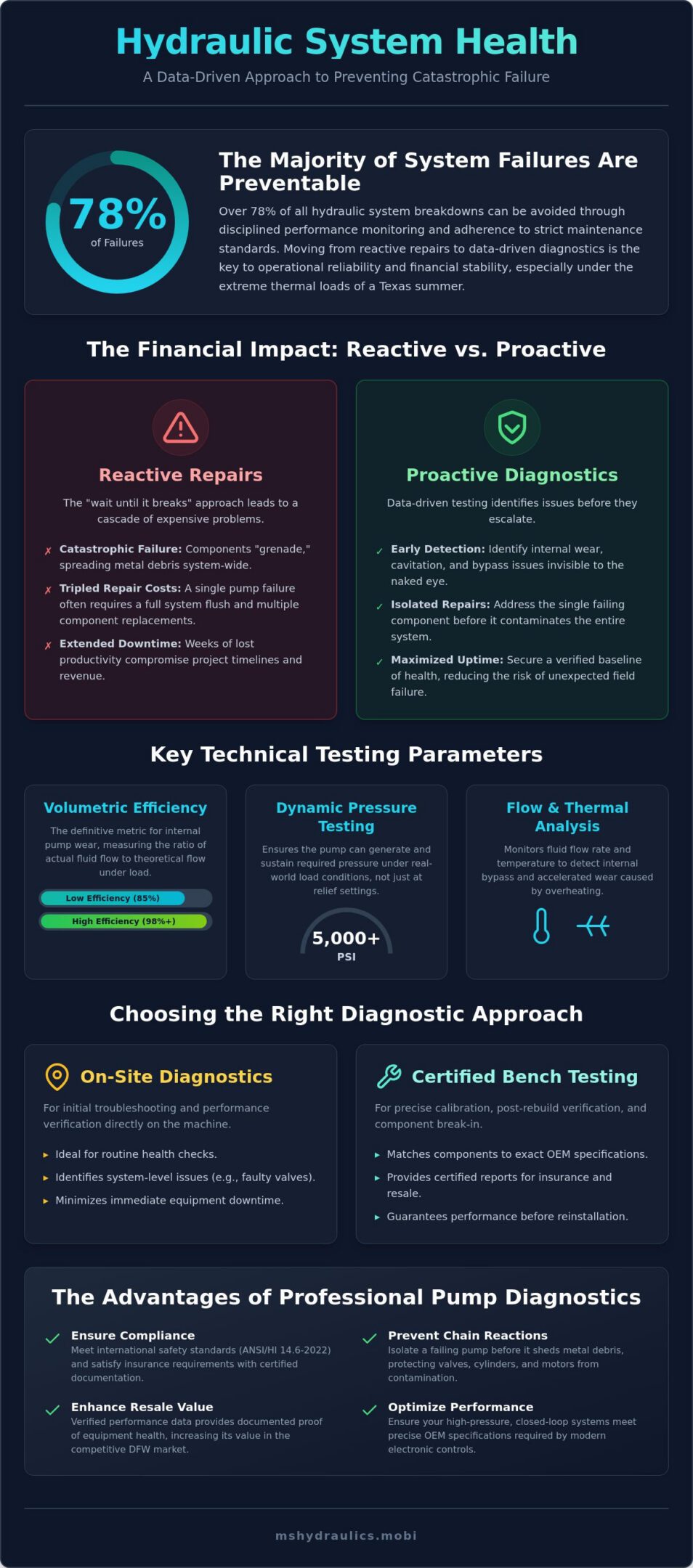
Over 78% of hydraulic system failures are preventable through disciplined performance monitoring and strict adherence to international safety standards. For fleet managers in North Texas, the challenge isn’t just maintaining pressure; it’s ensuring that components can withstand the extreme thermal loads of a Texas summer without failing unexpectedly. Professional hydraulic pump testing Waxahachie services provide the empirical data needed to move beyond the costly “parts-darts” approach of replacing components without a confirmed diagnosis. You already understand that unplanned downtime on a job site isn’t just an inconvenience, it’s a significant financial liability that compromises your project timelines.
This article details the technical rigors of hydraulic pump testing and explains how precision diagnostics minimize operational risks for Waxahachie’s industrial and construction fleets. We’ll examine the application of current ANSI/HI 14.6-2022 standards for rotodynamic pump performance and discuss how certified reports provide definitive proof of pump efficiency. By shifting from reactive repairs to data-driven maintenance, you’ll secure a verified baseline of system health and significantly reduce the risk of catastrophic system failure during peak operational periods.
Key Takeaways
- Understand how systematic verification of flow and pressure ensures compliance with international safety standards and insurance requirements for heavy equipment.
- Learn to measure volumetric efficiency and utilize dynamic pressure testing up to 5,000+ PSI to identify internal wear before it leads to system failure.
- Determine when to utilize on-site diagnostics versus certified bench hydraulic pump testing Waxahachie for precise calibration and component break-in.
- Identify the critical audible and performance indicators of pump failure, such as cavitation or thermal-induced lag, to prevent unplanned equipment downtime.
- Discover the advantages of integrating pump diagnostics with comprehensive cylinder rebuilds for total hydraulic system restoration and peak performance.
The Critical Role of Hydraulic Pump Testing for Waxahachie Operators
Hydraulic pump testing is the systematic verification of flow, pressure, and temperature under load. This procedure ensures a component operates within its designed performance envelope rather than merely functioning at a basic level. For industrial sectors in North Texas, this distinction is vital. While an operator might observe that a machine is moving, they may not realize the pump is losing significant volumetric efficiency due to internal wear. Understanding what is a hydraulic pump and its specific mechanical limits is the baseline for any rigorous maintenance program. Professional hydraulic pump testing Waxahachie services provide the empirical data required to determine if a pump meets original equipment manufacturer (OEM) specifications or if it’s nearing a point of terminal failure.
A primary objective of this testing is to halt the “chain reaction” of system degradation. When a pump begins to fail, it often sheds microscopic metallic debris into the hydraulic fluid. This contamination travels through the entire circuit, damaging valves, scoring cylinder walls, and compromising hydraulic motors. By the time the pump actually stops working, the cost of repair has often tripled because the entire system requires a comprehensive flush and multiple component replacements. Testing identifies these issues early, isolating the problem to a single unit before it compromises the machine’s integrity.
Preventing Catastrophic Failure in North Texas
In the demanding environments of Waxahachie construction and agricultural sites, pumps are subject to extreme thermal loads. These conditions accelerate internal bypass, where high-pressure oil leaks past internal seals or rotating groups. If left unchecked, the pump can eventually “grenade,” a term used when internal components shatter and distribute heavy metal contamination throughout the system. The financial impact is clear. Investing in a diagnostic test is a fraction of the cost compared to a total system restoration and the associated weeks of lost productivity. In one instance, a simple pressure test saved a Waxahachie excavator from total motor failure by identifying a cavitation issue that was invisible to the naked eye but obvious on a flow meter.
Meeting OEM Standards and Compliance
Modern heavy equipment utilizes high-pressure, closed-loop systems that require precision. “Good enough” performance isn’t a technical metric and won’t satisfy the requirements of modern electronic controls or load-sensing valves. OEM specification matching is the gold standard for hydraulic reliability. Beyond mechanical health, certified hydraulic pump testing Waxahachie provides documented proof of equipment maintenance. This documentation is essential for insurance compliance and significantly enhances the resale value of machinery in the competitive DFW market. Buyers and stakeholders value verified performance data over verbal assurances of functionality.
Technical Parameters: Bench Testing, PSI Verification, and Flow Analysis
Technical verification of a hydraulic system requires more than a simple pressure gauge reading. While a pump might reach its rated relief setting, it can still fail to perform the required work if it lacks sufficient flow under load. Comprehensive hydraulic pump testing Waxahachie protocols prioritize the measurement of volumetric efficiency to identify internal degradation before it results in a total system stall. This process involves a meticulous analysis of flow, pressure, and temperature to establish a performance baseline that aligns with original engineering specifications. Standardized protocols, similar to those outlined in federal pump testing procedures, ensure that performance data is consistent and verifiable across different equipment types.
The focus on energy conservation and pump efficiency extends beyond industrial applications; for instance, those interested in high-efficiency climate control for their homes or businesses can learn more about the specialized systems designed by Melbourne Hydronic Heating.
Understanding Volumetric Efficiency
Volumetric efficiency represents the ratio of actual flow to theoretical flow and serves as the definitive technical metric for determining internal pump wear. Even if a pump generates high pressure, internal bypass can cause flow to drop as the load increases. This is why a machine might operate normally while empty but struggle to lift a full bucket. Industry standards generally follow the “90% Rule”; when a pump’s volumetric efficiency falls below this threshold at its rated temperature and pressure, the unit is considered at its end-of-life. Continued operation beyond this point significantly increases fuel consumption and heat generation, further accelerating the wear of downstream components.
Dynamic pressure testing involves simulating real-world job site loads up to 5,000+ PSI. During this phase, technicians perform temperature delta analysis to monitor heat generation across the pump housing. Excessive heat usually points toward friction-related component failure or extreme internal leakage. For piston-style pumps, case drain monitoring is utilized as a critical diagnostic step. By measuring the volume of oil returning through the case drain line, it’s possible to quantify internal leakage with high precision, providing an objective look at the state of the pistons, slipper pads, and valve plate. Precise diagnostics on a dedicated test bench provide the data needed for reliable on-site diagnostic services and subsequent repairs.
Load Simulation and Bench Procedures
A hydraulic dynamometer allows for the simulation of peak stress without the variables present on a job site. This controlled environment is essential for identifying “hunting” or instability in variable displacement pump compensators. These fluctuations in flow or pressure often indicate a failing control valve or a worn swashplate mechanism. Bench testing also verifies the accuracy of torque-limiting controls and load-sensing systems. Ensuring these controls respond correctly to pressure signals prevents engine stalling and ensures the machine operates at maximum efficiency. This level of verification is only possible through rigorous hydraulic pump testing Waxahachie services that utilize calibrated laboratory equipment. For large-scale industrial projects where these pumps are part of a broader network, sourcing durable infrastructure from Water Services, Inc. can provide the structural integrity required for long-term reliability.
On-Site Diagnostics vs. Certified Bench Testing: The Right Approach
Determining the root cause of hydraulic failure requires a strategic choice between field diagnostics and laboratory-grade bench testing. Both methods serve distinct roles in a comprehensive maintenance strategy. While preliminary field assessments identify immediate operational issues, specialized shop testing provides the granular data necessary for precision calibration. Utilizing On-Site Diagnostic Services allows technicians to evaluate the pump within the context of the entire hydraulic circuit, which is essential for isolating “system noise” from actual mechanical failure. Often, what appears to be a failing pump is actually a malfunctioning relief valve or an internal leak in a downstream cylinder.
The transition from field troubleshooting to shop-based hydraulic pump testing Waxahachie is typically triggered when on-site flow meters indicate a significant drop in volumetric efficiency. Field diagnostics are excellent for rapid assessments, but they cannot replicate the controlled variables of a test bench. Shop testing eliminates the influence of worn valves or contaminated oil elsewhere in the machine, allowing for an objective evaluation of the pump’s internal state. This methodical approach ensures that repair resources are directed toward the actual point of failure rather than being wasted on the trial-and-error replacement of functional components.
When to Test in the Field
Initial troubleshooting should always occur on the job site to capture performance data under real-world conditions. Technicians look for sluggish actuator speeds or unusual audible signatures that suggest cavitation or aeration. During this phase, verifying the integrity of hydraulic hose fabrication and connections is a priority. A loose fitting on the suction side can introduce air into the system, causing symptoms that mimic pump wear. Field testing provides a quick, cost-effective way to rule out these external factors before committing to the removal and transport of heavy components.
When Certified Bench Testing is Mandatory
Certified bench testing is required whenever a pump has been opened for repair or when complex control settings must be verified. A post-repair break-in period on a test stand is essential to ensure a rebuilt unit won’t fail upon its initial startup under load. This process involves a gradual increase in pressure and flow to seat new components correctly. Furthermore, setting compensator and relief valve pressures requires high-precision instrumentation that portable meters cannot provide. Every unit that undergoes hydraulic pump testing Waxahachie in a shop environment should receive a “Birth Certificate,” a formal document that guarantees the unit meets or exceeds OEM performance standards before it’s reinstalled on the machine.
Identifying Pump Failure: When to Schedule Testing in Waxahachie
Recognizing the early indicators of mechanical distress is essential for maintaining fleet availability. Operators often detect the first signs of trouble through sensory changes in the machine’s operation. A high-pitched whine usually indicates cavitation, a condition where air bubbles implode against internal surfaces. Grinding or rhythmic clicking typically signals bearing failure or rotating group damage. Scheduling professional hydraulic pump testing Waxahachie at the first sign of these audible warnings prevents the internal destruction of the pump housing and the subsequent contamination of the entire system.
Performance lag is another critical indicator, particularly when cycle times slow down as the machine reaches its operating temperature. If a machine feels “strong” in the morning but loses power by midday, the pump is likely struggling with internal bypass. This loss of efficiency forces the engine to work harder, increasing fuel consumption and placing unnecessary stress on the cooling system. Monitoring these subtle changes in responsiveness allows for proactive scheduling of diagnostics before a total component failure occurs on the job site.
The ‘Heat-Fade’ Phenomenon
North Texas job sites present a unique environmental challenge due to sustained high temperatures. During summer peaks, hydraulic systems often experience “heat-fade,” where performance degrades as the operating shift progresses. This occurs because rising temperatures cause hydraulic oil viscosity to thin, which exposes internal clearances in worn pumps. As the oil loses its film strength, internal bypass increases, leading to significantly slower cycle times. A practical diagnostic tip for operators is to monitor the temperature differential between the reservoir and the pump case. A pump housing that is significantly hotter than the reservoir indicates excessive internal friction and leakage that requires immediate technical attention.
Physical Signs of Pump Distress
Physical manifestations of failure extend beyond sound and speed. Excessive vibration in the hydraulic lines or the pump housing often points to mechanical imbalance or loose internal components. During routine heavy equipment maintenance, technicians should inspect return line filters for “glitter” or metallic flakes. These particles are definitive evidence that the pump is shedding material from the rotating group or wear plates. Case drain flow increases exponentially as internal pump clearances widen. Monitoring this flow provides an objective measurement of wear that sensory checks alone cannot provide.
When a pump becomes too hot to touch, it’s often operating well beyond its designed thermal limit. This excessive heat oxidizes the hydraulic fluid, leading to a dark, burnt appearance and a characteristic acrid odor. Discolored fluid is a secondary indicator that the pump is struggling to maintain pressure without generating excessive friction. If your equipment exhibits these symptoms, you should contact a specialist for Hydraulic Pump Repair to establish a data-backed recovery plan.
Precision Hydraulic Pump Services: The Ms. Hydraulics Advantage
Ms. Hydraulics LLC prioritizes technical integrity through a rigorous, data-centric approach to system diagnostics. Our technicians are trained in the specific mechanical nuances of piston, vane, and gear pump architectures, ensuring that every evaluation is tailored to the component’s unique engineering requirements. In the context of hydraulic pump testing Waxahachie, we provide the industrial sector with verified performance metrics that eliminate guesswork. By utilizing mobile diagnostics, we bring laboratory-grade precision directly to your job site, significantly reducing the logistical costs and downtime associated with component transport. This commitment to accuracy ensures that every repair is backed by empirical evidence of functionality.
Our diagnostic capabilities allow us to differentiate between localized pump wear and system-wide pressure fluctuations. This distinction is critical for fleet managers who require high-availability machinery for demanding North Texas projects. We provide a level of technical depth that social media-based providers cannot match, focusing on the mechanical parameters that define long-term reliability. Every test we conduct serves as a benchmark for future performance, creating a documented history of equipment health that supports both safety compliance and asset valuation.
A Holistic Approach to Hydraulic Repair
We reject the practice of simply “swapping a pump” without understanding the underlying cause of the failure. A pump failure is often a symptom of a broader system issue, such as fluid contamination or a malfunctioning valve. Our process involves a comprehensive analysis to identify the root cause, ensuring that the replacement or repaired unit doesn’t suffer the same fate. This holistic strategy often involves integrating pump diagnostics with heavy equipment cylinder rebuilds for a complete system restoration. To support these efforts, we maintain access to high-quality hydraulic parts that meet or exceed original equipment standards, providing a foundation for long-term reliability and operational safety.
Serving Waxahachie and the Surrounding DFW Metroplex
Our operational footprint is strategically designed to support the diverse industrial needs of Ellis County and the broader DFW region. We understand the specific demands of local sectors, ranging from municipal infrastructure projects to large-scale agricultural operations. Whether you’re managing a construction fleet in the heart of Waxahachie or maintaining heavy machinery on a remote site, our mobile units provide the rapid response necessary to keep projects on schedule. Every hydraulic pump testing Waxahachie service we perform is documented with a detailed performance report, providing you with a permanent record of system health and maintenance compliance. Contact Ms. Hydraulics LLC today to schedule your professional hydraulic pump evaluation and performance test to ensure your fleet maintains peak operational efficiency.
Optimizing Fleet Reliability Through Technical Verification
Maintaining the operational integrity of heavy equipment requires a shift from reactive repairs to a disciplined, data-driven maintenance strategy. Don’t settle for guesswork. By prioritizing hydraulic pump testing Waxahachie operators can identify internal bypass and volumetric efficiency losses before they result in catastrophic component failure. This systematic approach ensures that every diagnostic call includes a comprehensive root cause failure analysis. It prevents the recurring issues that compromise project timelines and budgets.
Our expert technicians specialize in heavy equipment diagnostics, providing the technical expertise required to interpret complex performance metrics. With mobile on-site service available across Waxahachie and the North Texas region, we eliminate the logistical burden of transporting heavy machinery for preliminary assessments. This level of technical oversight is essential for sustaining peak performance in demanding industrial environments. Schedule Your Precision Hydraulic Pump Test Today to ensure your equipment remains a verified asset on every job site.
Frequently Asked Questions
How long does a typical hydraulic pump test take?
A standard on-site diagnostic session typically requires two to four hours of machine time to complete. Bench testing in a shop environment may take a full day due to the complexity of the setup and the requirement for a controlled break-in period. These timelines ensure that all thermal and pressure variables are stabilized before technicians record the final performance data.
Can you perform hydraulic pump testing on-site in Waxahachie?
Yes, mobile diagnostic units are fully equipped to perform hydraulic pump testing Waxahachie on-site at your facility or job location. This service allows for immediate troubleshooting of system-wide issues without the initial need to remove the pump from the equipment. It’s an efficient method for identifying external faults such as suction leaks, restricted inlets, or malfunctioning control valves.
What is the difference between a flow test and a pressure test?
A pressure test measures the maximum force the pump can generate against a load, while a flow test measures the volume of oil delivered per minute. A pump can often reach its rated pressure even when internal wear has significantly reduced its flow. Flow analysis is the only accurate way to determine a pump’s volumetric efficiency and its ability to maintain speed under load.
How much internal leakage is considered ‘normal’ for a piston pump?
Internal leakage, often measured as case drain flow, should generally not exceed one to three percent of the pump’s total rated flow in a new unit. As internal clearances widen due to mechanical wear, this percentage increases. Once leakage reaches ten percent of the total flow, the pump is typically considered past its reliable service life and requires a professional rebuild.
Will a pump test tell me if my hydraulic fluid is contaminated?
While a performance test measures mechanical output, it often reveals the symptoms of contamination such as scored valve plates or worn pistons. Technicians usually perform dedicated fluid analysis in conjunction with hydraulic pump testing Waxahachie to identify specific metallic particles. This data helps determine if the oil’s chemistry has broken down or if external debris is entering the circuit.
What happens if I continue to run a pump that has failed an efficiency test?
Operating a pump that has failed an efficiency test leads to excessive heat generation and the shedding of metallic debris into the hydraulic circuit. This contamination can cause a chain reaction of failures in valves, motors, and cylinders. The resulting repair costs are often significantly higher than the price of an early pump replacement or rebuild.
Do you provide a written report after the testing is complete?
Yes, every diagnostic evaluation concludes with a detailed written report that documents the pump’s performance against OEM specifications. This report includes data on flow, pressure, and temperature deltas recorded during the test phases. These documents serve as essential maintenance records for safety compliance, insurance verification, and equipment resale value.
Can testing identify why my pump failed in the first place?
Root cause failure analysis is a core component of the diagnostic process. By examining specific performance markers such as pressure spikes or cavitation signatures, technicians can often identify if the failure was caused by improper fluid, suction issues, or system-wide contamination. This insight prevents the same failure from occurring in a replacement or rebuilt unit.