Dallas Emergency Hydraulic Repair: Minimizing Downtime in North Texas (2026)
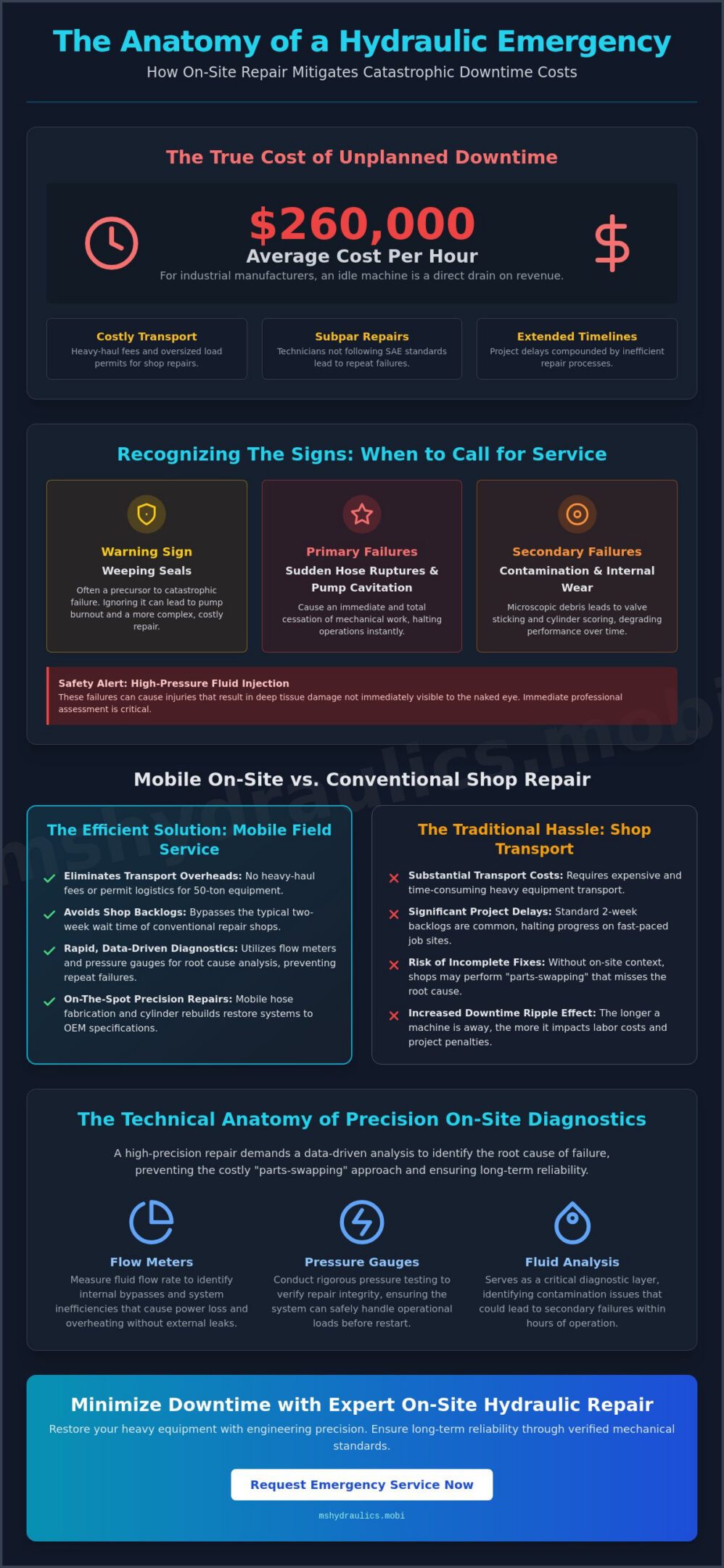
For industrial manufacturers in 2026, the average cost of unplanned downtime has reached approximately $260,000 per hour, making a rapid Dallas emergency hydraulic repair essential for operational stability. You know that an idle machine isn’t just a logistical delay; it’s a direct drain on your revenue. The frustration of paying for costly transport to a repair shop is often compounded by the risk of hiring technicians who don’t follow SAE standards. These subpar interventions frequently lead to repeat failures and extended project timelines.
This technical guide outlines how professional mobile diagnostics and on-site repair protocols restore your heavy equipment with engineering precision. We’ll detail the specific processes for hose fabrication and cylinder rebuilds that ensure your machinery returns to service safely. By prioritizing technical accuracy over temporary patches, you can minimize downtime and maintain the long-term reliability of your hydraulic systems through verified mechanical standards.
Key Takeaways
- Learn how to differentiate between catastrophic failures and weeping seals to determine when immediate field intervention is necessary for pump protection.
- Understand the role of flow meters and pressure gauges in conducting a root cause analysis that prevents recurrent mechanical failure.
- Compare the logistics of heavy equipment transport against the efficiency of a Dallas emergency hydraulic repair to optimize your project’s recovery timeline.
- Identify critical on-site protocols for fluid containment and system shutdown that mitigate environmental risks and secondary component damage.
- Discover how mobile hose fabrication and cylinder rebuilds provide a high-precision alternative to conventional repair shop backlogs.
Defining the Hydraulic Emergency: When to Call for Immediate Field Service
A hydraulic emergency is defined as a state where system pressure cannot be maintained or operational safety is compromised. While a weeping seal might appear to be a minor maintenance item, it often serves as a precursor to a catastrophic failure that halts entire production lines or construction sites. In the high-demand industrial environment of North Texas, recognizing the threshold for a Dallas emergency hydraulic repair is critical for equipment longevity and personnel safety. Waiting for a complete system collapse often turns a manageable component fix into a comprehensive overhaul of the entire circuit.
Categorizing Hydraulic System Failures
Technical assessments categorize failures into primary and secondary stages. Primary failures include sudden hose ruptures and pump cavitation, which lead to an immediate cessation of mechanical work. Secondary failures involve contamination-led valve sticking or cylinder scoring, where microscopic debris compromises the tight internal tolerances required for efficient operation. These issues represent a fundamental deviation from Hydraulic machinery principles, which rely on the precise, controlled transmission of force through incompressible fluid. When these mechanical parameters are exceeded, the risk of structural collapse or high-pressure fluid injection injuries increases. These injuries are particularly dangerous as they can cause deep tissue damage that isn’t always immediately visible to the naked eye.
Economic Impact of Downtime in North Texas
The financial burden of idle machinery in the DFW metroplex is substantial and quantifiable. For an excavator or a specialized drill rig, the loss of productivity is measured in thousands of dollars per hour when considering labor costs and project penalties. Choosing to ignore a hydraulic leak often leads to pump burnout, which forces a transition from a simple hose replacement to a complex and expensive hydraulic pump repair. The logistics of transporting 50-ton equipment to a stationary facility involve heavy-haul transport fees and the time-consuming process of securing oversized load permits. A mobile intervention eliminates these logistical overheads. It addresses the ripple effect on construction timelines, ensuring that fast-paced Dallas projects stay within their designated windows.
A professional response model is designed for these high-stakes scenarios. When every hour of downtime translates to lost revenue, the expectation is an immediate transition from diagnostic assessment to mechanical restoration. This model focuses on rapid on-site diagnostics, identifying whether the failure is a localized hose burst or a systemic pressure issue. By deploying technicians equipped for mobile hydraulic repair, fleet managers can avoid the standard two-week backlog typical of conventional repair shops. This approach prioritizes mechanical verification and engineering standards, ensuring that the restored system meets the original manufacturer’s specifications.
The Technical Anatomy of Rapid On-Site Hydraulic Diagnostics
A high-precision Dallas emergency hydraulic repair requires more than a visual inspection of a leaking fitting. It demands a data-driven analysis of the entire circuit to identify the root cause of mechanical failure. Technicians utilize flow meters and pressure gauges to conduct comprehensive root cause analysis in the field. This prevents the “parts-swapping” approach that often leads to repeat failures and wasted capital. By measuring physical parameters like flow rate and system pressure, we identify whether a specific component is failing or if the entire circuit’s efficiency is compromised by internal wear.
Precision Diagnostics in the Field
Our On-Site Diagnostic Services identify hidden system bottlenecks that often escape visual inspection. For instance, an internal valve bypass can cause significant heat generation and power loss without showing any external fluid loss. Expert Mobile Equipment Service Technicians employ rigorous pressure testing protocols to verify repair integrity before any machine restart. This methodical verification ensures that the primary repair doesn’t mask underlying pump cavitation or contamination issues that could lead to a secondary failure within hours of operation.
Fluid analysis serves as a critical diagnostic layer during an emergency intervention. By examining the particle count and fluid condition according to ISO 4406 standards, we can anticipate and prevent catastrophic pump failure. This level of technical scrutiny is standard for maintaining large-scale machinery fleets in North Texas. If your equipment shows signs of erratic behavior or sluggish response, scheduling proactive Heavy Equipment Maintenance can identify these issues before they escalate into a total system shutdown.
Hydraulic Hose Fabrication Standards
On-site hose fabrication must adhere to strict SAE 100R specifications to ensure durability in high-PSI environments. Fitting precision is the primary factor in hose longevity; even a minor misalignment during the crimping process creates a point of failure under pressure. For high-pressure applications, we utilize multi-spiral wire reinforcement to manage the mechanical stresses inherent in heavy-duty cycles. This technical precision is what separates a professional restoration from a temporary “quick-fix” that won’t hold under full load.
Compatibility with OEM standards is non-negotiable for modern equipment. Whether the machinery is manufactured by John Deere, Cat, or Komatsu, the replacement components must match the original engineering tolerances. The Ms. Hydraulics LLC approach involves custom hose assemblies that replicate these exact specifications on-site. This commitment to technical excellence ensures that the restored system operates within its designed performance envelope. It reduces the risk of secondary component damage and ensures your machinery remains compliant with international industry standards.
Mobile Field Service vs. Conventional Repair Shops: A Cost-Benefit Analysis
Deciding between a fixed-location facility and a field intervention requires an objective evaluation of logistical overhead. For fleet managers, the primary obstacle is the physical transport of heavy equipment across the DFW metroplex. Moving a non-functional excavator involves specialized trailers, oversized load permits, and significant labor hours spent in transit. A high-precision Dallas emergency hydraulic repair bypasses these complexities by bringing technical expertise directly to the machinery. This eliminates the need for expensive third-party hauling and the associated risk of damage during loading and unloading.
Conventional repair shops often maintain a rigid schedule, resulting in backlogs that can span multiple weeks. In contrast, mobile field service offers immediate labor application. There’s no queue; the technician begins work as soon as they arrive on-site. This direct approach is essential for high-utilization sectors where every hour of idle time compounds project delays. It ensures that critical machinery returns to service without waiting for a shop’s internal queue to clear.
On-site repair provides a technical advantage that a shop cannot replicate: real-time testing under actual load conditions. When a repair is completed in a shop, it is tested on a bench; however, field restoration allows for verification within the machine’s specific operational environment. This ensures that the hydraulic circuit functions correctly alongside the engine and mechanical linkages, reducing the risk of secondary component failure. It’s the most reliable way to confirm that the system is fully operational.
Minimizing environmental liability is another critical factor. A Dallas emergency hydraulic repair includes rapid containment of hydraulic spills, preventing fluid from entering storm drains or contaminating soil. This immediate response reduces the potential for regulatory fines and expensive remediation projects. It protects the job site and maintains compliance with local environmental standards during the restoration process.
When Mobile Repair is the Superior Choice
Critical path machinery like skid steers and drill rigs cannot leave the job site without halting the entire project. In these scenarios, mobile hydraulic repair Cleburne TX is the most efficient solution for maintaining the project schedule. Live diagnostics on the job site allow technicians to observe the system’s behavior during failure, providing data that might be lost once a machine is dismantled in a shop. It’s a more precise way to handle complex system interactions and ensure a lasting fix.
Evaluating Long-Term Value
Analyzing the total cost of ownership reveals that field service often provides better long-term value. While shop rates might seem lower on paper, the cumulative cost of transport, downtime, and project penalties usually exceeds the investment in a mobile response. Following an emergency call with scheduled Heavy Equipment Maintenance ensures the machine remains in peak condition. Professional field oversight identifies wear patterns early, preventing future catastrophic failures. This disciplined approach to maintenance protects your assets and stabilizes your operational budget.
Emergency Response Protocols: Managing Component Failure on Dallas Job Sites
The period between a component failure and the arrival of a technician is a critical window for asset protection. When a hydraulic system fails on a North Texas job site, the operator’s immediate response determines the complexity of the subsequent Dallas emergency hydraulic repair. An uncontrolled leak or an attempt to “limp” the machine to a different location can cause the hydraulic pump to run dry, leading to internal scoring and a much more expensive repair bill. A disciplined shutdown protocol is the first line of defense against escalating costs.
Environmental containment must be initiated immediately following the shutdown. Dallas municipal codes regarding storm drains are strictly enforced; allowing hydraulic fluid to enter the local water system can lead to heavy fines and mandatory soil remediation. Operators should utilize on-site spill kits to create a perimeter around the machinery. Simultaneously, documentation of the failure state is necessary. Recording the specific symptoms, such as unusual noises or erratic cylinder movement, provides the arriving technician with the data needed to bypass lengthy diagnostic steps.
The First 15 Minutes: Operator Action Items
Safe depressurization is the priority during the initial response. This process must be conducted without causing a structural collapse of any suspended attachments. Identifying the specific hydraulic parts involved helps the dispatch team prepare the correct replacement components. It’s also beneficial to clean the area surrounding the failure point. Removing surface grit prevents external contaminants from entering the system when the lines are eventually opened for repair.
Safety Protocols for High-Pressure Systems
High-pressure hydraulic systems present unique hazards that demand professional caution. Pinhole leaks are especially dangerous because they can cause fluid injection injuries. These injuries often seem minor at first but can result in severe tissue damage or amputation if not treated by a specialist. You must never use your hand to search for a hydraulic leak; a piece of wood or cardboard should be used as a probe instead. Lock-out/Tag-out (LOTO) procedures are mandatory for all mobile equipment to ensure the system cannot be accidentally pressurized while it’s being inspected. If your equipment has suffered a critical failure, our team provides on-site diagnostic services to safely assess and resolve the issue without further risk to your personnel.
Professional Hydraulic Restoration: The Ms. Hydraulics LLC Specialized Response
Ms. Hydraulics LLC operates with a disciplined commitment to engineering integrity and technical excellence across the DFW metroplex. Our mobile service units are engineered to function as fully-equipped hydraulic laboratories, providing the same level of precision found in a fixed facility. This mobile capability ensures that every Dallas emergency hydraulic repair is executed with verified components and calibrated diagnostic tools. By maintaining a 24/7 availability model, we serve the critical needs of the construction, agriculture, and industrial sectors where equipment availability is the primary metric of success.
Our technical staff possesses deep expertise in complex mechanical restorations, including heavy equipment cylinder rebuild Texas services. These interventions involve precise honing, rod inspection, and the application of high-performance seals designed to withstand the rigorous duty cycles of modern machinery. We don’t just replace parts; we restore the engineering tolerances required for peak system performance. This focus on mechanical accuracy prevents the premature seal failure and internal leakage often associated with lower-standard field repairs.
Serving the Dallas-Fort Worth Metroplex
Strategic positioning along the I-35 and I-20 corridors allows for rapid response logistics to job sites in Arlington, Mansfield, and Waxahachie. Texas industrial environments present specific challenges, such as extreme thermal fluctuations and abrasive soil conditions, which accelerate the degradation of hydraulic fluids and seals. Our technicians are trained to identify these environmental factors during the repair process, ensuring that the restored system is resilient enough to handle the unique stressors of North Texas job sites. This localized knowledge is essential for maintaining the operational reliability of large-scale fleets.
The transition from a reactive emergency response to a preventative maintenance program is a core part of our service philosophy. By analyzing the data gathered during a Dallas emergency hydraulic repair, we help fleet managers identify systemic issues before they result in catastrophic failure. The Ms. Hydraulics LLC guarantee is rooted in technical accuracy and professional decorum, providing a reliable partnership for major industrial players who value performance above all else. This methodical approach to maintenance extends the service life of pumps, motors, and valves, stabilizing your long-term operational costs.
Contact Ms. Hydraulics LLC for immediate dispatch to any Dallas job site to restore your heavy equipment’s operational efficiency.
Restoring Mechanical Performance and Operational Continuity
Ms. Hydraulics LLC has supported the North Texas industrial sector since 2021 by delivering engineering-grade mobile repairs. Whether your project is stalled by a burst hose or a malfunctioning valve, a Dallas emergency hydraulic repair restores your machinery to original performance parameters without the delay of a shop backlog. Our focus on mechanical verification and professional decorum establishes a foundation for dependable equipment operation in demanding environments. For comprehensive support that extends to your facility’s climate control, J3 Mechanical Services offers expert commercial HVAC installation and replacement across Texas.
Contact Ms. Hydraulics LLC for Emergency 24/7 Repair to deploy a specialized response team to your location. We’re ready to restore your operational continuity with the precision your project demands.
Frequently Asked Questions
How fast can you respond to a hydraulic emergency in Dallas?
Response times depend on current dispatch levels and your site’s proximity to the I-35 and I-20 corridors. We prioritize rapid mobilization for critical path machinery to mitigate the high costs of unplanned downtime. Our logistics model is designed for prompt arrival across the DFW metroplex, ensuring that technical assessment and diagnostics begin shortly after your initial service request.
What types of heavy equipment do you repair on-site?
We provide mechanical restoration for a broad range of industrial and construction machinery, including excavators, skid steers, drill rigs, and dozers. Our technicians are experienced with hydraulic systems from major manufacturers such as Caterpillar, John Deere, and Komatsu. Whether the failure involves mobile machinery or stationary industrial units, we apply the same engineering standards to ensure long-term system integrity.
Can you fabricate hydraulic hoses at my location?
Yes, our mobile units are fully equipped for on-site hydraulic hose fabrication. We utilize high-precision crimping equipment to manufacture replacement assemblies that meet or exceed SAE 100R specifications. This on-site capability eliminates the need for equipment transport and ensures that the new hose is precisely measured and fitted to your machine’s specific configuration in real-time.
Is mobile hydraulic repair more expensive than taking it to a shop?
While field service involves mobilization fees, it’s often more cost-effective when evaluating the total cost of ownership. Mobile intervention eliminates heavy-haul transport expenses and the need for oversized load permits. Most importantly, it significantly reduces the duration of unplanned downtime, which can cost industrial operations thousands of dollars per hour in lost productivity and project penalties.
What information do I need to provide when calling for emergency service?
Please provide the machine make and model, the specific symptoms of the failure, and the exact job site location. Identifying the affected hydraulic parts, such as a specific cylinder or pump, allows our dispatch team to ensure the technician arrives with the necessary diagnostic tools and replacement components for an efficient Dallas emergency hydraulic repair.
Do you offer 24/7 emergency hydraulic repair on weekends and holidays?
We maintain a 24/7 on-call availability model to support continuous operations in the construction, agriculture, and industrial sectors. This includes weekend and holiday coverage for critical failures that cannot wait for standard business hours. Our commitment to North Texas infrastructure means we provide professional technical support whenever a hydraulic emergency threatens your project’s timeline or safety.
Can you perform hydraulic cylinder rebuilds on-site?
We can perform many aspects of a hydraulic cylinder rebuild on-site, including seal replacement and rod inspection. If the damage involves deep internal scoring or requires specialized machining, we assess the component in the field to determine the most efficient path to restoration. Our goal is to minimize machine idleness by performing as much of the engineering work as possible at your location.
What is the most common cause of hydraulic failure in the Dallas heat?
Excessive heat in North Texas often leads to accelerated fluid oxidation and seal degradation. High ambient temperatures reduce the viscosity of hydraulic oil, which can cause pump cavitation and internal leakage. A Dallas emergency hydraulic repair is frequently triggered by these thermal stressors, making routine fluid analysis and cooling system maintenance essential for preventing catastrophic component failure during peak summer months.