Professional Hydraulic Diagnostics Service in Waxahachie: Reducing Heavy Equipment Downtime
Every hour a 20-ton excavator sits idle on a Waxahachie job site, the project’s bottom line takes a hit, but the most expensive error isn’t the downtime; it’s the cost of hauling that machine to a repair shop for a diagnosis based on guesswork. You understand that a sudden loss of system pressure or a sluggish cylinder can bring operations to a complete standstill. The logistical burden and high expense of transporting heavy equipment often feel like an unavoidable tax on your productivity. Utilizing a professional hydraulic diagnostics service Waxahachie ensures that the root cause of the failure is identified with technical precision before any components are removed or replaced.
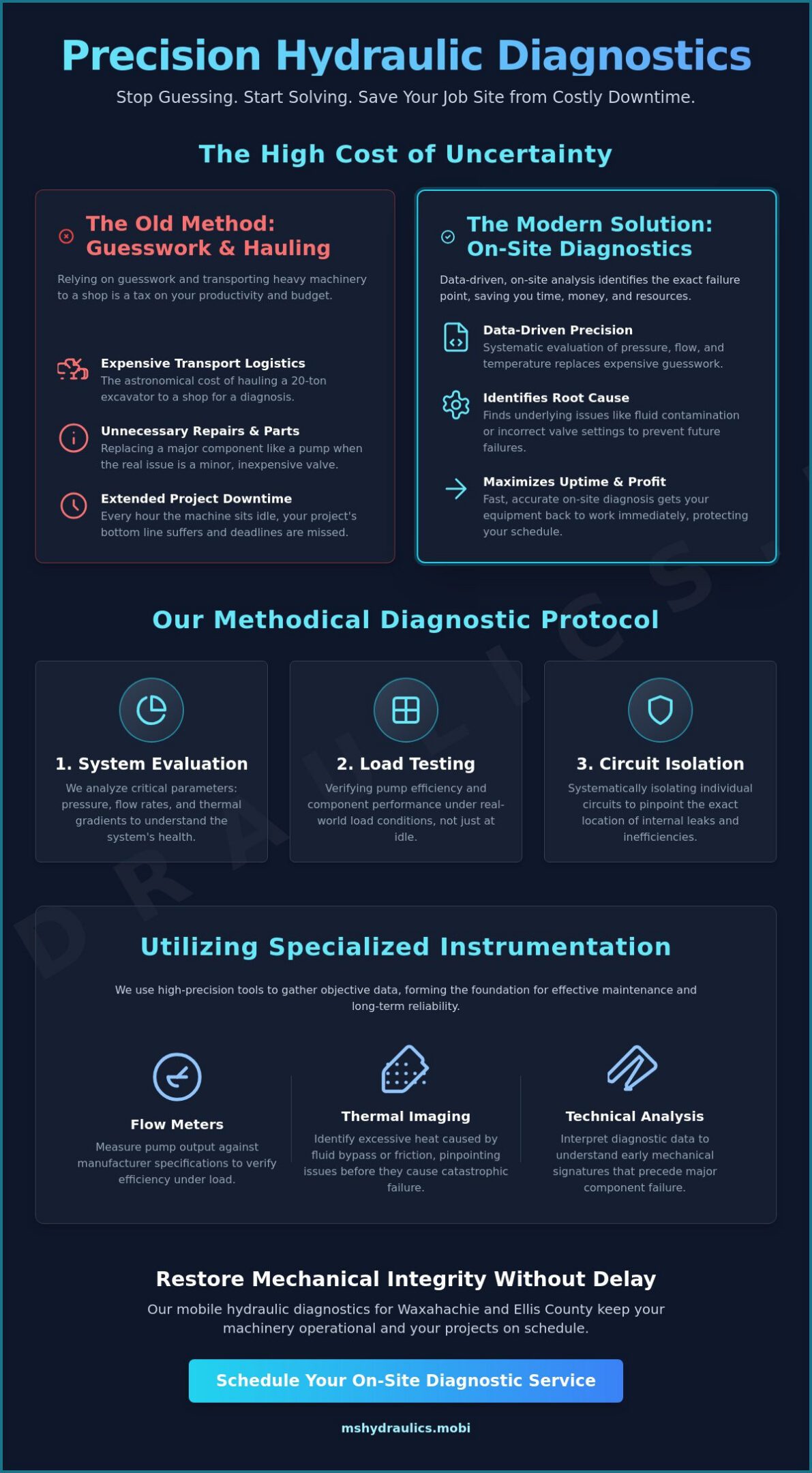
We’ll show you how precision on-site diagnostics identify the specific failing component to save your job site from costly, unnecessary repairs. This article provides a technical overview of how mobile hydraulic repair and system verification keep your machinery operational. You’ll learn how to avoid the uncertainty of hydraulic failure through methodical testing and on-site maintenance that restores mechanical integrity without the need for expensive transport logistics. By focusing on data-driven results, you can ensure your fleet maintains the performance standards required for heavy industrial applications.
Key Takeaways
- Understand how systematic evaluations of pressure, flow, and temperature replace expensive guesswork with technical accuracy.
- Compare the benefits of on-site testing under real-world load conditions against the high logistical costs of traditional shop-based diagnostics.
- Discover how a professional hydraulic diagnostics service Waxahachie identifies early mechanical signatures that precede catastrophic component failure.
- Review the specialized instrumentation required for precise system verification, including flow meters and thermal imaging tools.
- Learn how diagnostic data serves as a critical foundation for effective heavy equipment maintenance and long-term mechanical reliability.
The Role of Precision Hydraulic Diagnostics in Waxahachie Industrial Operations
In the heavy industrial sectors of Ellis County, hydraulic systems represent the primary power source for critical operations. A professional hydraulic diagnostics service Waxahachie provides more than a visual inspection; it’s a systematic evaluation of physical parameters including pressure, flow rates, and thermal gradients. When a machine loses power or exhibits erratic movement, the standard response often involves replacing components based on visual cues. However, guessing at parts leads to compounded expenses and extended downtime. Effective diagnostics use technical data to pinpoint the exact failure point. This ensures that repairs address the actual mechanical deficiency rather than just the visible symptoms.
Modern Hydraulic machinery relies on precise fluid dynamics to perform heavy duty tasks. In Waxahachie, where construction, agriculture, and manufacturing drive the local economy, the failure of a single excavator or industrial press can halt entire project timelines. The economic impact of equipment failure on local job sites is measured in lost revenue and delayed contracts. Without accurate diagnostic data, a fleet manager might authorize the replacement of a hydraulic pump when the true culprit is a sticking relief valve, resulting in thousands of dollars in unnecessary spending.
Beyond the Visible: Why Troubleshooting Matters
A ruptured hose or a leaking seal is frequently a symptom of a deeper systemic issue. It’s often the result of a localized pressure spike or excessive fluid temperature. Ignoring minor hydraulic bypass or heat issues leads to catastrophic failure of expensive pumps and motors. Root cause analysis allows technicians to determine if a failure resulted from contaminated fluid, incorrect valve settings, or mechanical wear. By identifying these underlying factors, operators can implement corrective actions that prevent the same failure from recurring. Precision troubleshooting transforms reactive maintenance into a disciplined strategy for system longevity.
The Waxahachie Service Context
Local operations near I-35E utilize a diverse fleet of equipment, including excavators, skid steers, and high pressure industrial presses. These machines face specific Texas operating conditions. High ambient temperatures accelerate fluid degradation and seal wear. Quick response times are essential for maintaining project schedules in this high demand environment. Having a hydraulic diagnostics service Waxahachie that understands these regional stressors ensures that troubleshooting is both accurate and relevant to the specific challenges faced by North Texas contractors and facility managers. This technical expertise is vital for verifying system integrity before returning a machine to the field.
Technical Protocols for Troubleshooting Hydraulic System Failures
Executing a professional diagnostic call requires a methodical approach that prioritizes data over assumptions. While basic repair shops might focus solely on visible leaks, a comprehensive hydraulic diagnostics service Waxahachie begins with a baseline assessment of the entire system. Technicians first perform a static inspection of fluid levels and filtration integrity before connecting specialized instrumentation. This process involves the installation of high precision flow meters, pressure gauges, and thermal imagers into the hydraulic circuit. By monitoring these parameters in real time, it’s possible to identify exactly where energy is being lost within the system.
Verifying pump efficiency under load is a critical step in the diagnostic protocol. A pump may appear functional when the machine is idling, but it can fail to maintain the necessary flow when resistance is applied. Technicians use flow meters to measure the output against the manufacturer’s specifications. Maintaining controlled Hydraulic system pressure is vital for both machine performance and operator safety during these high stress tests. To find internal leaks, technicians systematically isolate individual circuits. By blocking off specific sections of the valve bank or cylinder lines, they can observe pressure drops that indicate internal bypass, which is often the silent cause of sluggish machine performance.
Pressure and Flow Testing Standards
Diagnostic accuracy relies on understanding the inverse relationship between pressure (PSI) and flow (GPM). Volumetric efficiency represents the ratio of actual flow to theoretical flow, serving as a critical benchmark for pump performance. If GPM drops significantly as PSI increases, internal wear is likely present. Modern technicians utilize electronic pressure transducers to capture rapid pressure spikes. These transient events occur in milliseconds and are often missed by traditional analog gauges, yet they’re frequently responsible for repeated hose failures and valve damage.
Thermal Analysis and Fluid Contamination
Thermal imaging allows technicians to see heat signatures that reveal internal component failure. When fluid bypasses a seal or a valve seat, it generates localized heat due to friction. These “hot spots” pinpoint internal leaks without the need for invasive teardowns. Additionally, fluid analysis detects the presence of microscopic metal particles or air bubbles. These indicators suggest pump cavitation or aeration, which leads to rapid component destruction if left unaddressed. Clean oil is the non-negotiable baseline for any accurate diagnostic test. When these technical indicators suggest a failure, utilizing a professional On-Site Diagnostic Service ensures the root cause is addressed before a catastrophic breakdown occurs.
On-Site vs. Shop-Based Diagnostics: Maximizing Uptime in Ellis County
Decisions regarding heavy equipment maintenance often hinge on the logistics of transport. Moving a 20-ton excavator from a job site to a centralized repair facility involves substantial overhead. This includes heavy-haul trucking fees and the administrative burden of securing oversized load permits. By utilizing a hydraulic diagnostics service Waxahachie, project managers bypass these complexities. Technical verification occurs exactly where the failure happened. This approach provides a clear advantage in data accuracy. A shop environment is controlled and static, but on-site testing captures the machine’s behavior under real-world load conditions.
Field testing reveals intermittent faults that often disappear once a machine is cleaned and moved to a shop floor. Establishing a rigorous hydraulic diagnostics test program on the job site allows for the observation of pressure drops and thermal spikes during actual operation. Technicians monitor how the system responds to specific soil densities or lifting cycles. This level of granular data is essential for isolating internal leaks in complex valve manifolds. Mobile diagnostics ensure that the system is evaluated in the same state it failed, preventing the “no fault found” results that often plague shop-based troubleshooting.
The Logistics of Mobile Service
Ms. Hydraulics provides On-Site Diagnostic Services to the Waxahachie area using specialized service trucks. These vehicles aren’t just transport; they’re fully equipped mobile workshops. They carry high-capacity flow meters, electronic transducers, and professional hose fabrication equipment. This setup ensures that once a component is identified as faulty, the technician can often proceed directly to the repair phase. Testing the machine in its actual working environment allows for the immediate verification of the repair under the same stressors that caused the initial failure.
Cost-Benefit Analysis for Waxahachie Fleets
The financial disparity between shop-based and mobile service is significant. Hauling costs for heavy machinery can reach thousands of dollars before a single wrench is turned. In contrast, a mobile service call fee is a fraction of that investment. The efficiency of a “diagnose and repair in one trip” model minimizes the ripple effect of a stalled project. When a primary machine fails, it often idles an entire crew and supporting equipment. Rapid on-site resolution protects the project’s critical path and prevents the compounded revenue loss associated with extended shop stays. For local fleets, this hydraulic diagnostics service Waxahachie represents a disciplined approach to operational efficiency.
Interpreting Diagnostic Data to Prevent Catastrophic Component Failure
Raw data becomes actionable intelligence when interpreted through the lens of engineering standards. A comprehensive diagnostic report serves as a technical roadmap for Heavy Equipment Maintenance, identifying specific wear patterns before they manifest as mechanical failure. For example, a gradual decrease in volumetric efficiency often signals internal pump wear. If left unmonitored, this wear leads to metal-on-metal contact and total system contamination. Utilizing a professional hydraulic diagnostics service Waxahachie allows fleet managers to detect these warning signs early. Adjusting system pressures to match OEM specifications also extends the service life of cylinders and motors by preventing over-pressurization. This disciplined approach significantly reduces the Total Cost of Ownership (TCO) by avoiding the high capital expenditure of premature component replacement.
Effective data interpretation requires a deep understanding of mechanical tolerances. When a technician identifies a pressure drop across a control valve, it’s a clear indicator of internal bypassing. Addressing this issue immediately prevents the excessive heat generation that degrades hydraulic fluid and destroys seals. Implementing a regular hydraulic diagnostics service Waxahachie ensures that the fleet remains within its designed technical tolerances. This verification process is the difference between a machine that lasts ten thousand hours and one that requires a major overhaul at five thousand.
Predictive Maintenance Strategies
Moving from reactive repair to proactive system management requires a baseline of performance data for every machine in a fleet. Without these benchmarks, it’s impossible to quantify performance degradation. Technicians use diagnostic history to schedule critical interventions, such as a heavy equipment cylinder rebuild Texas, during planned downtime rather than during peak production. This foresight ensures that system integrity is maintained without disrupting project timelines. It’s a methodical way to manage mechanical risk.
Safety Implications of Accurate Diagnostics
Precision diagnostics also address critical safety requirements for high-pressure systems. Pinhole leaks and compromised hoses represent significant hazards to operators. Diagnostics identify these weaknesses through thermal analysis and pressure drop monitoring before a hose bursts. A well-tuned system operates within its designed parameters, which reduces the risk of sudden component failure on busy Waxahachie job sites. Maintaining this technical standard is a core component of operational safety. If your equipment shows signs of erratic performance, schedule a professional Mobile Hydraulic Repair to verify system safety and restore full operational capacity.
Advanced Mobile Hydraulic Diagnostics with Ms. Hydraulics LLC
Ms. Hydraulics LLC operates with a disciplined commitment to technical integrity and the delivery of accurate diagnostic data. Founded in 2021, the company has established deep roots within the North Texas industrial service sector by prioritizing engineering excellence over simplified repair work. While maintaining a central base of operations, the mobile hydraulic repair Cleburne TX service area extends directly into Waxahachie. This ensures that local job sites have access to high-tier troubleshooting expertise without the need for equipment transport. The focus remains on building long-term relationships through transparent diagnostics. By providing a factual roadmap of a machine’s mechanical state, Ms. Hydraulics eliminates the ambiguity often associated with heavy equipment repair.
Accurate identification of failing components is the primary objective of every field visit. This commitment to verification ensures that only necessary repairs are performed, protecting the client’s capital from wasteful spending on functional parts. The hydraulic diagnostics service Waxahachie relies on is built upon a foundation of industrial veteran experience and modern efficiency. This approach positions the company as a dependable partner for major players in construction and manufacturing who require predictable machine performance and verified system integrity.
Our Waxahachie Service Commitment
The response protocols for Waxahachie operations are designed to address critical system failures with technical precision. Technicians possess extensive expertise across major equipment brands, including CAT, John Deere, and Komatsu. This brand-specific knowledge allows for faster fault isolation and more accurate pressure adjustments according to OEM specifications. The integration of diagnostics with on-site hydraulic hose fabrication provides a holistic solution for fleet managers. If a diagnostic test reveals a compromised line or a failing seal, the technician can often address the issue immediately. This verifies the system’s integrity before the machine is returned to high-load duty cycles.
How to Schedule Your Diagnostic Inspection
Requesting a hydraulic diagnostics service Waxahachie is a structured process intended to minimize administrative delays. When contacting Ms. Hydraulics, providing specific technical details helps technicians prepare the necessary instrumentation. You should include the machine type, observed symptoms, and the precise site location. This preparation ensures that the diagnostic call is efficient and data-driven from the moment the service truck arrives. To secure a professional evaluation of your equipment’s hydraulic integrity, Contact Ms. Hydraulics for expert Waxahachie diagnostics and ensure your fleet remains operational and efficient.
Optimizing Fleet Performance Through Technical Verification
Maintaining high-pressure systems requires a transition from reactive parts replacement to disciplined, data-driven maintenance. You’ve seen how systematic troubleshooting of flow, pressure, and temperature identifies mechanical deficiencies before they escalate into total system contamination. Utilizing a professional hydraulic diagnostics service Waxahachie ensures that your heavy equipment remains operational and within OEM specifications. This technical precision protects your capital investment while eliminating the logistical burden of transporting machinery to a shop facility.
Ms. Hydraulics LLC has provided expert on-site troubleshooting for all heavy equipment since its founding in 2021. Our service trucks are equipped for mobile hose fabrication and cylinder rebuild capabilities; this ensures comprehensive support for job sites throughout Waxahachie, Cleburne, and the DFW Metroplex. Relying on verified data rather than guesswork is the most efficient way to maintain system integrity and reduce long-term operational costs. Schedule Your Mobile Hydraulic Diagnostic in Waxahachie today to secure the reliability of your fleet. Proper diagnostics are the foundation of a productive and profitable job site.
Frequently Asked Questions
What is included in a hydraulic diagnostic service call?
A professional diagnostic service call includes a comprehensive evaluation of the system’s physical parameters. Technicians install flow meters and pressure transducers to monitor real-time performance against manufacturer specifications. This process also involves thermal imaging to detect internal bypassing and a thorough inspection of fluid integrity. By conducting a systematic hydraulic diagnostics service Waxahachie, we ensure that every critical component, from the main pump to individual control valves, is verified for operational accuracy.
Can you diagnose a hydraulic problem if the machine won’t start?
Full hydraulic diagnostics require the machine’s engine to be operational to drive the primary pump. While technicians can perform static inspections and check for obvious mechanical failures or electrical issues when a machine won’t start, dynamic flow and load testing are impossible without power. If the engine failure is secondary to a hydraulic lock, technicians can isolate the pump to help identify the root cause of the starting issue during the inspection.
How long does a typical on-site diagnostic test take in Waxahachie?
A typical diagnostic session generally requires between one and four hours to complete. The exact duration depends on the complexity of the machine and the number of hydraulic circuits that require testing. Simpler systems like those on a skid steer are evaluated quickly, whereas complex excavators with multiple auxiliary functions require more time for thorough pressure and flow verification. This on-site efficiency minimizes the total downtime for your Waxahachie operations by providing immediate answers.
What are the signs that my hydraulic pump is failing?
Common indicators of pump failure include a noticeable loss of cycle speed, excessive operating noise, and increased fluid temperatures. If your machine exhibits erratic movement or struggles to lift rated loads, the pump may be suffering from internal wear or cavitation. Technicians use flow meters to quantify this degradation. Identifying these signs early through a hydraulic diagnostics service Waxahachie prevents the pump from disintegrating and contaminating the entire hydraulic circuit with metal debris.
Is mobile diagnostic service more expensive than taking it to a shop?
Mobile diagnostic services are generally more cost-effective than shop-based repairs when you factor in the total operational impact. While a mobile service call includes travel fees, it eliminates the high cost of heavy-haul trucking and oversized load permits. Additionally, performing repairs on-site prevents the extended downtime associated with shop backlogs. You save on both direct transportation expenses and the indirect revenue loss caused by a stalled project on the job site.
Do you provide a written report of the diagnostic findings?
Yes, every diagnostic session concludes with a detailed summary of the technical findings and recommended corrective actions. This information serves as a roadmap for your heavy equipment maintenance strategy. The report includes specific data points such as pressure readings and flow rates, allowing you to make informed decisions about component rebuilds or replacements. This documentation is essential for maintaining a verifiable service history for your industrial fleet and ensuring long-term reliability.
What heavy equipment brands do you service in Waxahachie?
Technicians provide diagnostic and repair services for all major heavy equipment brands found on Texas job sites. This includes Caterpillar, John Deere, Komatsu, Case, and Bobcat, as well as specialized industrial manufacturing equipment. Our familiarity with OEM specifications for these brands ensures that pressure settings and flow rates are adjusted to the correct technical standards. This broad expertise allows us to support diverse fleets across the Waxahachie and DFW area with high precision.
Can diagnostics prevent my hydraulic hoses from blowing?
Precision diagnostics identify the systemic issues that cause hoses to fail, such as excessive pressure spikes or high operating temperatures. Standard hose replacement only treats the symptom, but diagnostics find the root cause, like a faulty relief valve or a clogged cooler. By monitoring the system’s thermal and pressure gradients, technicians can identify compromised hoses before they burst. This proactive approach significantly improves job site safety and machine reliability by addressing the underlying mechanical stress.