How to Prevent Hydraulic System Failure in Cleburne & North Texas (2026)
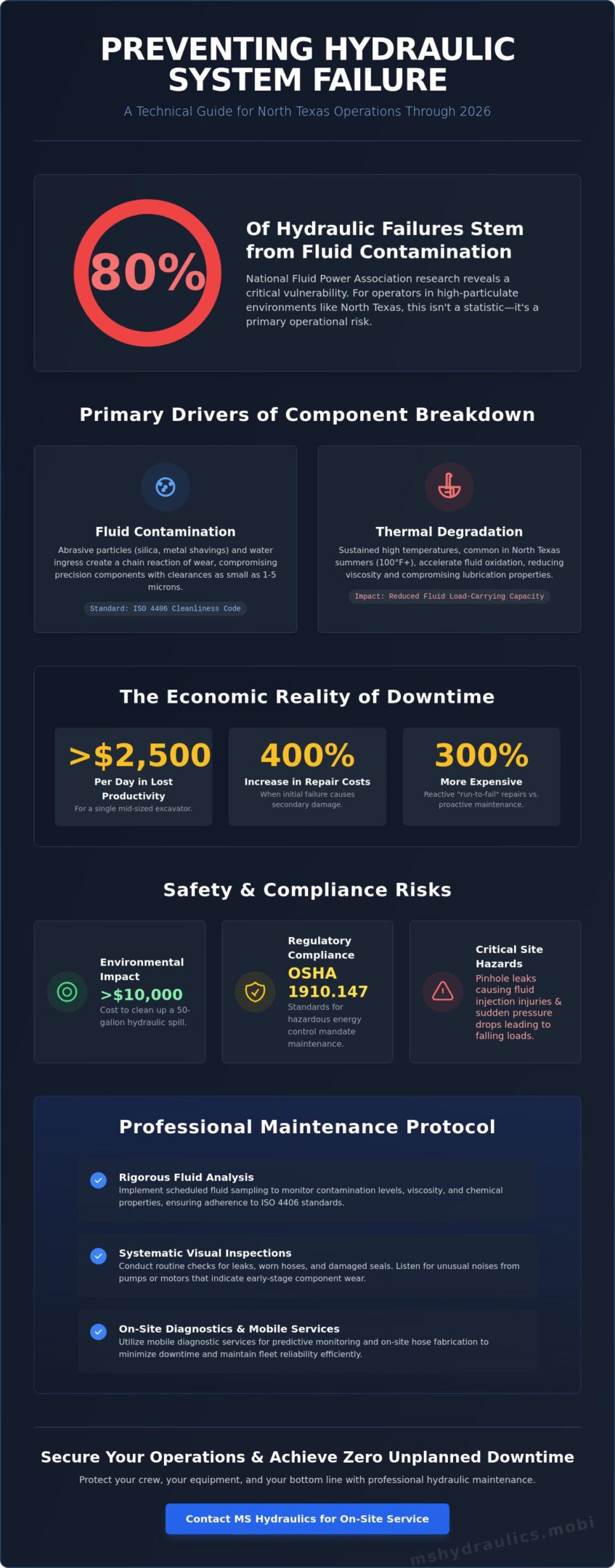
Research from the National Fluid Power Association indicates that 80% of hydraulic component failures stem directly from fluid contamination. For operators in Cleburne and North Texas, where environmental particulate levels and 100-degree Fahrenheit temperatures are common, these statistics aren’t just data points; they represent significant operational risks. You understand that a single hour of unplanned downtime on a high-pressure system can derail a project’s timeline and budget. Maintaining the precise tolerances required for modern pumps and valves is difficult when local environmental factors work against your equipment’s performance.
This article outlines the engineering protocols necessary to prevent hydraulic system failure through 2026. By mastering specific technical strategies and regional maintenance cycles, you’ll secure a more reliable operation and lower your total cost of ownership. We’ll analyze the implementation of ISO 4406 cleanliness standards, the impact of thermal degradation on fluid viscosity, and the predictive monitoring tools that help industrial players achieve zero unplanned downtime. This structured approach ensures your heavy equipment operates within its designed parameters, protecting your crew and your bottom line.
Key Takeaways
- Analyze the technical definition of component degradation and the substantial financial impact of unplanned downtime on DFW-area industrial and agricultural operations.
- Identify the primary drivers of mechanical breakdown, focusing on how fluid contamination and thermal degradation compromise system integrity and fluid viscosity.
- Master regional maintenance protocols specifically designed to prevent hydraulic system failure amidst the extreme summer temperatures and abrasive soil conditions of North Texas.
- Implement a professional maintenance checklist featuring rigorous fluid analysis and systematic visual inspections to detect early signs of component wear.
- Discover the strategic advantages of utilizing on-site diagnostic services and mobile hose fabrication to maintain fleet reliability and extend equipment service life.
Understanding the High Stakes of Hydraulic System Failure in Cleburne
Hydraulic failure is defined as the inability of a mechanical system to perform its intended function due to the degradation of internal components or fluid properties. This isn’t just a mechanical lapse; it’s a total interruption of power transmission that halts production. To effectively prevent hydraulic system failure, operators must recognize that degradation often begins with microscopic particulate contamination or fluid oxidation long before a total seizure occurs. In the heavy machinery sectors of Cleburne and North Texas, where equipment operates under extreme torque and pressure, even a 5% drop in volumetric efficiency can signal an impending breakdown. Gaining a technical grasp of how hydraulic machinery works is essential for identifying these early warning signs within pumps, motors, and complex valve circuits.
Modern fleet management requires a transition from reactive “run-to-fail” mindsets to proactive, data-driven maintenance. Reactive repairs are statistically 300% more expensive than scheduled interventions. By monitoring technical parameters such as fluid viscosity and system temperature, industrial partners can maintain the precision required for high-output operations. This disciplined approach ensures that every component, from the smallest O-ring to the primary displacement pump, meets its engineered service life.
The Economic Reality of Unplanned Downtime
For a construction firm operating in the DFW metroplex, the failure of a single mid-sized excavator can result in costs exceeding $2,500 per day in lost productivity. These figures don’t include the compounding expenses of secondary damage. For instance, when a hose fails and introduces debris into the system, the resulting damage to a piston pump can multiply repair costs by 400%. We define the “Total Cost of Failure” as the aggregate of emergency technician labor, expedited parts procurement, and the significant opportunity cost of idle job sites. In 2026, project timelines are tighter than ever, making unplanned downtime a primary threat to profitability.
Safety Risks and Regulatory Compliance
Safety is the most critical factor in hydraulic management. A pinhole leak in a high-pressure line can cause fluid injection injuries, which are severe medical emergencies requiring immediate surgical intervention. Beyond personnel safety, there are significant environmental and legal liabilities to consider:
- Environmental Impact: In Johnson County, cleaning up a 50-gallon hydraulic spill can cost upwards of $10,000 depending on soil penetration and proximity to water sources.
- Regulatory Standards: Consistent maintenance is required to remain compliant with OSHA 1910.147 standards regarding the control of hazardous energy.
- Site Hazards: Sudden pressure drops can cause heavy loads to fall, creating immediate physical risks to ground crews.
Maintaining rigorous service logs and adhering to ISO 4406 cleanliness standards helps prevent hydraulic system failure while providing a documented trail of safety compliance. This technical diligence protects both the workforce and the company’s standing with industrial regulators.
Root Causes: Identifying the Primary Drivers of Component Breakdown
Understanding the physics of failure is the first step to prevent hydraulic system failure. In North Texas, where summer temperatures frequently exceed 100°F, environmental stressors accelerate component degradation. Most breakdowns aren’t sudden events but the result of cumulative stressors that compromise system integrity over time.
The Mechanics of Contamination
70% to 80% of all hydraulic system failures originate from fluid contamination. Particulate matter, such as silica dust or metallic shavings from internal wear, acts as an abrasive medium. These particles create a chain reaction of wear within precision valves, where even microscopic clearances of 1 to 5 microns are compromised. Water ingress is equally destructive, as it promotes rust and reduces the fluid’s load-carrying capacity. Adherence to the ISO 4406 cleanliness code is essential for maintaining the operational integrity of high-pressure systems.
Heat and Fluid Oxidation
Excessive heat is the primary catalyst for fluid chemical breakdown. For every 18°F increase in temperature above 140°F, the oxidation rate of hydraulic oil doubles. This chemical reaction creates sludge and varnish that coat internal surfaces and clog small orifices. Operators should monitor for a scorched odor or a shift toward a darker, amber hue in the fluid. High temperatures also compromise elastomer seals and O-rings in hydraulic cylinders. Once these components lose their elasticity, internal bypassing and external leaks become inevitable.
Aeration and cavitation represent distinct physical threats to pump efficiency. Aeration occurs when air enters the suction line, leading to spongy operation and erratic actuator movement. Cavitation is more violent; the implosion of vapor bubbles generates localized heat and pressure spikes that erode the pump’s internal surfaces. This erosion reduces volumetric efficiency and alters the pump’s torque-to-pressure ratio. To effectively prevent hydraulic system failure, technicians must ensure that all suction-side connections are airtight and that reservoirs are properly sized to allow air to escape.
Mechanical wear follows a predictable curve. Hose assemblies in high-cycle applications often reach their fatigue limit after 1,000,000 to 2,000,000 pressure impulses. Fittings and cylinder rods also face degradation from side-loading or misalignment. These physical failures are often the final stage of a process that began with minor contamination or thermal stress. Relying on certified engineering standards ensures that replacement components meet the rigorous demands of industrial operation and resist premature fatigue.
The Texas Factor: Preventing Failure Amidst High Heat and Dust
The North Texas climate presents specific mechanical challenges to heavy machinery. In the Dallas-Fort Worth (DFW) region, summer ambient temperatures frequently surpass 100°F for weeks at a time. These conditions accelerate thermal breakdown, where hydraulic fluid loses its lubricating properties and begins to oxidize. To prevent hydraulic system failure, operators must account for the fact that every 18°F increase in temperature above 140°F cuts the service life of the oil in half. It is a critical risk for high-pressure systems.
Combatting Heat-Induced Failure
Maintaining correct viscosity is the first line of defense. Equipment in Cleburne and Alvarado requires fluids with a high viscosity index to ensure a stable film strength when temperatures peak. For most heavy machinery, transitioning from an ISO VG 32 to an ISO VG 46 or 68 provides the necessary protection against thinning. Regular Heavy Equipment Maintenance in the South must include a weekly inspection of heat exchangers. Even a 2mm layer of North Texas dust on cooling fins can reduce heat rejection efficiency by 25%. This leads to pump cavitation and seal hardening. Don’t ignore the cooling circuit during the July-August peak.
Dust Ingress and Seal Protection
The high silica content in Cleburne and Mansfield soil acts as an industrial abrasive. When fine particulates settle on hydraulic cylinder rods, they can bypass standard seals during the retraction stroke. This contamination scores the rod surface and destroys internal components. Industrial operations in Alvarado face 15% higher contamination rates compared to more temperate regions. Reliable performance depends on proactive filtration and environmental sealing.
- Upgrade to Heavy-Duty Wipers: Standard wipers often fail in high-dust environments. Use metal-cased scrapers to clear dried mud and clay before it reaches the primary seal.
- Pre-Service Cleaning: Always pressure wash the area around fittings before opening a circuit. A single grain of sand can cause a catastrophic valve jam.
- Monitor ISO Cleanliness: Aim for an ISO 4406 rating of 16/14/11 to prevent hydraulic system failure in abrasive North Texas conditions.
Fluid selection for the Texas climate isn’t just about heat. It’s about chemical stability. Use fluids with robust anti-wear (AW) packages that can withstand the shear forces of 3,500+ PSI operations while contending with environmental particulates. Managing these variables ensures that your equipment remains operational despite the regional stressors of the DFW Metroplex.
A Professional Maintenance Checklist to Extend Equipment Life
Industrial longevity depends on a disciplined maintenance protocol. To prevent hydraulic system failure, fleet managers in Cleburne must transition from reactive repairs to a predictive framework based on technical data. This structured approach ensures that every component operates within its engineered parameters, reducing the risk of sudden mechanical collapse.
This commitment to specialized preventative care is a standard across all professional maintenance fields; for instance, homeowners often rely on Best Chimney Services to provide the technical inspections necessary to maintain safety and system integrity.
- Step 1: Fluid Analysis. Execute a quarterly ISO 4406 particle count to identify microscopic metallic debris. Detecting 4, 6, and 14-micron particles early allows for corrective action before contamination scores valve spools or pump pistons.
- Step 2: Visual Hose Audits. Inspect for outer cover abrasion and kinking. Exposure of the wire braid leads to oxidation and failure within 48 hours of moisture contact in high-humidity environments.
- Step 3: Performance Benchmarking. Log cycle times and operating pressures. A 15% slowdown in actuator response often signals an internal bypass or a pump efficiency drop that precedes total system lockout.
- Step 4: Proactive Cylinder Service. Schedule a rebuild when bypass leakage exceeds 3% of the rated flow. Waiting for visible external leaks often results in irreversible barrel scoring.
- Step 5: Filter Management. Replace elements based on differential pressure indicators rather than fixed hourly intervals. This ensures maximum protection without risking filter bypass during cold starts or high-flow operations.
Adhering to these steps is the most effective way to prevent hydraulic system failure across heavy-duty applications. Consistent monitoring provides the data necessary to justify scheduled downtime over emergency repairs.
Hose and Fitting Integrity
The danger zone for hose integrity involves bends exceeding the manufacturer’s minimum bend radius, which increases mechanical stress on the wire reinforcement. Utilizing custom Hydraulic Hose Fabrication provides exact length and orientation, eliminating the torque stresses common with universal kits. Every fitting must match the specific system peak pressures; a single mismatched component can compromise the circuit under 5,000 PSI loads.
Cylinder and Valve Management
Drift in a loaded boom or visible oil on the rod indicates a Heavy Equipment Cylinder Rebuild is overdue. Inspect rods for chrome pitting or longitudinal scoring during every shift. These defects act as abrasive files, destroying new seals in under 100 operating hours. Testing valve response ensures that internal leakage won’t generate excess heat, which degrades oil viscosity and accelerates component wear throughout the system.
Schedule a technical assessment with our engineering team at MS Hydraulics to optimize your fleet performance.
Strategic Mobile Solutions: Why Cleburne Fleets Trust Ms. Hydraulics
Maintaining operational readiness in the North Texas industrial sector requires more than reactive maintenance. It demands a partner capable of executing field-level engineering with surgical precision. Ms. Hydraulics serves Cleburne and the broader DFW metroplex by focusing on technical accuracy and rapid response. By utilizing On-Site Diagnostic Services, fleet managers can identify microscopic wear patterns and pressure irregularities before they escalate into catastrophic breaks. This proactive stance is the most effective way to prevent hydraulic system failure across heavy-duty applications.
We bring a fully equipped fabrication shop directly to your job site. This mobility eliminates the typical four-hour round trip required to source specialized fittings or hoses in rural Johnson County. Our technicians manage mobile hose fabrication and expert cylinder rebuilds with tolerances that meet or exceed OEM specifications. We prioritize the underlying physics of your machinery, ensuring every replacement component handles the specific flow rates and thermal loads of your system. Our service model is built on three core pillars:
- Technical Integrity: We use calibrated diagnostic tools to measure system health accurately.
- Component Quality: Every fitting and seal is selected for its ability to withstand 5,000+ PSI environments.
- Engineering Expertise: Our team understands the interplay between pumps, valves, and actuators.
Minimizing Downtime with Mobile Repair
On-site repair removes the logistical burden and high cost of hauling 50,000-pound excavators or dozers to a central shop. We provide rapid response to job sites in Alvarado, Grandbury, and Arlington, often reaching the equipment within 90 minutes of a service call. Our technicians don’t just swap parts. They diagnose the root cause of pressure drops or fluid contamination. Identifying the “why” behind a component’s degradation is vital to ensure long-term reliability and prevent hydraulic system failure during critical project phases.
The Ms. Hydraulics Standard of Excellence
Our commitment to quality is reflected in our selection of premium hose materials and high-grade steel fittings. We operate with the mindset of a disciplined industrial veteran, where technical certifications and rigorous standards dictate every repair. We don’t compromise on seal quality or fluid cleanliness levels. To secure your equipment’s future performance and avoid costly work stoppages, schedule your on-site preventative inspection today. This structured approach to maintenance ensures your fleet remains a reliable asset rather than a liability.
Optimize Your Operational Continuity in North Texas
Maintaining peak performance in Cleburne requires a technical approach to regional environmental challenges. High ambient temperatures in North Texas, which regularly surpass 100 degrees Fahrenheit, accelerate fluid oxidation and seal degradation. By implementing a standardized maintenance protocol, fleets can effectively prevent hydraulic system failure and extend the service life of critical components like cylinders and pumps. Industry benchmarks indicate that rigorous adherence to fluid cleanliness standards can reduce unplanned downtime by up to 35%.
Ms. Hydraulics provides the technical expertise needed to sustain high-pressure operations across Alvarado and the DFW area. Our 24/7 mobile hydraulic repair capabilities ensure that your industrial machinery receives expert cylinder rebuilds without the delay of traditional shop lead times. We utilize precision engineering standards to restore your equipment to its optimal performance parameters. Don’t let heat or dust compromise your production schedule through 2026.
Request an On-Site Diagnostic Service Call in Cleburne & DFW to secure your machinery’s reliability. We’re ready to keep your fleet moving forward with professional excellence.
Frequently Asked Questions
What is the most common cause of hydraulic system failure?
Fluid contamination causes 80% of all hydraulic system failures in industrial machinery. These microscopic particles lead to abrasive wear on precision-machined components like spool valves and piston pumps. To prevent hydraulic system failure, you must maintain an ISO 4406 cleanliness code of 18/16/13 or better. Regular fluid analysis ensures that abrasive silt doesn’t compromise the tight tolerances of your equipment’s internal metal surfaces.
How often should I change my hydraulic fluid in the North Texas climate?
You should change your hydraulic fluid every 1,000 operating hours when working in North Texas temperatures that exceed 100 degrees Fahrenheit. Excessive heat accelerates oil oxidation and reduces viscosity, which leads to rapid component wear. While standard intervals are 2,000 hours, the 40-day streaks of triple-digit heat in Cleburne require more frequent monitoring. Always verify fluid condition using a Total Acid Number test to detect chemical breakdown.
Can I prevent hydraulic pump failure by changing filters more frequently?
Frequent filter changes prevent hydraulic pump failure by removing 99.5% of contaminants before they reach the pump inlet. Use filters with a Beta ratio of 200 or higher to ensure the removal of particles as small as 3 microns. In high-dust environments like North Texas construction sites, replacing filters every 500 hours protects the pump’s rotating group. This proactive maintenance schedule stops the chain reaction of wear caused by circulating debris.
What are the early warning signs of a hydraulic hose failure?
The first signs of impending hose failure include fluid weeping at the crimped couplings and visible wire reinforcement through the outer cover. If you notice a 2-millimeter blister on the hose surface, it indicates a leak in the inner tube. Replace any hose that shows signs of cracking or hardening from UV exposure. These three specific indicators often precede a catastrophic burst that causes immediate system pressure loss and safety hazards.
Is it better to rebuild or replace a leaking hydraulic cylinder?
Rebuilding a leaking cylinder is the preferred option when the chrome rod has less than 0.005 inches of wear and the barrel remains unscored. You can restore 100% of original performance by replacing the seals, wipers, and wear rings with high-grade fluorocarbon components. If the rod is bent more than 0.010 inches per foot, a full replacement becomes necessary. This technical assessment ensures you don’t waste resources on components with structural fatigue.
How does overheating affect the lifespan of my hydraulic components?
Overheating reduces the lifespan of seals and fluids by 50% for every 18-degree Fahrenheit increase above the 140-degree threshold. High temperatures cause nitrile seals to harden and crack, leading to internal leakage across valve ports. In the North Texas summer, oil temperatures reaching 180 degrees will degrade the additive package in 250 hours. Maintaining an operating temperature between 110 and 130 degrees ensures maximum component longevity and system efficiency.
What should I do if I suspect my hydraulic system is contaminated?
Shut down the equipment immediately and draw a 100-milliliter fluid sample for laboratory analysis to identify the contaminant type. If the fluid appears milky, it contains at least 500 parts per million of water. You must flush the entire circuit and replace all filters to prevent hydraulic system failure. Don’t simply top off the reservoir, as this won’t remove the 5-micron particles currently circulating through your sensitive proportional valves.
Do you provide mobile hydraulic repair services in Fort Worth and Dallas?
MS Hydraulics provides 24/7 mobile repair services across Fort Worth, Dallas, and Cleburne with a 90-minute average response time. Our service trucks carry 500 feet of various hose diameters and the specialized crimping tools needed for field repairs. We handle emergency cylinder removals and on-site fluid filtration for industrial and construction fleets. This localized support ensures that North Texas operators experience minimal downtime when critical hydraulic components fail during a project.