Excavator Hydraulic Repair in Arlington, TX: Mobile Solutions to Minimize Downtime
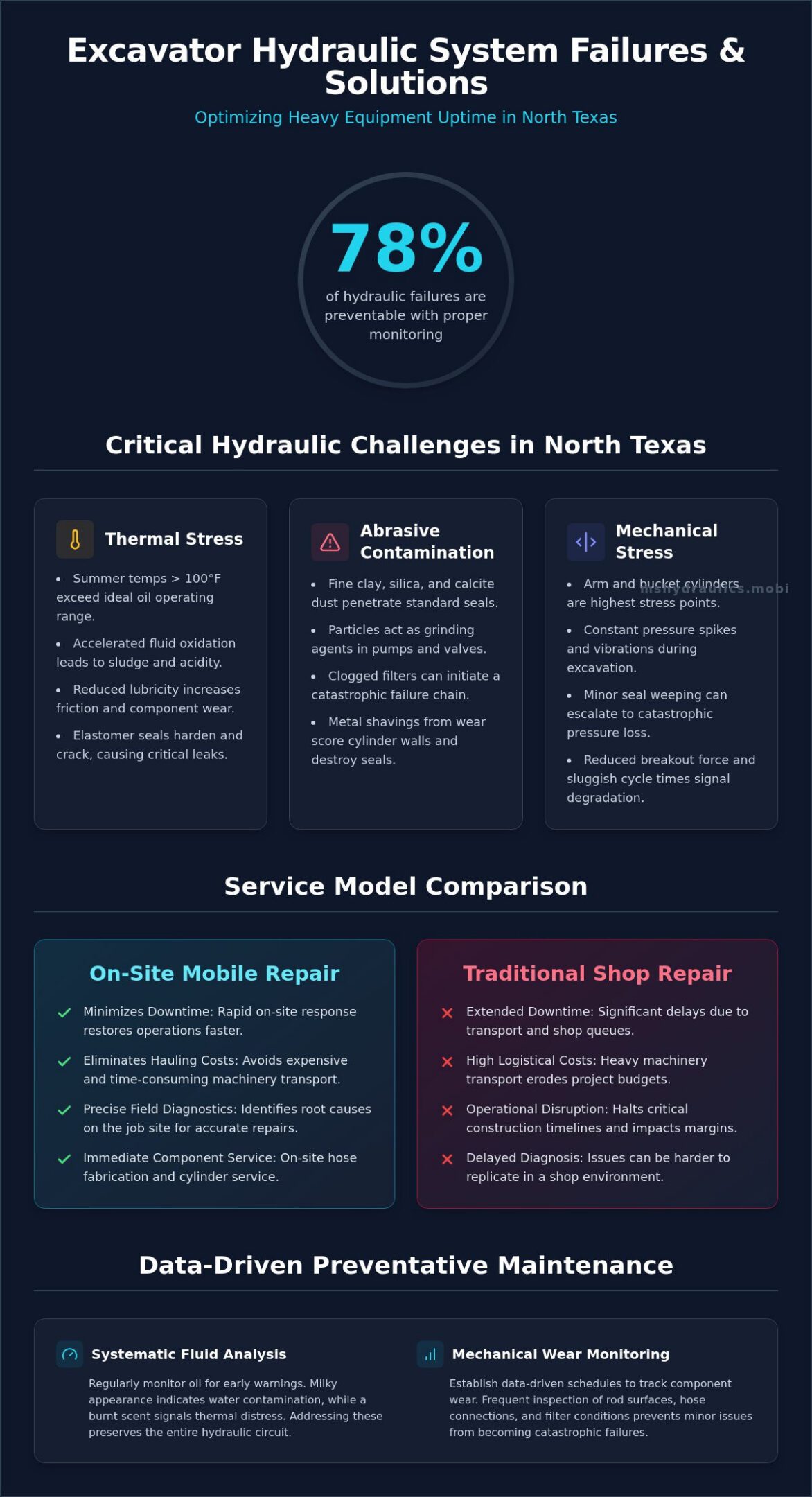
More than 78% of hydraulic system failures are preventable through rigorous monitoring and precise technical intervention. When a primary excavator fails on a high-stakes job site in North Texas, the logistical burden of transporting heavy machinery to a distant facility often compounds the financial impact of project delays. You understand that every hour of inactivity erodes your operational margin and disrupts critical construction timelines. It’s a costly reality that demands a more efficient response than traditional shop-based service models.
Our specialized approach to excavator hydraulic repair Arlington ensures that your machinery returns to peak performance without the need for expensive hauling. You’ll discover how advanced mobile diagnostics and on-site technical solutions restore hydraulic integrity while identifying the specific root causes of component failure. This systematic method prioritizes both speed and mechanical precision to prevent repeat issues and ensure long-term equipment health.
We’ll examine the technical advantages of on-site hydraulic hose fabrication, cylinder rebuilds, and comprehensive system assessments. By focusing on engineering excellence and rapid restoration, you can maintain the reliability of your fleet while meeting the stringent safety and environmental standards required in 2026. This professional overview provides the data you need to minimize downtime and optimize your heavy equipment operations.
Key Takeaways
- Understand how North Texas thermal conditions impact hydraulic fluid viscosity and seal integrity, leading to critical pressure loss in heavy machinery.
- Compare the total cost of ownership between traditional shop-based service and mobile excavator hydraulic repair Arlington to optimize project budgets and logistics.
- Learn the technical precision required for diagnosing high-pressure pumps and complex control valve assemblies within a field environment.
- Establish data-driven preventative maintenance schedules utilizing fluid analysis and mechanical wear monitoring to prevent catastrophic system failures.
- Recognize the operational value of on-site hydraulic hose fabrication and cylinder service in maintaining continuous equipment uptime on active job sites.
Critical Hydraulic Challenges for Excavators on Arlington Job Sites
Hydraulic failure in heavy equipment is technically defined as the inability of the system to maintain design-specified pressure or fluid velocity. This degradation in hydraulic machinery results in reduced breakout force and sluggish cycle times. For operators seeking excavator hydraulic repair Arlington, identifying these performance drops early prevents total component seizure. Arlington’s geological profile and extreme seasonal shifts create a hostile environment for high-pressure systems. The high clay content in local soil generates fine, abrasive dust that can penetrate standard seals. When these particulates enter the system, they act as grinding agents within the pump and valve assemblies.
The arm and bucket cylinders represent the highest stress points in an excavator’s architecture. These components endure constant pressure spikes and mechanical vibrations during heavy excavation. Frequent inspections of the rod surfaces and hose connections at these junctions are mandatory. Without regular assessment, minor weeping at a seal can quickly escalate into a catastrophic loss of pressure that halts production entirely.
The Impact of Thermal Stress in North Texas
Ambient temperatures in Arlington frequently exceed 100°F during summer months, pushing hydraulic oil past its ideal operating window. High thermal loads accelerate fluid oxidation, a chemical breakdown that increases acidity and sludge formation. This process reduces the oil’s lubricity, leading to increased friction and metal-to-metal contact. Excessive heat also causes elastomers in seals to lose their elasticity. Hardened seals eventually crack, resulting in external leaks and internal pressure bypass. Selecting a high-viscosity index (VI) fluid is essential for maintaining consistent film strength in the Texas heat.
Contamination Control in Excavator Systems
Arlington construction zones often feature high concentrations of silica and calcite dust. These particles are often smaller than the human eye can see, yet they’re large enough to jam the tight tolerances of a control valve. Using micron-rated filters is the primary defense against this ingress. A single failure in the filtration circuit initiates a catastrophic failure chain. Metal shavings from a worn pump migrate through the lines, scoring cylinder walls and destroying motor seals. Maintaining strict contamination control protocols is the only way to ensure long-term reliability of excavator hydraulic repair Arlington solutions.
Effective maintenance requires a disciplined approach to fluid health. Monitoring the clarity and scent of the oil can provide early warnings of contamination or overheating. If the fluid appears milky, it’s likely contaminated with water; if it smells burnt, it’s reached a state of thermal distress. Addressing these indicators immediately preserves the integrity of the entire hydraulic circuit.
Comprehensive Diagnostic and Repair Services for Excavator Components
Modern excavators rely on a sophisticated interplay between high-pressure fluid dynamics and electronic feedback loops. Effective excavator hydraulic repair Arlington requires more than just replacing damaged hoses; it necessitates a deep understanding of component synergy. Precision diagnostics identify why a pump is underperforming or why a travel motor has lost torque. Without a methodical approach to troubleshooting, technicians risk replacing functional parts while the underlying mechanical fault remains unaddressed.
The integration of electronic control units (ECUs) with hydraulic hardware has transformed diagnostic procedures. Sensors monitor pressure, temperature, and spool position in real-time. Troubleshooting these systems involves verifying that electrical signals correctly translate into mechanical movement. A mismatch here often mimics hydraulic failure, making expert-level on-site diagnostic services essential for accurate root-cause identification and rapid restoration of machine function.
Excavator Pump and Motor Restoration
High-pressure hydraulic pumps are the heart of the excavator’s power circuit. Cavitation and aeration are distinct but equally destructive phenomena that compromise pump health. Cavitation occurs when local pressure drops below the fluid’s vapor pressure, causing bubbles to collapse with enough force to erode hardened steel. Aeration introduces atmospheric air into the suction side, leading to fluid oxidation and spongy controls. Restoring travel motors involves inspecting planetary gear sets and monitoring case drain pressure, which serves as a key indicator of internal motor wear. Every excavator hydraulic repair Arlington project involving motors must conclude with a dynamic test to confirm that torque output is balanced across both tracks. Inefficiencies in swing motors often manifest as drift or a failure to maintain a fixed position on a slope, requiring an evaluation of the integral brake assembly and relief valve settings.
Control Valve and Manifold Troubleshooting
The multi-spool control valve acts as the brain of the hydraulic circuit, managing simultaneous functions like boom lift and bucket curl. When internal tolerances exceed specified limits, fluid bypasses the spool, leading to the gradual drift of the boom or arm. Troubleshooting this requires a methodical approach to isolate the failed circuit from the primary manifold. Precision cleaning removes microscopic contaminants that could otherwise score newly installed seals. Resealing these complex blocks restores the machine’s ability to hold heavy loads stationary, which is vital for safety on congested work sites. By maintaining the integrity of the manifold, operators ensure that hydraulic energy is directed with maximum efficiency and minimal heat generation.
Mobile vs. Shop Repair: Evaluating the Most Efficient Option
Selecting between shop-based service and mobile intervention requires a precise calculation of the total cost of ownership (TCO). While shop invoices might appear straightforward, they don’t account for the substantial indirect costs of equipment transport and extended downtime. Excavator hydraulic repair Arlington is most effective when performed at the point of failure. This eliminates the technical and administrative necessity of securing specialized hauling permits or coordinating pilot cars for oversized machinery moves. By repairing the unit on-site, you maintain control over the equipment’s location and security throughout the service duration.
Arlington’s infrastructure, particularly along the I-30 and Highway 360 corridors, presents significant logistical constraints for heavy machinery transport. A mobile service unit bypasses these traffic variables, arriving with the specialized tools required for excavator hydraulic repair Arlington. This mobile capability includes on-site hydraulic hose fabrication. Technicians can measure, cut, and crimp new high-pressure lines immediately, which is significantly faster than the traditional process of ordering pre-fabricated assemblies and waiting for delivery.
Eliminating Transport Logistics and Downtime
Scheduling a low-boy trailer for a standard 20-ton or 50-ton excavator often results in 24 to 48 hours of lost productivity before the machine even reaches a facility. This idle time compounds the financial impact of project delays. On-site service allows for immediate diagnostic verification the moment the technician arrives. For organizations managing regional fleets, utilizing mobile hydraulic repair Cleburne TX provides a streamlined template for maintaining high uptime across the DFW metroplex. The ability to perform repairs exactly where the machine sits ensures that the project timeline remains intact and operational momentum is preserved.
Field Diagnostics: Seeing the Problem in Real-Time
Certain hydraulic anomalies, such as intermittent pressure drops or specific thermal spikes, often only manifest when the machine is under a heavy mechanical load. In a sterile shop environment, replicating these exact field conditions is technically difficult. Field diagnostics allow the technician to observe the machine’s behavior during actual digging and lifting cycles. Direct communication between the technician and the operator facilitates a more accurate diagnostic process, as the operator can describe the “feel” of the controls during failure. Modern mobile service trucks are equipped with specialized hardware, including:
- High-capacity hydraulic crimping stations for on-site hose fabrication
- Digital flow meters and pressure transducers for real-time circuit analysis
- A comprehensive inventory of O-rings, seals, and JIC/ORFS adapters
- Specialized vacuum systems to prevent fluid loss and contamination
This technical readiness ensures that the root cause is identified and rectified in a single site visit, providing a level of efficiency that shop-based models struggle to match.
Preventative Maintenance Protocols to Extend Component Life
Implementing a disciplined preventative maintenance (PM) strategy is the most effective method for reducing the frequency of excavator hydraulic repair Arlington. Technical data indicates that over 78% of hydraulic failures stem from fluid contamination or neglected mechanical wear. By shifting from a reactive to a proactive model, fleet managers can significantly extend the mean time between failures (MTBF). This approach requires a combination of daily visual inspections, periodic fluid sampling, and precise calibration of system pressure settings to ensure the machine operates within its design parameters.
Maintaining correct system pressure (PSI) is critical for protecting the structural integrity of pumps and valves. Relief valves must be tested and calibrated to factory specifications; settings that are too high cause premature seal failure and structural fatigue, while low settings result in inefficient cycle times. If you observe consistent performance drops, engaging professional on-site diagnostic services can identify if the issue lies in pressure regulation or internal component wear before a total breakdown occurs.
The Role of Fluid Analysis in Fleet Health
Fluid analysis serves as an internal diagnostic tool, identifying microscopic metal particle counts that signal the early stages of component degradation. For high-utilization excavators operating in the abrasive Arlington soil, sampling should occur every 250 to 500 hours. High levels of chromium or iron in the oil often predict impending pump or motor failure. Following a comprehensive Heavy Equipment Maintenance schedule ensures that these indicators are captured early, allowing for planned repairs rather than emergency interventions.
Cylinder Care and Rod Maintenance
Cylinder rods are susceptible to scoring and polishing, which directly compromises the effectiveness of the primary seals. When the rod surface becomes damaged, it allows external contaminants to bypass the wiper seal and enter the high-pressure circuit. Identifying these issues early determines whether a standard seal replacement or a more intensive heavy equipment cylinder rebuild is necessary. Damaged wipers are often the primary entry point for dust, initiating a failure chain that eventually affects the entire manifold. Regular rod polishing and seal inspections are essential for maintaining the volumetric efficiency of the hydraulic system.
Daily operator inspections provide the first line of defense. A standard checklist for excavator hydraulic repair Arlington prevention should include:
- Inspection of cylinder rods for deep scratches, pitting, or signs of impact.
- Verification of hose routing to prevent abrasion against the machine frame.
- Checking for weeping at JIC and ORFS fittings, which indicates seal hardening.
- Monitoring hydraulic oil temperature gauges for deviations from normal operating ranges.
- Inspecting the integrity of breather caps to ensure no atmospheric dust enters the reservoir.
This methodical attention to detail preserves the machine’s legacy of reliability and ensures that minor mechanical variances don’t escalate into project-stopping failures.
Ms. Hydraulics LLC: Expert Mobile Excavator Repair in Arlington
Ms. Hydraulics LLC operates as a strategic technical partner for organizations requiring high-precision excavator hydraulic repair Arlington. By deploying fully equipped mobile service units directly to the job site, we eliminate the logistical inefficiencies associated with traditional repair facilities. Our objective remains clear: restore mechanical integrity and maximize equipment availability through engineering-led solutions. We don’t just fix symptoms; we address the underlying mechanical faults that lead to system degradation. This disciplined approach ensures that repairs are not merely temporary fixes but are sustainable technical restorations.
Our technicians specialize in complex hydraulic circuits, providing on-site hose fabrication and cylinder service that meets or exceeds OEM specifications. We recognize that industrial and construction sectors depend on the continuous operation of their fleets. Establishing long-term partnerships with Ms. Hydraulics LLC allows us to integrate seamlessly with your operational requirements. This provides a reliable buffer against unexpected mechanical failure and ensures that your equipment maintains its performance legacy over a long service life. We prioritize factual accuracy and technical verification in every intervention.
Specialized On-Site Capabilities
The capacity to perform On-Site Diagnostic Services for multi-functional hydraulic systems is a cornerstone of our service model. We maintain a comprehensive inventory of high-pressure fittings and hoses, enabling immediate fabrication regardless of the machine’s location. Our technical experience spans major excavator brands, including Caterpillar, Komatsu, and John Deere. This broad expertise ensures that specific internal nomenclature and manufacturer-specific pressure settings are correctly applied during every repair. It’s a level of precision that guarantees the machine returns to work with full breakout force and optimal cycle times. Our units are outfitted with the same high-tier instrumentation found in major industrial facilities.
Serving the Arlington Construction Community
Our service footprint encompasses the entire Arlington area, extending into Mansfield and Granbury to support the regional construction infrastructure. We invite fleet managers to evaluate the benefits of preventative maintenance contracts, which leverage data-driven inspections to prevent catastrophic system failure. These agreements provide a structured approach to fleet health, utilizing the protocols discussed in previous sections to minimize total cost of ownership. For organizations facing immediate mechanical obstacles, our mobile units provide the rapid response necessary to keep projects on schedule. If you require emergency technical support to address a hydraulic failure, contact Ms. Hydraulics LLC to initiate a diagnostic dispatch and restore your operational momentum.
While ensuring your heavy equipment remains operational is a priority, optimizing your administrative workspace with professional furniture is also key to project success; for those looking to furnish a site office cost-effectively, you can explore Used Cubicles to support your management team.
Optimizing Equipment Availability through Engineering-Led Solutions
Transitioning to a mobile-first service model is a strategic decision that aligns with modern industrial efficiency standards. By integrating the preventative maintenance protocols and advanced on-site diagnostics previously discussed, operators can effectively mitigate the risks associated with North Texas environmental stressors. This engineering-led approach ensures that hydraulic systems maintain their volumetric efficiency while avoiding the logistical bottlenecks and transport costs of traditional shop-based repair models. It’s a disciplined method for maintaining fleet reliability in a high-demand construction environment.
Our mobile units deliver specialized on-site technician labor for immediate diagnostics and custom hose fabrication in the field. This capability is critical for heavy equipment like excavators and drill rigs, where every hour of downtime directly correlates with a loss in project momentum. When you require professional excavator hydraulic repair Arlington, selecting a partner with a dedicated focus on mechanical precision is the most efficient path to system restoration. We ensure that every component is returned to its design-specified performance level.
The same principles of mechanical precision and reliable service apply to all critical fluid systems, including residential infrastructure; for expert assistance with home water systems, Simple Plumbing Inc delivers high-quality technical support to keep your property running smoothly.
Contact Ms. Hydraulics LLC for Expert Mobile Repair in Arlington to stabilize your project timelines and secure your fleet’s operational future. We remain committed to providing the technical excellence and rapid response required to keep your machinery in peak performance.
Frequently Asked Questions
How much does mobile excavator hydraulic repair cost in Arlington?
Service costs are calculated based on the specific technical requirements of each mechanical failure. Factors influencing the final invoice include diagnostic labor hours, the complexity of the hydraulic circuit, and the specific components required for restoration. We provide detailed assessments for every project to ensure transparency and accurate budgeting for fleet managers.
Can you fabricate custom hydraulic hoses on-site in Arlington?
Yes. Our mobile service trucks are equipped with specialized crimping stations and a comprehensive inventory of high-pressure hoses and fittings. This allows for immediate on-site fabrication of custom lines that meet or exceed original equipment manufacturer specifications. This capability significantly reduces the idle time associated with ordering pre-fabricated assemblies.
What are the signs that my excavator hydraulic pump is failing?
Technical indicators of pump failure include unusual whining or grinding noises caused by cavitation or aeration. You might also notice a significant increase in hydraulic fluid temperature or a noticeable loss of breakout force. Sluggish cycle times and erratic control response often signal that the pump can no longer maintain design-specified pressure or flow velocity.
Do you provide emergency 24/7 hydraulic repair services for Arlington job sites?
Our mobile units are optimized for rapid response to minimize project interruptions during standard operational cycles. While we prioritize urgent mechanical failures, you should verify current scheduling availability for specific emergency technical support. We focus on providing disciplined, professional intervention to restore your equipment as quickly as possible.
Is it better to rebuild or replace a hydraulic cylinder?
Rebuilding is typically the most efficient engineering solution if the cylinder barrel and rod remain structurally intact. A professional rebuild involves replacing all internal seals, wipers, and wear bands while polishing the rod surface to ensure a leak-free high-pressure seal. Replacing the entire unit is only recommended when there is catastrophic structural damage to the barrel or deep scoring on the rod.
What excavator brands do you service for hydraulic repairs?
Technical expertise extends to all major heavy equipment manufacturers, including Caterpillar, Komatsu, John Deere, and Volvo. Each excavator hydraulic repair Arlington project utilizes manufacturer-specific pressure settings and technical documentation. This ensures that every repair aligns with the precise engineering parameters of your specific machine model.
How long does a typical on-site hydraulic diagnostic call take?
A comprehensive diagnostic assessment generally requires one to three hours, depending on the complexity of the hydraulic and electronic control systems. This process involves utilizing digital flow meters and pressure transducers to isolate the failure point. Identifying the root cause accurately during this window prevents the need for repeat visits and ensures a successful first-time repair.
Can you repair hydraulic leaks on-site without moving the machine?
Yes. On-site technical solutions are specifically designed to address leaks at the point of failure, eliminating the need for expensive equipment hauling. Our technicians can reseal fittings, replace damaged hoses, and address component-level leaks while the machine remains on the job site. This approach preserves your operational momentum and avoids the logistical constraints of Arlington traffic.