Agricultural Hydraulic System Troubleshooting in Johnson County: A Technical Field Guide
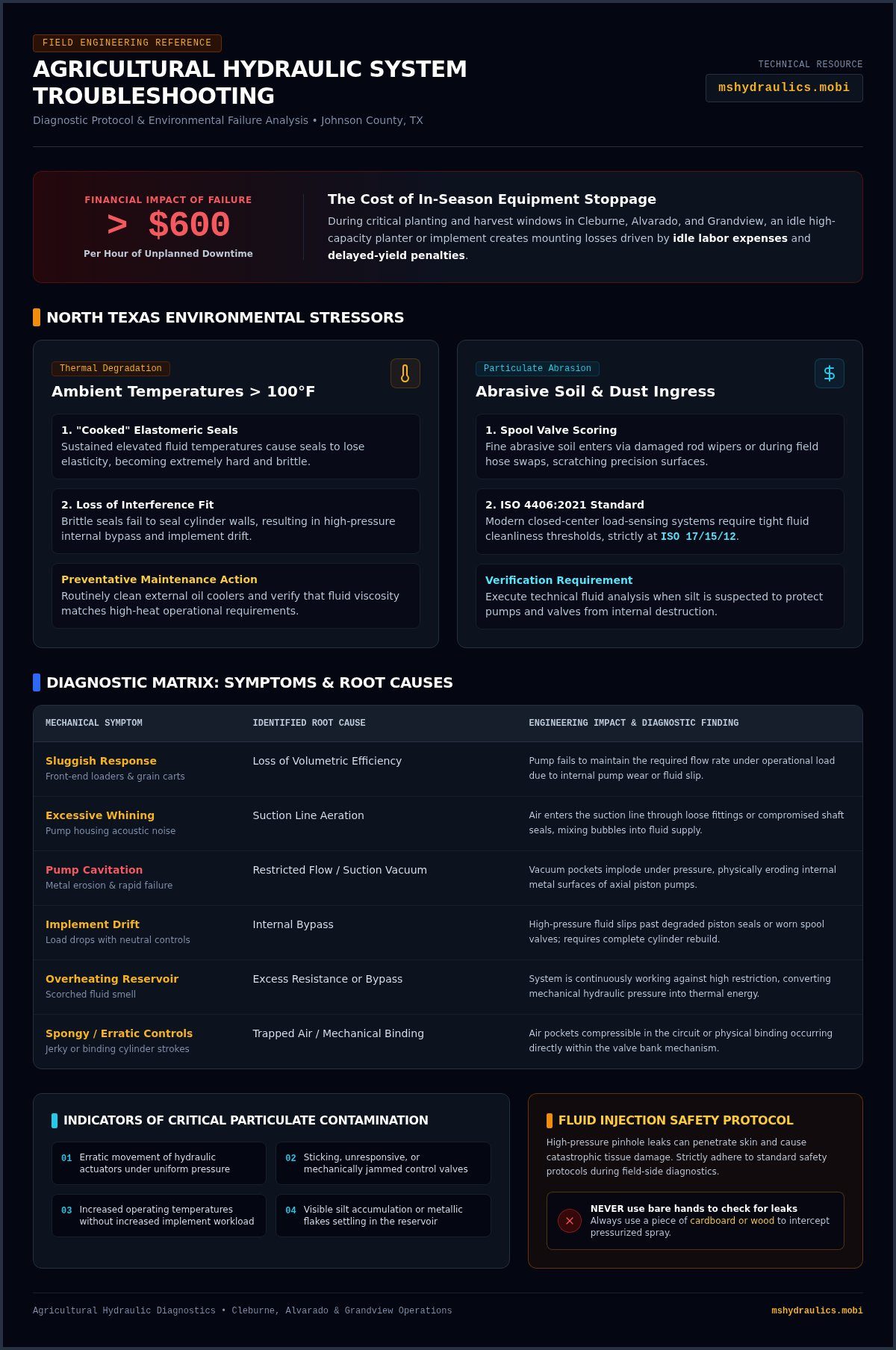
A high-capacity planter sitting idle in a Cleburne field during the peak planting window represents more than just a mechanical failure; it is a direct hit to your season’s bottom line. When a vital implement stops responding, the pressure to resume operations often leads to rushed decisions or the high cost of hauling heavy machinery to a distant repair shop. We understand that for operators in Alvarado and Grandview, every hour of unplanned downtime can result in losses exceeding $600 when factoring in idle labor and delayed-yield penalties. Maintaining the mechanical integrity of your fleet requires a disciplined approach to maintenance and diagnostics.
This technical field guide focuses on the precise protocols for agricultural hydraulic system troubleshooting in Johnson County to help you identify failures with engineering accuracy. You’ll master the diagnostic steps needed to differentiate between simple hose fatigue and complex pump cavitation. We will also examine the critical ISO 4406 cleanliness standards for modern closed-center load-sensing systems and provide the verification criteria for when a cylinder rebuild is necessary. By implementing these rigorous field-side standards and utilizing on-site fabrication, you can minimize equipment downtime and maintain the operational excellence your farm demands.
Key Takeaways
- Identify how North Texas environmental stressors, such as extreme heat and particulate contamination, accelerate hydraulic component degradation and lead to system failure.
- Execute a systematic 5-step protocol for agricultural hydraulic system troubleshooting in Johnson County to isolate points of failure using visual and thermal diagnostic techniques.
- Interpret mechanical symptoms like pump cavitation and sluggish cylinder response to determine whether a field fix or a professional cylinder rebuild is required.
- Recognize the performance risks associated with generic hose replacements and the advantages of on-site fabrication for maintaining high-pressure system specifications.
- Leverage mobile diagnostic services in Cleburne and Alvarado to eliminate the high costs of machinery transport and minimize critical downtime during harvest or planting.
Identifying Common Hydraulic Failures in Johnson County Ag Equipment
Effective agricultural hydraulic system troubleshooting in Johnson County begins with a clear distinction between gradual pressure loss and sudden mechanical breakdown. Pressure loss often manifests as a decline in cycle times or lifting capacity; mechanical breakdown involves the physical failure of components like fractured pump shafts or sheared pins. Understanding fluid power and hydraulic machinery fundamentals is essential for diagnosing these issues correctly. In tractor implements, operators must distinguish between external leaks, visible as fluid weeping at fittings, and internal leaks. Internal bypass occurs when fluid slips past worn piston seals or valve spools, causing “drift” where a load slowly drops while controls are neutral. Immediate intervention is required to prevent pump cavitation, which occurs when restricted flow or aeration causes vacuum pockets to implode, eroding metal surfaces.
The Impact of Texas Heat on Hydraulic Seals
Ambient temperatures in North Texas often exceed 100 degrees Fahrenheit, which accelerates the thermal degradation of elastomeric seals. When hydraulic fluid temperatures remain elevated, seals lose their elasticity and become “cooked.” This state is characterized by extreme hardening and brittleness. Brittle seals cannot maintain the necessary interference fit within a cylinder, leading to high-pressure bypass. For operations in Cleburne and Alvarado, preventative measures include cleaning oil coolers and ensuring fluid viscosity remains within the manufacturer’s specified range for high-heat environments. If a cylinder begins to bypass internally, it’s a sign that the seals have reached their thermal limit and require professional replacement.
Dust and Contamination in Field Hydraulics
The fine, abrasive soil across Johnson County poses a constant threat to hydraulic integrity. Particulate matter enters the system through damaged rod wipers or during field-side hose swaps. This contamination causes valve scoring, where grit scratches the precision-ground surfaces of spool valves, leading to uncontrollable internal leakage. Modern closed-center load-sensing systems require strict adherence to ISO 4406:2021 cleanliness standards. Particulate counts must be kept within tight thresholds, typically ISO 17/15/12, to prevent premature wear.
Common indicators of high particulate contamination include:
- Erratic movement of hydraulic actuators
- Sticking or unresponsive control valves
- Increased operating temperatures without increased load
- Visible silt or metallic flakes in the hydraulic reservoir
If you notice these symptoms, a technical fluid analysis is the most reliable way to verify if silt contamination has reached critical levels. Precise agricultural hydraulic system troubleshooting in Johnson County requires looking beyond the visible leak to the invisible contaminants that destroy pumps and valves from the inside.
Technical Troubleshooting: Symptoms and Likely Causes
Sluggish response in implements like front-end loaders or grain carts often indicates a drop in volumetric efficiency. This occurs when the pump cannot maintain the flow rate required by the actuators under load. While Section 1 addressed environmental stressors, this technical phase of agricultural hydraulic system troubleshooting in Johnson County focuses on isolating specific mechanical malfunctions. Excessive whining from the pump usually points to aeration, where air enters the suction line through a loose fitting or a damaged seal. Conversely, an overheating reservoir or a scorched fluid smell suggests that the system is working against high resistance or that internal bypass is converting hydraulic pressure into heat.
Spongy controls or erratic implement movement often signal trapped air or mechanical binding within the valve bank. When inspecting for these issues, operators must follow Penn State Extension agricultural hydraulics safety guidelines to avoid high-pressure fluid injection. Never use hands to check for pinhole leaks; instead, utilize a piece of cardboard or wood to detect fluid discharge. Identifying these symptoms early prevents the catastrophic failure of expensive axial piston pumps or complex valve spools.
Diagnosing Cylinder Drift and Power Loss
Cylinder drift is a primary concern in agricultural hydraulic system troubleshooting in Johnson County. If a loader bucket drops while the control is in neutral, the fault lies in either the piston seals or the directional control valve. A reliable field test involves extending the cylinder to its limit, safely relieving pressure, and disconnecting the return line. If fluid continues to bypass the piston while the system is pressurized, the internal seals are compromised. For those requiring detailed restoration protocols, consulting a guide on Hydraulic Cylinder Rebuild in Texas provides the necessary engineering context for a successful repair.
Pump and Valve Malfunctions
Aeration and cavitation are distinct phenomena that both lead to rapid pump degradation. Aeration creates a high-pitched whine and occurs when external air enters the fluid loop. Cavitation creates a distinctive “marbles in the pump” sound and results from a vacuum at the inlet, often caused by a clogged suction strainer. Both conditions require immediate attention to prevent internal metal erosion. Additionally, relief valves must be checked against manufacturer PSI specifications to ensure the system isn’t constantly bypassing fluid at the main block. Accurate assessment often requires specialized flow meters and pressure gauges, making on-site diagnostic services a strategic choice for maintaining operational uptime without hauling the machine to a shop.
Comparing DIY Field Fixes vs. Professional Mobile Repair
Operating high-PSI machinery involves inherent risks that temporary field fixes often exacerbate. While a quick patch might seem like a solution during a tight harvest window, it usually ignores the rigorous engineering requirements of modern implements. Professional agricultural hydraulic system troubleshooting in Johnson County requires a level of precision that generic, off-the-shelf components simply don’t provide. The total cost of ownership for a tractor or combine isn’t just the price of a replacement part; it’s the cumulative loss of productivity when a machine sits idle. Expert intervention ensures that repairs meet OEM standards, which significantly reduces the risk of secondary failures that could double your seasonal downtime.
The False Economy of “Big Box” Hydraulic Hoses
Sourcing hoses from general farm supply stores often introduces fitting compatibility issues that lead to immediate leaks. A mismatch between JIC, NPT, and ORFS (O-Ring Face Seal) fittings frequently results in high-pressure weeping or catastrophic thread stripping. These generic hoses often lack the impulse fatigue resistance necessary for high-cycle agricultural applications. Adhering to OSHA criteria for hydraulic hose replacement and system modifications is essential for maintaining operator safety. These guidelines highlight the dangers of using unrated components that can lead to blistering or sudden bursts under load. Custom fabrication ensures that every hose matches the original equipment manufacturer’s pressure rating and physical routing, preserving the system’s hydraulic integrity.
Benefits of On-Site Mobile Diagnostics
Moving large implements to repair shops in Cleburne or Alvarado involves complex logistics and substantial hauling fees. Mobile repair units eliminate these obstacles by bringing specialized diagnostic equipment directly to your location. Technicians can execute pressure and flow testing under actual operating conditions, which is vital for identifying intermittent faults that don’t appear in a stationary shop. This real-time assessment isolates issues in valve banks or pump compensators while the system is at its working temperature. Leveraging On-Site Diagnostic Services allows for an immediate, data-driven identification of failure points. This professional approach to agricultural hydraulic system troubleshooting in Johnson County ensures that your equipment returns to service with verified performance levels.
5-Step Diagnostic Protocol for Agricultural Hydraulics
A structured approach is the most effective way to manage unplanned downtime. For operators performing agricultural hydraulic system troubleshooting in Johnson County, following a sequential protocol prevents the common mistake of replacing functional parts while the root cause remains unaddressed. Field-side diagnostics must move from the most accessible visual indicators to more complex circuit isolations. This methodical flow ensures that every variable, from fluid levels to internal pressure bypass, is verified before a repair is initiated.
Conducting a Safe Visual Inspection
Safety is the primary requirement for any inspection. Before approaching the machine, you must implement proper lockout/tagout procedures to ensure the implement cannot move unexpectedly. Pinhole leaks are a significant hazard; fluid injection can occur at pressures as low as 100 PSI. Never use your hands to feel for leaks. Instead, pass a piece of cardboard or wood near suspected fittings to detect high-pressure spray. During this phase, check for hose abrasion points, particularly near moving implement joints where repeated vibration can wear through the outer reinforcement layers. Verify that fluid levels are within the OEM operating range, as low levels often lead to pump aeration.
Step 2: Thermal Assessment of Components. Use an infrared thermometer to scan the system. Components like valve spools or cylinders that show a localized temperature spike often indicate internal bypass, where high-pressure fluid is slipping past seals and generating heat through friction.
Step 3: Pressure Testing and Cycle Time Analysis. Compare the current speed of your implements against the manufacturer’s cycle time specifications. If a loader bucket takes twice as long to reach full extension, you’re likely dealing with a drop in volumetric efficiency.
Isolating the Root Cause
Step 4: Isolation of the Failed Circuit. To determine if a fault is localized, you can temporarily bypass specific valves to test individual cylinder performance. If the pump serves multiple functions but only one implement is sluggish, the issue is downstream in the valve bank or the cylinder itself. Document every symptom, including noise levels and pressure readings, to provide a detailed history for the technician. You must stop operation immediately if you suspect silt contamination or see metallic flakes in the fluid. Continuing to run a compromised system can lead to total pump failure and widespread circuit contamination.
Step 5: Professional Consultation for Component Rebuilds. Once the failure point is isolated, determine if the component requires specialized restoration. If your diagnostic steps indicate internal scoring or pump wear, you should request a mobile hydraulic repair unit to perform a technical verification and facilitate an on-site solution. This professional intervention ensures that agricultural hydraulic system troubleshooting in Johnson County results in a long-term fix rather than a temporary patch.
Engineering-Grade Repair for Johnson County Farmers
Ms. Hydraulics LLC specializes in providing technical solutions that align with the rigorous demands of the North Texas agricultural sector. Our mobile service units are engineered to perform complex agricultural hydraulic system troubleshooting in Johnson County directly at the point of failure. By focusing on precision and technical accuracy, we serve as a disciplined partner for operators in Cleburne, Alvarado, and Grandview. We understand that equipment reliability is the primary factor in maintaining seasonal productivity. Our approach eliminates the logistical burden of transporting heavy machinery, allowing farmers to focus on their core operations while we restore system integrity through verified engineering protocols.
Custom Mobile Hose Fabrication in the Field
The ability to manufacture high-pressure lines on-site is a critical advantage during planting and harvest. Our mobile units carry a comprehensive inventory of multi-spiral hoses and specialized fittings, including JIC, ORFS, and metric DIN standards. We utilize precision crimping technology that meets or exceeds original equipment manufacturer specifications. This on-site capability ensures that every replacement hose is routed correctly to prevent future abrasion or mechanical interference. Precision is mandatory for maintaining the volumetric efficiency of your tractor or harvester. By providing immediate fabrication in the field, we get your equipment back in the furrow without the delays associated with parts-counter runs or generic component sourcing.
Expert Cylinder and Component Rebuilds
When internal bypass or physical damage compromises a cylinder, a standard seal replacement is often insufficient. Our technical expertise in cylinder rebuilds involves a comprehensive restoration process. This includes full disassembly, thorough cleaning, and a detailed inspection of the barrel and rod surfaces. We provide rod polishing and machining services to address scoring or pitting that can lead to premature seal failure. Every rebuilt component undergoes rigorous pressure testing to verify that it can handle the high-impulse loads typical of modern agricultural implements.
Maintaining a fleet of complex machinery requires more than just reactive fixes. It demands a structured maintenance philosophy that prioritizes long-term performance over temporary patches. For operators seeking to improve their overall fleet reliability, our guide on Heavy Equipment Maintenance in Cleburne provides deeper insights into the engineering standards required for industrial-grade restoration. Our commitment to excellence ensures that every repair, from a simple hose swap to a complex valve bank calibration, contributes to the sustained operational success of your farm. Reliable agricultural hydraulic system troubleshooting in Johnson County is the foundation of a high-performing agricultural operation.
Optimizing Fleet Reliability Through Engineering-Grade Maintenance
Achieving consistency in agricultural hydraulic system troubleshooting in Johnson County requires a transition from reactive patching to a disciplined diagnostic framework. By implementing a structured 5-step protocol and adhering to rigorous ISO cleanliness standards, operators can effectively mitigate the high costs of unplanned downtime. We’ve established that generic hose replacements frequently fail to meet the impulse fatigue requirements of modern implements; therefore, custom fabrication remains a technical necessity for long-term reliability. Maintaining the mechanical integrity of your fleet ensures that seasonal windows for planting and harvest are fully utilized without the interruption of preventable component failures.
Ms. Hydraulics LLC provides the specialized technical support required to maintain these high standards in the field. As a locally owned and operated entity based in Cleburne, we offer on-site diagnostic expertise and custom hose fabrication while you wait. These mobile services eliminate the logistical challenges of hauling heavy machinery and ensure that every repair meets or exceeds OEM performance criteria. It’s our priority to deliver the precision needed for complex agricultural systems across Alvarado and Grandview. Request Emergency Mobile Hydraulic Repair in Johnson County to restore your equipment to full operational capacity and secure your season’s productivity.
Frequently Asked Questions
How do I know if my hydraulic hose needs a custom fabrication or just a patch?
Hydraulic hoses on agricultural machinery should never be patched due to the extreme pressure levels they sustain during operation. Any sign of wire braid exposure, blistering, or weeping at the coupling indicates a need for immediate replacement. Custom fabrication ensures the new hose matches the exact length and pressure rating required by the manufacturer. This prevents routing issues and premature fatigue that often lead to secondary failures in the field during critical harvest windows.
What are the most common hydraulic problems on hay balers in Johnson County?
Hay balers in North Texas frequently experience failures in the tensioning circuits and gate lift cylinders. These issues are often exacerbated by the high vibration levels and heavy particulate accumulation typical of haying operations. Routine agricultural hydraulic system troubleshooting in Johnson County reveals that valve block leaks and worn rod wipers are the most common culprits. Addressing these leaks early prevents the loss of bale density and ensures the mechanical longevity of the implement.
Can Ms. Hydraulics LLC perform on-site diagnostics in Alvarado or Grandview?
Ms. Hydraulics LLC provides comprehensive on-site diagnostics and mobile repair services throughout Alvarado, Grandview, and the surrounding areas. Our technicians are equipped with specialized pressure testing and flow metering tools to identify faults directly in the field. This mobile capability eliminates the need for expensive machinery hauling and allows for real-time testing under actual working loads. By bringing the shop to your location, we minimize downtime and maintain your equipment’s operational efficiency.
What is the difference between hydraulic pump aeration and cavitation?
Aeration occurs when air enters the hydraulic fluid through a leak in the suction line or a damaged shaft seal, resulting in a high-pitched whine. Cavitation is a distinct phenomenon caused by a vacuum at the pump inlet, often due to a restricted suction strainer or high fluid viscosity. While both conditions lead to rapid pump erosion and heat generation, they require different corrective actions. Identifying the specific noise and pressure characteristics is vital for accurate diagnostics.
Is it worth rebuilding a hydraulic cylinder or should I buy a new one?
Rebuilding a hydraulic cylinder is a technically sound and cost-effective alternative to purchasing a new unit, provided the barrel and rod remain within salvageable tolerances. Professional rebuilds involve full disassembly, precision honing, and the installation of high-performance seal kits to restore OEM performance. This process often includes rod polishing to eliminate scoring that would otherwise compromise new seals. It’s a strategic choice for maintaining legacy equipment while ensuring industrial-grade reliability.
How does North Texas dust affect my agricultural hydraulic system?
The fine, abrasive soil found across North Texas acts as a grinding compound if it enters the hydraulic loop through worn rod wipers or during field-side maintenance. These particles cause valve spool scoring and accelerate the degradation of internal pump components. Maintaining strict ISO 4406 cleanliness standards is essential for preventing these issues. Regular fluid analysis and the use of high-efficiency filtration are the primary defenses against dust-related system failures in this region.
What safety gear is required for DIY hydraulic troubleshooting?
Personal protective equipment for hydraulic troubleshooting must include safety glasses, heavy-duty gloves, and steel-toed boots to protect against mechanical hazards. You must also utilize specialized safety tools like cardboard or wood strips to detect high-pressure pinhole leaks. Never use your hands to check for leaks, as fluid injection injuries can occur at pressures as low as 100 PSI. Additionally, implementing formal lockout/tagout procedures ensures the machine remains stationary during the diagnostic process.
How long does a typical mobile hydraulic repair call take on-site?
The duration of a mobile service call varies depending on the complexity of the failure and the components involved. Simple tasks like on-site hose fabrication and replacement can often be completed in under an hour. More complex agricultural hydraulic system troubleshooting in Johnson County, such as pump diagnostics or valve bank calibrations, may require several hours of technical assessment. Our mobile units are equipped to handle most repairs on-site to get your equipment back to work as quickly as possible.