Mobile Hydraulic Motor Repair in Cleburne: On-Site Solutions for Heavy Equipment
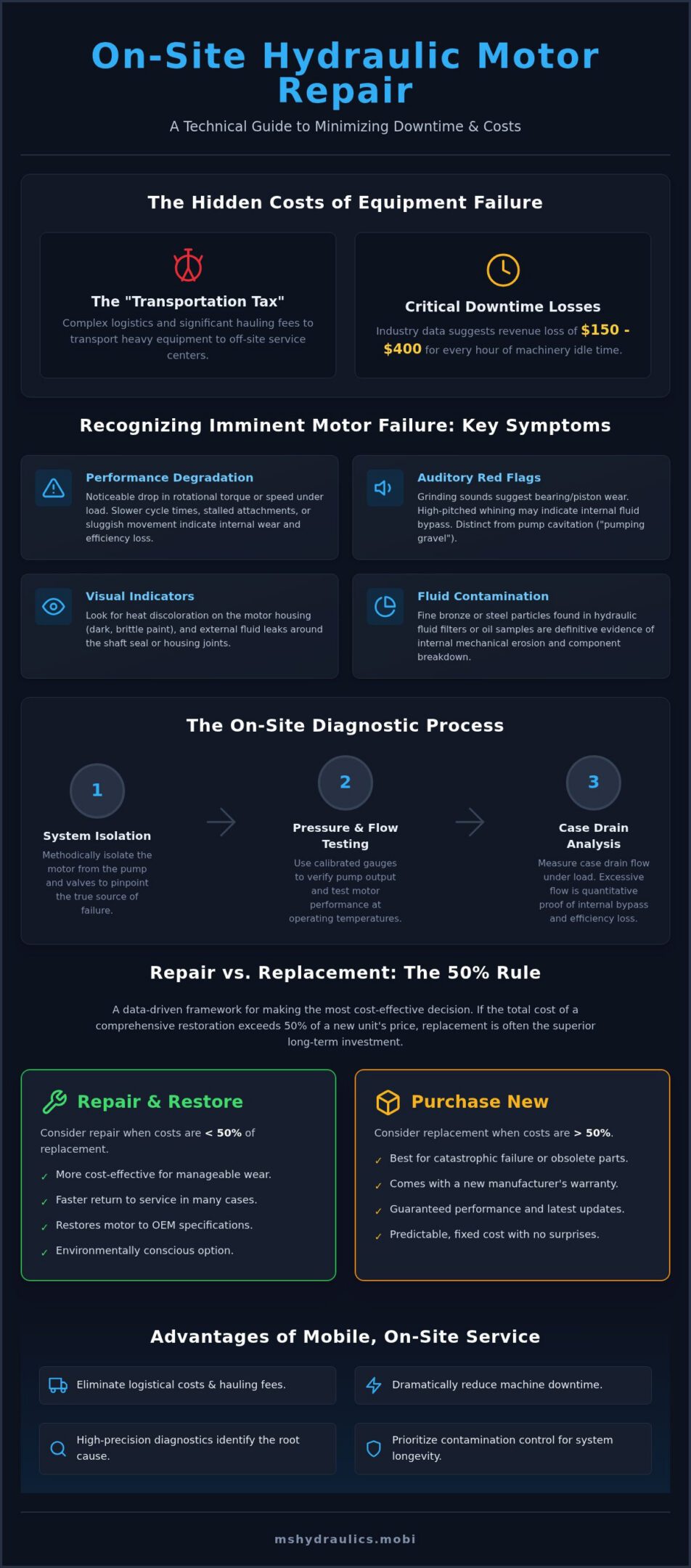
The “transportation tax” on heavy equipment repairs is a hidden operational burden that many North Texas contractors simply accept as inevitable. When a hydraulic motor fails, the standard response involves complex logistics and significant hauling fees to reach a service center. You likely understand that the real damage occurs in the form of lost revenue; industry data suggests these losses can range between $150 and $400 for every hour of downtime. Accessing expert mobile hydraulic motor repair Cleburne services allows you to bypass these logistical hurdles by bringing technical precision directly to the job site.
This guide provides the technical framework needed to identify hydraulic motor failure and access specialized on-site solutions that minimize machinery idle time. We’ll examine the specific diagnostic protocols used to isolate root causes, the advantages of field-based pressure and flow testing, and the objective metrics for evaluating repair versus replacement costs. By the end of this analysis, you’ll have a clear strategy for maintaining fleet performance without the unnecessary overhead of off-site transport. Our focus remains on engineering accuracy and operational efficiency to ensure your equipment returns to service with verified reliability.
Key Takeaways
- Identify physical symptoms like rotational torque loss and audible grinding to prevent total system failure and secondary component damage.
- Utilize on-site diagnostic protocols, including case drain flow tests, to isolate motor issues from pump or valve malfunctions with high precision.
- Access specialized mobile hydraulic motor repair Cleburne to eliminate the logistical costs and extended downtime associated with transporting heavy equipment to a shop.
- Apply the “50% Rule” to make data-driven decisions regarding the cost-effectiveness of motor restoration versus purchasing new units.
- Ensure operational longevity by implementing field repair procedures that prioritize contamination control and precise technical verification of all mechanical parameters.
Recognizing Hydraulic Motor Failure Symptoms on the Job Site
Heavy equipment operators in North Texas often encounter performance issues that signal imminent component failure. A primary indicator is a measurable drop in rotational torque or speed when the machine is under load. Unlike a pump, which converts mechanical power into hydraulic energy, a Hydraulic motor performs the inverse function. When internal wear occurs, the motor struggles to maintain the required output, leading to stalled attachments or sluggish movement. If you observe these traits, securing a mobile hydraulic motor repair Cleburne specialist is essential to prevent a complete system seizure.
Visual and Auditory Red Flags
Early detection relies on sensory data from the machine environment. Mechanical failure often produces distinct auditory signatures; grinding sounds usually indicate bearing failure or piston shoe wear, while high-pitched whining may suggest internal bypass. It’s critical to differentiate these from pump cavitation, which typically originates at the reservoir or pump inlet rather than the motor housing. Cavitation sounds like “pumping gravel” and indicates air or vacuum issues, whereas motor noise is localized to the drive unit itself.
Operators should also inspect the motor for heat discoloration. Excessive friction within the rotating group generates localized heat, often turning the paint on the housing brittle or dark. Additionally, external leakage around the shaft seal or housing joints indicates seal degradation or excessive internal pressure. Monitoring for metal contaminants in the hydraulic fluid is another vital step. Fine bronze or steel particles in a filter or oil sample are definitive evidence of mechanical erosion within the motor’s internal components.
Performance Degradation Indicators
Efficiency loss manifests most clearly through increased cycle times. On excavators, for example, a motor losing its integrity will result in slower swing speeds or reduced travel power. This decline is often linked to increased case drain flow. As internal clearances widen due to wear, high-pressure fluid bypasses the rotating group and exits through the case drain line. Excessive flow here is a quantitative proof of internal bypass and efficiency loss.
Volumetric efficiency is the ratio of actual to theoretical flow. When this ratio drops, the motor requires more fluid to achieve the same rotational speed, which generates heat and reduces overall machine productivity. Professional mobile hydraulic motor repair Cleburne technicians use flow meters to quantify this loss precisely. By measuring the case drain flow under load, they can determine if the motor meets the manufacturer’s performance specifications or requires immediate overhaul.
The Technical Process of On-Site Hydraulic Motor Diagnostics
Technical precision in the field requires more than visual inspection. Ms. Hydraulics LLC utilizes calibrated instrumentation to verify the mechanical state of the hydraulic circuit. Adhering to best practices established by the National Fluid Power Association, technicians perform systematic evaluations to isolate the motor from the rest of the system. This methodical approach ensures that mobile hydraulic motor repair Cleburne solutions address the actual source of power loss rather than just symptoms. Precision diagnostics prevent the “parts-swapping” mentality that often leads to inflated repair costs.
Pressure and Flow Testing Protocols
A diagnostic baseline begins at the pump. Technicians verify that the pump provides the correct flow and pressure before assessing the motor performance. Once the pump’s output is confirmed, the motor’s volumetric efficiency is tested. This involves monitoring case drain flow, which is the primary indicator of internal bypass. Testing must occur at the machine’s standard operating temperature. Hydraulic fluid viscosity decreases as heat increases, often revealing internal leaks that are invisible when the system is cold. Utilizing professional On-Site Diagnostic Services allows for these high-pressure tests to be conducted safely and accurately in the field.
Electronic and Computerized Troubleshooting
Modern heavy equipment integrates sophisticated electronic control units (ECUs) to manage hydraulic circuits. Sensors monitor parameters such as pilot pressure, oil temperature, and rotational speed. Technicians use specialized software to read error codes that might indicate pressure spikes or solenoid malfunctions. Verifying the electrical integrity of the circuit is a prerequisite for mechanical teardown. If a motor isn’t receiving the correct signal from the control valve, mechanical repairs won’t restore functionality. This integration of digital and mechanical testing is standard for mobile hydraulic motor repair Cleburne providers specializing in newer fleet models.
Diagnostics also extend to the mechanical interface. Technicians inspect planetary gear sets and output shafts for wear or misalignment. A seized planetary unit can mimic a hydraulic motor failure by preventing rotation despite adequate hydraulic pressure. By evaluating the entire drive assembly, Ms. Hydraulics LLC ensures a comprehensive restoration of machine power. For operators facing complex system failures, contacting an experienced partner at mshydraulics.mobi can prevent costly misdiagnosis and unnecessary component replacement.
Repair vs. Replacement: Evaluating Cost and Operational Longevity
Deciding between restoration and replacement requires an objective analysis of mechanical integrity and financial feasibility. Ms. Hydraulics LLC applies a rigorous evaluation process to ensure mobile hydraulic motor repair Cleburne remains a cost-effective alternative to purchasing new components. The industry standard “50% Rule” serves as a primary benchmark; if the estimated repair cost exceeds 50% of the price of a new unit, replacement is often recommended. However, this calculation must account for more than just the parts invoice. Industry data indicates that downtime can cost between $150 and $400 per hour. In the current supply chain environment, acquiring a new OEM motor can take weeks, whereas an on-site rebuild restores functionality in a fraction of that time, preventing significant revenue loss.
When a Rebuild is the Superior Choice
A rebuild is frequently the most strategic option for rare or discontinued motor models where new replacements are unavailable or prohibitively expensive. Technical specialists, who often align their practices with standards from the International Fluid Power Society, restore performance by replacing internal rotating groups and performing precision lapping on valve plates. This process mirrors the technical logic used in a Heavy Equipment Cylinder Rebuild, where the focus is on returning the component to its original manufacturing specifications. When housing integrity is sound and seal kits are readily available, a precision rebuild provides a high return on investment and extends the service life of the machine without the “transportation tax” of shop-based repairs.
Indicators for Full Motor Replacement
Certain mechanical conditions make mobile hydraulic motor repair Cleburne unfeasible. Severe housing damage, such as cracks or catastrophic internal scoring that exceeds machining tolerances, necessitates a full replacement. If the internal rotating group has disintegrated, the resulting metal contamination may have compromised the rest of the hydraulic system, making a new, clean unit the only way to ensure future reliability. When evaluating replacement, you should consider the warranty. New units typically offer more comprehensive coverage than repaired components. Calculating the total cost of ownership over the next 5,000 service hours is vital. If a repaired motor is likely to fail again due to housing fatigue, the upfront savings of a rebuild will eventually be eclipsed by repeated downtime and labor costs.
Mobile Repair Logistics: Maximizing Uptime in Johnson County
Executing a successful field repair requires rigorous logistical planning and a commitment to contamination control. When performing mobile hydraulic motor repair Cleburne, technicians must establish a controlled environment to protect sensitive internal components from environmental debris. Even a microscopic amount of dust or grit can cause catastrophic scoring on valve plates or piston barrels during reassembly. Ms. Hydraulics LLC technicians utilize specialized fluid containment systems to manage hydraulic oil during teardowns. This ensures compliance with environmental safety standards while preventing soil contamination on active job sites. Coordination of parts delivery is also managed directly by the mobile unit to eliminate the delays often associated with third party transport.
Serving Cleburne and the DFW Metroplex
The geographic diversity of Johnson County presents unique challenges for heavy equipment maintenance. Repairing drill rigs in remote areas requires a mobile service unit capable of navigating difficult terrain while carrying full diagnostic and repair instrumentation. Ms. Hydraulics LLC maintains rapid response capabilities for construction sites in Granbury, Mansfield, and Alvarado. This regional focus ensures that specialized expertise is available where the equipment is actually located. For a detailed overview of our regional support, you can review our guide on Mobile Hydraulic Repair in Cleburne. By bringing the shop to the machine, we eliminate the logistical complexity of moving oversized excavators or skid steers through North Texas traffic.
Operator Preparation for a Service Call
Machine operators play a vital role in the efficiency of an on-site repair. To facilitate a rapid restoration of service, it’s recommended to clean the exterior of the motor housing and the surrounding chassis before the technician arrives. This preparation prevents loose dirt from entering the hydraulic circuit when lines are disconnected. Additionally, providing clear, unobstructed access to the motor and the hydraulic reservoir allows the technician to begin diagnostics immediately. Safety is a primary concern during these operations. Operators must ensure that all safety lockouts and tagout procedures are in place, adhering to OSHA 29 CFR 1910.147 standards for the control of hazardous energy. These proactive steps reduce the total time required for the repair and ensure a safer working environment for everyone on the site.
If your machinery is currently stationary due to a drive failure, you don’t have to wait for a transport trailer. Contact the experts at Ms. Hydraulics LLC to schedule a diagnostic visit and restore your project’s momentum today.
Ms. Hydraulics LLC: Expert Mobile Hydraulic Motor Services
Ms. Hydraulics LLC provides a specialized level of technical proficiency that only comes from over two decades of field experience. While the company was formally established in 2021, our lead technicians bring more than 22 years of mobile repair history to every job site. We understand that mobile hydraulic motor repair Cleburne requires more than basic mechanical skills; it demands a deep understanding of fluid power dynamics and mechanical tolerances. Our services cover a wide range of industrial platforms, from high-torque excavator swing motors to the high-speed drive motors found on modern skid steers and drill rigs. Every intervention is treated as a precision engineering task designed to restore the machine’s original performance specifications.
Our commitment to integrity means we prioritize your operational overhead over short-term profit margins. We provide objective data to help fleet managers decide between repair and replacement, focusing on the long-term reliability of the equipment. This service is a core component of our broader Heavy Equipment Maintenance programs. By integrating motor, pump, and valve diagnostics into a single cohesive reliability strategy, we help North Texas businesses maintain a competitive edge through reduced machinery downtime and optimized fuel efficiency.
Precision Engineering in the Field
Technical interventions at Ms. Hydraulics LLC are guided by a commitment to root cause analysis. We don’t just replace worn parts; we investigate the underlying factors that led to the failure. If a motor’s rotating group has suffered from cavitation or heat-related scoring, we analyze the entire circuit to ensure the pump and valving are providing the correct input parameters. We use high-quality seals and internal components that align with international engineering standards, ensuring that every repair offers lasting reliability. This methodical focus on finding the “why” behind a failure is what separates a professional restoration from a temporary fix. It’s a disciplined approach that ensures your hydraulic systems meet rigorous performance benchmarks under the most demanding workloads.
Schedule Your On-Site Diagnostic Today
Maintaining a proactive service schedule is the most effective way to manage your fleet’s total cost of ownership. Regular on-site diagnostics can detect early-stage wear in hydraulic motors before it leads to catastrophic system failure. By investing in preventative inspections, you can schedule mobile hydraulic motor repair Cleburne during planned downtime rather than reacting to an emergency breakdown. This proactive stance protects your capital investments and ensures that your projects remain on schedule. To request a mobile service call in Johnson County or the surrounding DFW area, simply reach out to our technical team. Contact Ms. Hydraulics LLC for expert motor repair and experience a partnership rooted in industrial excellence and technical integrity.
Optimizing Fleet Performance through Technical Precision
Maintaining operational uptime requires a transition from reactive parts replacement to proactive technical management. Identifying mechanical failure symptoms early and utilizing precise flow testing allows fleet managers to eliminate the “transportation tax” that often inflates repair budgets. Accessing professional mobile hydraulic motor repair Cleburne services ensures that heavy equipment returns to service with verified reliability without the logistical burdens of off-site transport.
Ms. Hydraulics LLC leverages over 22 years of heavy equipment experience to provide specialized on-site solutions. As locally owned and operated mobile diagnostic specialists in Cleburne, TX, we prioritize engineering accuracy and technical integrity. Our methodical approach isolates the root cause of power loss to ensure your machinery performs at its theoretical efficiency.
Request On-Site Hydraulic Motor Repair from Ms. Hydraulics LLC to restore your machine’s functionality and protect your project timelines. We look forward to supporting your fleet’s long-term success with field-proven expertise.
Frequently Asked Questions
Can a hydraulic motor be repaired while still mounted on the machine?
Diagnostics and external seal replacements are frequently performed while the motor remains mounted to the chassis. However, a comprehensive internal rebuild usually requires removal to ensure a contaminant free environment for the rotating group. Performing a full teardown in an exposed field setting risks introducing grit into the internal assembly, which can lead to rapid mechanical failure. Ms. Hydraulics LLC technicians evaluate the specific failure mode to determine if on site component removal is necessary.
How long does a typical on-site hydraulic motor repair take in Cleburne?
Most on site diagnostic sessions are completed within two to four hours. The total duration of a mobile hydraulic motor repair Cleburne depends heavily on the extent of internal damage and the immediate availability of specialized seal kits or rotating groups. While minor external issues are often resolved the same day, complex mechanical failures may require additional time for part procurement. Our priority is minimizing machine downtime while maintaining rigorous engineering standards.
What are the primary causes of hydraulic motor overheating in North Texas?
Excessive internal bypass is the primary technical cause of overheating, especially during high temperature North Texas summers. When internal clearances widen due to mechanical wear, high pressure fluid slips past the pistons and converts hydraulic energy into localized heat. This condition is often exacerbated by contaminated fluid or restricted oil coolers. Regular fluid analysis and pressure testing are essential to identify these efficiency losses before they result in a complete thermal seizure.
Is it cheaper to rebuild a hydraulic motor or buy a new one?
Rebuilding is typically more cost effective when the housing and major castings remain within manufacturing tolerances. A precision rebuild can save significant capital compared to the cost of a new OEM unit, especially for specialized industrial machinery. However, if the housing is cracked or internal scoring is too deep to lap, replacement becomes the only reliable option. We provide an objective assessment of these variables to ensure your repair budget is optimized for long term longevity.
What information do I need to provide for a mobile motor repair quote?
To receive an accurate assessment, please provide the machine’s make, model, and the serial number found on the motor’s identification plate. Describing specific symptoms, such as a loss of tracking power or unusual mechanical whining, helps our technicians prepare the necessary diagnostic tools. Providing clear photos of the motor’s location and the surrounding hydraulic connections also facilitates a more efficient service response for mobile hydraulic motor repair Cleburne and the surrounding DFW area.
Does Ms. Hydraulics LLC provide emergency motor repair for construction sites?
Ms. Hydraulics LLC specializes in rapid response mobile repair for active construction and industrial sites. Our technicians are equipped to handle urgent failures on excavators, skid steers, and drill rigs throughout Johnson County, including Alvarado and Mansfield. We understand that every hour of stationary equipment represents a loss in project revenue. Our mobile units carry the diagnostic instrumentation required to perform immediate on site assessments and restore functionality as quickly as technical parameters allow.
What is the difference between a hydraulic pump and a hydraulic motor failure?
A hydraulic pump failure typically results in a total loss of system pressure, affecting all machine functions simultaneously. In contrast, a motor failure is localized to a specific actuator, such as a single drive track or a swing gear. If your machine can perform other hydraulic functions but one specific movement is weak or noisy, the motor is the likely culprit. Our on site diagnostic services utilize flow meters to definitively isolate the failure point between these two components.
Can you perform computer diagnostics on older hydraulic equipment motors?
Yes, we apply different diagnostic methodologies depending on the machine’s age. While modern equipment requires specialized software to interface with electronic control units, older motors are diagnosed using traditional pressure and flow testing protocols. With over 22 years of experience, our technicians possess the technical depth to troubleshoot analog hydraulic systems that lack digital sensors. We verify mechanical integrity through physical parameters, ensuring that legacy equipment continues to operate at peak volumetric efficiency.