Hydraulic Maintenance Guide for Heavy Equipment
Did you know that unplanned equipment downtime costs the average Fortune 500 company approximately $2.8 billion annually, with hourly costs reaching $260,000? For heavy equipment operators in North Texas, these figures represent the high stakes of mechanical reliability. You recognize that reactive repairs are a primary driver of lost revenue, especially when premature component failure occurs in demanding field environments. Implementing a rigorous program of preventative maintenance for hydraulic systems is no longer a suggestion; it’s a technical necessity for maintaining a competitive edge.
This guide provides the engineering protocols and precise schedules required to eliminate unscheduled downtime and extend the service life of your machinery. You’ll master the standards for fluid integrity, including ISO 4406 cleanliness targets, and learn to navigate the latest 2026 international standards for energy efficiency and load-bearing components. We’ll detail a structured approach to system diagnostics, fluid analysis, and documentation. This methodical framework ensures your equipment remains certification-ready while significantly lowering your total cost of ownership through predictable, data-driven maintenance cycles.
Key Takeaways
- Understand the 1:10 rule of maintenance economics to quantify how proactive investment eliminates the high costs of emergency mobile repairs and secondary mechanical damage.
- Implement a rigorous protocol for preventative maintenance for hydraulic systems by adhering to ISO 4406 cleanliness standards to ensure fluid remains a functional mechanical component.
- Establish baseline performance metrics through standardized pressure testing and fluid analysis to detect internal leakage before it leads to catastrophic system failure.
- Master specialized environmental adaptation strategies to protect sensitive hydraulic components from the extreme thermal stress and dust accumulation common on North Texas jobsites.
- Discover how to integrate mobile on-site diagnostic services into your operations to create predictable, certification-ready documentation of your fleet’s mechanical health.
The Economic Impact of Preventative vs. Reactive Maintenance
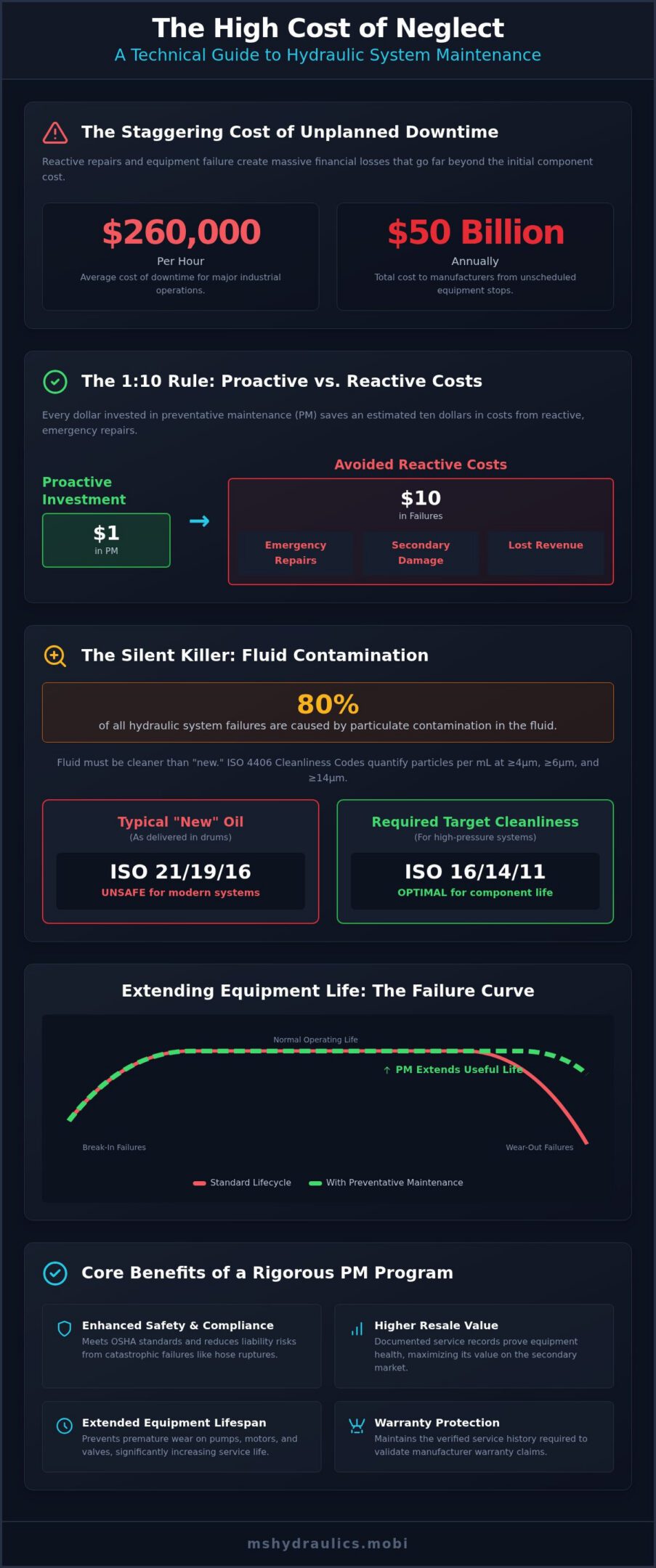
Industrial data indicates that every dollar invested in preventative maintenance for hydraulic systems yields a ten-fold return by averting emergency repairs. This 1:10 rule isn’t merely a theoretical benchmark; it’s a financial reality for fleet managers. When a hydraulic pump fails during a critical lift, the immediate repair cost is often the smallest part of the total bill. You must also account for secondary damage. A disintegrated pump sends metallic debris through the entire system, necessitating a full flush and potentially damaging expensive valves and cylinders. Contamination spreads fast.
Downtime costs are equally punishing. According to 2025 industry statistics, unplanned downtime costs manufacturers approximately $50 billion annually, with some operations losing up to $260,000 per hour. For a North Texas contractor, an idle excavator or drill rig halts the entire job site’s progress. These delays lead to missed deadlines and liquidated damages. Beyond immediate costs, a consistent PM program preserves the asset’s lifecycle. Documented service records directly correlate with higher resale values. They prove the equipment hasn’t been subjected to the thermal and mechanical stress of run-to-failure cycles.
The Failure Curve in Hydraulic Systems
Reliability engineers often reference the “Bathtub Curve” to describe asset lifecycles. This model shows a high probability of failure during initial break-in and again during the wear-out phase. Effective preventative maintenance for hydraulic systems extends the flat bottom of this curve, where the equipment operates at peak efficiency. Understanding Hydraulic machinery principles helps technicians identify the point of no return. This is the moment when internal leakage in a motor exceeds tolerable limits, leading to rapid heat generation and total component seizure. Utilizing On-Site Diagnostic Services allows for the detection of these issues before they cause a catastrophic system failure.
Insurance and Compliance Benefits
Documented maintenance is a prerequisite for most manufacturer warranties. Without a verified service history, claims for premature component failure are frequently denied. Beyond warranties, a rigorous PM schedule is a core component of job site safety. Sudden hose ruptures or cylinder collapses pose significant liability risks. Maintaining equipment to high standards ensures compliance with OSHA safety regulations and industry certifications. This disciplined approach to maintenance doesn’t just protect the machinery; it protects the company’s legal and financial standing in a high-stakes industrial environment. Scheduling regular mobile hydraulic repair and inspection ensures your fleet remains compliant and operational.
Critical Maintenance Vectors: Fluid Integrity and Filtration Standards
In high-pressure industrial systems, hydraulic fluid functions as a critical mechanical component. It transmits power, lubricates internal surfaces, and dissipates heat. Maintaining precise viscosity and chemical stability is the foundation of effective preventative maintenance for hydraulic systems. When fluid degrades, its ability to maintain a load-bearing film vanishes. This leads to metal-on-metal contact within pumps and motors, accelerating wear rates and causing internal leakage.
The industry standard for quantifying fluid health is the ISO 4406 Cleanliness Code. This three-number system represents the quantity of particles at sizes ≥4 µm, ≥6 µm, and ≥14 µm per milliliter of fluid. Many operators mistakenly assume that new oil arriving in drums is ready for service. In reality, new oil often carries a cleanliness level of 21/19/16, while modern high-pressure systems frequently require a much stricter 16/14/11 profile. Particulate contamination is the primary cause of 80% of hydraulic failures. These microscopic particles act as grinding paste, eroding precision-machined tolerances and shortening component life.
Filtration efficiency is measured by the Beta (β) rating. A filter with a β10=1000 rating indicates that for every 1,000 particles of 10 microns entering the filter, only one passes through. For high-performance machinery, utilizing filters with high Beta ratios and specific micron requirements is non-negotiable. Following established technical diagnostic protocols ensures that filtration systems are sized correctly for the system’s flow rate and pressure drops. Regular fluid analysis, typically costing between $30 and $50 per sample, provides the data needed to monitor these parameters.
Hydraulic Fluid Management Protocols
Selecting the correct fluid involves evaluating the system’s operating temperature range and pressure requirements. Mixing incompatible fluids, such as mineral-based oils with environmentally friendly HEPR fluids governed by ISO 15380:2023, can lead to seal failure and chemical fallout. Oxidative stability is the fluid’s resistance to chemical breakdown caused by heat and oxygen, which directly prevents the formation of sludge and varnish that causes valve sticking. Monitoring these chemical changes is essential for long-term system reliability.
Filtration System Optimization
Relying solely on visual indicators for filter changes is often insufficient. Scheduled replacement based on duty cycles ensures that filters are swapped before they reach bypass mode. In high-dust environments like Texas job sites, upgrading to high-efficiency tank breathers is essential. These breathers prevent atmospheric moisture and silica from entering the reservoir as the fluid level fluctuates. If you’re seeing signs of premature filter clogging, scheduling mobile hydraulic repair can help identify if your system needs a more robust filtration strategy.
Technical Diagnostic Protocols: Pressure Testing and Fluid Analysis
Precision diagnostics transform maintenance from a reactive task into a predictive discipline. While filtration captures contaminants, diagnostic protocols identify the mechanical wear and internal leakage that filtration alone cannot resolve. Utilizing On-Site Diagnostic Services is essential for establishing baseline performance metrics. By documenting the system’s pressure and flow capabilities when the machinery is healthy, technicians can detect gradual performance degradation. A 10% drop in pump volumetric efficiency often precedes a total component seizure, yet it remains invisible to operators without specialized testing equipment.
Fluid analysis serves as the primary predictive tool in preventative maintenance for hydraulic systems. Lab results provide a chemical window into the system’s internal condition. High copper levels typically indicate wear in bronze bushings or pump thrust plates. Elevated iron counts suggest friction within cylinders or gear sets, while silicon spikes are a definitive marker of dirt ingression through failed seals or breathers. Interpreting these results requires technical expertise to differentiate between normal break-in wear and accelerated mechanical failure. This data driven approach allows for scheduled component replacement, avoiding the $260,000 per hour cost associated with unplanned downtime.
Advanced Pressure and Flow Testing
Technicians use flow meters to calculate volumetric efficiency by comparing theoretical flow to actual output under load. This metric is more accurate than simple pressure gauges. Cycle time testing provides a practical field metric; if an excavator’s boom lift time increases by two seconds, internal leakage is likely occurring in the main control valve or cylinder seals. Acoustic monitoring further enhances diagnostics by identifying the distinct high frequency signatures of aeration and cavitation. These phenomena cause rapid metal erosion and must be corrected through suction line inspections or reservoir venting.
The Fluid Analysis Workflow
Accuracy in fluid analysis depends entirely on sampling technique. Samples must be taken from a live, circulating line at operating temperature to ensure a representative distribution of wear particles. Taking samples from the bottom of a stagnant reservoir leads to false positives due to settled debris. For high utilization construction equipment, analysis should occur every 500 operating hours. Integrating these lab findings into Heavy Equipment Maintenance logs creates a verifiable health history for the asset. This documentation is vital for maintaining manufacturer warranties and maximizing the equipment’s eventual resale value.
Environmental Adaptation: Maintaining Hydraulic Systems in the North Texas Climate
Environmental factors in North Texas dictate the frequency and rigor of preventative maintenance for hydraulic systems. Regional climate extremes, specifically the sustained 100°F+ temperatures during summer months, accelerate fluid oxidation. Oxidation is a chemical reaction where oxygen combines with hydrocarbon molecules, creating sludge and varnish. This chemical breakdown doubles in speed for every 18°F increase above a system’s optimal operating temperature. In Alvarado and Grandbury, the situation is compounded by high concentrations of airborne silica and limestone dust. If these abrasive particles bypass filtration, they cause rapid scoring of cylinder rods and valve spools.
Humidity also plays a critical role in system health. The North Texas “freeze-thaw” cycle creates temperature differentials that lead to condensation inside hydraulic reservoirs. This moisture compromises the fluid’s lubricity and promotes internal corrosion. Water in the system also encourages the growth of microbes in certain biodegradable fluids governed by ISO 15380:2023. Effective environmental adaptation requires a proactive strategy that addresses these regional stressors before they manifest as mechanical failure. Ensuring your reservoir breathers are equipped with desiccant filters is a primary defense against this moisture ingression.
Heat Management and Cooling Systems
Maintaining optimal thermal transfer is vital when ambient temperatures exceed 100°F. Technicians must regularly inspect heat exchangers for debris and fin damage. Even a thin layer of dust on the cooling fins significantly reduces heat dissipation. Monitoring oil temperature is equally important; once fluid exceeds the 180°F threshold, standard nitrile seals begin to harden and lose elasticity. For fleets operating in the DFW metroplex, selecting high Viscosity Index (VI) fluids is recommended. These fluids maintain a more stable viscosity across the wide temperature swings common in the region, ensuring consistent pump performance from morning start-up to afternoon peak heat.
Seals and Hoses in Harsh Environments
The intense Texas sun causes rapid UV degradation of external components. Hydraulic hoses often develop surface cracks, which eventually lead to structural failure under pressure. Inspecting hydraulic hoses for cover damage is a priority on rocky job sites where abrasion is constant. Using protective sleeves can mitigate wear from abrasive soil. When rebuilding systems, selecting high-temperature seal kits ensures that the machinery remains leak-free during peak summer utilization. If your fleet is showing signs of thermal stress or hose wear, contact Ms. Hydraulics for mobile hydraulic repair and on-site cooling system inspections to prevent catastrophic failure.
Implementing Mobile Preventative Maintenance in Cleburne and DFW
Executing a consistent program for preventative maintenance for hydraulic systems requires a logistical strategy that minimizes machine transport costs. Utilizing mobile hydraulic repair Cleburne TX allows fleet managers to schedule critical inspections and fluid changes during planned windows of inactivity. This on-site approach eliminates the need to haul heavy equipment to a central facility, which often consumes a full day of productive time. A custom maintenance schedule, tailored to the specific duty cycles of excavators or drill rigs, ensures that each asset receives attention based on its actual mechanical load rather than generic hour intervals.
Proactive strategies also include on-site heavy equipment cylinder rebuild Texas services. By identifying scored rods or bypass leakage during a routine inspection, technicians can perform a rebuild before the cylinder fails completely. This prevents the secondary contamination of the hydraulic circuit discussed in previous sections. Additionally, training operators to recognize early warning signs, such as unusual pump cavitation noise, slow cycle times, or external weeping at hose fittings, creates a first line of defense. When operators understand the mechanical implications of these symptoms, they become active participants in the system’s reliability.
The Ms. Hydraulics Maintenance Partnership
Our technicians integrate with your operational schedule to ensure maintenance occurs without disrupting project timelines. These multi-point inspections go beyond visual checks, utilizing flow meters and pressure transducers to verify system health. Our service vehicles are equipped with specialized tooling for mobile hose fabrication, allowing for immediate on-site replacement of compromised lines. This capability ensures that a detected hose wear issue is rectified instantly, maintaining the integrity of the high-pressure circuit and preventing environmental spills on the job site.
Getting Started with a PM Program
The first step in establishing a formal program is auditing the current status of your fleet. This involves documenting fluid ages, filter change dates, and existing performance baselines for all primary pumps and motors. Once the audit is complete, setting up automated service reminders for high-priority machines ensures that no critical maintenance window is missed. This data-driven approach transforms maintenance from an unpredictable expense into a managed operational cost. Contact Ms. Hydraulics to schedule a professional system evaluation and begin the transition toward a more reliable, certification-ready fleet.
Optimizing Fleet Reliability Through Technical Discipline
Adopting a rigorous framework for preventative maintenance for hydraulic systems isn’t just an operational choice; it’s a financial necessity for mitigating the $260,000 hourly cost of unplanned downtime. By prioritizing fluid integrity through ISO 4406 standards and utilizing predictive diagnostics, fleet managers secure the operational longevity of their assets. These technical protocols ensure that mechanical components operate within designed parameters, even under the extreme thermal stress and dust accumulation common on North Texas job sites.
Ms. Hydraulics provides the technical expertise required to maintain these high standards through on-site mobile diagnostic services and specialized heavy equipment repair. Our technicians serve the Cleburne, Dallas, and Fort Worth regions, delivering the precision required to keep your machinery certification-ready and efficient. Transitioning to a data-driven maintenance model reduces the total cost of ownership and eliminates the volatility of emergency repairs. Schedule a Professional Hydraulic System Evaluation today to establish a performance baseline for your fleet. Investing in technical discipline now ensures your machinery remains a dependable asset for the long term.
Frequently Asked Questions
What is the most common cause of hydraulic system failure?
Particulate contamination is the leading cause of approximately 80% of all hydraulic system failures. These microscopic particles, often silica or metallic wear debris, act as abrasives that erode precision-machined tolerances in pumps and valves. Failure to maintain ISO 4406 cleanliness levels leads to accelerated mechanical wear and internal leakage. Effective filtration and sealed reservoirs are the primary defenses against this type of system degradation.
How often should hydraulic fluid be analyzed in heavy equipment?
For high-utilization heavy equipment, fluid analysis should be conducted every 500 operating hours or at least twice per year. This interval allows technicians to monitor trends in wear metals and chemical stability before they reach critical thresholds. In the demanding environments of Cleburne and Alvarado, more frequent sampling may be necessary if equipment is subjected to extreme dust or high-duty cycles that accelerate fluid oxidation.
What are the primary signs of hydraulic fluid contamination?
Visible indicators of contamination include a milky or cloudy appearance, which signals water ingression, or a darkened, pungent odor indicating thermal oxidation. Mechanical symptoms include increased pump noise, erratic actuator movement, and elevated operating temperatures. However, particulate contamination is often invisible to the naked eye. This underscores the technical necessity of regular laboratory analysis to detect microscopic debris that bypasses standard visual inspections during routine servicing.
Can preventative maintenance prevent hydraulic hose bursts in the field?
While no protocol can eliminate all risks, preventative maintenance for hydraulic systems significantly reduces the probability of hose bursts. Regular inspections identify external cover damage, UV cracking, and improper routing that leads to abrasion. Technicians can replace compromised hoses on-site in Fort Worth or Dallas before they reach the point of structural failure. This proactive approach prevents the environmental contamination and site-wide delays associated with high-pressure fluid release.
How does the North Texas heat affect hydraulic system maintenance intervals?
Sustained temperatures exceeding 100°F in North Texas accelerate the rate of fluid oxidation, potentially halving the service life of standard hydraulic oils. High heat also hardens nitrile seals and increases the risk of thermal expansion issues. Consequently, maintenance intervals for cooling system inspections and fluid health checks must be shortened during the summer months. Monitoring the viscosity index ensures the fluid maintains sufficient film strength to protect internal components.
Is on-site diagnostic service cost-effective for small construction fleets?
On-site diagnostic services are highly cost-effective for small fleets in Crowley and Mansfield because they eliminate the logistical expenses of equipment transport. Identifying a failing pump or leaking cylinder seal in the field prevents the secondary damage that occurs when a system is run to failure. By investing in professional diagnostics, small operators avoid the high cost of emergency mobile repairs and maintain the predictable schedules required for project profitability.
What is the difference between preventative and predictive maintenance for hydraulics?
Preventative maintenance involves scheduled tasks like filter changes and visual inspections performed at set intervals. Predictive maintenance utilizes data from fluid analysis and flow testing to determine the actual condition of the machinery. Integrating both strategies into preventative maintenance for hydraulic systems allows for component replacement based on measured wear rather than arbitrary timelines. This dual approach optimizes the total cost of ownership by extending the life of healthy components.
How long does a typical preventative maintenance inspection take?
A comprehensive hydraulic maintenance inspection typically requires two to four hours per machine. This duration includes performing pressure tests, taking fluid samples, and conducting a multi-point visual assessment of hoses, cylinders, and heat exchangers. For complex drill rigs or large excavators in the DFW metroplex, the process may extend to ensure all technical parameters are verified. Mobile technicians facilitate this process on-site to ensure minimal disruption to your daily operations.