Aerial Device Electrical Testing in Dallas & Fort Worth
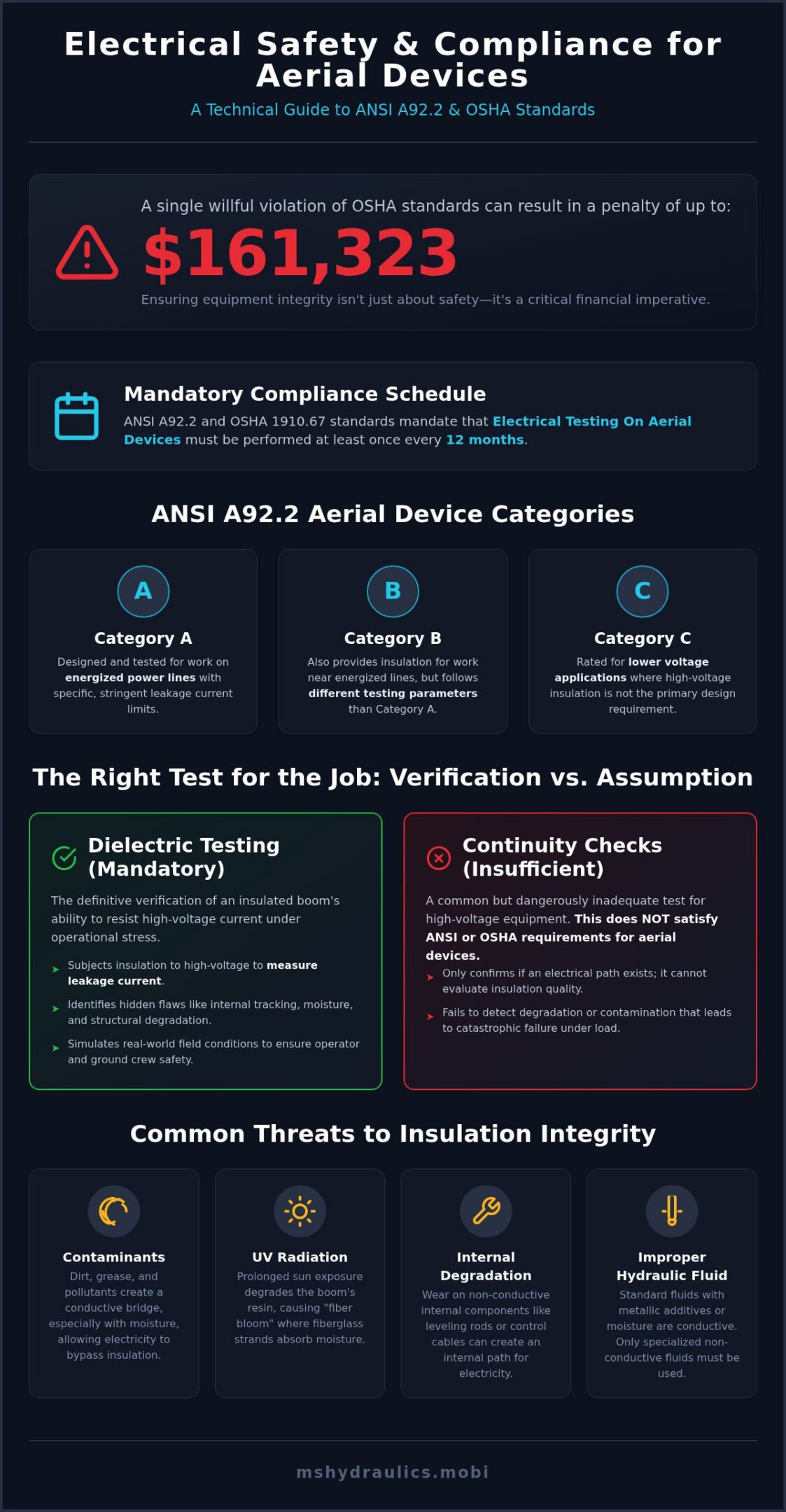
A single willful violation of OSHA standards regarding dielectric testing can result in a financial penalty of up to $161,323 per occurrence. For fleet operators across the Dallas and Fort Worth metroplex, these figures underscore the high stakes of regulatory compliance and equipment reliability. You understand that the safety of your operators depends on the invisible integrity of your equipment’s insulation. Routine Electrical Testing On Aerial Devices serves as the primary verification that your insulated booms and non-conductive hydraulic systems are functioning within safe leakage current limits.
This article provides a comprehensive technical overview of the safety protocols and ANSI A92.2 compliance intervals required to maintain a high-voltage fleet. You’ll gain a clear understanding of dielectric testing procedures, a strategic plan for maintaining insulation through precise hydraulic care, and a methodology for using proactive diagnostics to minimize operational downtime. By integrating these engineering standards, you’ll ensure your equipment meets the rigorous ANSI/NETA MTS-2023 maintenance requirements while protecting your personnel and your bottom line from catastrophic failure.
Key Takeaways
- Identify the technical distinctions between Category A, B, and C aerial devices to ensure your fleet meets ANSI A92.2 voltage rating standards.
- Master the critical protocols for Electrical Testing On Aerial Devices, focusing on the verification of fiberglass reinforced plastic insulation and internal component integrity.
- Recognize how hydraulic fluid contamination on boom surfaces compromises dielectric integrity and implement pre-test inspection protocols to prevent test failure.
- Leverage mobile diagnostic services and on-site hose fabrication to address insulation breaches immediately and maintain operational continuity during certification cycles.
- Establish a rigorous maintenance schedule that aligns with NETA standards to mitigate the risk of catastrophic electrical failure and high-value OSHA penalties.
Understanding the Critical Role of Electrical Testing for Aerial Devices
Dielectric testing serves as the definitive verification of an insulated boom’s capacity to resist high-voltage current. For fleet managers, Electrical Testing On Aerial Devices is not merely a checkbox; it’s a fundamental engineering requirement. This testing ensures that the fiberglass reinforced plastic (FRP) and other insulating components maintain their integrity under operational stress. Dielectric strength is the maximum electric field a material can withstand without breaking down.
Aerial devices are classified into three primary categories based on their design and voltage ratings. Category A units are designed and tested for work on energized power lines with specific leakage current limits. Category B units also provide insulation for work near energized lines but follow different testing parameters. Category C units are rated for lower voltage applications. The primary objective of these classifications is the protection of the operator in the bucket and the ground crew from lethal electrocution or flashover events.
Dielectric Testing vs. Continuity Checks
A common misconception in equipment maintenance is that a simple continuity test is sufficient for safety. It isn’t. Continuity checks only confirm whether an electrical path exists. They cannot evaluate the quality of insulation under load. In contrast, dielectric testing subjects the Aerial work platform (AWP) to high-voltage stress to measure leakage current. Specialized high-voltage AC or DC test sets are required to simulate field conditions. These diagnostics identify internal tracking, moisture ingress, or structural degradation that standard multimeters fail to detect. Precision is mandatory here. Even a minor insulation breach can lead to catastrophic failure.
Compliance Standards: ANSI/SIA A92.2 and OSHA Requirements
Adherence to ANSI A92.2 standards is mandatory for any organization operating insulated aerial equipment. This standard requires Electrical Testing On Aerial Devices at least once every twelve months. Additionally, OSHA 1910.67 regulations specifically govern vehicle-mounted elevating and rotating work platforms. These rules mandate that equipment is tested and maintained to ensure operator safety. Beyond physical safety, the maintenance of detailed testing records is a critical business function. Failing to provide proof of annual certification leads to significant legal liability. It can void insurance coverage and result in severe OSHA penalties. Properly documented inspections protect your assets and your personnel.
The Science of Insulation: How Aerial Lifts Maintain Dielectric Integrity
Fiberglass reinforced plastic (FRP) serves as the primary structural material for insulated booms because of its exceptional dielectric strength. This resin-based composite is engineered to prevent electrical current from finding a path to the ground through the vehicle chassis. However, the insulation system is a complex assembly that extends beyond the boom’s outer shell. Internal components, such as leveling rods and control cables, must also consist of non-conductive materials to prevent internal electrical tracking. If these components degrade, the boom’s ability to isolate the operator is compromised, regardless of the shell’s condition.
Environmental factors constantly challenge this dielectric integrity. Contaminants like dirt, grease, and industrial pollutants are often conductive, especially when mixed with moisture. These substances create a “bridge” across the non-conductive surface, allowing electricity to bypass the insulation. UV radiation is another silent threat to safety. Prolonged exposure to the Texas sun breaks down the resin structure of the boom. This leads to a condition known as “fiber bloom,” where fiberglass strands become exposed and absorb atmospheric moisture. Adherence to OSHA regulation 1910.67(c)(3) is necessary to ensure these structural changes don’t result in a safety breach during operation.
The Role of Non-Conductive Hydraulic Fluids
Standard hydraulic fluids often contain metallic additives or moisture levels that facilitate electrical conductivity. In an insulated system, you must utilize specialized fluids with a high dielectric constant to maintain safety. If the fluid becomes contaminated with water or metal particulates from pump wear, the entire boom loses its protective properties. For fleet managers in North Texas, choosing the correct hydraulic fluid for the Texas climate is essential to balance mechanical performance with electrical safety. Proactive fluid management ensures that Electrical Testing On Aerial Devices yields passing results and protects your crew from high-voltage discharge.
Fiberglass Boom Construction and Maintenance
The external gel coat of a boom acts as a vital moisture barrier. When this layer develops “crazing”—fine, spiderweb-like cracks—moisture can penetrate the underlying fiberglass layers. This internal moisture significantly increases leakage current during Electrical Testing On Aerial Devices. Maintaining a clean surface is the first line of defense. Technicians should use only approved non-conductive cleaners to remove road film and hydraulic residue without scratching the resin. If you notice surface degradation or hydraulic leaks that might compromise your insulation, our on-site diagnostic services can identify and resolve these issues before your next scheduled certification.
Step-by-Step Electrical Testing Procedures for Bucket Trucks
The execution of Electrical Testing On Aerial Devices requires a controlled environment and precisely calibrated diagnostic equipment. Technicians first secure the vehicle using outriggers and extend the boom into the manufacturer’s prescribed test position. This specific orientation ensures the insulating section is fully isolated from both the vehicle chassis and the ground. Once positioned, high-voltage leads are attached to the boom tip, and monitoring electrodes are secured at the base of the insulated section to capture any current bypass.
Voltage application must be gradual to prevent transient surges that could damage the fiberglass structure or internal components. For a Category C unit, the technician ramps up the electrical potential to the required test level, which is typically 100kV. Once the target voltage is reached, the system monitors the leakage current for a continuous duration, usually one minute. This steady-state observation is critical. It allows the technician to identify intermittent tracking or dielectric breakdown that might not be apparent during a momentary surge.
Periodic vs. Annual Dielectric Testing
Annual testing is the baseline regulatory requirement, but high-utilization fleets often benefit from a periodic six-month testing cycle. Beyond these scheduled intervals, Electrical Testing On Aerial Devices is mandatory following any maintenance that could compromise the boom’s integrity. For example, performing hydraulic cylinder rebuilds or replacing internal leveling rods requires a follow-up dielectric test to verify that no conductive contaminants were introduced during the process. These rigorous laboratory-grade tests don’t replace daily pre-shift visual inspections. Operators must remain vigilant, checking for structural crazing or hydraulic fluid residue that could facilitate a path for electrical current.
Interpreting Test Results and Leakage Current
Test results are quantified in microamperes (µA), measuring the minute current that escapes through or across the insulation. The ANSI A92.2 standard provides the framework for these limits, which vary depending on the device’s specific nameplate rating. In the Dallas-Fort Worth region, atmospheric conditions significantly impact these metrics. High humidity can lead to surface condensation, which artificially inflates leakage current readings. If a unit exceeds its µA threshold, technicians must determine if the failure is due to environmental moisture or a genuine structural breach. Clear pass/fail criteria ensure that only equipment meeting the highest safety parameters returns to the field.
Preparing Your Fleet for Electrical Certification in North Texas
Preparation is the most overlooked phase of fleet certification. A failure during Electrical Testing On Aerial Devices is often the result of preventable surface contamination rather than structural degradation. Technicians must implement a rigorous cleaning protocol to remove the accumulated road film and industrial pollutants that settle on the boom during transit and operation. Even a microscopic layer of conductive grime can provide a path for high-voltage current. Comprehensive heavy equipment maintenance in Cleburne & North Texas includes these specific cleaning intervals to ensure equipment remains test-ready. Beyond the boom, you must verify that all bucket liners are free of cracks, punctures, or embedded conductive debris like metal shavings or wire scraps.
Cleaning and Inspecting Insulation Surfaces
Effective surface maintenance requires specialized tools, including non-conductive wax, lint-free cloths, and manufacturer-approved solvents. After cleaning, the “water bead” test serves as a simple but effective field verification. If water applied to the boom surface doesn’t bead into tight droplets, the protective wax coating is insufficient. This lack of hydrophobicity allows moisture to film across the surface, significantly increasing the risk of a dielectric failure. It’s also necessary to inspect the interior of the bucket for hidden conductive paths. Small metal shavings from drilling or hardware replacement can compromise the liner’s insulating properties, leading to an immediate test rejection.
Common Points of Electrical Failure in Hydraulic Systems
Hydraulic integrity is inseparable from electrical safety. Leaking fluid on the boom surface is a primary driver of failed inspections because hydraulic oil can attract and hold conductive dust. Internally, the condition of the hoses is equally critical. Carbon-tracking occurs in older hydraulic hoses as the rubber degrades, creating an internal conductive path that bypasses the boom’s insulation. Using standard wire-braid hoses in an insulated section is a critical safety violation; these components must be replaced with non-conductive alternatives. Our team provides custom hydraulic hose fabrication using certified non-conductive materials to prevent these failures. If your fleet is approaching its annual certification, schedule a mobile hydraulic repair session to ensure your fluid systems are sealed and compliant.
Professional Diagnostics and Mobile Support for Aerial Device Safety
Contractors operating across the Dallas and Fort Worth metroplex face significant logistical hurdles when scheduling Electrical Testing On Aerial Devices. Transporting an insulated unit to a fixed laboratory involves fuel costs, operator hours, and the risk of the equipment being out of service for multiple days. Utilizing On-Site Diagnostic Services for Heavy Equipment in Cleburne and the surrounding counties eliminates these inefficiencies. When a technician identifies an insulation breach or a mechanical failure during the certification process, having a mobile partner capable of immediate intervention is the only way to avoid a second mobilization fee and extended downtime.
On-site hose fabrication is particularly critical during the dielectric certification window. If a test fails because of carbon-tracking or moisture ingress in a high-pressure line, the testing sequence often stops until the component is replaced. A mobile service vehicle equipped with non-conductive hose stock can fabricate and install replacements immediately. This integrated approach ensures that your fleet remains operational and compliant without the need for multiple service appointments. Having a “one-stop” partner for both mechanical repair and safety diagnostics provides the technical consistency required for high-voltage operations.
Why On-Site Testing Minimizes Fleet Downtime
The financial impact of transporting heavy equipment to a testing facility often exceeds the cost of the test itself. When you factor in the hourly rate of a specialized driver and the fuel consumption of a heavy-duty chassis, mobile service provides a superior return on investment. Immediate on-site repairs, such as cylinder resealing or valve adjustments, prevent a failed inspection from turning into a week-long service delay. Local expertise is also vital for addressing North Texas weather-related issues. The extreme heat in Tarrant and Johnson Counties accelerates the degradation of hydraulic seals and non-conductive resins, making proactive on-site diagnostics a strategic necessity for fleet longevity.
Integrating Electrical Safety into Your Preventative Maintenance Schedule
A structured 12-month maintenance calendar is the most effective way to manage fleet compliance and operator safety. This schedule should include quarterly inspections of boom surfaces, semi-annual fluid analysis to check for metallic contaminants, and annual dielectric certification. There’s a direct synergy between mechanical health and electrical integrity. For instance, hydraulic cylinder rebuilds ensure that internal seals don’t leak fluid onto the insulated boom, which we’ve established as a leading cause of failed Electrical Testing On Aerial Devices. By aligning your mechanical repairs with your safety testing, you create a holistic maintenance environment that protects your personnel. Ensure your fleet is safe and compliant; Contact Ms. Hydraulics for expert mobile repair today to secure your operational uptime.
Securing Your Fleet’s Dielectric Integrity and Operational Uptime
Maintaining compliance with ANSI A92.2 standards requires a technical synergy between structural insulation and mechanical performance. The success of Electrical Testing On Aerial Devices depends on more than just the fiberglass boom; it requires a hydraulic system free from conductive contaminants and carbon-tracking. By implementing a rigorous cleaning protocol and utilizing specialized non-conductive hydraulic hose fabrication, you eliminate the most common causes of dielectric failure. It’s a strategic approach that prioritizes engineering precision over reactive maintenance.
Our expert technicians serve Cleburne, Dallas, and Fort Worth, providing the precision diagnostics needed to identify insulation breaches before they result in catastrophic failure or OSHA penalties. We specialize in comprehensive heavy equipment maintenance and on-site repairs that keep your units in the field. Integrating these engineering standards into your annual schedule ensures your personnel remain protected during high-voltage work. Schedule Your Mobile Hydraulic Diagnostic Today to verify your fleet’s safety and maintain peak operational efficiency throughout North Texas. Your commitment to technical excellence is the most effective safeguard for your team.
Frequently Asked Questions
How often is dielectric testing required for aerial devices?
ANSI A92.2 standards mandate that dielectric testing occurs at least once every twelve months for all aerial devices used near energized conductors. OSHA regulations also require verification before the equipment enters service for the first time or following any structural repair that could compromise the insulating properties. High-utilization fleets in the Dallas-Fort Worth region often adopt a six-month periodic interval to ensure continuous compliance and to identify early signs of fiberglass degradation or hydraulic fluid contamination.
Can I use regular hydraulic fluid in an insulated bucket truck?
Standard hydraulic fluids are unsuitable for insulated systems because they often contain metallic additives and moisture that facilitate electrical conductivity. You must utilize specialized non-conductive hydraulic oil with a high dielectric constant to maintain the boom’s integrity. Using the wrong fluid type is a leading cause of failure during Electrical Testing On Aerial Devices. Our technicians in Cleburne recommend verified dielectric fluids that balance mechanical performance with the required insulation parameters for high-voltage safety.
What is the difference between Category A, B, and C aerial devices?
Aerial devices are classified by their design and voltage ratings. Category A units are engineered for direct work on energized power lines and follow the strictest leakage current limits. Category B units provide insulation for work near energized lines but are not the primary protection. Category C units are rated for lower voltages and are typically utilized in telecommunications or secondary distribution. Each classification requires specific testing voltages and current thresholds to verify that the fiberglass boom remains a safe barrier.
What causes an aerial device to fail an electrical test?
Failures are typically caused by surface contamination, such as industrial road film or grease, which creates a conductive bridge across the fiberglass. Moisture ingress through structural crazing or UV-damaged resin also increases leakage current. Internally, the presence of conductive debris in the bucket or carbon-tracking in old hydraulic hoses can lead to an immediate rejection. Regular heavy equipment maintenance and thorough cleaning with non-conductive solvents are essential to preventing these common points of dielectric breakdown.
Does a bucket liner need to be tested separately?
Yes, bucket liners require individual verification to ensure they provide the necessary secondary insulation for the operator. Technicians inspect the liner for physical defects like cracks, punctures, or embedded metal shavings that could allow current to pass. During the testing process, the liner is often subjected to high-voltage stress while submerged or through monitoring electrodes. Maintaining a clean, defect-free liner is a critical component of passing comprehensive Electrical Testing On Aerial Devices and protecting your personnel.
What should I do if my boom fails a dielectric test?
If a boom fails its dielectric test, you must immediately remove the unit from service to address the safety breach. The first step is usually a deep cleaning and the application of non-conductive wax to eliminate surface-level tracking. If the failure persists, you should inspect internal components like hydraulic hoses and leveling rods for degradation. Our mobile hydraulic repair team provides on-site diagnostics in Arlington and Mansfield to identify and resolve these technical issues quickly, restoring your equipment’s compliance.
Is mobile dielectric testing available in the Cleburne and DFW area?
Mobile dielectric testing is widely available across the Cleburne and DFW area through specialized certification providers. While Ms. Hydraulics LLC focuses on the mechanical and fluid systems that support these tests, we partner with fleet managers to prepare equipment for on-site inspections. Our technicians provide hydraulic hose fabrication and cylinder rebuilds at your facility in Waxahachie or Cedar Hill. This ensures your equipment is in peak condition when the mobile testing unit arrives for annual certification.
Can a hydraulic leak cause an electrical safety hazard on an aerial lift?
A hydraulic leak represents a significant electrical hazard because fluid on the boom surface attracts conductive dust and moisture. This creates an external path for high-voltage current to reach the chassis. Internal leaks within the insulated section can also cause carbon-tracking along the hoses, effectively bypassing the dielectric barrier. Prompt mobile hydraulic repair is necessary to seal these leaks and maintain the equipment’s insulating properties. Reliable fluid containment is a fundamental requirement for passing any safety-critical inspection.