The Engineering Guide to Skid Steer Hydraulic Maintenance and Fleet Reliability
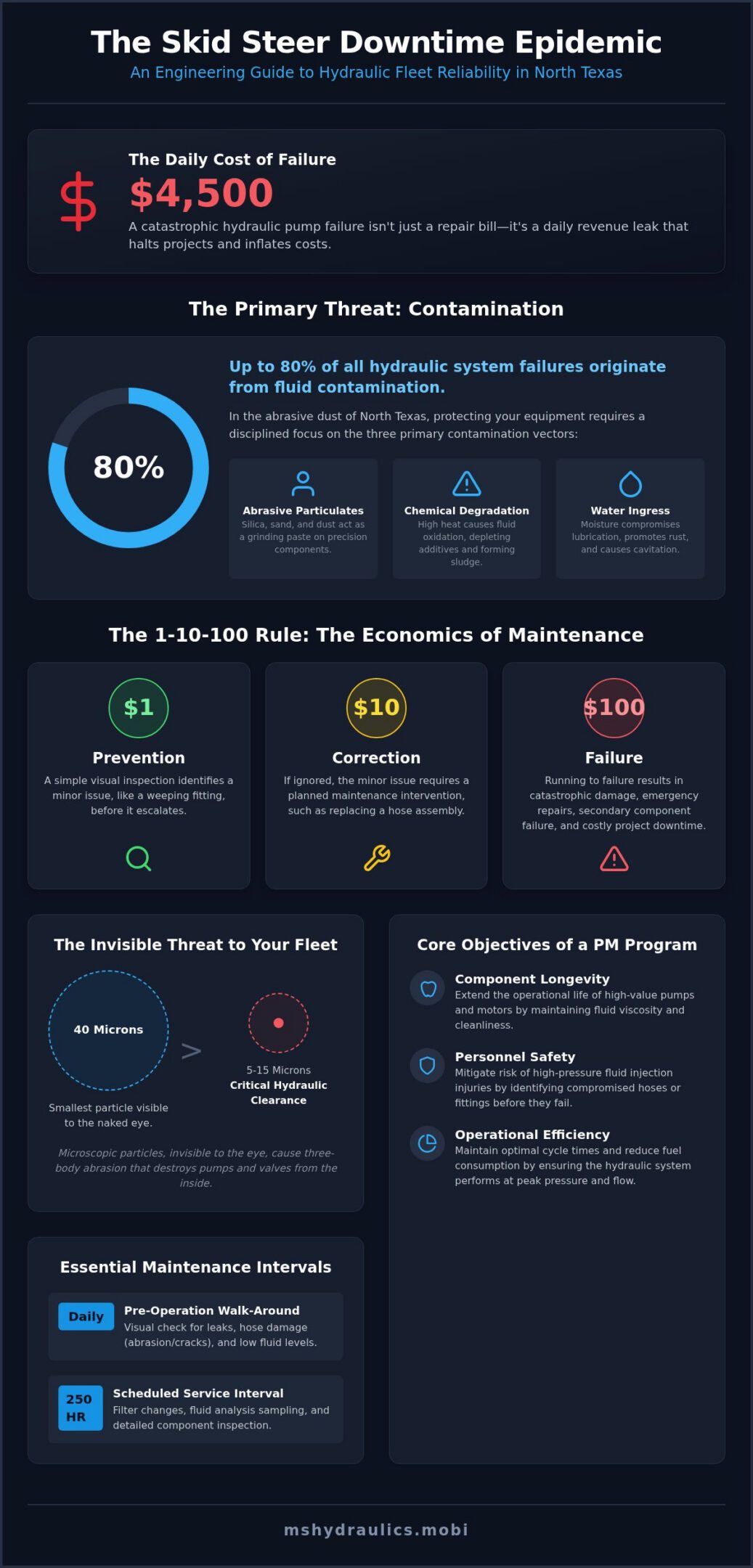
A catastrophic hydraulic pump failure on a high-value skid steer isn’t just a mechanical breakdown; it’s a $4,500 daily revenue leak for North Texas operators. When your machine sits idle, project deadlines slip and costs escalate rapidly. You likely recognize that keeping a fleet operational in the extreme Texas heat and abrasive dust of Johnson County demands a disciplined approach. Implementing a rigorous program for skid steer hydraulic maintenance is the only way to transform your equipment from a liability into a predictable, high-performance asset.
This engineering guide provides the technical protocols you need to eliminate unplanned downtime and maximize the life cycle of your machinery. We’ll detail the precise steps for contamination ingress prevention, fluid analysis, and component monitoring. By mastering these industrial standards, you’ll achieve a lower total cost of ownership and ensure your mobile fleet remains reliable through every season. We’ll preview the essential diagnostic benchmarks and specialized repair strategies that define market-leading fleet management in 2026.
Key Takeaways
- Contamination control is the primary defense against system failure, addressing the abrasive and chemical factors that cause 75-80% of hydraulic issues.
- A disciplined skid steer hydraulic maintenance schedule, including daily walk-arounds and 250-hour intervals, is essential for maximizing equipment life cycles.
- Technical inspection of hoses and cylinders allows for the identification of critical wear patterns, such as chrome scoring or fitting weeping, prior to catastrophic failure.
- Mobile on-site diagnostics and custom hose fabrication provide a high-precision alternative to traditional shop repairs, significantly reducing industrial downtime.
- Adapting maintenance protocols to the specific environmental stressors of North Texas ensures fleet reliability despite high temperatures and dust ingress.
The Critical Role of Skid Steer Hydraulic Maintenance in Fleet Reliability
Skid steer hydraulic maintenance is a disciplined engineering protocol consisting of systematic inspections, rigorous fluid analysis, and continuous component monitoring. This process is designed to identify and mitigate mechanical stressors before they culminate in catastrophic system failure. Unlike larger excavators, skid steers are uniquely vulnerable due to their compact chassis design. The dense arrangement of components restricts airflow, leading to significantly higher heat retention within the hydraulic circuits. This thermal stress accelerates fluid oxidation and seal degradation, making proactive skid steer hydraulic maintenance a technical necessity rather than an optional service.
The economic justification for this discipline is best illustrated by the 1-10-100 rule. In this framework, a $1 investment in a visual inspection identifies a minor leak. If ignored, that leak requires a $10 maintenance intervention to replace a hose. If the system is allowed to run to failure, the resulting emergency repair, component replacement, and lost productivity cost $100. Because hydraulics power both the primary drive systems and high-flow attachments like forestry mulchers or augers, a single point of failure effectively renders the entire asset useless.
Quantifying the Cost of Hydraulic Neglect
Neglect often results in cascading failure. When a high-pressure pump begins to break down, it doesn’t just stop working. It sheds microscopic metal shards throughout the entire hydraulic circuit. These contaminants migrate into the valve bank and cylinder bores, causing secondary damage that can triple the initial repair cost. In the fast-paced DFW construction market, where land clearing and grading can generate $200 to $350 per hour, a machine sidelined for three days represents thousands in lost revenue. Calculating the true cost of neglect requires factoring in these machine hourly rates alongside the price of parts and labor; for those managing project logistics, it is also useful to explore Per-Load and Per-Item Hauling Fees to understand how debris removal impacts the total budget.
Core Objectives of an Engineering-Grade PM Program
A high-level preventative maintenance (PM) program focuses on three key technical outcomes:
- Component Longevity: Extending the operational life of high-value pumps and motors by maintaining fluid viscosity and cleanliness.
- Personnel Safety: Mitigating the risk of high-pressure fluid injection injuries by identifying compromised hose jackets or weeping fittings.
- Operational Efficiency: Maintaining optimal cycle times. As hydraulic efficiency drops, the machine works harder and consumes more fuel to perform the same task, eroding profit margins.
By adhering to these objectives, fleet managers in North Texas can ensure their equipment remains reliable despite the 2026 environmental challenges of extreme heat and dust ingress.
The Science of Contamination Control: Protecting the Hydraulic Heart
Contamination represents the single greatest threat to equipment longevity. Engineering data consistently indicates that approximately 75% to 80% of hydraulic system failures originate from fluid contamination. In the dusty environments of North Texas, effective skid steer hydraulic maintenance must focus on three primary contamination vectors: abrasive particulates like silica sand, chemical degradation from oil oxidation, and biological ingress, typically in the form of water. Each of these factors compromises the lubricating film required to protect high-speed internal components.
The most dangerous contaminants are often invisible to the naked eye. While the human eye generally perceives particles around 40 microns, the critical clearances in modern hydraulic valves and pumps are often between 5 and 15 microns. These microscopic particles act as a grinding paste, scouring the precision-honed surfaces of valve spools and pump pistons. This process, known as three-body abrasion, leads to internal leakage and a gradual loss of system pressure. Maintaining breather cap integrity and utilizing high-efficiency filtration with appropriate Beta ratings is the only way to mitigate this invisible wear.
Implementing Professional Fluid Analysis
Visual inspections of hydraulic oil are insufficient for determining fluid health. Even oil that appears clear can be “dead,” meaning its additive package has depleted or it contains high levels of sub-visible silt. A professional laboratory report provides data on copper levels, indicating pump wear, and silicon levels, which signal a breach in the air filtration or seal system. Utilizing On-Site Diagnostic Services allows fleet managers to receive rapid assessments of fluid health without the delays associated with traditional mail-in labs. This data-driven approach ensures that fluid changes are performed based on actual condition rather than arbitrary timelines.
Best Practices for Coupler and System Cleanliness
The point of attachment is the most common site for introduced contamination. Adhering to a strict “Clean-Before-Connect” protocol is mandatory for all operators. Male and female couplers must be wiped with lint-free cloths before every engagement to prevent forcing grit directly into the high-pressure circuit. Additionally, while maintaining machine cleanliness is a priority, high-pressure washing requires caution. Directing high-pressure water at breather caps or cylinder seals can force moisture and grit past the wipers, contaminating the system from the outside in. For specialized assistance with system flushing or component care, engaging a provider of mobile hydraulic repair ensures that cleanliness standards are maintained during all field interventions.
Evaluating Hydraulic Components: Hoses, Cylinders, and Pumps
Systematic skid steer hydraulic maintenance requires a granular evaluation of individual components. A simple “no leaks” assessment is insufficient for high-utilization fleets. Technicians must identify cover abrasion where hoses rub against the chassis, as well as heat-induced brittleness that indicates the fluid has exceeded its thermal limits. Weeping fittings, characterized by a light film of dust-collecting oil, are early warning signs of seal failure. These indicators permit a controlled repair rather than a reactive emergency response.
Pump diagnostics are equally critical. Before a pump suffers total seizure, it often exhibits signs of cavitation or aeration. Cavitation occurs when vacuum bubbles form and implode against internal surfaces, while aeration introduces air into the fluid, causing “spongy” controls. Neglecting these symptoms leads to internal metal-on-metal contact. For long-term fleet health, integrating a heavy equipment cylinder rebuild Texas protocol into your 1,000-hour service cycle ensures that wear components are restored before they compromise the system’s structural integrity.
Proactive Hydraulic Hose Management
Utilizing custom hydraulic hose fabrication allows for superior routing compared to generic OEM replacements. Custom lengths and specific elbow fittings can eliminate rub points that lead to premature failure. Operators must respect the minimum bend radii for each hose specification. Exceeding these limits creates internal wire fatigue that causes a hose to burst under pressure. In 2026, high-flow skid steers often operate at pressures exceeding 3,500 PSI, making correct pressure ratings non-negotiable for safety and performance.
Cylinder Restoration vs. Replacement
Determining whether a cylinder requires a simple seal kit or a full rebuild depends on rod condition. Chrome scoring or deep pitting allows contaminants to bypass the wiper seal, quickly destroying the internal packings. A professional rebuild is often more cost-effective than replacement, provided the rod can be restored to its original specification. Pressure testing after a rebuild is a critical verification step; it ensures the component can handle peak loads on dusty North Texas job sites. It’s vital to remember that a single leaking cylinder doesn’t just lose oil; it creates a pressure drop that reduces the lifting capacity of the entire loader arm.
Implementing a Technical Maintenance Schedule for North Texas Operations
Adhering to a generic manufacturer’s manual is often insufficient for machines operating in the demanding conditions of North Texas. A localized, engineering-grade schedule for skid steer hydraulic maintenance accounts for accelerated wear cycles caused by regional environmental stressors. This structured approach transitions fleet management from a reactive “fix-on-fail” model to a proactive reliability program. By implementing specific technical benchmarks, operators can detect the onset of component fatigue before it results in a total system breach.
- Daily Operator Inspections: This five-minute technical walk-around focuses on identifying weeping fittings, hydraulic reservoir levels, and debris accumulation around the oil cooler. Early detection at this stage prevents minor leaks from escalating into major fluid loss events.
- 250-Hour Interval: Technicians should perform a detailed visual analysis of all high-pressure hoses and verify the integrity of grease points. Filter health is assessed here to ensure the filtration system hasn’t reached its bypass state.
- 500-Hour Interval: This stage requires a professional fluid analysis to monitor for viscosity breakdown and oxidation. It’s also the critical window for cooling system hygiene, ensuring the hydraulic heat exchanger is free of dust and organic material.
- 1,000-Hour ‘Reset’: A comprehensive system pressure test is performed to verify pump efficiency and valve bank precision. Proactive replacement of high-wear components, such as primary drive hoses, is recommended during this phase to reset the machine’s reliability clock.
Environmental Stressors in Cleburne and DFW
The “Texas Heat Factor” is a primary driver of hydraulic failure. When ambient temperatures exceed 100°F, the operating temperature of the hydraulic circuit can quickly surpass the thermal limits of standard fluids. This leads to a significant drop in viscosity, reducing the protective lubricating film on pump pistons and motor groups. Additionally, the abrasive “Gumbo” clay found in Johnson County is notoriously difficult to manage. This soil type adheres to cylinder rods and pivot points, acting as a grinding medium that destroys seals. Frequent breather cap replacements are mandatory to prevent this fine particulate matter from being drawn into the reservoir during normal cylinder cycling.
Documentation and Fleet Management
Transitioning from manual paper logs to digital tracking systems is essential for modern fleet reliability. Digital records provide an auditable trail of all skid steer hydraulic maintenance activities, which is vital for maintaining warranty standing and maximizing resale value. Establishing a shared technical language between operators and maintenance personnel ensures that “spongy controls” or “unusual pump resonance” are reported and addressed immediately. Scheduling these preventative services during scheduled project “dead time” ensures that billable hours remain at 100% while protecting the asset’s long-term health. For professional support in establishing these protocols, contact Ms. Hydraulics LLC to discuss on-site diagnostic and maintenance solutions.
Optimizing Maintenance with Mobile Hydraulic Services in Cleburne
The traditional logistical burden of hauling a disabled machine to a dealer shop often incurs excessive transport fees and extends downtime by several days. Mobile hydraulic repair Cleburne TX eliminates these inefficiencies by bringing industrial-grade shop capabilities directly to the job site. Field technicians utilize portable diagnostic equipment to achieve a level of precision that matches stationary facilities, ensuring that skid steer hydraulic maintenance is performed without removing the asset from its operational environment. This direct approach signals a commitment to reliability that stationary shops simply can’t replicate for field-heavy operations.
A distinct technical advantage of on-site service is the ability to observe hydraulic performance under actual load conditions. Shop tests often fail to replicate the specific thermal and abrasive stressors of a North Texas job site. By monitoring system pressure and cycle times while the machine is engaged in its primary task, technicians can identify intermittent faults or “weeping” seals that remain hidden in a sterile shop setting. Partnering with Ms. Hydraulics for customized Heavy Equipment Maintenance plans ensures that every mechanical parameter is verified against its real-world application, maximizing the life cycle of the asset.
The Benefits of On-Site Hose Fabrication
The primary cause of secondary contamination is often the time-intensive “parts run.” When a hydraulic system is left open while a technician travels to a distant shop for a replacement, it’s exposed to abrasive dust and moisture. On-site custom hydraulic hose fabrication allows for immediate production of exact-match assemblies, keeping the circuit sealed until the moment of installation. This protocol reduces downtime from hours to minutes, which is critical during high-revenue project phases where every idle hour represents lost capital.
Serving the North Texas Industrial Corridor
Ms. Hydraulics provides dedicated technical support across the North Texas corridor, including Cleburne, Alvarado, Grandbury, and the wider DFW region. This mobile capability allows for the integration of complex services, such as cylinder rebuilds and pump diagnostics, into a single, highly organized field visit. By centralizing these technical requirements, fleet managers maintain steady operational rhythms and predictable equipment life cycles. Contact Ms. Hydraulics to schedule your 2026 PM audit to verify your fleet’s reliability and secure your industrial assets against unplanned failure.
Securing Operational Continuity through Technical Discipline
Implementing the 1-10-100 rule and rigorous contamination control protocols transforms hydraulic care from a reactive expense into a strategic asset. By prioritizing fluid analysis and proactive component monitoring, fleet managers effectively mitigate the thermal and abrasive stressors unique to North Texas job sites. The integration of engineering-grade skid steer hydraulic maintenance ensures that high-value pumps and drive systems achieve their maximum designed life cycle while maintaining peak productivity. It’s the most reliable method for protecting your capital investments against the cascading costs of catastrophic failure.
Ms. Hydraulics LLC provides specialized mobile hydraulic expertise throughout the DFW region, delivering shop-quality precision where it’s needed most. Our technicians offer on-site diagnostics, custom hose fabrication, and expert cylinder restoration for industrial fleets. Schedule On-Site Skid Steer Maintenance with Ms. Hydraulics to stabilize your operational costs and eliminate unplanned downtime in 2026. Consistent technical oversight is the most effective path toward a more reliable and profitable fleet.
Frequently Asked Questions
What is the most common cause of skid steer hydraulic failure?
Fluid contamination is the primary driver of system failure, accounting for approximately 75% to 80% of all hydraulic issues. In the abrasive environments of North Texas, silica dust and moisture ingress are the most prevalent contaminants. These particles compromise the lubricating film between high-speed internal components, leading to accelerated wear. Effective skid steer hydraulic maintenance focuses on rigorous filtration and breather integrity to mitigate these sub-visible threats before they cause a total system breach.
How often should I perform a hydraulic fluid analysis on my skid steer?
Professional fluid analysis should be conducted every 500 operating hours or at least semi-annually to monitor for oxidation and additive depletion. This interval is critical for identifying microscopic metal particles that indicate internal pump or motor wear. By establishing a baseline through regular testing, fleet managers can transition to condition-based oil changes. This technical approach prevents the premature degradation of high-value components while optimizing the total cost of ownership for industrial equipment in 2026.
Can a mobile technician really perform a full hydraulic PM service on-site?
A qualified mobile technician utilizes portable diagnostic equipment and on-site hose fabrication units to deliver shop-quality precision in the field. These services include flow testing, pressure diagnostics, and fluid sampling without the logistical delays of hauling the machine to a stationary facility. It’s an on-site intervention that allows for the observation of hydraulic performance under actual job site loads. This ensures that all mechanical parameters meet OEM specifications while minimizing the industrial downtime associated with traditional shop-based repairs.
What are the warning signs that my skid steer hydraulic pump is failing?
Early warning signs of pump failure include unusual resonance, such as high-pitched whining or growling, which often indicates cavitation or aeration. Operators should also monitor for increased cycle times and a noticeable loss of breakout force. Excessive heat radiating from the hydraulic tank or pump housing is another indicator of internal bypass leakage. Detecting these symptoms early through routine skid steer hydraulic maintenance allows for a controlled repair before metal shards contaminate the entire valve bank.
Is it better to rebuild or replace a leaking hydraulic cylinder?
Rebuilding a cylinder is generally more cost-effective than replacement, provided the rod’s structural integrity remains intact. If the rod exhibits deep pitting or chrome scoring, it may require re-chroming or replacement to prevent premature seal failure. Professional restoration includes honing the barrel, replacing all internal seals, and verifying performance through pressure testing. This engineering approach restores the component to original specifications, ensuring reliable lifting capacity and consistent performance on demanding North Texas job sites.
How does the Texas heat affect my skid steer’s hydraulic maintenance schedule?
Extreme Texas heat significantly accelerates the thermal degradation of hydraulic fluid, causing a rapid decrease in viscosity. When ambient temperatures exceed 100°F, the fluid’s ability to maintain a protective lubricating film is compromised. It’s a factor that necessitates more frequent cooling system hygiene and more rigorous fluid analysis. Operators should also inspect seals and hoses more often, as high temperatures increase the rate of elastomer hardening and brittleness, potentially leading to sudden high-pressure leaks during peak summer operation.
What is the ‘Clean-Before-Connect’ protocol for hydraulic attachments?
Extreme Texas heat significantly accelerates the thermal degradation of hydraulic fluid, causing a rapid decrease in viscosity. When ambient temperatures exceed 100°F, the fluid’s ability to maintain a protective lubricating film is compromised. It’s a factor that necessitates more frequent cooling system hygiene and more rigorous fluid analysis. Specialized industrial cleaning experts like Distribution Hygiene Services Limited emphasize that maintaining such high standards of sanitation is essential for protecting technical systems from environmental stressors. Operators should also inspect seals and hoses more often, as high temperatures increase the rate of elastomer hardening and brittleness, potentially leading to sudden high-pressure leaks during peak summer operation.
Regular preventative maintenance significantly enhances the resale value of a skid steer by providing a documented history of technical oversight. An auditable trail of fluid analyses and component inspections serves as empirical evidence of machine reliability and structural health. Prospective buyers in the industrial sector prioritize assets with verified maintenance records, as these machines represent a lower risk of catastrophic failure. It’s documentation that confirms the asset has been managed according to professional engineering standards.