Texas Drill Rig Hydraulic Repair: Minimize 2026 Downtime
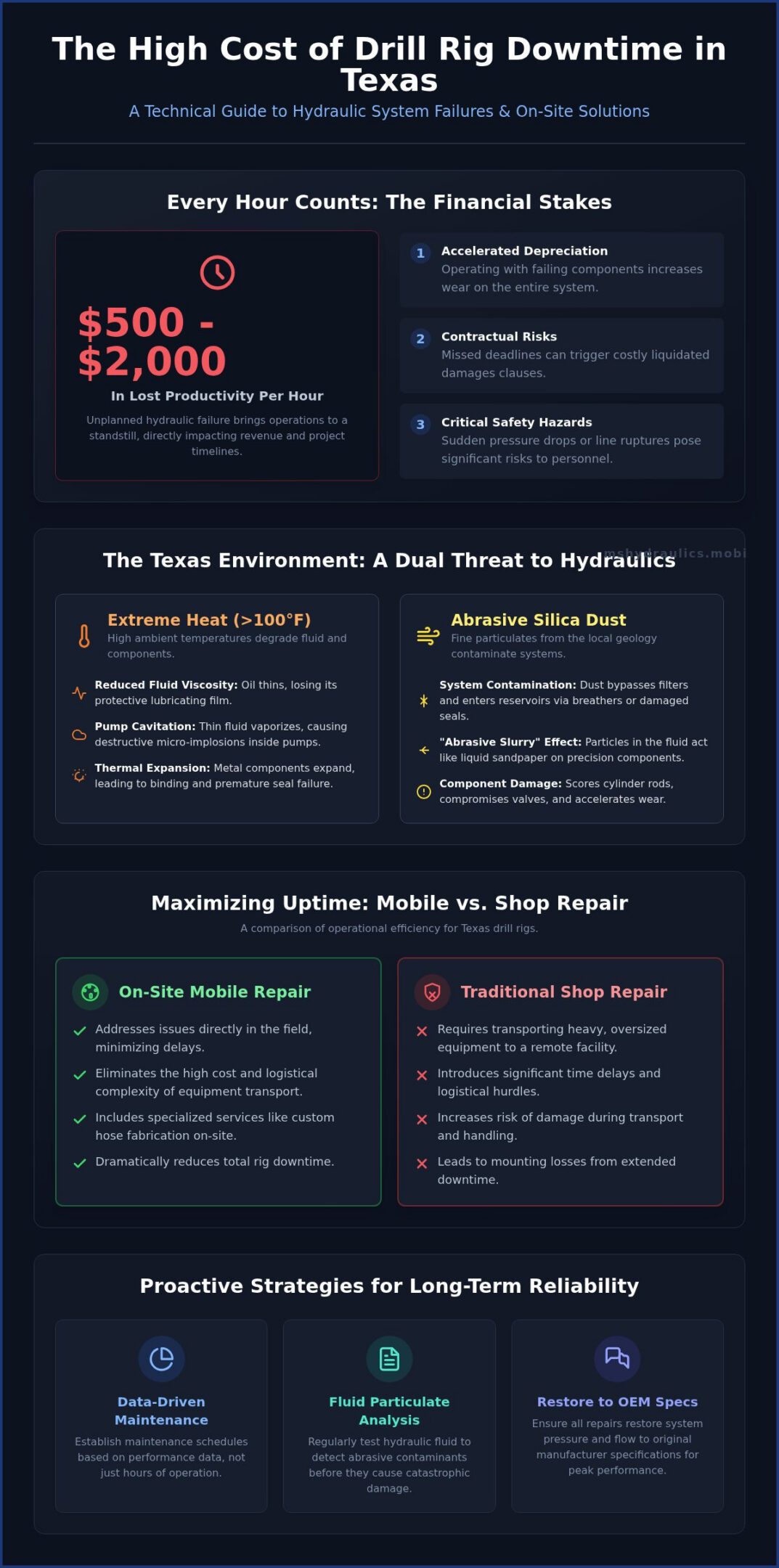
Every hour your drill rig sits idle on a Texas job site, you lose between $500 and $2,000 in lost productivity. In a market where West Texas Intermediate prices are projected to average $51 per barrel throughout 2026, these margins for error simply don’t exist. Securing expert drill rig hydraulic repair Texas is essential when you can’t afford the logistical headache of transporting heavy equipment to a remote service center. You’ve likely dealt with inexperienced technicians who misdiagnose complex circuits, leading to repeated failures and mounting losses.
We understand that maintaining high-pressure systems requires a mobile-first, engineering-led approach that addresses mechanical demands directly in the field. You’ll discover how specialized on-site diagnostics and precision hose fabrication restore your system pressure and flow to OEM specifications. This guide previews the technical strategies for eliminating downtime, maintaining compliance with the latest Texas Railroad Commission waste rules, and ensuring long-term mechanical reliability through expert field maintenance.
Key Takeaways
- Analyze how extreme Texas ambient temperatures impact hydraulic fluid viscosity and lead to pump cavitation during high-output drilling cycles.
- Identify technical indicators of hydraulic motor torque loss and internal leakage to address component failure before it causes total rig downtime.
- Compare the operational advantages of on-site drill rig hydraulic repair Texas against the high logistical costs and time delays associated with shop transport.
- Establish a data-driven maintenance schedule utilizing hydraulic fluid particulate analysis to ensure long-term system reliability and OEM-spec performance.
- Leverage specialized mobile services, including custom hose fabrication and cylinder rebuilds, to maintain continuous operation on North Texas job sites.
The High Stakes of Drill Rig Hydraulic Repair in the Texas Climate
Hydraulic systems function as the central nervous system of any drilling operation, converting fluid power into the massive torque and hoisting capacity required for deep-hole penetration. These systems rely on fundamental Hydraulic machinery principles to maintain consistent pressure across complex circuits. In the demanding environment of North Texas, maintaining this mechanical balance is a constant challenge for operators. Specialized drill rig hydraulic repair Texas becomes a technical necessity when ambient temperatures frequently exceed 100°F, directly altering the physical properties of the hydraulic medium and the tolerances of precision components.
Environmental Stressors on Texas Drilling Sites
High thermal loads represent the most significant threat to system integrity during summer months. When ambient temperatures rise, hydraulic fluid viscosity drops significantly, often falling below the minimum centistoke (cSt) rating required by OEM pump manufacturers. This thinning of the oil results in a loss of the protective lubricating film between moving metal surfaces, leading to increased internal leakage and accelerated component wear. Excessive heat also causes thermal expansion in hydraulic cylinders, which can lead to binding or premature seal degradation if the system isn’t calibrated for extreme temperature swings.
Beyond heat, the geological profile of the Barnett Shale and surrounding North Texas regions introduces high concentrations of abrasive silica dust. This particulate matter often bypasses standard filtration systems during high-wind events, entering the reservoir through breather caps or damaged rod wipers. Once inside the system, these particles act as an abrasive slurry that scores cylinder rods and compromises internal valves. Effective Heavy Equipment Maintenance must prioritize the use of high-quality, high-temperature fluorocarbon or nitrile seals that can withstand both the thermal expansion of the metal housing and the constant friction of external contaminants.
Financial Implications of Hydraulic Failure
The economic impact of a hydraulic breakdown extends far beyond the immediate repair invoice. For Tier 1 and Tier 2 drilling rigs, unplanned downtime disrupts the critical path of a project, potentially leading to contractual penalties and the loss of future drilling windows. The “ripple effect” of a single blown hose or a seized pump can halt an entire site’s progress, affecting safety protocols and labor utilization across multiple teams.
- Accelerated Depreciation: Operating a rig with degraded fluid or failing pumps increases the wear rate on every downstream component.
- Contractual Risks: Missed deadlines due to equipment failure can trigger liquidated damages clauses in drilling contracts.
- Safety Hazards: Unexpected pressure drops or line ruptures pose significant risks to personnel working near the mast or drill floor.
Hydraulic downtime is the period during which a drilling rig remains non-operational due to fluid power failure, resulting in an average market loss of $500 to $1,500 per hour in North Texas.
Technical Breakdown: Common Hydraulic Component Failures in Drilling Operations
Drilling rigs utilize high-pressure hydraulic circuits to drive top drives, drawworks, and mud pumps. When these systems fail, the diagnostic process must be methodical to avoid unnecessary component replacement. Expert drill rig hydraulic repair Texas requires a deep understanding of how load-sensing pumps and high-torque motors interact under varying borehole conditions. Identifying the root cause of a pressure drop or a mechanical stall is the first step in restoring OEM-level performance.
Pump cavitation remains a primary failure mode in high-demand drilling cycles. It occurs when the pump cannot draw enough fluid, leading to the formation and subsequent implosion of vapor bubbles. This process erodes internal metal surfaces and can cause total pump seizure within hours. Aeration, conversely, involves air entering the suction line, resulting in spongy control response and erratic pressure readings. Both conditions are often exacerbated by the fluid viscosity issues common in the Texas heat.
Drill Rig Pump and Motor Diagnostics
Technicians often identify a precursor to catastrophic pump failure by a high-pitched “whining” or “marbles in a can” sound, which indicates cavitation. To determine the health of a hydraulic motor, we perform case drain testing to measure volumetric efficiency. If the case drain flow exceeds manufacturer specifications, it’s a clear indicator of internal leakage or “slip.” This slip explains why a rig might maintain system pressure but lack the necessary speed or torque to maintain the required RPMs during a difficult drill string rotation.
High-Pressure Hose and Fitting Integrity
Hose and fitting integrity is critical because drilling operations generate intense harmonic vibrations that fatigue standard hydraulic assemblies. According to safety standards for High Pressure Lines and Equipment, maintaining these connections is vital for preventing catastrophic fluid discharge and site accidents. We utilize on-site custom hose fabrication to ensure that every replacement meets the exact burst pressure ratings required for heavy-duty drilling applications.
Utilizing On-Site Diagnostic Services allows for the identification of micro-leaks and fitting fatigue before they escalate into high-pressure blowouts. Fitting selection is equally vital; while JIC fittings are common, O-Ring Face Seals (ORFS) often provide superior leak resistance in high-vibration environments. If your equipment shows signs of sluggishness or visible seepage, engaging a specialist for mobile hydraulic component repair can prevent a minor sticking valve from becoming a major rig failure. Valve bank malfunctions often stem from sticking spools, which are frequently caused by the particulate contamination found on North Texas job sites.
Mobile Field Service vs. Shop Repair: Maximizing Uptime for Texas Rigs
Transporting a multi-ton drilling rig to a centralized facility involves significant logistical friction. Beyond the direct costs of heavy-haul trucking and pilot cars, the disassembly and reassembly of the mast and sub-structure often consume 48 to 72 hours of potential production time. For many operators, choosing drill rig hydraulic repair Texas specialists who operate mobile units is the most efficient way to mitigate these losses. Mobile technicians eliminate the transit window, allowing diagnostics to begin within hours of a service call rather than days.
Analyzing the financial trade-off requires looking at the total cost of ownership. While field service labor generally commands a higher hourly premium than shop-based work, the avoidance of rigging fees and transport permits often results in a lower net expenditure. More importantly, performing a heavy equipment cylinder rebuild Texas on-site allows the technician to test the component under actual load conditions. This ensures that the repair holds up against the specific vibration and pressure spikes of that particular wellbore, a verification step that is impossible in a stationary shop environment. Research into the causes of hydraulic system failure confirms that particulate accumulation is a leading factor; addressing these issues directly at the source prevents the introduction of new contaminants during transport.
The Logistics of On-Site Repair
A fully equipped mobile service truck functions as a rolling precision laboratory. It carries the specialized tooling required for high-pressure hydraulic fabrication, including crimpers and saws capable of handling multi-spiral hoses. These units allow technicians to work around the existing drilling schedule, performing critical repairs during planned pipe trips or shift changes. Safety remains a priority; mobile teams follow rigorous protocols for working in active drilling zones, including the use of secondary containment to prevent fluid spills and adherence to site-specific lockout/tagout procedures.
When a Shop Repair is Actually Necessary
While mobile service addresses the vast majority of hydraulic issues, certain mechanical failures require a controlled environment. If a cylinder rod requires industrial-scale machining or specialized rod polishing to remove deep scoring, the component must be moved to a facility with heavy-duty lathes. In these instances, a hybrid approach is often the most effective strategy. A technician performs the field removal and then oversees the shop restoration before returning for the on-site installation and system bleed. For specific regional coverage, including our mobile hydraulic repair Cleburne TX service area, we maintain the capability to handle both rapid field response and complex shop-based overhauls.
Preventative Maintenance Strategies for High-Output Hydraulic Systems
Establishing a rigorous Heavy Equipment Maintenance schedule is the most effective method for reducing the frequency of emergency drill rig hydraulic repair Texas. For high-output rigs, maintenance isn’t merely a checklist of oil changes; it’s an engineering process designed to monitor component health and predict failure before it occurs. By benchmarking system pressures and flows when the rig is in peak condition, you create a baseline for future diagnostics. Any deviation from these established parameters, even if the rig remains operational, indicates internal wear that requires technical intervention.
Hydraulic fluid analysis serves as a diagnostic window into the internal state of your pumps and motors. Quantitative data from these tests reveal the concentration of specific particulates, such as copper or iron, which correlate to the wear of brass bushings or steel gears. High levels of silica typically point to a breach in the filtration system or a failing rod seal. Training your operators to recognize early warning signs, such as increased cycle times or unusual thermal spikes in the reservoir, allows for proactive scheduling of specialized hydraulic pump repair before a total system seizure occurs.
Fluid and Filtration Management
Selecting the correct ISO viscosity grade is critical for rigs operating in the North Texas climate. During the 2026 service year, where summer temperatures are expected to remain high, switching to a high-viscosity index fluid ensures that the lubricating film remains stable under heavy loads. Filtration systems must utilize high-efficiency, beta-rated filters that can capture microscopic contaminants without causing excessive backpressure. The ISO 4406 cleanliness code quantifies the number of particles per milliliter of fluid at three specific micron levels, typically 4µm, 6µm, and 14µm, to provide a standardized metric for hydraulic system health.
Daily Inspection Checklists for Operators
A disciplined daily inspection routine identifies mechanical stressors that lead to hydraulic fatigue. Operators should examine cylinder rod surfaces for any signs of scoring, pitting, or discoloration, as these often precede seal failure. Hose routing requires constant verification; as the mast moves or the rig is leveled, hoses can rub against the chassis, leading to catastrophic abrasion. Finally, verifying the cleanliness of heat exchangers and the operation of cooler fans is essential. A clogged cooler in the Texas heat leads to fluid oxidation, which permanently degrades the chemical properties of your hydraulic oil and shortens the lifespan of every component in the circuit.
Ms. Hydraulics: Specialized Drill Rig Hydraulic Services in North Texas
Ms. Hydraulics LLC operates as a technical partner for drilling contractors throughout the Dallas-Fort Worth metroplex. We focus on restoring system performance through engineering precision rather than temporary fixes. Our team addresses the specific mechanical challenges of the 2026 Texas energy market, where operational efficiency remains the primary driver of profitability. By providing specialized drill rig hydraulic repair Texas, we ensure your equipment meets the rigorous demands of high-pressure shale operations. We founded this organization in 2021 with a commitment to technical integrity and mechanical accuracy, positioning ourselves as a dependable resource for major industrial players.
Our mobile units eliminate the logistical friction of equipment transport. We bring the shop to your job site, providing immediate access to Hydraulic Hose Fabrication and Hydraulic Cylinder Rebuilds. This on-site capability reduces the downtime window from days to hours, protecting your margins against the high hourly costs of non-productivity. Our technicians possess the specialized knowledge required to troubleshoot complex hydraulic circuits, ensuring that every repair aligns with OEM specifications and international industry standards.
Custom Solutions for Drilling Contractors
Drilling rigs often utilize non-standard fittings and unique hose configurations that aren’t readily available at general supply houses. We provide on-site hose fabrication for these specialized applications, utilizing high-pressure components that withstand the harmonic vibrations of the drill floor. Our expertise extends to expert diagnostics for complex multi-circuit hydraulic systems, where we isolate failures in valve banks, motors, or pumps with surgical precision. We also develop maintenance plans tailored to your specific rig hours and site conditions, helping you stay ahead of the July 2026 Texas Railroad Commission compliance deadlines for site equipment integrity.
Contacting the North Texas Mobile Team
We’ve streamlined our dispatch process to ensure a rapid response for emergency hydraulic repairs across Cleburne, Fort Worth, Dallas, and the surrounding areas. When you initiate a service call, you’re connected with a technician who understands the physical and mechanical parameters of your specific rig type. Beyond immediate repairs, we offer consulting on long-term fleet health, utilizing data from fluid analysis and pressure benchmarking to extend the service life of your hydraulic assets. Our goal is to provide a holistic integration of commercial reliability and engineering excellence. For those managing commercial facilities that require similar technical precision for power systems, Tri-County Electric Service provides expert electrical solutions and generator installations to ensure your infrastructure remains as resilient as your heavy machinery.
Maintaining a high level of professional decorum and technical transparency, we provide detailed documentation for every diagnostic and repair performed. This verification ensures your maintenance records remain compliant with both OSHA standards and internal safety protocols. Don’t let a failing pump or a blown line compromise your project timeline or site safety. Schedule your on-site drill rig diagnostic today.
Securing Operational Continuity for the 2026 Drilling Season
Maintaining the mechanical integrity of a drilling rig in the North Texas climate requires a shift from reactive repairs to engineering-led preventative strategies. You’ve seen how extreme thermal loads and particulate contamination degrade system performance, leading to the high hourly costs of unplanned downtime. By prioritizing on-site diagnostics and real-time pressure benchmarking, operators can identify internal component wear before it results in a total circuit failure.
Expert drill rig hydraulic repair Texas isn’t just about fixing what’s broken; it’s about optimizing the entire hydraulic lifecycle to ensure long-term reliability on the job site. Our team provides the technical precision required for complex systems, utilizing mobile units to eliminate the delays associated with rig transport. Whether you require specialized Heavy Equipment Cylinder Rebuilds or immediate On-Site Hose Fabrication, we provide the data-driven support your fleet needs to remain productive.
Our 24/7 Mobile Response Units are equipped to handle the most demanding field conditions, ensuring your operation remains compliant and efficient. Request Mobile Drill Rig Repair in North Texas to restore your system to OEM specifications. We look forward to helping you maintain peak performance throughout your next project.
Frequently Asked Questions
How quickly can you respond to a drill rig hydraulic emergency in Texas?
Response times are determined by technician availability and the proximity of the mobile unit to your specific job site. We prioritize emergency calls for drill rig hydraulic repair Texas by deploying technicians directly from our Cleburne hub to locations throughout the Dallas-Fort Worth metroplex. This localized dispatch model ensures that on-site diagnostics begin as soon as possible to mitigate the financial impact of equipment downtime.
Can you fabricate high-pressure hydraulic hoses on-site for my rig?
Yes, our mobile service trucks are equipped with industrial-grade crimping and cutting machinery for immediate on-site hydraulic hose fabrication. We maintain an inventory of multi-spiral hoses and specialized fittings, including JIC and O-Ring Face Seal (ORFS) configurations, to match OEM specifications. This capability eliminates the need for operators to source parts from remote warehouses, allowing for the immediate restoration of system pressure.
Do you offer on-site hydraulic cylinder resealing and rebuilds?
We perform on-site hydraulic cylinder rebuilds and resealing for most drilling rig applications, provided the site conditions allow for a controlled work environment. Technicians handle the disassembly, inspection, and installation of high-temperature seal kits directly on the rig. If a cylinder rod exhibits deep scoring that requires industrial machining or rod polishing, we manage the component’s removal and transport to a facility for specialized restoration.
What are the most common causes of hydraulic pump failure on Texas drill sites?
Hydraulic pump failures in the Texas market are primarily driven by fluid aeration, cavitation, and thermal degradation. High ambient temperatures frequently cause hydraulic oil to thin beyond its recommended viscosity, leading to increased friction and internal slip. Furthermore, abrasive particulate matter from North Texas shale plays can bypass standard filtration, scoring internal pump gears and bushings, which eventually results in total mechanical seizure.
How much does mobile hydraulic repair for a drill rig cost?
The total expenditure for mobile repair depends on the diagnostic complexity, the parts required for restoration, and the total labor hours invested in the field. Factors such as the distance to the drilling site and the necessity for specialized hose fabrication or pump overhauls will influence the final cost. We provide detailed technical documentation for all services rendered to assist operators in tracking their maintenance and repair expenditures accurately.
What areas in North Texas do you provide mobile hydraulic services to?
Our mobile service network covers the entire North Texas region, with a primary focus on Cleburne, Fort Worth, and Dallas. We support drilling operations throughout Johnson, Tarrant, and Dallas counties, including remote job sites where transport logistics are difficult. This regional focus allows us to provide more responsive service than national providers who do not maintain a dedicated local presence in the DFW metroplex.
Can you troubleshoot complex electronic-over-hydraulic controls on modern rigs?
We utilize advanced diagnostic tooling to analyze both purely mechanical circuits and modern electronic-over-hydraulic control systems. Many contemporary rigs employ sensors and solenoid valves to regulate load-sensing pumps and automated mast functions. Our technicians are trained to isolate whether a malfunction originates in the mechanical hardware, the hydraulic fluid path, or the electronic control interface to ensure an accurate and permanent repair.
Do you provide preventative maintenance plans for large drilling fleets?
We offer comprehensive preventative maintenance plans tailored to the operational hours and environmental demands of large drilling fleets. These plans integrate regular fluid analysis, pressure benchmarking, and thorough system inspections to detect early signs of component fatigue. Proactive maintenance ensures that your fleet remains compliant with industry safety standards while significantly reducing the likelihood of catastrophic hydraulic failure during critical drilling cycles.