Industrial Hydraulic Solutions in Dallas: A Technical Guide to Minimizing Downtime
A single hour of catastrophic equipment failure on a North Texas job site represents a systemic breakdown that extends far beyond immediate production losses. With the Dallas Fed reporting a manufacturing production index of 9.4 as of May 2026, the pressure to maintain operational continuity has never been higher for regional industrial leaders. You know that incompetent repairs and the high costs of hauling heavy machinery to remote shops are unacceptable risks that compromise your project timelines. Implementing the precise industrial hydraulic solutions Dallas operations require involves a shift from reactive patching to engineering-grade maintenance and on-site diagnostic clarity.
This guide details the technical frameworks and rapid-response strategies used to ensure a rapid return to operational status. You’ll discover how a disciplined combination of on-site mobile diagnostics and precision component restoration prevents recurring failures and environmental safety hazards. We’ll also preview the specific maintenance protocols and 2026 regulatory compliance strategies, including updated OSHA Hazard Communication Standards, that ensure long-term system reliability and mechanical integrity across your entire fleet of heavy equipment.
Key Takeaways
- Analyze the economic impact of machinery downtime and the technical frameworks required for integrated system management in North Texas.
- Review the technical frameworks for industrial hydraulic solutions Dallas operations used to maintain high-performance systems and minimize downtime.
- Establish specific criteria for selecting between mobile diagnostic services and shop-based component rebuilds to optimize operational continuity.
- Identify how standardized hydraulic fluid analysis and routine filter replacement protocols serve as a foundation for long-standing equipment reliability.
- Evaluate the role of engineering-grade partnerships in maintaining the mechanical integrity of complex hydraulic systems across the DFW metroplex.
Understanding Industrial Hydraulic Solutions in the Dallas Market
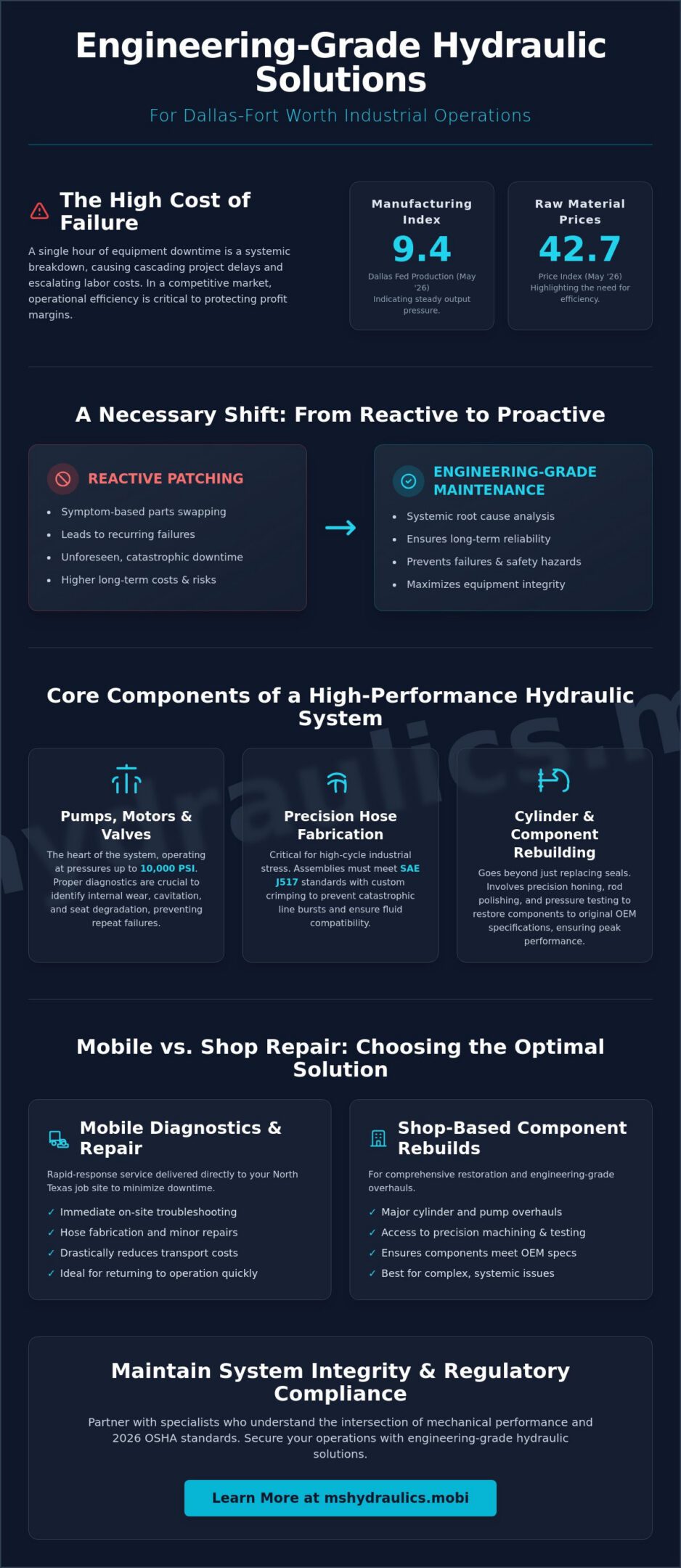
Industrial operations across the Dallas-Fort Worth metroplex face significant pressure to maintain peak performance in an increasingly competitive environment. According to the Dallas Fed’s May 2026 report, the regional manufacturing production index reached 9.4, indicating a steady pace of output expansion. This growth necessitates sophisticated industrial hydraulic solutions Dallas firms can rely on to prevent mechanical degradation. True industrial solutions encompass integrated system management, focusing on the synergy between Core Components of High-Performance Hydraulic Systems like pumps, valves, and cylinders. Moving beyond reactive repairs is essential for protecting the mechanical integrity of heavy machinery.
The economic impact of machinery downtime in North Texas construction and agriculture sectors is profound. When a drill rig or excavator fails, the labor costs and project delays compound quickly. In a market where raw material prices rose to an index of 42.7 in May 2026, operational efficiency is the primary way to protect profit margins. This efficiency often starts with a well-maintained facility, where you might explore Office Cleaning from Advance Industrial Maintenance to ensure your administrative support matches your technical standards. Localized, rapid-response technical support ensures that a minor failure doesn’t escalate into a multi-day catastrophe. A professional hydraulic service must address the entire system, including precision hose fabrication, cylinder restoration, and pump diagnostics, to ensure long-term reliability.
The Scope of Modern Hydraulic Engineering
Modern machinery relies on precise fluid power principles to convert pressure into mechanical force. Many industrial units operate at pressures up to 10,000 PSI, requiring components that meet rigorous SAE specifications. Maintaining these systems requires technical diagnostics rather than simple parts swapping. Swapping a valve without identifying the source of contamination leads to repeat failures. Professional technicians analyze flow rates and pressure drops to verify the root cause of any malfunction, ensuring that the repair addresses the underlying engineering issue rather than just the symptom.
Regional Industrial Demands in North Texas
Dallas-area infrastructure projects demand equipment that can withstand extreme thermal cycles. Texas heat significantly impacts hydraulic fluid viscosity, leading to accelerated wear if the wrong lubricants are used or if cooling systems aren’t optimized. Additionally, 2026 updates to the OSHA Hazard Communication Standard require strict compliance regarding chemical labeling and safety data sheets for hydraulic fluids. Local expertise ensures that systems remain both high-performing and compliant with these evolving safety regulations. It’s essential for operators to partner with specialists who understand the intersection of mechanical performance and regulatory requirements.
Core Components of High-Performance Hydraulic Systems
High-performance hydraulic systems are only as reliable as their weakest sub-component. While many providers focus solely on basic hose replacement, comprehensive industrial hydraulic solutions Dallas operations must address the entire fluid power circuit. This includes identifying internal wear in pumps, motor cavitation, and valve seat degradation. A failure to diagnose these systemic issues often leads to repeat component failure and unmanaged environmental hazards. Maintaining the mechanical integrity of heavy machinery requires a holistic approach that evaluates how each part interacts under high-pressure conditions.
Precision Hose Fabrication Standards
Selecting the correct hose material and fitting interface is critical for equipment subjected to high-cycle industrial stress. Custom crimping ensures that the hose assembly maintains its structural integrity under extreme pressure fluctuations. SAE J517 standards establish the specific construction and performance requirements for hydraulic hoses to ensure they meet designated pressure ratings and temperature tolerances. Using assemblies that don’t meet these benchmarks increases the risk of catastrophic line bursts. Precision fabrication involves verifying the compatibility of the inner tube with the specific hydraulic fluid used in the system.
Cylinder and Component Rebuilding
Restoring a hydraulic cylinder requires more than just replacing seals. The engineering process behind a heavy equipment cylinder rebuild Texas professionals utilize involves precision rod polishing to remove surface imperfections that cause premature seal wear. Technicians must select seal materials that match the operational environment and pressure demands. Rebuilding components is a cost-effective alternative to replacement, provided the restoration meets original equipment manufacturer (OEM) specifications. Every rebuilt unit must undergo rigorous pressure testing to verify its performance before it returns to the field.
Systemic reliability also depends on the health of pumps and motors. Identifying signs of cavitation or gear wear early prevents total system contamination. Effective Preventative Maintenance and System Diagnostics are essential for identifying these internal issues before they manifest as a complete equipment shutdown. Valves must also be inspected for internal bypass and pressure relief settings. If your machinery shows signs of sluggish performance or overheating, consulting with experts in on-site diagnostic services can provide the clarity needed to prevent future mechanical failures.
Mobile vs. Shop Repair: Choosing the Right Solution
Selecting the appropriate repair environment is a critical decision that directly impacts both the speed of recovery and the long-term reliability of the machinery. Professional industrial hydraulic solutions Dallas operations must evaluate the logistical footprint of the equipment against the technical requirements of the repair. While on-site intervention minimizes transport delays, complex component failures often necessitate the controlled conditions of a specialized shop. This choice requires a disciplined cost-benefit analysis that considers transport fees, labor hours, and the potential for environmental contamination during field disassembly.
Understanding the Fundamentals of hydraulic systems is essential when determining if a failure is external, such as a ruptured hose, or internal, such as pump wear. External failures are frequently candidates for field service, whereas internal mechanical degradation usually requires shop-based precision tools. On-site diagnostics provide the advantage of observing system performance under actual load conditions, which is often impossible to replicate in a shop environment without extensive test stands. Rapid on-site leak containment also serves as a primary defense against environmental hazards and OSHA non-compliance on active job sites.
The Advantages of On-Site Field Service
For many operators in North Texas, utilizing mobile hydraulic repair Cleburne TX services provides the fastest path to operational status. This approach eliminates the complex logistics and high costs associated with hauling oversized machinery like excavators or drill rigs. Field technicians can perform real-world diagnostics, identifying issues that only manifest during high-cycle operations. This is particularly valuable in high-traffic areas like Mansfield or Arlington, where equipment transport is restricted by local ordinances or infrastructure limitations.
Shop-Based Precision Engineering
Certain restorations demand access to specialized machining tools that cannot be deployed in the field. Shop-based environments are mandatory for cylinder rod polishing, where surface finishes must meet exact micron specifications to ensure seal longevity. Controlled environments are also necessary for repairing hydraulic motors and pumps, as even microscopic dust particles can cause catastrophic wear in high-pressure circuits. Shop testing for industrial valve banks ensures that every pressure relief setting and flow control parameter is verified against OEM standards before the component is reinstalled on the machine.
Preventative Maintenance and System Diagnostics
Proactive system management is the only verifiable method for reducing the mean time between failures (MTBF) in high-cycle machinery. While previous sections detailed the mechanics of component restoration, the integration of heavy equipment maintenance protocols ensures these components operate within their designed thermal and pressure parameters. For companies seeking comprehensive industrial hydraulic solutions Dallas specialists provide, the focus must remain on early detection. Subtle indicators like increased operating temperatures, sluggish cycle times, or aeration-induced noise serve as precursors to total system collapse. Utilizing on-site diagnostic services allows technicians to capture real-time data, identifying pressure spikes or flow restrictions that signal internal mechanical fatigue before they manifest as a job-site emergency.
Fluid Analysis and System Hygiene
Contamination remains the primary cause of hydraulic system failure, often introduced through degraded seals or improper fluid handling during field service. Maintaining system hygiene involves more than just periodic filter changes; it requires a disciplined approach to fluid chemistry and particulate monitoring. Regular pressure testing verifies the structural integrity of the circuit and ensures that relief valves are functioning at specified crack pressures. Through spectroscopic fluid analysis, technicians identify specific metal particulates that indicate which internal components are wearing before a catastrophic failure occurs. This data-driven approach allows for scheduled interventions that are far more cost-effective than emergency field repairs or total pump replacements.
Scheduled Maintenance for Industrial Fleets
Fleet managers must tailor maintenance intervals to the specific environmental stressors of North Texas. High ambient temperatures in Dallas accelerate the oxidation of hydraulic oil, leading to varnish buildup and valve sticking. In heavy construction environments, fine particulate matter can bypass standard filtration if breathers aren’t maintained or if cylinders are operated with compromised wipers. Training operators to recognize changes in machine feedback, such as increased vibration or drifting actuators, is a critical component of this strategy. The return on investment for preventative care is easily verified when comparing the predictable costs of oil analysis and filter kits to the uncontrolled expenses of unplanned downtime and equipment hauling. If you require a technical audit of your fleet’s hydraulic health, contact the specialists at Ms. Hydraulics to schedule a diagnostic review.
Partnering with Ms. Hydraulics for North Texas Operations
Securing the mechanical integrity of heavy machinery requires a partner that understands the intersection of engineering theory and field application. Ms. Hydraulics provides a centralized resource for industrial hydraulic solutions Dallas firms utilize to maintain operational continuity across diverse project sites. Our technical framework integrates advanced on-site diagnostic services with high-precision shop capabilities, ensuring that every repair adheres to rigorous industrial standards. By maintaining a disciplined focus on physical and mechanical parameters, we provide North Texas operators with the technical verification necessary to support large-scale industrial infrastructure.
The Ms. Hydraulics Technical Advantage
Technical accuracy serves as the foundation of our service delivery model. With decades of experience in heavy equipment maintenance, our team approaches every hydraulic cylinder rebuild or pump repair with a focus on precision restoration. We don’t simply replace parts; we analyze failure modes to prevent recurrence. This methodical approach ensures that restored components meet or exceed OEM specifications. Our commitment to engineering integrity means that every custom hose assembly and valve repair undergoes strict verification before returning to service, reinforcing our position as a dependable partner for major industrial players.
Contact and Response Protocols
Operational delays require a structured response to minimize financial impact. Our service area extends across the DFW metroplex, providing coverage from Cleburne and Alvarado to Arlington and Dallas. For equipment failures in Johnson and Tarrant Counties, our mobile hydraulic repair units are equipped to perform on-site diagnostics and custom hose fabrication, reducing the need for costly transport. To initiate a service request or to schedule a comprehensive system diagnostic for your fleet, contact our technical team directly. We provide detailed quotes for hydraulic motor repairs, cylinder rebuilds, and routine maintenance programs tailored to your specific operational requirements, which can be further optimized using digital management tools from Repair-CRM.
Establishing a long-term industrial partnership with Ms. Hydraulics ensures your fleet benefits from consistent, high-level technical oversight. We prioritize the reliability and performance of your hydraulic systems above all else. Whether your machinery requires immediate field intervention or complex shop-based machining, our team maintains the professional decorum and engineering excellence your operations demand.
Optimizing Operational Continuity in North Texas
Maintaining the mechanical integrity of heavy machinery requires a shift from reactive repairs to a technical framework of integrated system management. By prioritizing engineering-grade diagnostics and precision component restoration, you ensure your equipment operates within its designed parameters. Implementing the high-performance industrial hydraulic solutions Dallas operators rely on prevents recurring failures and costly environmental hazards. Whether your project demands mobile diagnostics for excavators and drill rigs or the controlled environment of a specialized shop for precision cylinder rebuilds, technical accuracy remains the only verifiable path to minimizing downtime.
Since 2021, Ms. Hydraulics has served the Dallas, Fort Worth, and North Texas region with a disciplined approach to fluid power engineering. Our team provides the expertise needed to manage complex industrial fleets and restore critical components to OEM specifications. Don’t let mechanical degradation compromise your production timelines or project safety standards. Contact Ms. Hydraulics for Expert Industrial Solutions to schedule a diagnostic review or request immediate field support for your skid steers and heavy machinery. We’re ready to support your operational excellence.
Frequently Asked Questions
What are the most common causes of hydraulic system failure in Dallas industrial sites?
Fluid contamination and extreme thermal stress are the primary drivers of system degradation in North Texas. High ambient temperatures accelerate oil oxidation, leading to varnish buildup and valve sticking. Additionally, improper fluid handling can introduce particulates that cause internal component wear, making compliance with 2026 OSHA Hazard Communication Standards essential for maintaining system hygiene and operational safety.
How long does a typical mobile hydraulic hose repair take on-site?
A standard on-site hose fabrication and installation typically requires one to two hours following the technician’s arrival. This duration includes the time needed for system depressurization, removal of the failed assembly, and precision crimping of a new hose that meets SAE J517 specifications. Complex routings or restricted access to the failed component may extend the required labor time.
Can all hydraulic cylinders be rebuilt, or is replacement sometimes necessary?
Most industrial cylinders are candidates for rebuilding if the barrel’s structural integrity remains intact. Technicians utilize precision rod polishing and seal selection to restore units to OEM performance levels. However, if the cylinder rod is severely bent or the internal barrel surface is pitted beyond machining limits, a total component replacement becomes the more cost-effective and reliable engineering choice.
What industries in the DFW area do you provide hydraulic solutions for?
We provide specialized industrial hydraulic solutions Dallas firms require across the construction, manufacturing, and logistics sectors. With the Dallas-Fort Worth industrial market showing an 8.7% vacancy rate in early 2026, the demand for reliable material handling equipment and warehouse machinery remains high. Our technical support extends to regional infrastructure projects and heavy industrial manufacturing plants throughout the metroplex.
Is mobile hydraulic repair more expensive than bringing equipment to a shop?
Mobile repair involves field service labor rates but eliminates the significant expense of hauling oversized machinery to a physical shop. For external failures like ruptured hoses or leaking seals, on-site intervention is generally more economical due to the reduction in downtime. Shop repairs are reserved for complex machining tasks where a controlled, contamination-free environment is mandatory for component integrity.
How do I know if my hydraulic pump is failing versus just a bad hose?
Pump failure typically manifests as an audible change in system pitch, such as cavitation noise, or a noticeable drop in cycle speed under load. A bad hose is usually identified by visible external leaks or structural bulging of the outer cover. On-site diagnostic services allow technicians to measure flow rates and pressure parameters to verify if internal bypass is occurring within the pump.
What safety standards do your technicians follow during on-site repairs?
Technicians adhere to rigorous OSHA regulations, including standardized lock-out/tag-out procedures and 2026 Heat Illness Prevention protocols for outdoor job sites. We also prioritize environmental safety through rapid fluid containment strategies to prevent job-site contamination. Every repair is performed with a focus on maintaining the mechanical integrity of the high-pressure system to ensure safe operation post-service.
Do you offer 24/7 emergency hydraulic services in the Dallas-Fort Worth area?
Operational availability for emergency repairs depends on current technician dispatch and shop capacity at the time of the request. To ensure a rapid response, operators should contact our technical team to verify current lead times for mobile diagnostics or shop-based rebuilds. We focus on providing predictable and reliable service schedules to support the continuity of your industrial operations.