Tractor Hydraulic Repair in Arlington, TX: Mobile Solutions for Agricultural Machinery
Transporting a compromised tractor to a repair facility often introduces more particulate contamination into the sensitive hydraulic system than the original mechanical failure. For operators managing the 14 billion dollar tractor and power unit segment of the agricultural market, the logistical cost of hauling heavy machinery is secondary to the risk of secondary system degradation. If you’re managing equipment in North Texas, securing a reliable partner for tractor hydraulic repair Arlington TX is a strategic necessity rather than a simple convenience.
It’s a reality that equipment downtime equates to lost revenue and missed operational windows. You’ll discover how mobile solutions, including on-site diagnostic services and hydraulic hose fabrication, minimize logistical overhead while maintaining strict system integrity. This guide details the technical benefits of on-site hydraulic cylinder rebuilds and examines how the Texas Agricultural Right to Repair Act (HB4362), effective September 1, 2025, provides owners with the necessary leverage to maintain their own fleet’s performance through expert mobile support.
Key Takeaways
- Identify the specific mechanical stressors on hydraulic pumps and valves that lead to system failure during heavy agricultural lifting and tilling operations.
- Analyze why mobile tractor hydraulic repair Arlington TX serves as a superior logistical strategy by mitigating the risk of system contamination during equipment transport.
- Assess the impact of Arlington’s ambient temperatures on hydraulic fluid viscosity and the necessity of technical preventative maintenance routines to ensure long term reliability.
- Compare the operational efficiency and total cost of ownership of on-site hose fabrication and cylinder rebuilds against traditional shop-based repair models.
- Understand how specialized mobile diagnostics facilitate the rapid restoration of hydraulic function while maintaining rigorous engineering and performance standards.
Addressing Tractor Hydraulic Failures in Arlington, TX
Tractor hydraulic repair in Arlington, TX involves a specialized focus on the individual components that comprise a vehicle’s fluid power architecture. This includes the technical diagnostics and restoration of hydraulic pumps, directional control valves, actuators, and high-pressure hose assemblies. These systems are the primary drivers of modern tractor functionality, enabling the precise control of heavy implements through fundamental hydraulic machinery principles. Arlington serves as a critical junction where rapid urban expansion intersects with established agricultural operations. This geographic reality creates a high demand for maintenance that can address the diverse needs of both sectors. When a primary hydraulic component fails, the resulting loss of pressure renders the machine non-functional, necessitating immediate intervention to prevent operational paralysis.
The High Cost of Tractor Downtime
A stalled tractor during peak seasonal windows generates significant indirect costs that extend far beyond the price of a replacement part. Given that tractors and power units constituted a 14 billion dollar segment of the maintenance market in 2024, the financial impact of equipment failure is a serious concern for any operation. For Arlington-based construction and landscaping firms, equipment failure disrupts tightly scheduled project timelines, which leads to contractual penalties and wasted labor hours. If a hydraulic failure is neglected, it often precipitates secondary mechanical issues. For instance, a minor leak can lead to low fluid levels, causing the pump to run dry and sustain permanent internal damage. Addressing these malfunctions through professional tractor hydraulic repair Arlington TX ensures that minor component wear doesn’t escalate into a catastrophic system-wide failure.
Common Signs of Hydraulic System Distress
Early detection of hydraulic distress is essential for maintaining equipment longevity and preventing total system contamination. Operators should monitor for audible cues such as high-pitched whining or growling. These sounds typically indicate aeration or cavitation within the hydraulic pump, conditions that occur when air enters the system or when the pump is starved of fluid. Visual indicators are equally telling. External leaks at cylinder seals or hose fittings are obvious signs of trouble, while a spongy or delayed response from the loader often points to internal pressure losses. In the North Texas climate, monitoring fluid temperature is vital. Excessive heat reduces fluid viscosity, which compromises lubrication and leads to accelerated wear on valves and motors. Identifying these symptoms early allows for targeted hydraulic pump or valve repair before the entire system is compromised.
Common Hydraulic Component Failures in Agricultural Machinery
Agricultural machinery operates in environments where mechanical stressors are constant. During heavy tilling or lifting, hydraulic pumps must maintain peak pressure while managing significant thermal loads. Multi-function agricultural equipment relies on complex valve banks to distribute flow, and these components are highly susceptible to internal erosion. Technical data suggests that fluid contamination accounts for approximately 90% of all hydraulic system failures. For operators seeking tractor hydraulic repair Arlington TX, understanding these specific failure modes is the first step toward effective system restoration. Identifying a failure before it results in a total system purge is critical for maintaining operational efficiency.
Different manufacturers utilize distinct hydraulic architectures that present unique maintenance challenges. John Deere systems often employ closed-center, pressure-compensated pumps, whereas many Kubota models utilize simpler open-center gear pumps. Case IH machinery frequently features advanced load-sensing valves that require precise calibration. Each brand requires a specific diagnostic approach to identify internal bypass or mechanical wear. Operators should adhere to a technical preventative maintenance schedule to ensure these brand-specific components operate within original design parameters and avoid premature fatigue.
Hydraulic Cylinder and Seal Degradation
The abrasive nature of North Texas soil presents a significant challenge to hydraulic actuators. Fine grit and dirt accumulate on cylinder rods during field operations. If the wiper seal fails, these particles enter the cylinder, scoring the rod and damaging the internal u-cup seals. This leads to external leakage and “drift,” where the implement fails to hold its position. Professional Heavy Equipment Cylinder Rebuild in Texas focuses on the precise machining and resealing required to meet tight agricultural tolerances. Precision is mandatory here; even a microscopic scratch on a rod can compromise the integrity of a new seal within hours of operation.
Pump and Motor Performance Issues
Identifying whether a pump is failing involves more than a visual check. Gear pumps typically fail through housing wear or side-plate erosion, resulting in a gradual loss of flow. Piston pumps, found on higher-horsepower tractors, often suffer from shoe-plate wear or internal valve plate damage. Technicians use flow meters and pressure gauges to isolate these issues. If a pump shows a significant drop in efficiency, specialized hydraulic pump repair services can often restore performance for high-hour machinery. Early intervention through tractor hydraulic repair Arlington TX prevents metal debris from contaminating the reservoir and downstream valves. This methodical approach ensures that repair costs remain manageable and prevents the need for a complete system flush.
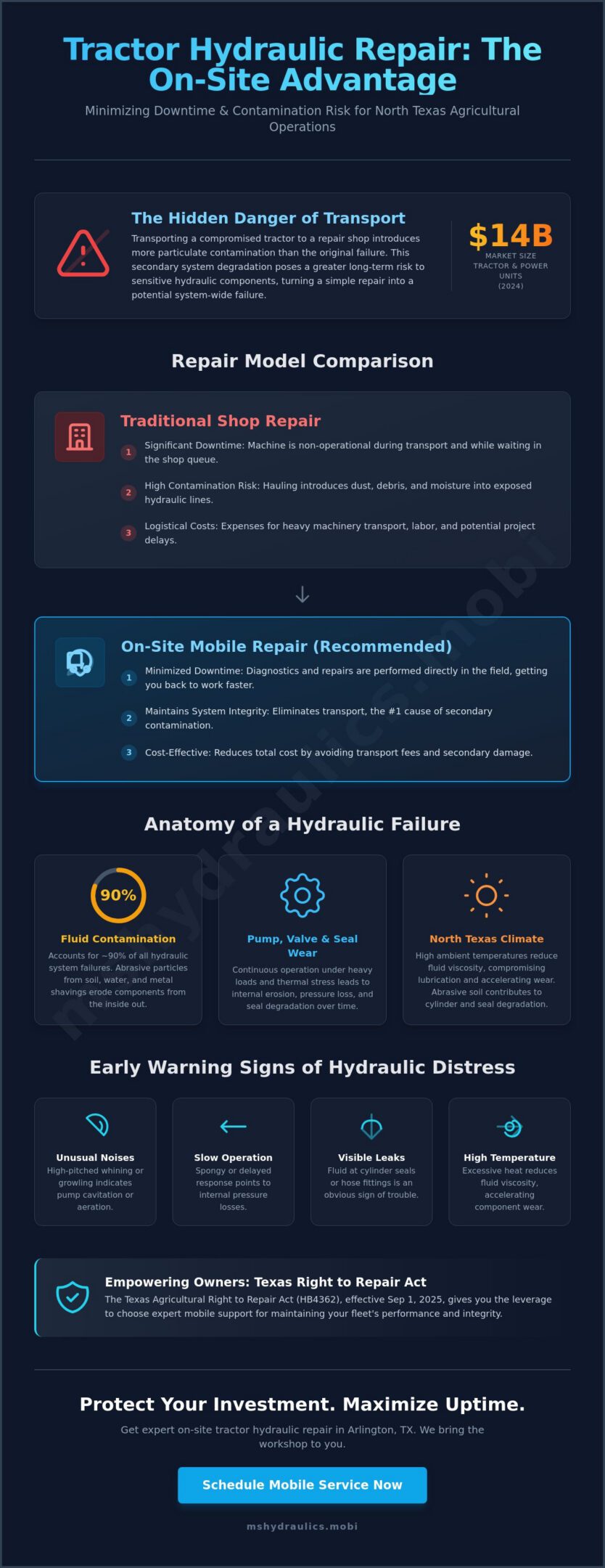
Field Service vs. Shop Repair: Evaluating Logistics and Downtime
Evaluating the total cost of ownership for machinery maintenance requires looking beyond the hourly labor rate. While shop-based facilities often emphasize their controlled environments, they frequently overlook the significant logistical overhead incurred by the equipment owner. When a tractor’s hydraulic system fails in the field, the immediate challenge is movement. A disabled machine requires specialized transport, often involving a low-boy trailer and a commercial driver. Choosing mobile tractor hydraulic repair Arlington TX eliminates these external costs and mitigates the risk of secondary damage during transport. Expert On-Site Diagnostic Services allow for an immediate technical assessment in the machine’s actual operating environment. This ensures that the root cause of the failure is identified under real-world load conditions rather than in a static shop setting.
Safety is another critical factor in the field service versus shop repair decision. Loading a tractor with compromised hydraulic function onto a trailer is inherently dangerous. Without reliable steering or braking from the hydraulic system, the machine is difficult to control during the loading process. Repairing the equipment where it failed removes this risk entirely. It also prevents the potential for environmental contamination that can occur if a leaking machine is moved across public roads. Mobile technicians arrive with the containment tools necessary to manage fluid spills, ensuring compliance with TCEQ standards for used oil management.
Eliminating the Hauling Burden
Securing a low-boy trailer for a disabled tractor in the Arlington area is a complex logistical task. Operators must coordinate with third-party transport services and navigate the heavy traffic corridors of the DFW Metroplex, which often consumes several hours of productive time. Mobile service avoids this burden entirely. A technician arrives at the equipment’s location with the necessary tooling to perform tractor hydraulic repair Arlington TX, allowing the operator to remain focused on other management tasks. This approach transforms a major logistical event into a controlled maintenance procedure, significantly reducing the total duration of equipment downtime.
On-Site Hose Fabrication and Installation
Hydraulic hose failure is a primary cause of tractor work stoppage. Traditional repair methods require the operator to remove the damaged hose and transport it to a counter for matching. Mobile solutions provide immediate Hydraulic Hose Fabrication directly at the machine. This ensures a precise fit and prevents common installation errors, such as incorrect hose routing or improper bend radii. Correct routing is essential for preventing premature abrasion and ensuring the longevity of the new assembly. By fabricating and installing the hose on-site, the equipment returns to service immediately, bypassing the delays associated with parts procurement and transit.
Preventative Maintenance for North Texas Tractors
Operational reliability in the North Texas agricultural sector depends on a rigorous adherence to technical maintenance standards. The environmental conditions in Arlington, characterized by high ambient temperatures and abrasive clay soils, accelerate the degradation of hydraulic components. High heat directly reduces fluid viscosity, which compromises the protective lubrication film between moving parts in pumps and valves. Without a structured inspection routine, these environmental factors lead to premature component fatigue and the eventual need for tractor hydraulic repair Arlington TX. Implementing a comprehensive Heavy Equipment Maintenance protocol ensures that these risks are managed before they result in system failure.
Establishing a frequency based inspection schedule allows operators to identify wear patterns early. Use the following technical checklist to maintain system integrity:
- Daily: Inspect fluid levels and check for external weeping at fittings or cylinder seals. Ensure the cooling core is free of debris to prevent thermal spikes.
- Weekly: Examine cylinder rods for nicks, rust, or scoring. Inspect the integrity of hose jackets for signs of abrasion or UV degradation.
- Monthly: Check the condition of the hydraulic tank breather. In the dusty conditions common to North Texas, a clogged breather creates a vacuum that starves the pump and introduces contaminants.
Hydraulic Fluid Management
Fluid analysis serves as a primary diagnostic tool for detecting internal component wear before a catastrophic failure occurs. By analyzing particulate counts and chemical composition, technicians can identify the presence of brass, steel, or moisture within the system. Selecting the correct ISO viscosity grade is essential for Texas operations. While a standard ISO 46 fluid may suffice in temperate climates, the extreme heat in Arlington often necessitates a higher viscosity index to maintain pressure at peak operating temperatures. When changing filters, it’s vital to clean the surrounding area thoroughly. Introducing even a small amount of North Texas grit into the system during a filter swap can cause more damage than the old filter itself. For professional assistance with fluid systems, you should schedule Heavy Equipment Maintenance to ensure all procedures meet industrial cleanliness standards.
Visual and Physical System Audits
A physical audit focuses on the mechanical interfaces of the hydraulic system. Cylinder rods must be kept clean; the abrasive nature of local soil quickly destroys seal lips if grit is allowed to accumulate. If you notice “weeping” at a fitting, it indicates a compromised O-ring or a loose connection that will eventually fail under high pressure. Frayed hose jackets are another critical warning sign. Once the outer protective layer is gone, the steel reinforcement is susceptible to corrosion and burst failure. Monitoring these physical markers is the most effective way to avoid the logistical burden of emergency tractor hydraulic repair Arlington TX. Consistent observation ensures that your machinery remains within its designed performance parameters throughout the demanding North Texas growing season.
Mobile Solutions for Arlington Operators: The Ms. Hydraulics Advantage
Ms. Hydraulics LLC functions as a specialized partner for operators requiring high-precision mechanical support in the Arlington and Cleburne regions. The organization provides a focused suite of services, including hydraulic pump repair and valve restoration, tailored specifically to the needs of the agricultural and construction sectors. By maintaining a mobile-first operational model, the firm addresses the primary pain points of equipment owners: excessive downtime and the logistical complexities of machine transport. For those managing a fleet in North Texas, securing professional tractor hydraulic repair Arlington TX ensures that machinery remains within its optimal performance envelope. The company’s technical approach relies on factual accuracy and engineering expertise to restore equipment to its original design specifications.
Our Service Area and Response Capabilities
The operational reach of Ms. Hydraulics LLC extends across Arlington, Mansfield, and the broader North Texas corridor. This geographic focus allows for a structured response to service requests from local farms and job sites. Each service unit is a fully equipped mobile laboratory, featuring the specialized tooling required for on-site hydraulic hose fabrication and advanced diagnostic testing. These trucks carry a comprehensive inventory of high-pressure fittings and seals, which enables technicians to resolve most issues without a return trip to a central warehouse. When a system failure occurs, the process for requesting a diagnostic visit is streamlined to ensure rapid deployment. Operators can initiate contact through the official website to secure a technician who’ll perform a methodical assessment of the machine’s hydraulic health under its actual working conditions.
Why Local Expertise Matters
Technical proficiency is enhanced by a deep understanding of the local industrial landscape. Since its founding in 2021, Ms. Hydraulics LLC has established itself as a disciplined industrial entity within the North Texas community. A technician who understands the specific demands of Arlington’s terrain and climate is better equipped to diagnose recurring failures related to soil contamination or thermal degradation. This local insight is critical when performing a Mobile Hydraulic Repair, as it informs the selection of materials and components that can withstand regional stressors. The company’s commitment to integrity is evidenced by its focus on objective, data-driven diagnostics. This approach prioritizes long-term mechanical reliability and customer relationships over short-term service volume. By adhering to international industry standards and formal verification processes, the firm provides Arlington operators with a dependable alternative to traditional shop-based repair facilities.
Securing Operational Continuity with Mobile Hydraulic Excellence
Maintaining the operational integrity of agricultural machinery requires a transition from reactive fixes to a structured technical strategy. By utilizing mobile solutions, operators eliminate the logistical hazards and high costs of equipment transport while ensuring that repairs are performed under real-world load conditions. This methodical approach preserves system cleanliness and prevents the secondary mechanical failures often associated with particulate contamination during transit. It’s a strategic choice that prioritizes long-term equipment health over temporary patches. Professional diagnostics and on-site component restoration allow your fleet to return to service with verified reliability.
Ms. Hydraulics LLC has served the Arlington and North Texas industrial community since 2021. The organization provides specialized diagnostic equipment compatible with all major machinery brands and facilitates immediate hydraulic hose fabrication directly at the machine’s location. This technical capability ensures that your tractor hydraulic repair Arlington TX is executed with industrial precision and minimal downtime. Our commitment to factual accuracy and engineering expertise provides a dependable foundation for local agricultural and construction operations.
Request On-Site Tractor Hydraulic Repair in Arlington to restore your equipment’s hydraulic efficiency today. Reliable performance is the foundation of a productive agricultural operation.
Frequently Asked Questions
How much does mobile tractor hydraulic repair cost in Arlington?
The total expenditure for a repair depends on the specific component failure, the time required for on-site diagnostics, and the cost of replacement parts. Service providers typically apply a standard hourly labor rate along with a mobilization fee based on the distance to the equipment’s location. Operators should contact a service coordinator to discuss their specific machine symptoms and receive a detailed estimate based on current regional labor and parts market values.
Can you fabricate hydraulic hoses on-site for any tractor brand?
Mobile service units are equipped with industrial crimping technology and an extensive inventory of high pressure fittings to support diverse machinery brands. This capability allows for the precise fabrication of hoses for John Deere, Kubota, Case IH, and other major manufacturers. On-site fabrication ensures that the new assembly matches the original manufacturer specifications for length, diameter, and pressure rating, which prevents the common issues associated with generic parts.
What is the typical response time for a mobile service call in Arlington?
Response times are determined by current technician availability and the logistical requirements of the specific service area within the North Texas corridor. Scheduling is managed to prioritize operational continuity for agricultural and construction clients. To obtain an accurate arrival window, equipment owners should provide their exact location and a brief description of the hydraulic malfunction when initiating a service request.
Do you repair hydraulic cylinders in the field or take them to a shop?
Minor seal replacements and external component repairs are frequently conducted on-site to minimize equipment downtime. If a cylinder requires precision machining, rod straightening, or internal barrel honing to meet industrial tolerances, the component is typically moved to a controlled facility. This ensures that the restoration meets the rigorous engineering standards necessary for long term reliability in heavy lifting applications.
Is it better to repair or replace a failing hydraulic pump on an older tractor?
The decision to repair or replace is based on a technical evaluation of the pump’s internal housing and rotating group. If the internal wear is within measurable limits, a professional rebuild is often a cost effective logistical choice that restores the machine to peak performance. Replacement is generally recommended when the pump housing has sustained catastrophic damage or when the cost of individual parts exceeds the price of a new assembly.
Can hydraulic system contamination be reversed without a full flush?
Reversing contamination requires the physical removal of particulates and moisture from the entire fluid circuit. While high efficiency filtration can manage minor debris, a complete system flush is the only verified method to ensure the system is free of the abrasive materials that cause premature valve and pump fatigue. This process is essential after a major component failure to prevent the immediate degradation of new parts.
What brands of tractors do you provide hydraulic repair for?
Support is provided for a wide range of agricultural and utility tractor brands, including John Deere, Kubota, New Holland, and Mahindra. Technicians utilize specialized diagnostic equipment designed to interface with various manufacturer architectures. This ensures that tractor hydraulic repair Arlington TX is performed according to the specific pressure and flow requirements of the original equipment manufacturer.
Are your mobile technicians certified for heavy equipment diagnostics?
Technicians possess extensive technical experience in fluid power systems and heavy equipment maintenance. This expertise allows for the accurate identification of complex failures in pumps, valves, and actuators. Equipment owners should verify specific technician credentials and organizational milestones when evaluating the technical capabilities of a service provider to ensure they meet the precision requirements of their machinery.