Emergency Hydraulic Leak Repair in Waxahachie, TX: On-Site Solutions for Heavy Equipment
A hydraulic leak on a high-pressure system is not merely a maintenance inconvenience; it is a critical systemic failure that threatens both project timelines and environmental compliance. For operators managing infrastructure projects along I-35, securing professional hydraulic leak repair Waxahachie services is the difference between a minor pause and a catastrophic equipment seizure. You know that transporting a non-functional 40-ton excavator for a simple seal failure is an inefficient use of capital and labor. The difficulty of moving heavy machinery often compounds the costs of downtime, which is why on-site resolution is the only logical engineering response.
This article provides the technical framework to identify, diagnose, and resolve hydraulic failures on-site. You’ll learn how to ensure your machinery returns to its rated operating pressure without the need for costly hauling or the risk of OSHA fines for fluid spills. We will analyze the diagnostic protocols required to prevent recurrence and examine how the $42 billion heavy equipment repair market is shifting toward engineering-led mobile solutions in 2026. By applying these precision standards, you can maintain the stability and reliability of your fleet in even the most demanding industrial environments.
Key Takeaways
- Identify the critical financial and environmental liabilities associated with hydraulic fluid loss on major Waxahachie infrastructure projects.
- Differentiate between visible external failures and complex internal bypass leakage that compromises system pressure and mechanical torque.
- Evaluate the logistical advantages of professional hydraulic leak repair Waxahachie services compared to the high costs of transporting immobile equipment.
- Execute standardized field protocols for system depressurization and contaminant management to ensure a high-pressure rated repair.
- Leverage 24/7 mobile engineering support to minimize machinery downtime and maintain operational continuity across Ellis County.
Waxahachie’s Industrial Landscape and the High Cost of Hydraulic Leaks
Waxahachie serves as a critical junction for North Texas infrastructure, particularly with the ongoing expansion of the I-35 corridor and the rapid development of data centers across the region. In this high-intensity environment, a hydraulic failure is more than a mechanical setback; it’s a significant financial liability. For project managers, securing a professional hydraulic leak repair Waxahachie service is the primary method for mitigating these operational risks. A single compromised seal can halt a multi-million dollar construction phase, leading to cascading delays across the Dallas-Fort Worth metroplex.
The technical reality is that Hydraulic machinery relies on precise pressure maintenance to function. When a leak occurs, the system loses the ability to generate the necessary torque and displacement. This inefficiency doesn’t just slow down the machine; it creates a dangerous operational environment. Rapid-response diagnostics are essential to prevent the total failure of expensive components like pumps and valves. Failure to act quickly often results in the introduction of contaminants into the system, which compounds the repair requirements.
The Economic Impact on Local Construction and Agriculture
The global heavy equipment repair market is projected to exceed $42 billion by the end of 2026. This growth is driven by the high costs of machinery downtime. For an operator in Waxahachie, an idle excavator can represent thousands of dollars in lost productivity every hour. Hauling non-functional equipment to a centralized shop in Dallas adds significant logistical expenses and extends the repair window by several days. Small leaks left unaddressed often lead to secondary damage, such as pump cavitation or motor seizure. These failures increase the total repair cost exponentially compared to an immediate on-site intervention.
Regulatory and Safety Compliance in North Texas
Compliance with OSHA standards is non-negotiable for industrial operations in 2026. Current enforcement priorities include strict lockout/tagout procedures and the prevention of high-pressure injection injuries. These injuries occur when fluid penetrates the skin at high velocities, often leading to permanent tissue damage. Ellis County also maintains strict soil contamination protocols for industrial sites. A significant hydraulic spill on a job site can result in heavy environmental fines and mandatory remediation efforts. OSHA Hazard Communication Standard updates, finalized in May 2024, require updated safety data sheets and training through 2026. Utilizing certified on-site technicians for hydraulic leak repair Waxahachie ensures that repairs meet ISO standards while protecting the local environment from hazardous fluid discharge.
Engineering Perspectives on Hydraulic Leakage: Internal vs. External Failures
Effective hydraulic leak repair Waxahachie requires a disciplined engineering approach that distinguishes between visible fluid loss and internal pressure bypass. External leaks are readily apparent, often manifesting as puddles or saturated components. However, internal leakage is a more insidious failure mode. It occurs when fluid moves from a high-pressure zone to a low-pressure zone within a component, such as a valve or cylinder. This results in a loss of volumetric efficiency without any external evidence. Both types of failure compromise the displacement and torque capabilities of the machinery, leading to substandard performance on the job site.
The environmental conditions in North Texas significantly influence these failure rates. High ambient temperatures, often exceeding 100°F, cause thermal expansion in metallic fittings and a reduction in fluid viscosity. As hydraulic oil thins, it more easily bypasses worn seals and microscopic cracks. Additionally, the presence of cavitation, which is the formation and collapse of vapor bubbles, can erode internal metal surfaces. This erosion acts as a precursor to catastrophic system leaks. Understanding the environmental and health risks of hydraulic fluid is vital for operators, as even small leaks can lead to significant soil contamination and hazardous exposure for technicians.
External Leak Sources: Hoses, Fittings, and Seals
External failures are frequently the result of mechanical fatigue or environmental abrasion. In demolition and forestry applications, hoses are subjected to constant friction that wears down the outer carcass, eventually exposing the wire reinforcement to oxidation. Fitting failures are often caused by vibration-induced fatigue or improper installation torque. Over-tightening a JIC fitting, for instance, can crack the flare nut, leading to a high-pressure spray. Additionally, cylinder rod seals are vulnerable to dust and debris common in Waxahachie construction sites. When a rod retracts, contaminants can be pulled past the wiper seal, scoring the internal surfaces and destroying the primary pressure seal.
Internal Leakage: The Silent Performance Killer
Internal leakage causes “drifting” in cylinders, where a load fails to hold its position despite the control valve being in neutral. This happens when fluid bypasses the piston seal inside the barrel. Valve spool wear is another common culprit; as clearances increase due to contaminated fluid, pressure “bleeds” across the spool. Diagnosing these issues without full disassembly requires specialized equipment. Professional technicians use flow meters and pressure transducers to measure bypass rates under load. If you suspect your machinery is losing power or precision, on-site diagnostic services can pinpoint the exact internal failure point. This precision prevents the unnecessary replacement of functional components, ensuring your hydraulic leak repair Waxahachie is both accurate and cost-effective.
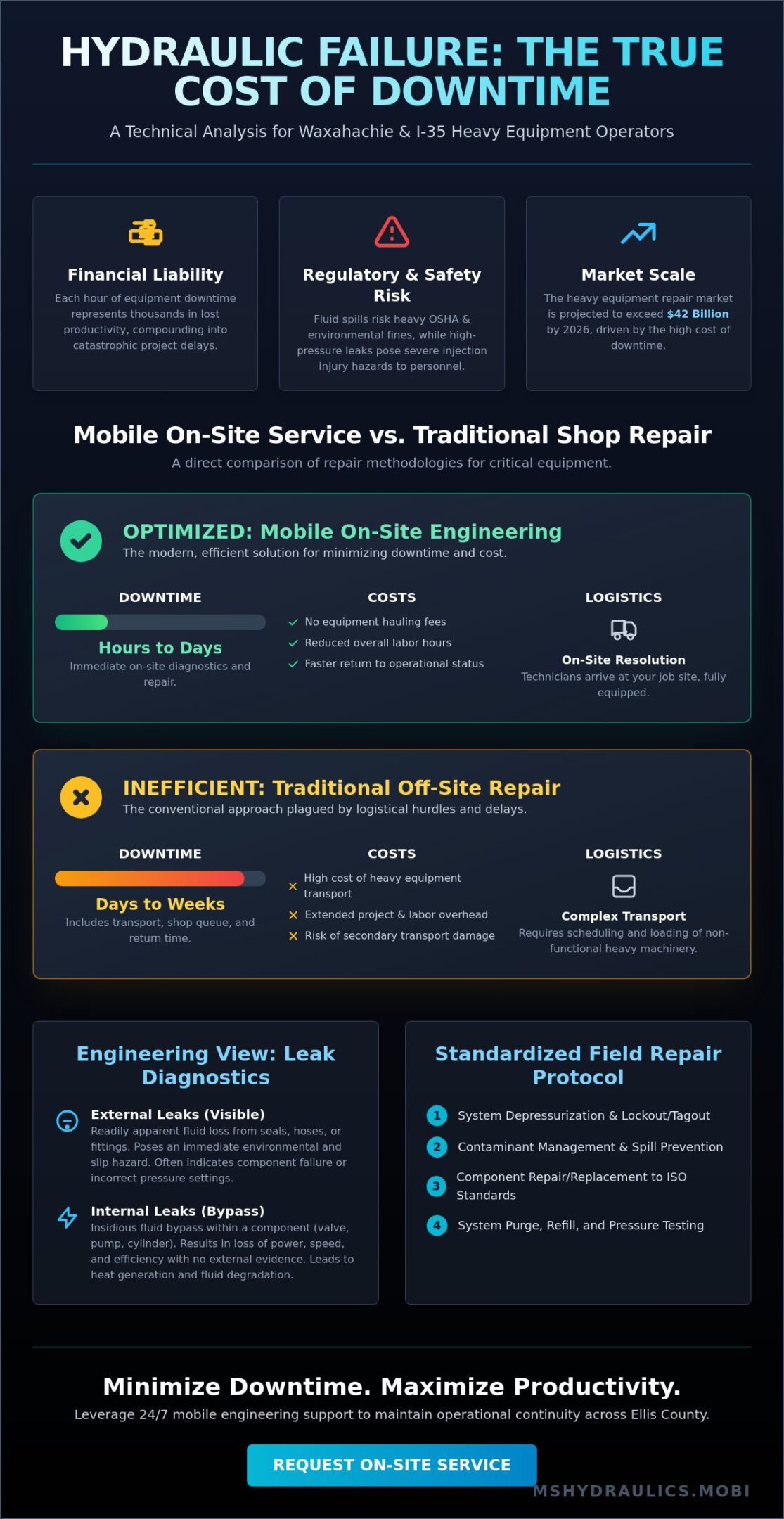
Mobile Hydraulic Service vs. Traditional Repair Shops in Ellis County
Choosing between a mobile response and a traditional brick-and-mortar shop is a strategic decision that impacts the overall lifecycle of your fleet. For heavy machinery, the “dead-on-site” scenario is the most challenging. When a primary lift cylinder or a high-pressure line fails, the machine becomes a static obstacle. Traditional repair models require the operator to either remove the component or transport the entire unit. This process often takes 48 to 72 hours before the diagnostic phase even begins. Mobile hydraulic leak repair Waxahachie services eliminate this lead time by arriving with a fully equipped service unit, performing diagnostics immediately upon arrival.
The technical advantage of field service lies in the ability to observe the system under its actual operating parameters. Shop repairs often rely on bench testing, which may not replicate the specific vibrations or thermal loads experienced during heavy excavation. For operators requiring specialized expertise across North Texas, our mobile hydraulic repair Cleburne TX service provides the same engineering-led response, ensuring that the repair is validated against real-world performance requirements.
Eliminating the Logistics of Heavy Equipment Transport
The hidden costs of equipment transport often exceed the repair invoice itself. Lowboy rentals and specialized permits for oversized loads represent significant overhead. By repairing machinery where it sits, operators avoid these logistical fees and minimize site disruption. A 2026 analysis of heavy equipment maintenance suggests that on-site interventions reduce total turnaround time by 60% compared to dealership shop visits. This efficiency is vital for high-pressure infrastructure projects where every hour of idle time compromises the project’s profitability and schedule.
On-Site Fabrication: Ensuring a Perfect Fit
One of the primary advantages of mobile service is the ability to perform custom hose fabrication based on the specific geometry of the machine. Retail orders for OEM parts often result in delays if the specific configuration is out of stock. In the field, technicians measure, cut, and crimp hoses to exact specifications. This ensures optimal routing and prevents the abrasion patterns that lead to premature failure. Immediate pressure testing of the new assembly under actual operating conditions provides a level of verification that a shop bench test cannot match. This technical precision ensures that the hydraulic leak repair Waxahachie is not just a temporary fix, but a permanent restoration of system integrity. Field labor also offers a higher degree of transparency than flat-rate shop fees. You pay for the actual engineering time spent on your equipment, ensuring the repair is both efficient and technically sound.
Field Repair Protocols for Hydraulic Systems on Waxahachie Job Sites
Executing a hydraulic leak repair Waxahachie requires a methodical engineering approach to guarantee the mechanical integrity of the high-pressure system. Deviating from a structured protocol introduces the risk of system contamination or premature component failure. Our technicians follow a rigorous five-step field process designed to restore machinery to its original equipment manufacturer (OEM) specifications while maintaining the highest safety standards.
- Step 1: Secure and Depressurize. Residual pressure in a hydraulic circuit can exceed 3,000 PSI, posing a severe risk of high-velocity injection injury. Technicians must secure the load and cycle the controls to bleed off all stored energy before beginning work.
- Step 2: Decontamination. Before opening any circuit, the surrounding area is cleaned to prevent particulate ingress. Maintaining ISO 4406 fluid cleanliness standards is critical for the longevity of precision pumps and valves.
- Step 3: Precision Detection. While visual leaks are often obvious, ultrasonic leak detection is utilized to identify pinhole fractures in steel lines or fittings that aren’t yet visible to the naked eye.
- Step 4: Restoration. This phase involves the on-site fabrication of high-pressure hoses or the replacement of failed seals using certified, high-performance components.
- Step 5: Verification. The system is flushed to remove any introduced contaminants, followed by a fluid level check and a full-pressure operational test to validate the repair.
Advanced Diagnostic Techniques
In 2026, the industry is shifting toward predictive maintenance enabled by integrated sensors and condition monitoring. We utilize pressure transducers to monitor real-time system spikes that indicate underlying mechanical issues. Thermal imaging is also employed to identify heat signatures caused by internal bypass leakage in control valves or cylinders. Finally, fluid analysis provides a quantitative assessment of particulate contamination. This data allows us to determine if a leak has already caused internal wear to the pump or motor, ensuring the hydraulic leak repair Waxahachie addresses the root cause rather than just the symptom.
Preventative Maintenance to Avoid Future Leaks
Consistent Heavy Equipment Maintenance is the most effective strategy for reducing emergency downtime. By scheduling regular On-Site Diagnostic Services, operators can identify hose fatigue and seal degradation before a catastrophic failure occurs. Training operators to recognize the early warning signs of hydraulic distress, such as unusual noise or sluggish response, further protects the asset. If you’re experiencing a current system failure, request an immediate on-site diagnostic assessment to prevent further mechanical degradation and costly environmental remediation.
Ms. Hydraulics LLC: Precision Mobile Repair for Waxahachie Operators
Ms. Hydraulics LLC provides the engineering expertise required to maintain heavy machinery in the demanding North Texas industrial sector. For operators facing critical failures, our hydraulic leak repair Waxahachie service offers a 24/7 technical response designed to eliminate the logistical burden of equipment transport. We prioritize mechanical precision and system reliability, ensuring that every field intervention adheres to the same standards as a controlled shop environment. Our focus remains on restoring the volumetric efficiency and rated pressure of your assets through disciplined diagnostic and repair protocols.
Beyond emergency leak resolution, our technicians possess specialized expertise in mobile hydraulic repair Cleburne TX, extending our professional support across the southern Dallas-Fort Worth corridor. This comprehensive service model includes high-pressure hose fabrication and complex system troubleshooting. For machinery requiring deeper mechanical restoration, our capabilities in heavy equipment cylinder rebuild Texas ensure that critical actuators are returned to OEM specifications. This commitment to engineering integrity helps prevent the recurring failures that often stem from superficial or retail-focused repairs.
Our Mobile Repair Capabilities
Our service units are engineered to function as mobile laboratories. Each truck is equipped with technical instrumentation for monitoring system parameters such as flow, temperature, and pressure. We specialize in the maintenance of construction and agricultural fleets, managing the complex valve banks and high-torque motors found in modern machinery. Our technicians are trained to identify the root causes of failure, whether it’s a compromised O-ring or a catastrophic pump seizure. By utilizing on-site fabrication, we ensure that new hose assemblies meet the exact displacement and pressure requirements of the hydraulic circuit. This methodical approach ensures that every repair supports the long-term machinery health of your fleet.
Service Area and Response Times
Strategic positioning allows for rapid dispatch to job sites in Waxahachie, Alvarado, and Midlothian. We understand that infrastructure projects along I-35 cannot tolerate extended downtime, so our dispatch protocols prioritize immediate site support. To request emergency hydraulic leak repair Waxahachie, operators can contact our technical team directly for a diagnostic consultation. This direct access to engineering expertise ensures that the mobile unit arrives on-site with the necessary components and data to resolve the failure during the initial visit. Our structured approach provides the stability and predictability that B2B clients require for large-scale industrial operations across North Texas.
Securing Operational Stability for Waxahachie Infrastructure Projects
Maintaining the mechanical efficiency of heavy machinery requires a transition from reactive maintenance to precision-led engineering standards. As the heavy equipment market approaches a projected $242 billion valuation by the end of 2026, resolving system failures where they occur is a competitive necessity. You now understand the technical distinction between external fluid loss and the silent performance killer of internal bypass. Implementing a structured field protocol ensures that your machinery returns to its rated torque without the logistical delays or high costs of traditional shop transport.
Ms. Hydraulics LLC was founded in 2021 with a specific focus on industrial integrity and technical accuracy. We provide expert on-site diagnostics for excavators, skid steers, and drill rigs across the broader DFW regional area. When you require professional hydraulic leak repair Waxahachie, our mobile units deliver the instrumentation and expertise needed to restore your system. Don’t allow a compromised seal to escalate into a catastrophic pump failure or an environmental liability. Contact Ms. Hydraulics LLC for Emergency Mobile Repair to secure your project timelines and protect your fleet’s long-term health. We’re ready to stabilize your operations.
Frequently Asked Questions
How do I temporarily stop a hydraulic leak until a technician arrives?
You can’t safely plug or tape a high-pressure hydraulic leak because industrial systems often operate at 3,000 to 5,000 PSI. Attempting a temporary patch risks a high-velocity injection injury that can penetrate human tissue. The only safe procedure is to lower all attachments to the ground, shut down the engine, and cycle the controls to bleed off stored pressure. Once the system’s depressurized, place a containment basin under the leak to prevent soil contamination and environmental fines.
What is the most common cause of hydraulic hose failure in North Texas?
Thermal degradation and mechanical abrasion are the leading causes of failure in the North Texas climate. Ambient temperatures exceeding 100°F cause hydraulic fluid to thin, which increases internal heat and stresses the rubber compounds of the hose carcass. In local construction environments, 80% of hose failures result from external rubbing against the machine frame or other hoses. This friction eventually exposes the wire reinforcement to oxidation and catastrophic bursting, especially during high-pressure lift cycles.
Can you repair a leaking hydraulic cylinder on-site in Waxahachie?
Yes, mobile technicians can perform hydraulic leak repair Waxahachie for cylinders on-site if the failure is limited to the seals. We replace rod seals, wipers, and O-rings at your location to restore the cylinder’s pressure-holding capability. However, if the cylinder rod is heavily scored or the barrel is dented, the component may require transport to a facility for precision machining. Performing seal replacements in the field is a standard method for reducing downtime on Ellis County job sites.
How much does mobile hydraulic repair cost compared to a shop?
Mobile repair is generally more economical when you factor in the total cost of ownership and machinery downtime. While shop labor rates are fixed, transporting a non-functional 40-ton machine requires lowboy rentals and specialized permits that add significant overhead before the repair starts. On-site service eliminates these logistical expenses and reduces machinery idle time by an average of 60% compared to traditional shop visits, making it the more efficient choice for industrial operators.
Is it safe to operate machinery with a small “weeping” hydraulic leak?
It’s never safe to operate machinery with any visible leak, regardless of the size. A “weeping” leak is a technical indicator of seal failure and is often the precursor to a catastrophic burst that can cause total loss of load control. Additionally, OSHA 2026 enforcement focuses heavily on fluid spills and pressure safety. Even a minor leak can result in expensive environmental remediation costs if fluid enters the soil on a Waxahachie job site.
Do you provide 24/7 emergency hydraulic repair in Waxahachie?
Yes, we provide 24/7 emergency hydraulic leak repair Waxahachie and surrounding areas along the I-35 corridor. Our service trucks are strategically positioned to ensure rapid response times for infrastructure and agricultural operators across Ellis County. We understand that mechanical failures don’t follow a standard schedule, so our engineering-led team is available at all hours to minimize your project’s downtime and prevent environmental hazards.
What information do I need to provide for a mobile hose fabrication call?
To expedite a mobile hose fabrication call, you should provide the hose diameter, the estimated length, and the specific fitting types. Common fittings include JIC flares or O-Ring Face Seals (ORFS). If possible, identify the system’s maximum operating pressure (PSI) and the machine’s make and model. Providing this technical data allows the technician to arrive on-site with the correct series of high-pressure hose and certified couplings for an immediate restoration.
How long does a typical on-site hydraulic diagnostic take?
A typical on-site diagnostic procedure takes between 30 and 60 minutes to complete. This timeframe allows the technician to utilize pressure transducers and thermal imaging to identify the exact failure point without unnecessary disassembly. By conducting a thorough assessment before beginning the repair, we ensure the intervention is targeted and accurate. This methodical approach prevents the replacement of functional components and gets your machinery back to its rated performance faster.