Skid Steer Hydraulic Repair in Cleburne: Engineering-Led Mobile Solutions
Can your operation afford a productivity loss of $500 to $1,500 for every hour a machine remains stationary? For heavy equipment operators in North Texas, hydraulic failure is more than a mechanical setback; it’s a significant financial drain that impacts project timelines and bottom lines. You understand that the logistical costs and risks associated with transporting heavy machinery often exacerbate the problem. This article demonstrates how specialized skid steer hydraulic repair Cleburne services provide a technical solution that eliminates the need for off-site transport. By focusing on engineering-led mobile interventions, we restore your equipment to original factory specifications without the delays of traditional shop schedules.
We’ll examine the critical role of on-site high-pressure hose fabrication and the importance of clear diagnostic data in preventing recurrent system failures. You’ll discover how mobile technical expertise ensures mechanical integrity and minimizes industrial downtime across Johnson County. This overview details the transition from reactive maintenance to a structured, data-driven approach that maximizes the performance and reliability of your hydraulic systems.
Key Takeaways
- Quantify the financial impact of equipment downtime and the hidden logistical costs associated with heavy machinery transport.
- Differentiate between specific failure points in high-flow and standard hydraulic architectures to improve diagnostic accuracy.
- Learn how specialized skid steer hydraulic repair Cleburne restores mechanical integrity through on-site hose fabrication and precision system restoration.
- Utilize systematic pressure testing and flow meter verification to ensure your machinery operates according to original factory specifications.
- Compare the technical efficiency of engineering-led mobile solutions against traditional shop-based repair timelines and logistical risks.
The Economic Reality of Skid Steer Downtime in Johnson County
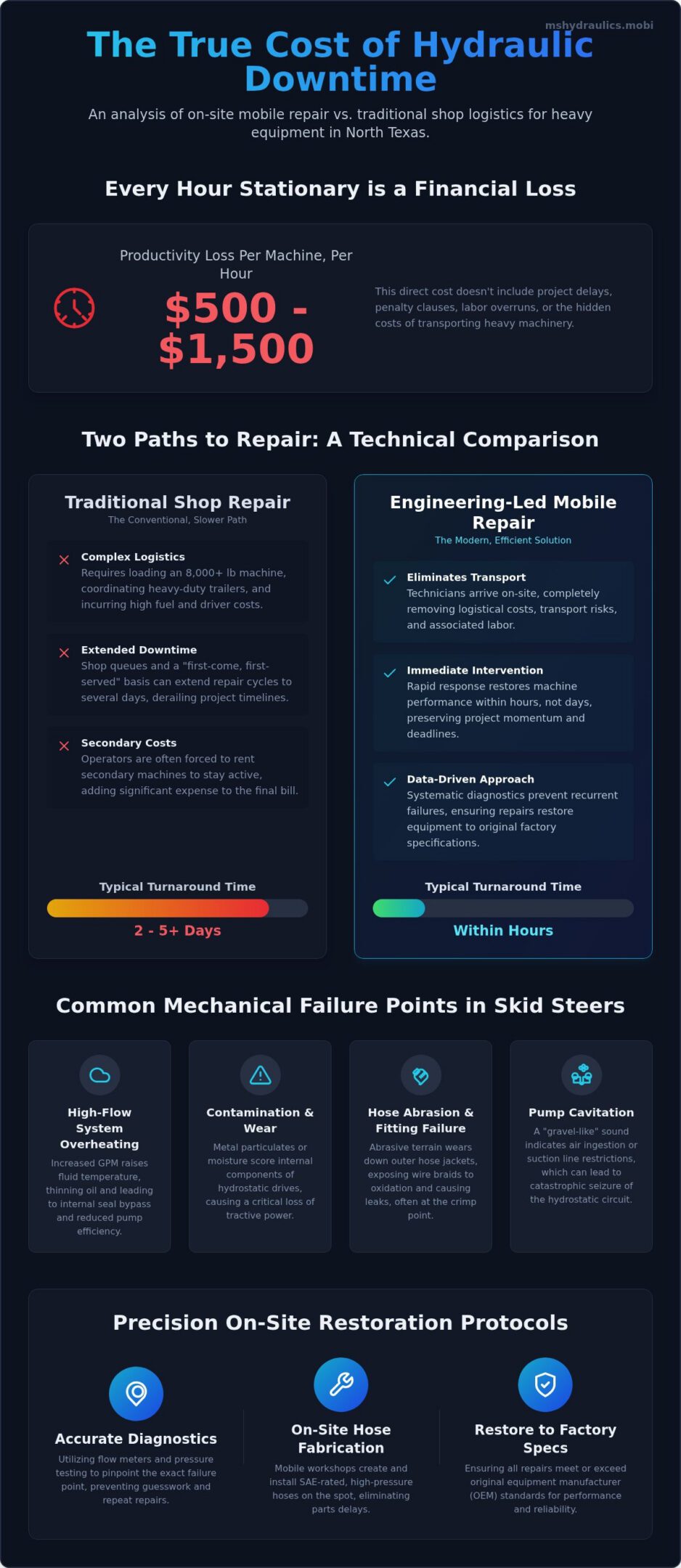
In the industrial sectors of Johnson County, a stationary skid steer represents more than a technical failure. It’s a quantifiable financial drain. Industry data indicates that downtime for heavy equipment frequently results in productivity losses ranging from $500 to $1,500 per hour. When a machine stops, the entire project timeline shifts, often triggering penalty clauses or labor cost overruns. Securing professional skid steer hydraulic repair Cleburne is a strategic move to stop these losses immediately. Rapid restoration of mechanical integrity is the only way to protect the narrow margins found in modern construction and agriculture.
Technical inefficiency also carries long-term financial consequences. Efficiency isn’t just about movement; it’s about the precision of hydraulic machinery principles. Even minor leaks or internal pressure drops force the engine to work harder to achieve the same output. This increased load leads to higher fuel consumption and accelerates the thermal degradation of hydraulic fluid, which ultimately compromises the longevity of pumps and motors.
Logistical Burdens of Traditional Shop Repairs
Loading a compromised 8,000-pound machine onto a trailer presents significant safety risks and labor requirements. Transporting equipment to a regional dealership involves high fuel costs, driver time, and the logistical complexity of coordinating heavy-duty trailers. Traditional shops often operate on a first-come, first-served basis, leading to wait times that can span several days. During these cycles, many operators are forced into secondary machine rentals to keep the site active. This adds another layer of expense to an already costly repair bill.
Maintaining Project Momentum in North Texas
Construction and agricultural projects in North Texas operate on strict contractual deadlines. A 48-hour delay for a shop repair can derail an entire phase of development. Utilizing mobile hydraulic repair Cleburne TX allows for immediate intervention, often restoring machine performance within hours. This rapid response preserves project momentum and maintains the professional reputation of the contractor. Timely skid steer hydraulic repair Cleburne ensures that mechanical failure doesn’t compromise long-term client-contractor relationships or lead to expensive schedule slippage.
Mechanical Failure Points in High-Flow and Standard Systems
Skid steer hydraulic architectures are categorized into standard and high-flow systems, each presenting unique maintenance requirements. Standard systems typically manage general-purpose attachments, while high-flow configurations—common in heavy-duty Bobcat or John Deere models—provide the increased GPM (Gallons Per Minute) necessary for power-intensive tools like forestry mulchers or cold planers. This higher flow rate increases hydraulic fluid velocity and operating temperatures. If the system’s thermal management fails, the resulting heat thins the oil, leading to internal seal bypass and reduced volumetric efficiency in the pump.
Hydrostatic drive motors and final drives are particularly vulnerable to internal wear. These components rely on precise tolerances to maintain torque. Contamination from metal particulates or moisture can lead to scoring on the rotating group, causing a loss of tractive power. Diagnostic indicators such as pump cavitation—often described as a gravel-like sound—suggest air ingestion or suction line restrictions. Addressing these symptoms through expert skid steer hydraulic repair Cleburne prevents the complete seizure of the hydrostatic circuit.
Hydraulic Hose Abrasion and Fitting Failure
The abrasive terrain of North Texas accelerates external wear on hydraulic lines. Standard hoses often lack the reinforced outer jackets required to withstand constant contact with brush or limestone. Failure typically occurs at the crimp point or through outer cover abrasion that exposes the wire braid to oxidation. Utilizing SAE-rated fittings is essential; these components are engineered to maintain mechanical integrity under the high-pressure spikes generated by auxiliary attachments. Identifying “wet” spots on hoses during a pre-shift inspection is a critical step in pre-emptive leak detection. For rapid on-site fabrication, you can rely on mobile hydraulic experts to replace compromised lines before they burst.
Cylinder Seal Integrity and Rod Damage
In the dusty environments of Johnson County, fine particulates act as an abrasive medium against hydraulic cylinder rods. As the rod retracts, these contaminants can bypass the wiper seal and damage the primary pressure seals. This leads to internal leakage, where fluid moves across the piston, causing “drift” or a lack of holding power under load. Diagnosing this requires a bypass test to verify if the leak is internal to the cylinder or within the control valve. Securing specialized skid steer hydraulic repair Cleburne ensures that these complex multi-brand systems are serviced according to their specific engineering tolerances. Field-based cylinder resealing is often viable if the rod remains free of deep scoring; however, significant pitting or chrome damage necessitates a full rebuild to restore factory specifications.
Comparative Analysis: Field-Based Mobile Repair vs. Traditional Shop Logistics
Choosing between field-based intervention and traditional shop services requires a rigorous evaluation of total time-to-restoration. In a traditional shop model, the timeline includes equipment loading, transport, and the inevitable “queue time” at the facility. This process often extends a simple hydraulic failure into a multi-day operational halt. Conversely, skid steer hydraulic repair Cleburne through a mobile unit eliminates these logistical variables. By bringing the shop’s technical capabilities directly to the machine, the restoration process begins the moment the technician arrives on-site.
Safety remains a paramount consideration. Attempting to winch a non-functional skid steer with seized drive motors onto a trailer introduces unnecessary mechanical stress and physical risk. Mobile repair bypasses these hazards by addressing the failure where it stands. The ability to perform on-site hose fabrication and component diagnostics ensures that the machine is not only repaired faster but also avoids the secondary damage often incurred during improper transport.
The “Mobile Shop” Advantage
A sophisticated mobile unit isn’t merely a service vehicle; it’s a specialized workshop. These units carry a comprehensive inventory of SAE-rated fittings and high-pressure hoses specifically for Bobcat, Kubota, and John Deere systems. This inventory eliminates the “parts run” that frequently stalls traditional repairs. Technicians perform on-site pressure testing to verify factory PSI settings, ensuring the system operates within its engineered parameters before the unit is returned to service. This level of technical verification is essential for maintaining the performance of high-flow attachments.
Financial Impact of Immediate Intervention
Technical restoration of a hydraulic system begins with systematic isolation of the failure point. We utilize high-precision pressure transducers to monitor circuit performance in real-time. This data allows us to determine if a loss of power stems from a failing pump, a leaking control valve, or an internal cylinder bypass. For complex electronic-over-hydraulic systems, on-site diagnostic services are essential to interface with the machine’s controller and clear fault codes. Verification of GPM output using calibrated flow meters ensures the machine meets manufacturer specifications before it returns to the field.
Environmental safety remains a priority during these field operations. We employ specialized containment systems to manage hydraulic fluids, preventing soil contamination in agricultural or construction zones. This disciplined approach to skid steer hydraulic repair Cleburne ensures that every technical intervention remains compliant with industrial standards and preserves the local ecosystem.
Thermal Management and Fluid Analysis
The extreme Texas climate significantly impacts hydraulic fluid performance. High ambient temperatures in Johnson County cause fluid to exceed its optimal operating range, leading to a drop in the viscosity index. When fluid thins, lubrication properties diminish, causing metal-on-metal contact within the pump rotating groups. Contamination is the primary cause of premature failure; fine silica dust common in North Texas acts as an abrasive, scoring valve spools and pump plates. If a major component fails, we follow strict technical requirements for a full system flush. This process removes metallic debris that would otherwise circulate and destroy newly installed components.
Restoring Factory Performance
Achieving factory-level performance requires precise adjustment of the system’s relief valves. These valves protect the circuit from over-pressurization, but they can drift over time due to spring fatigue or debris. We calibrate these settings to ensure the machine maintains its rated lift capacity without risking structural damage. For operators utilizing high-flow attachments, we verify auxiliary flow rates to ensure optimal attachment speed and torque. Final system testing involves high-pressure cycles to confirm zero-leak integrity across all newly fabricated hoses and rebuilt cylinders. If your equipment is showing signs of thermal distress or reduced cycle times, you can schedule professional on-site diagnostics to identify the root cause before catastrophic failure occurs.
Ms. Hydraulics: Precision Mobile Solutions for Cleburne Fleet Operators
Ms. Hydraulics LLC operates a specialized fleet of mobile units specifically engineered to address the technical challenges of North Texas industrial sites. We serve as the primary technical partner for construction and agricultural entities throughout Cleburne, Alvarado, and Granbury. Our service model prioritizes mechanical integrity and long-standing operational stability over temporary repairs. By integrating structured heavy equipment maintenance into your broader operational strategy, you can effectively mitigate the risks of catastrophic system failure. Our technicians utilize objective diagnostic data and engineering expertise to ensure your fleet remains a reliable asset for international and local stakeholders alike.
Custom Hose Fabrication on Your Job Site
The mobile fabrication process at Ms. Hydraulics is characterized by technical precision and rapid deployment. We don’t simply replace failed lines; we optimize the entire assembly for the specific physical parameters of the machine. Our mobile units carry an extensive inventory of high-grade, SAE-rated materials designed to exceed OEM specifications. This ensures that every skid steer hydraulic repair Cleburne results in a component capable of withstanding the extreme pressure spikes found in modern high-flow systems. During the installation process, we conduct a thorough assessment of hose routing and mechanical protection. Implementing superior routing techniques prevents future downtime by reducing the external abrasion and stress that typically cause premature failure in the rugged North Texas terrain.
Expert Cylinder and Component Rebuilds
Hydraulic cylinders are essential for maintaining the maximum breakout force necessary for demanding excavation and material handling tasks. Our mobile technicians perform on-site disassembly and a granular diagnosis of each cylinder assembly to isolate the root cause of seal degradation or rod bypass. We utilize high-performance seal kits and rigorous testing protocols to verify that the restored cylinder meets its original factory performance specifications. This field-based capability eliminates the significant logistical costs and time delays inherent in traditional shop-based rebuilds. When project momentum is threatened by mechanical failure, securing expert skid steer hydraulic repair Cleburne from Ms. Hydraulics provides a disciplined, data-driven solution. Our team is focused on modern efficiency and technical excellence, ensuring your equipment returns to full operational capacity across Johnson County and the surrounding DFW area.
Optimizing Operational Efficiency Through Technical Restoration
Effective fleet management in North Texas requires a transition from reactive shop visits to engineering-led mobile solutions. By addressing mechanical failure points where the machine stands, operators eliminate the logistical risks of heavy machinery transport and the significant financial drain of productivity loss. It’s a strategic shift that preserves project momentum. For those looking to further optimize their job site by clearing out old equipment or debris, you can explore Junk Removal and Moving Services to ensure a clean and safe work environment. This data-driven approach ensures that every skid steer hydraulic repair Cleburne utilizes on-site diagnostic precision and high-pressure hose fabrication to restore factory-standard performance.
Ms. Hydraulics LLC remains committed to providing certified technical diagnostics and specialized repair services across Cleburne, Alvarado, and the broader Johnson County area. Our focus on mechanical integrity and industrial excellence ensures your equipment remains a dependable asset in the most demanding environments. Request Expert Mobile Hydraulic Repair in Cleburne to restore your system’s performance and secure your project timelines. Maintaining high-pressure integrity is the most effective way to ensure long-term mechanical reliability.
Frequently Asked Questions
How much does skid steer hydraulic repair cost in Cleburne?
Costs vary based on the technical complexity of the failure and the specific components involved in the restoration. Factors influencing the total include whether the repair requires on-site hose fabrication, pump replacement, or complex cylinder rebuilds. While specific rates are determined by the diagnostic findings, mobile intervention often reduces total project expenses by eliminating the logistical costs of heavy machinery transport. You should consult a technician for a precise evaluation based on your machine’s current mechanical state.
Can hydraulic hoses be made on-site at my job location?
Yes, our mobile units are equipped with specialized equipment for on-site hydraulic hose fabrication. This capability allows technicians to manufacture high-pressure lines that meet or exceed OEM specifications without the machine leaving the site. By utilizing high-grade SAE-rated materials and precise crimping technology, we ensure the mechanical integrity of the replacement. This process eliminates the delays associated with parts counter visits and ensures a perfect fit for your specific machine configuration.
What are the signs that my skid steer hydraulic pump is failing?
Primary indicators of pump failure include unusual acoustic signatures, such as high-pitched whining or a gravel-like sound indicating cavitation. You may also observe a significant decrease in cycle times or a loss of breakout force during operation. Excessive heat generation in the hydraulic circuit often suggests internal seal bypass or mechanical wear within the pump’s rotating group. If your equipment exhibits these symptoms, immediate diagnostic testing is required to prevent catastrophic system failure.
How long does a typical mobile hydraulic service call take?
The duration of a service call depends on the technical scope of the required intervention. Basic hose replacements or minor leak repairs are often completed within one to two hours. More complex tasks, such as on-site cylinder resealing or system-wide pressure calibrations, may require several hours of focused technical labor. Our objective is to minimize industrial downtime by providing rapid restoration of mechanical performance directly at your Cleburne or Alvarado project site.
Do you repair hydraulic systems on Bobcat, Kubota, and John Deere machines?
We provide specialized support for a wide range of multi-brand fleets, including Bobcat, Kubota, and John Deere equipment. Our technicians are experienced in the specific engineering nuances of both standard and high-flow hydraulic architectures across these manufacturers. We maintain an inventory of fittings and seals that align with international industry standards, ensuring that every skid steer hydraulic repair Cleburne meets the rigorous performance requirements of your specific machine model.
Is it better to rebuild or replace a leaking hydraulic cylinder?
The decision to rebuild or replace depends on the condition of the internal components and the cylinder rod. If the rod is free of deep scoring or pitting, a professional rebuild using high-performance seal kits is a cost-effective way to restore factory specifications. However, if the cylinder barrel is deformed or the rod has significant structural damage, replacement may be necessary to ensure long-term reliability. A technical diagnosis determines the most viable path for restoration.
What causes hydraulic fluid to overheat on North Texas job sites?
Overheating is frequently caused by high ambient temperatures in the North Texas climate combined with heavy workloads. Mechanical factors also contribute, such as clogged hydraulic coolers, improper fluid viscosity, or internal bypass within pumps and valves. When fluid exceeds its designed operating temperature, it loses its lubrication properties, which accelerates the wear of critical components. Regular maintenance of the cooling system and monitoring fluid integrity are essential for preventing thermal degradation.
How often should I perform a hydraulic system diagnostic on my skid steer?
You should conduct a comprehensive hydraulic system diagnostic at intervals recommended by the manufacturer, typically every 500 to 1,000 operating hours. However, more frequent testing is advisable for machines operating in the abrasive, high-heat environments of Johnson County. Proactive diagnostics allow for the identification of pressure drops or fluid contamination before they lead to expensive component failures. This methodical approach to maintenance preserves the mechanical integrity and resale value of your fleet.