Hydraulic System Overheating Fix in Waxahachie: Diagnostic & Repair Guide
Thermal energy in a hydraulic circuit is rarely a byproduct of external ambient temperatures alone; it’s a measurable indicator of system inefficiency. While North Texas summers routinely exceed 95 degrees, a properly functioning system should maintain a stable thermal equilibrium. If your machinery is struggling with reduced cycle times or erratic performance, you’re likely searching for a reliable hydraulic system overheating fix Waxahachie technicians can implement before a total pump failure occurs. You’ve likely noticed that simply idling the machine doesn’t solve the underlying friction or internal bypass issues causing the temperature spike.
This technical guide provides a structured diagnostic framework to identify the root causes of heat generation, from aeration and cavitations to clogged heat exchangers. We’ll examine the mechanical parameters of fluid viscosity and component wear that lead to catastrophic failure if left unaddressed. By following this troubleshooting protocol, you’ll learn to isolate specific failure points and implement repair strategies that restore machine performance and protect your capital investment. We will cover everything from initial thermal imaging to advanced valve and cylinder inspections.
Key Takeaways
- Identify the critical thermal threshold of 180°F (82°C), beyond which hydraulic fluid degrades and seals suffer irreversible damage.
- Understand the “Texas Factor,” where ambient temperatures in Waxahachie exceeding 100°F significantly reduce the system’s heat dissipation capacity.
- Learn to perform a “Heat Leak” audit using infrared technology to distinguish between normal operational heat and internal component failure.
- Implement a structured hydraulic system overheating fix Waxahachie operators can use to restore thermal equilibrium through external decontamination and component calibration.
- Discover how mobile diagnostic services and on-site hose fabrication minimize downtime by resolving overheating issues directly at the job site.
Understanding Hydraulic Overheating in the North Texas Climate
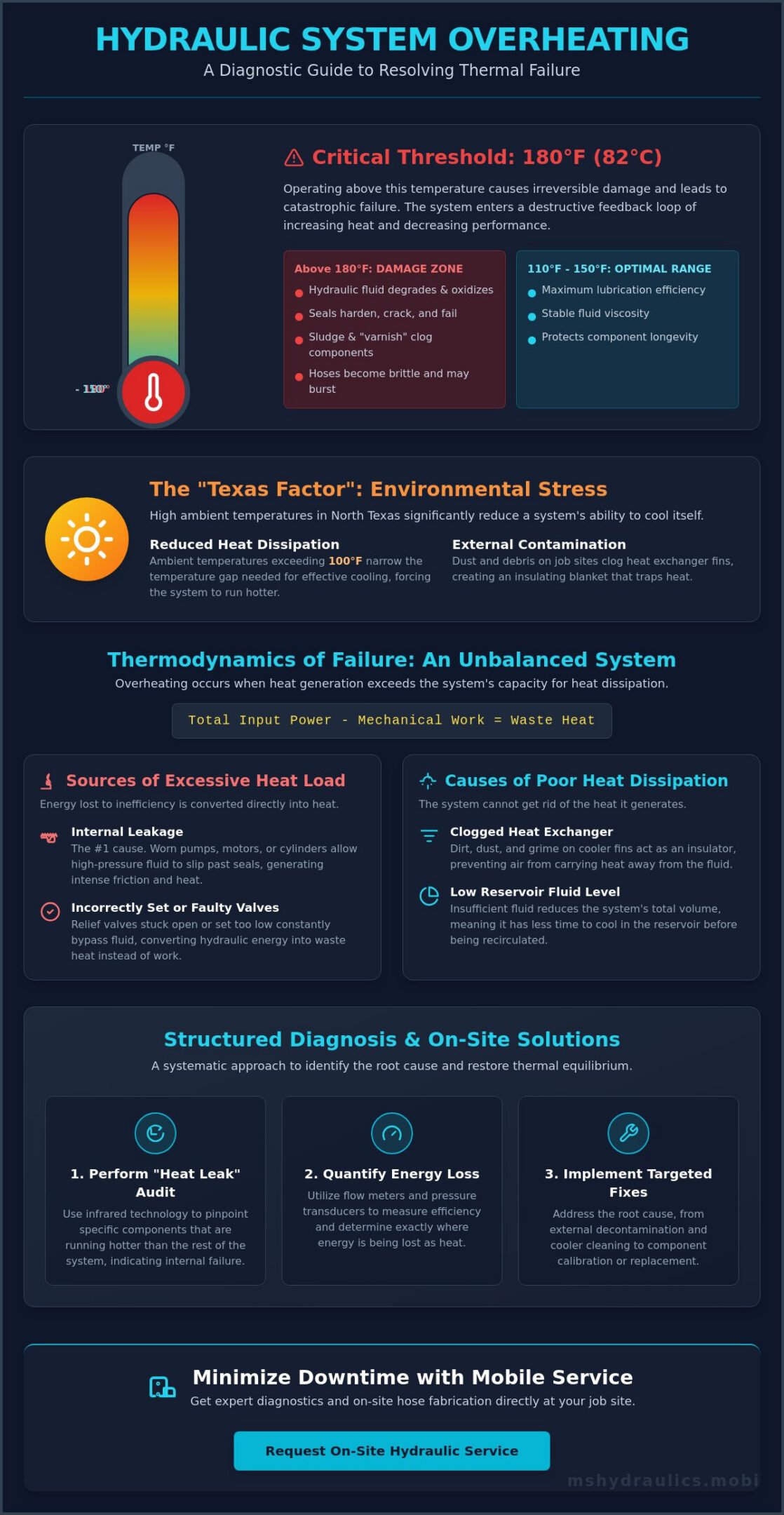
Overheating in a hydraulic system is defined as the point where the fluid’s temperature exceeds the threshold required for effective lubrication and component protection. For most industrial and mobile equipment, this critical limit is 180°F (82°C). Beyond this temperature, the chemical stability of the hydraulic oil begins to fail, leading to oxidation and the formation of sludge. Modern 2026 standards for high-performance fluids prioritize shear stability and oxidation resistance, yet these protections are compromised when operating temperatures remain consistently above the recommended range. When seeking a hydraulic system overheating fix Waxahachie operators must account for the local environment’s impact on the system’s thermal equilibrium.
The “Texas Factor” represents the significant reduction in cooling efficiency caused by high ambient temperatures. In Waxahachie, summer temperatures frequently exceed 100°F, which narrows the temperature delta between the ambient air and the cooling medium. Just as residential cooling experts like Nice and Cool Inc. must account for these extremes when maintaining home AC systems, hydraulic operators face a narrowed temperature gradient that forces machinery to run closer to its failure point. This reduced cooling margin means that even minor internal inefficiencies can quickly escalate into a catastrophic thermal event.
The Critical Temperature Thresholds
Standard mineral-based hydraulic oils operate most efficiently between 110°F and 150°F. Once the fluid reaches the 180°F mark, the process of seal hardening begins. This leads to “varnishing,” where degraded oil leaves carbonaceous deposits on internal valve spools and cylinder walls. Understanding the principles of fluid power reveals that as viscosity drops due to heat, internal friction and bypass leakage increase. This creates a destructive feedback loop where the system generates more heat while losing the ability to perform work. Excessive heat also reduces the elasticity of hydraulic hoses, resulting in premature brittleness and potential bursts under pressure.
Why Waxahachie Job Sites are High-Risk Environments
North Texas job sites are characterized by heavy dust and fine particulate matter. These contaminants accumulate on heat exchanger fins, acting as an insulating layer that prevents necessary airflow. Implementing a professional hydraulic system overheating fix Waxahachie technicians provide often starts with a thorough decontamination of these external surfaces. High-duty cycles on excavators and drill rigs used in Ellis County infrastructure projects exacerbate the heat load. Humidity also plays a role; moist air is less effective at carrying away heat from external surfaces than dry air, further straining the cooling circuit and accelerating component wear.
Thermodynamics of Failure: Heat Load vs. Heat Dissipation
Every hydraulic circuit operates according to a fundamental energy balance: Total Input Power minus Mechanical Work equals Heat Generation. In an ideal environment, a system converts the majority of its input energy into productive force. However, no system is 100% efficient. The energy lost during this conversion process manifests as heat. When the rate of heat generation exceeds the system’s ability to dissipate it, temperatures climb. Identifying a permanent hydraulic system overheating fix Waxahachie operators can rely on requires a precise evaluation of both the heat load produced and the dissipation capacity of the hardware.
Mechanical work is the intended output, but internal friction and pressure drops are inevitable. When these variables fall outside of engineered specifications, the heat load becomes unmanageable. Quantifying these energy losses is the primary objective of professional On-Site Diagnostic Services. Technicians use flow meters and pressure transducers to determine exactly where energy is being converted into waste heat rather than mechanical movement.
Sources of Excessive Heat Load
Internal leakage is the most frequent cause of excessive heat generation. As pumps and motors wear, the volumetric efficiency drops, allowing high-pressure fluid to slip past internal seals. This “silent thief” generates immense friction as the fluid is forced through narrow gaps. Relief valves also play a significant role. If a relief valve is set too low or has a damaged seat, it stays partially open, constantly bypassing high-pressure oil back to the reservoir. This process strips the fluid of its energy, converting it entirely into heat. Additionally, aeration and cavitation introduce air bubbles into the fluid. When these bubbles are subjected to high pressure, they implode, creating localized thermal spikes that degrade the oil’s molecular structure.
Barriers to Effective Heat Dissipation
Heat dissipation is the system’s ability to shed thermal energy into the surrounding atmosphere. The reservoir is the primary heat sink; it requires adequate fluid levels to provide enough surface area for radiation. Low oil levels reduce the dwell time, preventing the fluid from cooling before it’s pulled back into the pump. On many North Texas job sites, restricted airflow is a common failure point. Dirt, grease, and bent fins on oil coolers act as insulation, trapping heat within the circuit. Thermal bypass valves can also fail. If these valves stick in the bypass position, the oil never reaches the heat exchanger, rendering the cooling circuit useless. For machines experiencing these symptoms, scheduling a mobile hydraulic repair is the most efficient way to restore thermal balance and prevent component seizing.
The ‘Heat Leak’ Audit: Pinpointing Component Failures
Thermal imaging has transformed the diagnostic process for heavy machinery. By conducting a thermal scan of the entire circuit, technicians can visualize “heat leaks” that remain invisible to the naked eye. This process utilizes infrared technology to map temperature gradients across pumps, valves, and actuators in real time. Differential temperature testing serves as a core component of this audit. By comparing inlet versus outlet temperatures on a specific component, we can quantify energy loss. A temperature increase of more than 10 degrees across a directional control valve often indicates internal bypass. This methodical approach is essential for the precise hydraulic system overheating fix Waxahachie fleet managers require to maintain operational uptime.
While pressure testing confirms a system can reach its relief setting, it rarely identifies the source of heat. Flow testing is the superior diagnostic tool in this scenario. It measures the volumetric efficiency of components under load, revealing where fluid is slipping past internal tolerances and converting pressure into thermal energy. Understanding these parameters allows for targeted repairs rather than the expensive, trial-and-error replacement of functional parts.
Cylinder Bypass: The Most Common Culprit
Internal leakage within a cylinder occurs when fluid migrates past the piston seal during a stroke. This high-velocity bypass generates intense friction and localized heat. A cylinder barrel that feels significantly hotter than the connecting hoses is a primary indicator of this failure. In these instances, a Heavy Equipment Cylinder Rebuild is necessary to restore the mechanical integrity of the seal and polish the rod. Technicians should perform the “Touch Test” with caution; always use an infrared thermometer to avoid contact with surfaces that may exceed 200°F.
Pump and Valve Inefficiencies
Pump wear is best identified through case drain flow analysis. As internal clearances in a piston pump increase, more oil is forced into the case and back to the reservoir via the case drain line. Measuring this volume provides a direct metric of pump health. Similarly, directional control valve spools can wear over thousands of cycles, allowing fluid to bleed between ports. This bypass is often accompanied by a distinct “hissing” sound at the relief valve. This sound indicates that the valve is stuck in a pressure-to-heat conversion mode, requiring immediate calibration or replacement to stabilize system temperatures and prevent further oil degradation.
Step-by-Step Hydraulic System Overheating Fix
Resolving persistent thermal issues requires a methodical protocol that addresses both external environmental factors and internal mechanical failures. Implementing a comprehensive hydraulic system overheating fix Waxahachie operators can execute begins with immediate thermal stabilization to protect critical tolerances. Following this structured approach ensures that the root cause is identified and corrected before permanent component damage occurs.
Step 1: Immediate Shutdown and Safety. Cease operations immediately if temperatures exceed 180°F. Continued use leads to thermal expansion of metal components, which can cause pump seizing or cylinder scoring. Allow the system to cool naturally; never apply cold water to hot components as this can cause thermal shock and cracking.
Step 2: External Cleaning. Decontaminate the heat exchanger and reservoir surfaces. In the dusty environments of North Texas, a layer of grime just a few millimeters thick can act as a thermal insulator. Use low-pressure compressed air or specialized degreasers to clear the cooling fins without causing mechanical deformation.
Step 3: Fluid and Filter Audit. Inspect the hydraulic fluid for signs of aeration or darkening, which indicates oxidation. Verify that the fluid viscosity matches the manufacturer’s requirements for high-ambient temperature operation. Replace all return and pressure filters to ensure there is no restriction in the cooling circuit flow.
Step 4: Pressure Calibration. Use a calibrated pressure gauge to verify that the relief valve settings align with OEM specifications. A relief valve set even 100 PSI too low can cause constant bypass, generating massive amounts of heat during standard work cycles.
Step 5: Professional Mobile Diagnostic. If temperatures remain unstable after these steps, the failure is likely internal to the pump or motor. When on-site efforts fail to stabilize temperatures, contacting a specialist for Mobile Hydraulic Repair Cleburne TX is the most effective way to prevent total component failure and minimize project delays.
Operator-Level Maintenance Checklist
Daily inspections are the most effective defense against overheating. Operators should prioritize the following checks to maintain system health:
- Inspect the oil cooler for debris and straighten any bent fins using a fin comb.
- Verify the tension and condition of fan belts; a slipping belt reduces airflow significantly.
- Check hydraulic motor-driven fans for proper RPM using a tachometer if performance seems sluggish.
- Scan return lines for kinks or collapsed sections that increase backpressure and heat.
Advanced Technical Adjustments
Technicians may need to perform deeper system calibrations to resolve complex overheating issues. This includes adjusting port relief valves that may be venting prematurely under specific load conditions. Verifying the operation of the thermal expansion valve (TEV) is also critical; if the valve fails to open, oil will skip the cooling circuit entirely. Establishing a rigorous Heavy Equipment Maintenance schedule ensures these technical parameters are checked quarterly, preventing the recurrence of thermal failure during peak summer months.
Mobile Hydraulic Solutions in Waxahachie: Ms. Hydraulics
Implementing a permanent hydraulic system overheating fix Waxahachie operators can trust requires more than just a fluid change; it demands a precise engineering intervention. Ms. Hydraulics provides the mobile infrastructure necessary to execute the technical diagnostics and repairs outlined in this guide. Our mobile units are strategically positioned to serve Waxahachie and the surrounding Ellis County area, offering rapid response times to prevent the escalation of thermal damage. We don’t just treat the symptom of high fluid temperature; we isolate the mechanical failure causing the energy loss.
Our mobile workshops are equipped for on-site hydraulic hose fabrication. This capability is critical because heat-damaged hoses often become restricted, creating a bottleneck that further increases system backpressure and heat generation. By replacing these lines on-site with components that meet or exceed original equipment manufacturer (OEM) specifications, we restore the circuit’s volumetric efficiency. Our focus remains on identifying the root cause, whether it’s a failing pump, a worn valve spool, or internal cylinder bypass, ensuring the machine returns to service with a stable thermal profile.
Why Field Service Beats Dragging Machines to a Shop
Transporting heavy excavators or drill rigs from a Waxahachie job site to a centralized repair facility introduces substantial logistical costs and multi-day delays. Field service removes these barriers entirely. Beyond the convenience, diagnosing a hydraulic system while it’s under actual load provides the most accurate data. Shop testing often fails to replicate the specific duty cycles and environmental stressors found on a North Texas construction site. By observing the machine’s thermal behavior in its working environment, our technicians can identify “heat leaks” that only manifest during peak operation. This real-world verification is essential for high-stakes infrastructure and agricultural repairs where downtime directly impacts the bottom line.
The Ms. Hydraulics Advantage
Our technical team utilizes advanced diagnostic tools, including high-precision flow meters and infrared thermal imaging, to perform comprehensive system audits. This data-driven approach allows us to develop custom maintenance plans that account for the unique challenges of the North Texas climate. We prioritize factual accuracy and mechanical integrity in every repair, positioning ourselves as a reliable partner for major industrial players in the region. If your equipment is struggling to maintain thermal equilibrium, contact us for a professional On-Site Diagnostic. We’ll provide a definitive hydraulic system overheating fix Waxahachie fleet managers can rely on for long-term machine performance.
Restoring Operational Efficiency and Thermal Stability
Managing hydraulic temperatures in North Texas requires rigorous adherence to thermodynamic principles and proactive maintenance. By identifying internal leakage through flow testing and maintaining clean heat exchangers, operators can prevent the destructive cycle of oil oxidation and seal failure. A permanent hydraulic system overheating fix Waxahachie technicians provide focuses on calibrated pressure settings and component integrity to ensure the system remains within its 180°F safety threshold. Ms. Hydraulics has served Waxahachie, Cleburne, and the broader North Texas region since 2021. Our specialized mobile diagnostic units are equipped for precise thermal imaging, expert cylinder rebuilds, and on-site hose fabrication. This technical capability ensures your equipment operates at peak volumetric efficiency even during triple-digit summer days. Schedule Emergency Mobile Hydraulic Repair in Waxahachie to restore your machinery to factory specifications. Maintaining thermal equilibrium is the most effective way to protect your capital investment and extend the service life of your heavy equipment.
Frequently Asked Questions
What is the most common cause of hydraulic system overheating?
The most common cause of hydraulic overheating is internal leakage, also known as bypass. When high-pressure fluid slips past internal seals in pumps, motors, or valves, it converts pressure energy directly into heat rather than mechanical work. This inefficiency creates a destructive thermal feedback loop. Identifying a reliable hydraulic system overheating fix Waxahachie technicians can perform often starts with testing the volumetric efficiency of these critical components to find the leak source.
Can low hydraulic fluid cause a system to overheat?
Low hydraulic fluid levels significantly reduce the system’s heat dissipation capacity. The reservoir acts as the primary heat sink; a lower oil volume means the fluid spends less time in the tank to shed thermal energy before being recirculated. This shortened dwell time prevents the fluid from cooling sufficiently. The result is a rapid climb in operating temperature, even when the machine is under moderate load conditions in the field.
How do I know if my hydraulic oil cooler is bad?
You can identify a failing hydraulic oil cooler by measuring the temperature differential between the inlet and outlet ports. If there isn’t a significant temperature drop, the cooler is either internally bypassed or externally fouled. Clogged fins or a failed thermal bypass valve are common failure points. Professional technicians use infrared thermometers to verify if the core is effectively transferring heat to the passing air as designed.
Is it safe to keep running a machine if the hydraulic temp light is on?
Operating a machine after the hydraulic temperature light illuminates is not safe and often leads to catastrophic failure. High temperatures typically exceed 180°F, causing seals to harden and the oil’s viscosity to drop below the level required for component lubrication. Continuing to run the equipment can lead to pump seizing and cylinder scoring. It’s critical to shut down the machine immediately to protect internal tolerances and metallurgy.
Does high ambient temperature in Waxahachie affect my hydraulic pressure?
High ambient temperatures in Waxahachie affect hydraulic pressure by reducing the fluid’s viscosity. As the oil thins out due to heat, internal leakage increases across pump and valve tolerances. This volumetric loss makes it difficult for the system to maintain its rated operating pressure. While the relief valve setting remains constant, the system’s ability to reach that pressure is compromised by the reduced efficiency of the overheated fluid.
How often should I clean my hydraulic heat exchanger in Texas?
You should clean your hydraulic heat exchanger at least weekly, though daily inspections are recommended on dusty North Texas construction sites. Particulate accumulation on the cooling fins acts as a thermal insulator, preventing effective heat transfer to the atmosphere. Using low-pressure air or specialized cleaners to maintain clear airflow is a critical part of a comprehensive hydraulic system overheating fix Waxahachie operators must prioritize during summer months.
What happens to hydraulic oil when it gets too hot?
When hydraulic oil exceeds its maximum operating temperature, it undergoes chemical oxidation. This process leads to the formation of sludge and varnish, which can stick to valve spools and clog small orifices. The oil also loses its additive package and lubrication properties. Once the oil has been severely overheated, it can no longer protect metal surfaces from friction, necessitating a complete system flush and fluid replacement to restore protection.
Can a bad hydraulic hose cause overheating?
A damaged or restricted hydraulic hose can cause overheating by creating excessive backpressure. If an internal liner collapses or a hose is kinked, it creates a narrow restriction that the fluid must force its way through under pressure. This restriction converts pressure into heat energy. Replacing heat-damaged or improperly routed hoses is a standard procedure for restoring proper thermal balance and ensuring the system operates within its engineered flow parameters.