Expert Skid Steer Hydraulic Repair in Texas: Mobile Solutions to Minimize Downtime
The true cost of a blown hydraulic line isn’t the price of the part; it’s the hundreds of dollars lost every hour a crew stands idle while a dead machine sits in the North Texas heat. Every project manager understands the logistical nightmare of coordinating a heavy haul to a repair shop just to receive a diagnostic report. When you require the specialized skid steer hydraulic repair Texas job sites demand, the objective is to eliminate transport variables and restore mechanical performance immediately. Ms. Hydraulics LLC focuses on technical precision and mobile efficiency to address these critical failures exactly where they happen.
We agree that project momentum shouldn’t stall because of a failed seal or a ruptured hose. This article provides the technical insights needed to diagnose common hydraulic system failures and explains why mobile on-site repair is the most efficient solution for Cleburne and the DFW metroplex. You’ll learn about professional hose fabrication, on-site diagnostic protocols, and expert strategies to prevent system overheating during peak operational cycles. By prioritizing engineering accuracy over simple patches, you can ensure your equipment maintains the reliability required for heavy industrial applications.
Key Takeaways
- Identify how North Texas environmental variables, specifically high thermal loads and abrasive particulate matter, accelerate the degradation of hydraulic fluid and seal integrity.
- Learn to recognize early mechanical indicators of system failure, such as actuator cavitation or erratic loader arm movement, to prevent catastrophic component loss.
- Evaluate the efficiency of mobile skid steer hydraulic repair Texas services compared to the logistical expenses and extended downtime associated with traditional shop backlogs.
- Understand the technical requirements for high-pressure hydraulic hose fabrication and cylinder rebuilds to ensure machinery meets original performance specifications.
- Discover why on-site diagnostics and localized technical expertise in the DFW metroplex provide a superior framework for maintaining long-term fleet reliability.
Common Causes of Skid Steer Hydraulic Failure in Texas
Hydraulic systems in heavy machinery operate under extreme tolerances where even minor deviations in pressure or temperature can lead to total system failure. A Skid-steer loader relies on a complex network of pumps, valves, and actuators to translate engine power into mechanical work. In the North Texas region, these components are subjected to environmental and operational stressors that differ significantly from other climates. Identifying the root cause of a hydraulic malfunction is the first step toward implementing a permanent solution through expert skid steer hydraulic repair Texas specialists.
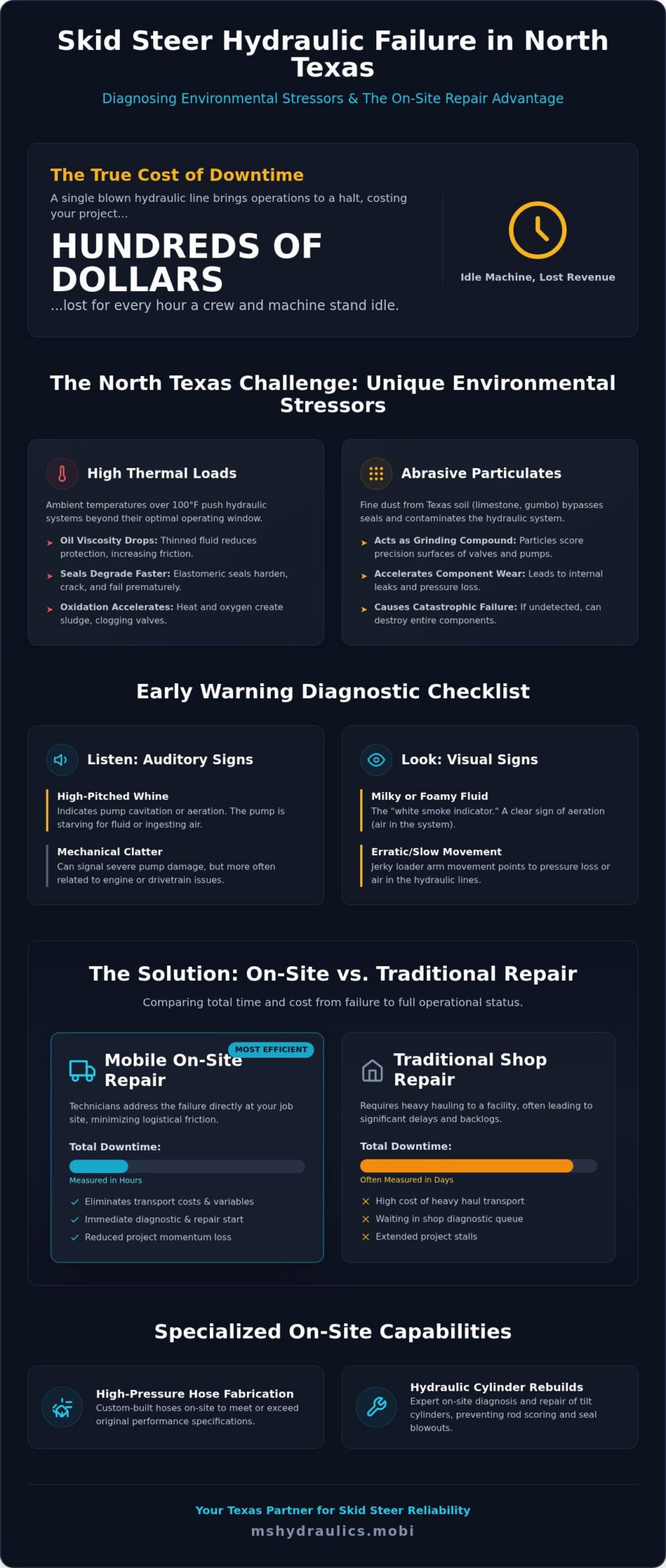
Thermal loads represent the most persistent threat to machinery health. When ambient temperatures exceed 100 degrees Fahrenheit, hydraulic oil often surpasses its optimal operating window. As fluid temperature rises, its viscosity index drops. This thinning reduces the protective film between moving metal parts in the pump, leading to increased friction and a loss of volumetric efficiency. High heat also accelerates the degradation of elastomeric seals, causing them to harden and fail prematurely.
Cavitation is another critical failure mode that often goes unnoticed until significant damage occurs. It happens when vapor bubbles form and collapse within the hydraulic pump, usually due to restricted suction lines or air ingress. Operators should monitor for a high-pitched whining sound or erratic actuator movement. If left unaddressed, cavitation erodes internal pump surfaces and can lead to a total seizure of the rotating group.
Environmental Stressors in North Texas
The abrasive nature of Texas soil presents a constant contamination risk for hydraulic circuits. Fine particulate matter from limestone and black gumbo soil can bypass worn wiper seals, entering the high-pressure system. Once inside, these particles act as a grinding compound, scoring the precision-ground surfaces of control valves and pump pistons. In areas like Alvarado and Crowley, where heavy grading is common, the risk of particulate ingress is especially high. Implementing a rigorous preventative maintenance schedule that includes professional fluid analysis is essential to detect these contaminants before they cause catastrophic mechanical wear.
Mechanical Wear Patterns in Skid Steers
High-cycle operations, particularly when using high-flow attachments like brush cutters or mulchers, place immense strain on the auxiliary hydraulic circuit. This constant pressure cycling leads to hose fatigue, often manifesting as pinhole leaks or bursts at the pivot points of the loader arms. The tilt cylinders also face significant stress during breakout maneuvers, which can lead to rod scoring or seal blowouts. Hydraulic fluid oxidation occurs when high temperatures and oxygen exposure cause a chemical breakdown of the oil, resulting in sludge formation that inhibits valve spool movement. Regular inspections of these high-stress areas are vital for maintaining the technical integrity of your fleet.
Diagnostic Checklist: Identifying Skid Steer Hydraulic Issues
Effective troubleshooting begins with a systematic evaluation of machine behavior. Modern skid steers, particularly those equipped with high-flow auxiliary systems, require precise diagnostic protocols to distinguish between minor seal leaks and catastrophic pump failure. Establishing a baseline for machine performance allows operators to detect subtle changes in hydraulic efficiency before they escalate into total system failure. When these symptoms arise, securing a professional skid steer hydraulic repair Texas technician ensures that the diagnostic process is both accurate and safe.
Visual and Auditory Indicators
Pump distress often manifests through specific acoustic signatures. A mechanical clatter usually points to engine or drive train issues, but a high-pitched, consistent whine typically indicates pump cavitation or aeration. Aeration occurs when air enters the system, often through a loose suction line or a damaged shaft seal. This condition is easily identified by checking the hydraulic reservoir for a milky or foamy appearance, sometimes referred to as the white smoke indicator. If the fluid appears aerated, the pump is at immediate risk of internal erosion.
Visual inspections should focus on identifying wet spots on hydraulic lines and around cylinder glands. These spots often signal high-pressure pinhole leaks or weeping seals. It’s critical to follow established Hydraulic System Safety protocols during these inspections. High-pressure fluid can penetrate the skin, leading to severe injury. Operators should also monitor the hydraulic temperature gauge. If the system consistently operates at the upper limit of its thermal range during standard cycles, it indicates internal slippage or a failing cooling system.
Performance-Based Diagnostics
Degradation in actuator speed or lifting capacity is a clear indicator of hydraulic inefficiency. If loader arms exhibit jerky movement or fail to reach full extension under load, there’s likely an internal bypass in the lift cylinders or a malfunctioning control valve. Technical personnel should compare current actuator cycle times against the manufacturer’s original factory specifications. A deviation of more than 10 percent usually warrants a deeper investigation into the system’s volumetric efficiency.
Auxiliary flow performance is the most sensitive indicator of pump health. High-demand attachments, such as brush cutters or mulchers, require consistent flow and pressure to maintain torque. If an attachment stalls under normal resistance, the auxiliary pump or the main relief valve is likely failing to maintain the required pressure. For precise verification of these parameters, you can utilize On-Site Diagnostic Services to perform flow and pressure tests without removing the machine from the job site. Regular monitoring of these performance metrics is the most effective way to maintain the technical integrity of your equipment and prevent unplanned downtime.
Mobile Repair vs. Shop Repair: Cost and Efficiency Analysis
Hauling a non-operational skid steer in the DFW metroplex presents significant logistical hurdles. Because a machine with a failed hydraulic system often has locked tracks or immobile loader arms, it cannot be driven onto a trailer. This necessitates specialized recovery equipment and additional labor, which adds substantial fees before the repair even begins. Furthermore, traditional shops in the region frequently report backlogs of 24 to 48 hours just for an initial diagnostic. Mobile service bypasses this queue, providing immediate technical assessment and resolution.
The ROI of On-Site Service
The financial benefit of on-site service is most evident when analyzing downtime duration. While shop rates might appear competitive, they don’t account for the four to six hours lost during the round-trip transport process. Ms. Hydraulics LLC utilizes service vehicles equipped for immediate component fabrication. This capability reduces the time required for a hose replacement from a half-day logistics cycle to a 30-minute technical procedure. For example, a recent project in Mansfield avoided a full day of lost production when a mobile technician fabricated a high-pressure auxiliary hose on-site, allowing the crew to resume operations before the next scheduled shift.
Professional mobile hydraulic repair Cleburne TX services provide a fixed-cost solution that eliminates the variable expenses of third-party hauling. By performing diagnostics and repairs in the machine’s operational environment, technicians can also observe the equipment under actual load conditions, ensuring the repair meets the specific mechanical demands of the local terrain.
When On-Site Repair is Essential
On-site intervention isn’t just a convenience; it’s often a technical necessity. Total system failures, such as a seized main pump or a buckled cylinder rod, can make it physically impossible to move the machine without causing further structural damage. Attempting to drag a dead skid steer onto a lowboy trailer risks damaging the drive motors and tires. In these scenarios, restoring basic hydraulic function on-site is the only safe path forward. Additionally, remote agricultural locations in North Texas often lack the infrastructure for easy equipment transport. Mobile units bring factory-grade diagnostic tools and fabrication equipment to these locations, ensuring that even the most isolated machinery maintains high levels of reliability and performance.
Specialized Repair Services for Skid Steer Components
Restoring a hydraulic system to factory specifications requires more than basic part replacement; it demands a granular understanding of fluid power engineering. Skid steer loaders utilize high-pressure, closed-loop systems where tolerances are measured in microns. When a component fails, the objective is to restore the original volumetric efficiency and pressure compensation capabilities. Professional skid steer hydraulic repair Texas services focus on these precision parameters to ensure that every rebuilt pump, motor, and valve bank performs reliably under the rigorous demands of North Texas job sites.
Valve bank maintenance is a critical aspect of system restoration. Modern machines often utilize load-sensing valves that require precise pressure compensation adjustments to ensure smooth multi-function operation. If a valve spool is sticking or seal integrity is compromised, the operator will experience erratic loader arm movement or drifting under load. Technicians must perform a technical teardown to reseal these banks and recalibrate the relief settings to match the manufacturer’s performance curve. This methodical approach prevents the internal bypassing of fluid, which is a primary cause of system overheating and power loss.
Skid Steer Cylinder Restoration
Disassembly is the primary phase of a professional cylinder rebuild. Technicians inspect the chrome plating on the piston rod for scoring or pitting, as even minor surface defects will destroy new seals within hours of operation. The barrel is checked for “ballooning” or internal scratching that could allow fluid to bypass the piston head. Technical details on these engineering processes are available in our Heavy Equipment Cylinder Rebuild Texas guide. Once the inspection is complete, we utilize high-spec elastomeric seals designed for the high-cycle, high-temperature environments typical of Texas construction projects.
On-Site Hose Fabrication
Hydraulic hose failure is the most frequent cause of unplanned downtime. Effective fabrication requires matching the specific reinforcement layers to the machine’s operating pressure. While standard 2-wire braided hoses suffice for many applications, high-flow skid steer attachments often require 4-wire spiral reinforced hoses to handle the extreme pressure spikes. Our technicians carry a comprehensive inventory of fitting types, including JIC (Joint Industry Council), ORFS (O-Ring Face Seal), and BSPP (British Standard Pipe Parallel), to ensure a leak-free connection. Proper hose routing is equally vital; we prioritize secure clamping and abrasion protection to prevent future chafing against the loader frame.
Technical precision ensures that your machinery remains a reliable asset rather than a liability. If your equipment is exhibiting signs of component fatigue or pressure loss, you can schedule professional hydraulic component repair to restore your skid steer’s operational integrity immediately.
Ms. Hydraulics: Your Texas Partner for Skid Steer Reliability
Ms. Hydraulics LLC operates as a disciplined technical partner for industrial and agricultural operators across the region. We understand that mechanical reliability is the foundation of project profitability. By providing specialized skid steer hydraulic repair Texas fleets can rely on, we ensure that equipment performance remains consistent even under the most demanding duty cycles. Our technicians bring engineering-grade diagnostic tools directly to the job site, eliminating the logistical friction inherent in traditional shop-based repair models. This direct approach allows for real-time verification of system pressures and flow rates under actual field conditions.
Maintaining a fleet requires more than reactive fixes; it requires a commitment to technical excellence. Our mobile units are equipped with high-capacity hose fabrication equipment and precision diagnostic computers, allowing us to perform full system overhauls without removing the machine from its operational environment. This methodology ensures that every repair meets rigorous industrial standards and restores the machine to its peak efficiency. We don’t just patch problems; we provide comprehensive solutions that address the root cause of hydraulic instability.
Our North Texas Service Area
Our mobile service units are strategically positioned to provide rapid response times across the DFW metroplex. We focus our technical expertise on Cleburne, Waxahachie, Arlington, and Mansfield, ensuring that local soil and climate conditions are factored into every mechanical solution. Whether supporting a large-scale construction project in Granbury or an agricultural operation in Johnson County, our team prioritizes structural and hydraulic integrity. This localized presence allows us to serve the construction, agriculture, and industrial sectors with a level of precision that generalist mechanics cannot match.
Scheduling Your Mobile Service
Engaging our mobile repair services is a structured process designed to minimize operational disruption. When a technician is dispatched, operators should ensure the machine is located on level ground and clear of active work zones. This facilitates a safe and thorough diagnostic environment for high-pressure testing. While emergency repairs are a core part of our service, we emphasize the role of proactive Heavy Equipment Maintenance in extending fleet longevity. Regular system inspections and fluid analysis are the most effective methods for identifying potential failure points before they result in catastrophic downtime.
Contact Ms. Hydraulics LLC to coordinate a technical assessment or to schedule immediate on-site repairs. Our commitment to excellence and industrial verification ensures that your machinery returns to service with its original performance parameters fully restored. We remain focused on modern efficiency and the long-term health of your heavy equipment assets.
Optimizing Fleet Reliability through Technical Precision
Maintaining the technical integrity of a skid steer requires a methodical approach to hydraulic health. Environmental demands in North Texas necessitate specialized solutions that address thermal degradation and abrasive contamination directly at the source. By choosing on-site intervention, you eliminate the logistical burden of equipment transport and the uncertainty of shop backlogs. This strategy ensures that your machinery returns to peak volumetric efficiency with minimal disruption to project timelines. We don’t just fix symptoms; we restore systems to their original engineering specifications.
This same philosophy of precision applies to structural maintenance; if you are dealing with settling foundations or need to restore the safety of your property’s brick steps and walkways, Airlift Concrete Experts provides the specialized leveling services required to maintain a professional and safe environment.
Ms. Hydraulics LLC provides the specialized skid steer hydraulic repair Texas operators require to maintain a competitive advantage. Our expert technicians serve Cleburne and the broader DFW metroplex, arriving equipped for on-site custom hose fabrication and advanced system diagnostics. We remain committed to restoring your equipment’s mechanical performance through engineering-grade precision and reliable component restoration. Request Mobile Skid Steer Repair in North Texas to secure your fleet’s operational future today. We look forward to supporting your project with disciplined industrial expertise.
Frequently Asked Questions
How much does it cost to fix a hydraulic leak on a skid steer in Texas?
The total cost for a hydraulic leak repair is determined by the failure’s location and the technical complexity of the affected component. While a simple fitting or hose replacement is relatively straightforward, a leak within a control valve bank or a main pump seal requires more extensive labor and specialized diagnostic equipment. A professional on-site evaluation is necessary to provide an accurate technical quote based on the machine’s current mechanical state.
Can a mobile technician rebuild a hydraulic cylinder on-site?
Mobile technicians can perform hydraulic cylinder rebuilds on-site provided the work area allows for the required levels of cleanliness. The procedure involves the removal of the cylinder, followed by the disassembly of the rod and piston to replace the elastomeric seals. If the piston rod has sustained deep scoring or the barrel has expanded beyond factory tolerances, the component may require precision machining in a controlled shop environment.
How long does a typical skid steer hydraulic hose repair take?
A standard hydraulic hose fabrication and installation usually requires 30 to 60 minutes once the technician arrives at the machine’s location. This timeframe fluctuates based on the hose’s diameter, the number of reinforcement layers, and the accessibility of the connection points. Utilizing a mobile service eliminates the hours typically lost to equipment transport and shop backlogs, allowing the machine to return to service immediately.
What are the signs that my skid steer hydraulic pump is failing?
A failing hydraulic pump typically manifests through audible distress and reduced mechanical efficiency. You’ll often hear a consistent, high-pitched whine caused by cavitation, while the loader arms may exhibit jerky or slow response times. Excessive heat generation in the hydraulic reservoir is another critical indicator that the pump is losing its volumetric efficiency and requires immediate technical intervention to prevent a total system seizure.
Do you offer emergency hydraulic repair in Arlington and Mansfield?
Ms. Hydraulics LLC provides the specialized skid steer hydraulic repair Texas job sites require in Arlington, Mansfield, and the surrounding DFW area. Our mobile units are equipped for full system diagnostics and on-site component restoration. We maintain a strategic presence in North Texas to ensure that construction and industrial operations can resolve hydraulic failures with minimal disruption to their project schedules.
Is it better to repair or replace a hydraulic cylinder?
Repairing a hydraulic cylinder is the preferred technical solution when the damage is restricted to seal degradation or minor surface wear. Rebuilding the unit restores original performance parameters at a lower cost than purchasing a new OEM component. However, if the cylinder barrel is cracked or the rod is structurally deformed, replacement is the only safe option to maintain the machine’s lifting capacity and structural integrity.
How often should I change the hydraulic fluid in my skid steer?
Standard service intervals for hydraulic fluid are typically every 1,000 operational hours, but the North Texas climate often necessitates more frequent changes. Extreme summer heat and high levels of ambient dust accelerate the chemical breakdown of the oil and increase particulate contamination. We recommend performing regular fluid analysis to monitor the oil’s viscosity and oxidation levels, ensuring the system remains protected from premature wear.