Excavator Cylinder Rebuild in Cleburne: Engineering Standards for Maximum Uptime
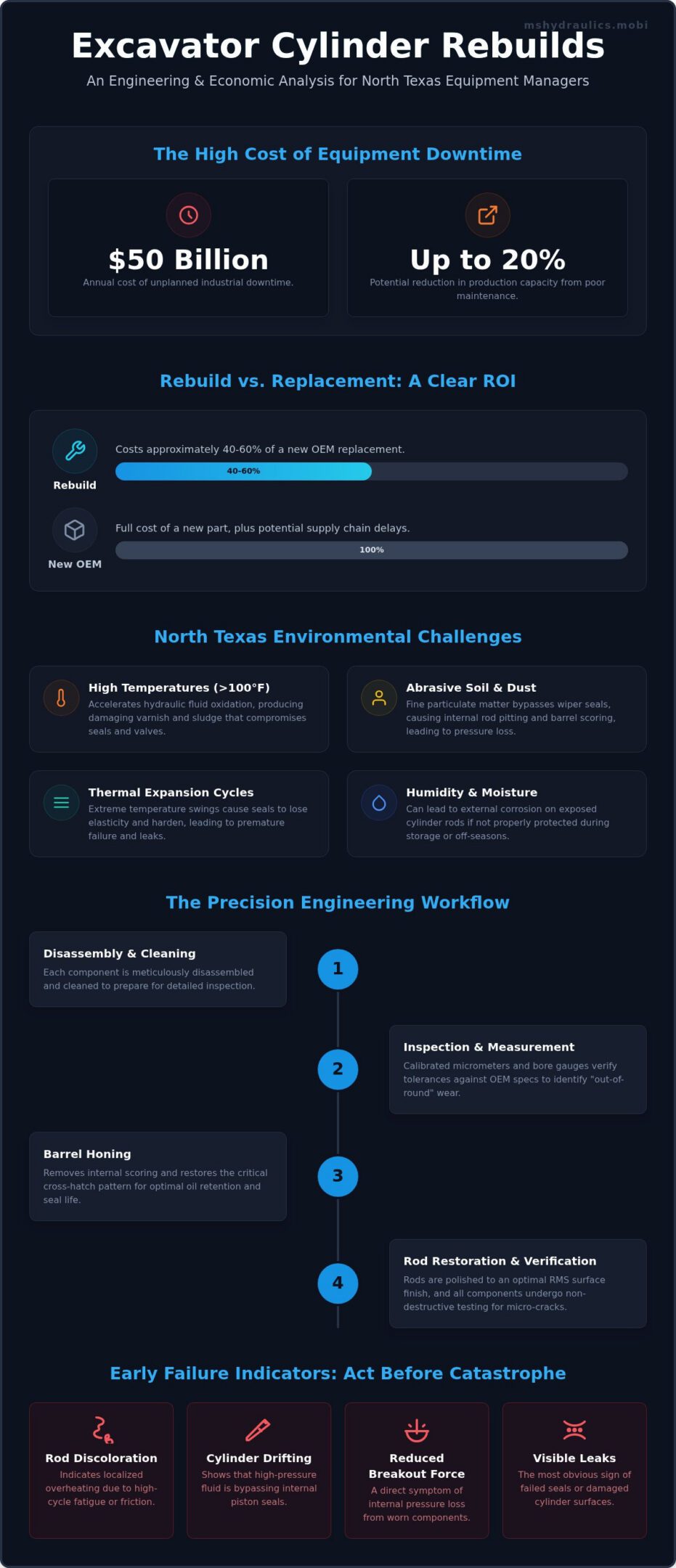
Unplanned equipment downtime is estimated to cost the industrial sector 50 billion dollars annually, with poor maintenance practices potentially reducing production capacity by up to 20 percent. For operators in North Texas, a failing hydraulic system represents more than a leak; it is a direct threat to project timelines and profitability. Choosing a professional excavator cylinder rebuild Cleburne service ensures that your machinery returns to the field with the mechanical integrity required for high-pressure applications. You recognize that a simple seal replacement often fails to address deeper issues like rod misalignment or barrel scoring, leading to costly, repetitive failures.
This article provides an objective analysis of the engineering standards and precision machining steps necessary to restore cylinders to OEM specifications. We will examine the technical requirements for internal component verification, the economic advantages of professional restoration, and the specific diagnostic protocols used to minimize machinery downtime. By following these disciplined maintenance strategies in 2026, equipment managers can secure restored breakout force and a measurable return on their repair investment.
Key Takeaways
- Professional rebuilds provide a significant ROI by costing approximately 40 to 60 percent of a new OEM replacement while bypassing current supply chain delays.
- Learn how precision engineering steps, including barrel honing and internal component verification, restore original breakout force and cycle times.
- Discover why the North Texas climate makes a specialized excavator cylinder rebuild Cleburne essential to combat abrasive dust and hydraulic fluid oxidation.
- Identify early failure indicators like rod discoloration and cylinder drifting to address mechanical issues before they cause catastrophic system breakdowns.
- Utilize on-site diagnostic capabilities to verify hydraulic performance and establish a precise repair scope prior to equipment disassembly.
Addressing Excavator Hydraulic Cylinder Wear in the North Texas Environment
High temperatures in North Texas directly impact hydraulic fluid stability. When ambient temperatures exceed 100 degrees Fahrenheit, the rate of hydraulic fluid oxidation increases significantly. This chemical degradation produces varnish and sludge that compromise valve operation and seal integrity. In these conditions, a standard seal swap often fails because it doesn’t address the underlying contamination. A comprehensive excavator cylinder rebuild Cleburne ensures that the system is flushed and internal surfaces are inspected for the microscopic damage that oxidation leaves behind.
Environmental Stresses in Johnson County
The abrasive nature of Johnson County soil presents a unique challenge for heavy equipment operating in Alvarado and Granbury. Fine particulate matter acts as a lapping compound when it bypasses the wiper seal. Once inside the cylinder, these particles cause rod pitting and internal barrel scoring. These physical defects create a path for high-pressure fluid to bypass the piston, resulting in lost breakout force. In Cleburne, thermal expansion cycles further complicate maintenance. Seals expand and contract daily under extreme temperature swings; this eventually leads to a loss of elasticity and hardening of the polymer compounds. Humidity also plays a role in North Texas. Moisture can accumulate in equipment storage areas, leading to external corrosion on exposed rods if they aren’t properly retracted or protected during the off-season.
Machinery-Specific Failure Patterns
Different machine types exhibit localized wear based on their operational duty cycles. Excavator boom and bucket cylinders endure high-cycle fatigue. This constant movement under load stresses the gland and piston interfaces, often resulting in rod discoloration from localized overheating. For drill rig hydraulics, the primary concern is managing extreme vibration and torque. These forces can lead to hairline fractures in the cylinder head or mountings that a visual inspection might miss. Skid steer cylinders face a different set of stressors. Frequent directional changes and rapid cycling create pressure spikes that can blow out seals if the internal tolerances aren’t perfectly maintained. A professional excavator cylinder rebuild Cleburne addresses these specific failure points through rigorous internal component measurement and verification, ensuring the cylinder meets original engineering specifications.
The Precision Engineering Workflow: Steps to a Professional Rebuild
A professional excavator cylinder rebuild Cleburne requires a systematic approach to restoration that exceeds basic repair shop capabilities. It begins with full technical disassembly where every internal component is cleaned and subjected to precise measurement to verify dimensional integrity. Surface-level inspections are insufficient for modern high-pressure systems. Technicians must validate that the structural components meet original engineering tolerances before any new parts are installed. This methodical verification process identifies hidden wear patterns that lead to premature failure if left unaddressed. Our facility utilizes high-capacity lathes to handle large-bore excavator cylinders, ensuring that even the most substantial components are machined with absolute precision.
Inspection, Honing, and Measurement
During the inspection phase, technicians measure tolerances against OEM specifications using calibrated micrometers and bore gauges. This step is critical for identifying barrels that have become “out-of-round” or tapered due to side-loading and structural fatigue. To correct these issues, we utilize a professional cylinder hone to remove internal scoring and embedded debris. This process restores the specific cross-hatch pattern required for optimal oil retention. Without this pattern, seals run dry and fail prematurely. We also inspect the piston and gland for structural micro-cracks using non-destructive testing methods. This ensures the core assembly can safely withstand peak operating pressures without risk of catastrophic failure.
Rod Restoration and Seal Selection
Rod restoration involves evaluating straightness and identifying surface pitting that compromises seal life. Precision rod polishing is performed to achieve an optimal RMS surface finish, which minimizes friction and heat generation during high-cycle operations. In the 2026 equipment landscape, seal selection must be tailored to the environment. We utilize high-performance polymers specifically engineered to maintain elasticity across the extreme temperature ranges found in North Texas. Proper installation techniques are mandatory to prevent seal nipping or twisting during reassembly. This level of technical oversight ensures the long-term reliability of the hydraulic cylinder rebuild. The workflow concludes with rigorous bench testing. Each unit is pressurized to its rated peak PSI to verify zero-leakage performance, confirming that breakout force and cycle times meet original manufacturer standards.
Rebuild vs. Replacement: Evaluating ROI for Cleburne Fleet Managers
Cost and Performance Analysis
The long-term ROI of a precision rebuild exceeds that of “throwaway” cylinders. While aftermarket units might offer a lower entry price, they often utilize inferior seal materials and thinner barrel walls. These compromises lead to higher failure rates in the demanding North Texas environment. Comprehensive Heavy Equipment Maintenance practices significantly extend the service life of a rebuilt unit; this creates a predictable maintenance cycle. By restoring the internal surfaces to a verified RMS finish, as discussed in the previous section, the cylinder operates with reduced friction. This efficiency directly translates to lower fuel consumption and faster cycle times during heavy excavation projects.
Minimizing Operational Downtime
In 2026, supply chain volatility continues to impact the availability of specialized hydraulic components. Lead times for new OEM cylinders can often stretch into weeks or months. A local excavator cylinder rebuild Cleburne bypasses these logistical bottlenecks by utilizing existing castings. This regional approach provides a distinct advantage for operations in Alvarado, Mansfield, and Granbury. Minimizing transport distances reduces the total time a machine is out of service. Strategic fleet managers schedule these rebuilds during planned maintenance windows to avoid the $260,000 hourly cost associated with unplanned downtime. Component restoration also supports modern industrial sustainability goals. By reusing heavy steel castings, companies reduce their environmental footprint while maintaining the highest engineering standards for their heavy equipment fleets.
Recognizing Failure Signals Before Catastrophic Breakdown
Identifying mechanical degradation before it leads to total system failure is a core component of effective fleet management. While external leaks are obvious, internal failures often manifest through subtle operational changes. An excavator cylinder rebuild Cleburne is most effective when performed as a preemptive measure. Piston seal bypass, for instance, causes cylinder drift, where a boom or bucket fails to hold its position under load. This indicates that high-pressure fluid is leaking past the internal seals. This condition quickly worsens and generates excessive heat within the hydraulic circuit, further degrading the oil and surrounding components.
On-Site Diagnostic Protocols
Utilizing specialized On-Site Diagnostic Services allows operators to isolate cylinder issues from potential valve or pump failures without removing the unit. Technicians perform pressure-hold tests to quantify the rate of internal bypass. This data determines if the rod requires shop-based machining or if the issue is limited to external seal wear. Early detection through fluid analysis can also reveal microscopic metal shavings. These particles signal that internal barrel scoring is occurring. This necessitates an immediate professional excavator cylinder rebuild Cleburne to prevent permanent rod damage and system-wide contamination.
Physical Inspection Checklist
A daily walk-around should include a specific inspection of the rod surface and gland interface. Rod rainbowing, an iridescent discoloration, signals that the cylinder has exceeded its thermal operating limits. This heat often hardens seals, making them brittle and prone to cracking. Pitting on the rod surface acts like a saw; it destroys the wiper seal with every stroke. Operators should also monitor the gland nut for active pressurized leaks and inspect the cylinder barrel for physical dents. Even minor external impacts can cause internal binding, leading to rapid wear of the piston wear rings. To ensure your equipment maintains maximum breakout force, request a mobile diagnostic assessment to evaluate your hydraulic system’s health before a minor leak becomes a major project delay.
Ms. Hydraulics: Precision Excavator Cylinder Rebuild Cleburne Services
Ms. Hydraulics LLC operates as a technical authority for heavy equipment operators across the DFW metroplex. Our facility in Cleburne serves as a specialized hub for fleets in Alvarado, Granbury, and Mansfield. We understand that hydraulic circuit integrity is the foundation of machinery performance. Whether managing the high-torque demands of a drill rig or the rapid cycle times of a skid steer, our team applies rigorous engineering standards to every project. A professional excavator cylinder rebuild Cleburne is not merely a repair; it’s a restoration of the original design parameters. We focus on long-term equipment health rather than temporary fixes, ensuring that your machinery maintains its rated breakout force under the most demanding North Texas field conditions.
Our Technical Restoration Approach
Ms. Hydraulics LLC maintains a disciplined workflow that prioritizes dimensional verification and material excellence. We adhere to strict OEM tolerances, utilizing high-capacity lathes to accommodate large-bore excavator cylinders. Every rebuild includes the integration of high-performance seal packages specifically selected for their thermal stability and abrasion resistance. Our project-based fees are structured to provide clarity and predictability for fleet managers. These fees encompass the full scope of restoration, including technical disassembly, precision machining, and final high-pressure testing. This comprehensive methodology is why we are the preferred partner for Mobile Hydraulic Repair in Cleburne, TX. We provide the technical bridge between mobile diagnostics and high-precision shop-based restoration.
Initiating Your Cylinder Evaluation
Scheduling an on-site diagnostic call is the first step toward restoring system efficiency. For operations in Johnson County, our technicians arrive equipped to perform a preliminary assessment of your hydraulic components. This on-site verification identifies if the failure is localized to a single cylinder or stems from a broader system issue. Once a rebuild is recommended, we provide clear instructions for cylinder removal and transport to minimize logistical friction. Our primary objective is the reduction of machinery downtime for construction and agricultural fleets. By integrating mobile diagnostics with our 2026 restoration protocols, we ensure that your equipment returns to service with the reliability required for multi-phase industrial projects.
Securing Long-Term Performance for North Texas Heavy Equipment
Maintaining hydraulic integrity in the North Texas environment requires a disciplined approach to component restoration. A high-quality excavator cylinder rebuild Cleburne service provides more than a simple leak fix; it restores the specific mechanical parameters necessary for peak breakout force and cycle efficiency. By utilizing professional honing and precision rod polishing, fleet managers can secure a significant cost advantage over purchasing new OEM units while successfully bypassing current supply chain bottlenecks.
Ms. Hydraulics LLC has served the DFW metroplex since 2021, providing specialized expertise in excavator, drill rig, and earthmover hydraulics. Our expert technicians utilize mobile on-site diagnostic capabilities to verify system health before any component removal occurs. This integrated approach ensures that every restoration meets strict engineering standards and operational requirements. Request a Professional Excavator Cylinder Rebuild Quote from Ms. Hydraulics to stabilize your maintenance costs and maximize machinery uptime in 2026. We look forward to supporting your fleet’s long-term operational success.
Frequently Asked Questions
How long does a typical excavator cylinder rebuild take in Cleburne?
A typical excavator cylinder rebuild Cleburne takes between two and five business days, depending on the extent of machining required and part availability. Standard resealing projects move faster, while cylinders requiring barrel honing or rod restoration require more time for precision verification. We provide project-based timelines after the initial technical disassembly to ensure your equipment returns to service as quickly as possible without compromising engineering integrity.
Can a hydraulic cylinder rod be repaired if it is deeply scored or bent?
Deeply scored rods can often be restored through industrial re-chroming, but bent rods typically require full replacement to maintain safety standards. A bent rod compromises the structural alignment of the gland and piston, leading to rapid seal failure and potential barrel damage. Our technicians use precision measurement tools to determine if a rod’s straightness and surface integrity fall within acceptable OEM tolerances or if a new component is necessary.
What is the difference between a simple reseal and a complete cylinder rebuild?
A simple reseal only replaces the polymer components, while a complete excavator cylinder rebuild Cleburne includes barrel honing, rod polishing, and internal component verification. Resealing is often a temporary fix that fails to address the root causes of wear, such as internal scoring or “out-of-round” barrels. A professional rebuild restores the entire unit to its original engineering specifications, ensuring long-term reliability and peak hydraulic performance.
Is it better to rebuild an OEM cylinder or buy a cheaper aftermarket replacement?
Rebuilding an original OEM cylinder is generally superior to purchasing a cheap aftermarket replacement because the factory castings feature higher-quality metallurgy. Aftermarket units often utilize thinner barrel walls and inferior seal materials that struggle with the high-pressure demands of North Texas operations. By restoring the original housing, you maintain perfect equipment fitment and hydraulic porting while achieving a significant return on your repair investment.
How can I tell if my excavator cylinder is bypassing internally?
Internal bypassing is most commonly identified by “cylinder drift,” where the boom or bucket slowly loses its position while the control valves are in neutral. You might also notice jerky movements or a significant loss of breakout force during heavy excavation. We utilize on-site pressure testing to confirm if fluid is bypassing the piston seals internally, which allows us to isolate the issue before the cylinder is removed.
Does Ms. Hydraulics provide on-site cylinder removal for rebuilds?
Ms. Hydraulics provides on-site diagnostic services to evaluate cylinder health, but the actual rebuild process occurs in our specialized shop to ensure a contaminant-free environment. We assist fleet managers by providing clear preparation steps for cylinder removal and transport. This integrated approach combines the convenience of local diagnostics with the precision of a controlled engineering facility, minimizing total machinery downtime across the DFW metroplex.
What are the most common causes of hydraulic cylinder failure in North Texas?
The primary causes of failure in North Texas include hydraulic fluid oxidation from high ambient temperatures and seal abrasion from fine Johnson County dust. Daily thermal expansion cycles also cause seals to lose their elasticity over time, leading to external weeping. These environmental stressors, combined with the high-cycle fatigue of excavator operations, necessitate regular professional inspections to prevent minor leaks from escalating into catastrophic mechanical failures.
How do I know if my cylinder rod needs to be re-chromed or just polished?
Rods with shallow surface scratches or light oxidation can often be restored through precision polishing to achieve the required RMS finish. However, if the rod exhibits deep pitting, “rainbowing” from extreme heat, or significant chrome loss, industrial re-chroming is required to restore the hard outer surface. Our inspection protocol involves measuring the depth of all surface defects to determine the most cost-effective restoration method that maintains original seal life.