On-Site Hydraulic Diagnostics for Construction Fleets in Fort Worth
Every hour an excavator sits idle because of a misdiagnosed pump failure is a direct hit to your project’s margin. Relying on generic mechanics often leads to expensive guesswork that fails to address the underlying cause of hydraulic instability. Precision-engineered on-site hydraulic diagnostics for construction fleet in Fort Worth provide the technical verification necessary to resume operations without the logistical burden of hauling machinery to a distant repair facility. When a high-pressure system fails, the priority is a definitive answer rather than a series of trial-and-error parts replacements.
You recognize that the high cost of machinery transport and lost revenue from diagnostic delays can quickly exceed the actual repair bill. It’s frustrating to pay for hauling only to receive inconsistent results from technicians who lack specialized industrial expertise. This guide demonstrates how precision mobile diagnostics minimize heavy equipment downtime by identifying the exact failure point in pumps, valves, or cylinders. We will detail the methodology behind on-site system verification, the benefits of immediate hose fabrication, and how a structured technical approach restores your fleet’s performance without the complexity of transport logistics.
Key Takeaways
- Learn how rigorous pressure testing and flow analysis verify system integrity against OEM specifications to identify internal leakage.
- On-site hydraulic diagnostics for construction fleet in Fort Worth eliminate the substantial logistics costs and downtime associated with machinery transport.
- Data-driven verification prevents the financial waste of unnecessary part-swapping. It’s the most reliable way to ensure a long-term restoration of fleet health.
- Identify the critical steps for preparing your equipment, such as documenting fault codes, to accelerate the diagnostic process.
- See how combining expert diagnostics with immediate on-site hose fabrication provides a seamless path to operational recovery.
The Critical Role of Precision Diagnostics in Construction
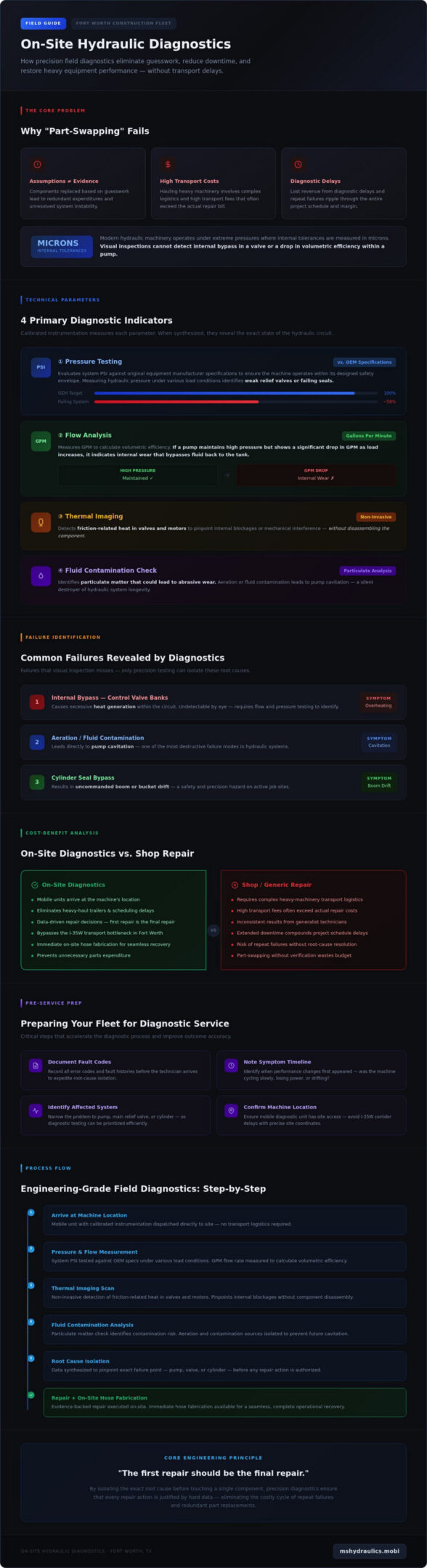
The financial drain of “part-swapping” is a common inefficiency in heavy equipment maintenance. This unscientific method, where components are replaced based on assumptions rather than evidence, leads to redundant expenditures and unresolved system instability. Modern hydraulic machinery systems operate under extreme pressures where internal tolerances are measured in microns. Visual inspections cannot detect internal bypass in a valve or a drop in volumetric efficiency within a pump. Without specialized testing, fleet managers often pay for expensive components that do not address the actual failure point.
Implementing on-site hydraulic diagnostics for construction fleet in Fort Worth shifts the focus from reactive component replacement to engineering-grade verification. This transition ensures that every repair action is justified by hard data. When a machine loses power or cycles slowly, the problem could reside in the pump, the main relief valve, or an internal cylinder leak. Precise diagnostics isolate these variables, protecting the fleet from the high cost of diagnostic guesswork.
Eliminating Guesswork in Field Repairs
Accurate field diagnostics prevent the cycle of repeat failures that often plague job sites. Identifying whether a symptom originates in the pump, valve, or cylinder requires specialized testing equipment. Hydraulic diagnostics is a data-driven verification process used to isolate mechanical failures within a pressurized circuit. By isolating the root cause, technicians ensure the first repair is the final repair. Common failures identified through this process include:
- Internal bypass within control valve banks that causes heat generation.
- Aeration or fluid contamination that leads to pump cavitation.
- Cylinder seal bypass resulting in uncommanded boom or bucket drift.
This technical integrity protects the long-term health of the entire hydraulic circuit. It’s a disciplined approach that values reliability and performance above quick, temporary fixes.
Fort Worth’s Construction Landscape and Downtime
The geographical challenges of the North Texas region amplify the costs of equipment failure. In high-traffic construction zones, a stalled excavator represents more than just a repair bill; it’s a project bottleneck that ripples through the entire schedule. Hauling heavy machinery from a site in downtown Fort Worth involves complex logistics and high transport fees. Utilizing on-site hydraulic diagnostics for construction fleet in Fort Worth allows operators to bypass the I-35W transport bottleneck. Mobile units arrive at the machine’s location, eliminating the need for heavy-haul trailers and the associated scheduling delays. This efficiency keeps projects moving and maintains the structural integrity of the construction timeline.
Technical Parameters: How We Analyze Hydraulic Integrity
Technical verification requires measuring physical properties against established benchmarks. In on-site hydraulic diagnostics for construction fleet in Fort Worth, we utilize calibrated instrumentation to assess four primary indicators: pressure, flow, temperature, and fluid purity. Each parameter provides a discrete data point that, when synthesized, reveals the exact state of the hydraulic circuit. This methodical approach replaces visual guesswork with engineering-grade data.
Pressure testing evaluates system PSI against original equipment manufacturer (OEM) specifications to ensure the machine operates within its designed safety envelope. Measuring hydraulic pressure under various load conditions identifies weak relief valves or failing seals. Simultaneously, flow analysis measures Gallons Per Minute (GPM) to calculate volumetric efficiency. If a pump maintains high pressure but shows a significant drop in GPM as the load increases, it indicates internal wear that bypasses fluid back to the tank.
Thermal imaging adds a layer of non-invasive verification. By detecting friction-related heat in valves and motors, technicians can pinpoint internal blockages or mechanical interference without disassembling the component. Finally, fluid contamination checks identify particulate matter that could lead to abrasive wear. This comprehensive analysis ensures that on-site diagnostic services provide a complete picture of system health before any repair begins.
Pressure and Flow: The Vital Signs of Your Fleet
Maintaining correct PSI is critical for heavy equipment safety and structural integrity. Excess pressure can lead to catastrophic hose failures or structural fatigue; insufficient pressure results in sluggish performance and stalling. Interpreting flow meter data allows technicians to predict the remaining service life of components. A steady decline in flow over time suggests a predictable wear pattern, enabling scheduled maintenance rather than emergency repairs. This predictive capability is essential for managing large-scale construction operations where equipment availability is non-negotiable.
Advanced Troubleshooting for Complex Components
Modern construction machinery often features integrated diagnostic ports that allow for rapid system interrogation. These access points provide a direct window into the high-pressure circuit, enabling us to monitor relief valves and control blocks for “silent” failures. These failures, such as a relief valve that cracks open prematurely, often go unnoticed during standard operation but severely limit the machine’s breakout force. Our diagnostic protocols for hydraulic pumps and motors involve checking case drain flow, which serves as a definitive indicator of internal component health and overall system efficiency.
On-Site Diagnostics vs. Shop Repair: A Cost-Benefit Analysis
Choosing between field verification and shop-based repair requires a calculated analysis of total operational costs. Transporting heavy machinery through the I-35W corridor or to active development sites like Panther Island involves significant logistical overhead. Utilizing on-site hydraulic diagnostics for construction fleet in Fort Worth mitigates these expenses by bringing specialized instrumentation directly to the machine’s location. This approach eliminates the need for heavy-haul trailers and the associated fees, which often rival the cost of the repair itself. By prioritizing field-based assessment, fleet managers reduce the time a machine spends in transit and maximize its availability for critical project milestones.
Speed of resolution is a primary differentiator. While a shop repair might involve days of waiting for a slot in the service bay, on-site diagnostics often provide a definitive answer within hours. This efficiency is particularly valuable in the fast-paced North Texas construction market, where schedule slippage results in severe financial penalties. Furthermore, diagnosing a machine in its working environment allows for the identification of issues that only occur under specific load conditions, ensuring the root cause is addressed before the machine is declared operational.
The Logistics of Downtime in Fort Worth
In the DFW region, major repair hubs often face substantial backlogs. These delays mean a machine might sit idle for several days before a technician even begins a preliminary assessment. On-site service reverses this dynamic; the technician arrives ready to perform immediate system verification. While the assessment is underway, project managers can reassign operators to other tasks on the same site, maintaining overall productivity. Additionally, hauling machinery with active hydraulic leaks carries environmental risks. Intervening on-site contains these fluids at the source, protecting the job site and reducing the potential for regulatory complications.
Real-World Performance Verification
Static shop tests often fail to replicate the dynamic stresses of a high-intensity construction environment. Certain failures, such as intermittent valve bypass or thermal-related pump inefficiency, may only manifest when the system is under a specific job site load. Testing the machine in its operating environment ensures the data collected reflects actual performance parameters. This immediate feedback loop allows fleet managers to make informed decisions regarding on-site diagnostic services and subsequent repairs. It establishes a professional standard where technical accuracy is prioritized over logistical convenience.
Preparing Your Construction Fleet for Diagnostic Service
Efficient on-site hydraulic diagnostics for construction fleet in Fort Worth rely on systematic preparation. Technicians arrive equipped with specialized tools, but local site conditions and historical data significantly influence the speed of resolution. Before the mobile unit reaches the job site, fleet managers should consolidate all relevant technical documentation. This includes previous repair history and current maintenance logs to identify recurring patterns in system behavior. Having this data available allows for a more targeted interrogation of the hydraulic circuit.
Specific technical details are required to streamline the assessment. Fleet managers should ensure the following information is ready for the technician:
- Active Fault Codes: Record all codes from the machine’s electronic control unit (ECU).
- Fluid Temperature: Note the hydraulic oil temperature when the failure occurred.
- Symptom Frequency: Identify if the issue is constant or only manifests during specific load cycles.
- Recent Component Replacements: List any parts changed within the last 500 operating hours.
Operator Input: The First Step in Diagnosis
Operators provide the most critical data regarding the failure event. Technicians need to know if there were unusual mechanical noises, such as pump whining or valve chatter, prior to the shutdown. Erratic behavior, like jerky cylinder movement or slow response times, often indicates specific internal wear patterns. First-hand data from the person behind the controls accelerates the technical assessment by narrowing the diagnostic focus. This collaborative approach ensures the technician starts with a clear understanding of the machine’s operational context.
Site Safety and Accessibility Protocols
The physical environment must be secured to allow for high-pressure testing. Clearing a perimeter around the machine is essential for safe access to diagnostic ports and hydraulic lines. Technicians must adhere to OSHA standards and any specific job site safety requirements, such as lockout/tagout procedures. The machine should be positioned on level ground to ensure accurate fluid level readings and to allow full range of motion for testing pumps and valves. If your machinery is currently showing signs of decreased performance, you can schedule on-site diagnostic services to prevent a total system failure.
Properly preparing the site ensures that the technician can focus entirely on the engineering parameters of the system. This discipline reduces labor hours and ensures a more accurate root-cause identification. It’s the most effective way to transition from a stalled project to a fully operational fleet.
Ms. Hydraulics: Engineering-Grade Field Diagnostics
Ms. Hydraulics LLC prioritizes integrity through technical precision. Founded in 2021, the firm addresses the specific needs of heavy equipment operators in North Texas. Providing on-site hydraulic diagnostics for construction fleet in Fort Worth is not merely a service; it’s a commitment to industrial excellence and fleet longevity. We recognize that the construction sector requires a partner who values performance above all else. Our approach is characterized by an objective, engineering-focused methodology that eliminates the uncertainty often associated with field repairs. This disciplined focus ensures that every diagnostic action results in a verifiable path to restoration.
From Diagnosis to Fabrication
When a diagnostic assessment reveals a ruptured line or a compromised seal, the speed of restoration depends on immediate resource availability. Our mobile units integrate advanced testing with hydraulic hose fabrication, allowing for the immediate replacement of failed conductors. This integration eliminates the secondary delay of sourcing parts from a third-party vendor. For more complex mechanical failures, the diagnostic data provides a clear technical path toward a heavy equipment cylinder rebuild. A single-source partner managing both the analysis and the physical restoration ensures that OEM technical specifications are maintained throughout the entire repair cycle. This efficiency is vital for maintaining the rigorous timelines of major infrastructure projects.
A Trusted Partner for DFW Construction
Since its inception in 2021, Ms. Hydraulics LLC has established a reputation for disciplined, technical execution across the North Texas region. We serve a diverse range of critical machinery, including high-capacity excavators, skid steers, and industrial drill rigs. Based in Cleburne, our reach extends across the broader Fort Worth metroplex, providing a localized solution to the high costs and logistical burdens of equipment transport. Reliability in this sector is built on factual accuracy rather than evocative claims. By focusing on the physical parameters of hydraulic integrity, Ms. Hydraulics LLC helps fleet managers maintain a predictable operational schedule and minimize the risk of catastrophic failure. Scheduling a diagnostic verification is the most effective way to protect your heavy equipment assets and ensure the continued health of your construction fleet.
Optimizing Fleet Performance through Technical Verification
Precision-engineered diagnostics are essential for maintaining the operational integrity of high-pressure hydraulic systems. By utilizing specialized mobile diagnostic units to perform technical verification at the machine’s location, fleet managers eliminate the logistical complexities of transport while ensuring the root cause of failure is accurately identified. This data-driven approach, supported by on-site hose fabrication capacity, allows for the immediate restoration of critical assets like excavators and drill rigs.
Ms. Hydraulics has provided disciplined, engineering-grade services across the DFW metroplex since 2021. Implementing on-site hydraulic diagnostics for construction fleet in Fort Worth ensures that your machinery meets OEM specifications without the delays of shop-based backlogs. It’s the most reliable method for protecting your project timelines and high-value equipment assets. Technical accuracy is the foundation of a dependable fleet.
Schedule Expert On-Site Diagnostics for Your Fort Worth Fleet and secure the long-term health of your machinery today.
Frequently Asked Questions
What are the most common signs that my construction equipment needs a hydraulic diagnostic check?
Common indicators of hydraulic instability include sluggish cycle times, uncommanded cylinder drift, and excessive heat generation. You might also notice cavitation noise from the pump or a significant loss of breakout force during high-load operations. These symptoms suggest internal bypass or volumetric efficiency issues. Scheduling on-site hydraulic diagnostics for construction fleet in Fort Worth allows for the technical verification of these parameters before a catastrophic failure occurs.
Can you perform a full hydraulic system test on-site in Fort Worth?
We perform comprehensive system interrogation directly at your location using calibrated flow meters and pressure transducers. Our mobile units possess the instrumentation required to measure Gallons Per Minute (GPM) and PSI against OEM specifications. This on-site capability allows us to isolate failures in pumps, control valves, or actuators without the machine leaving the site. It is a precise methodology designed to provide engineering-grade data in a field environment.
How long does a typical on-site hydraulic diagnostic call take?
A standard diagnostic session typically requires between one and three hours depending on the complexity of the circuit and the number of active fault codes. Basic pressure and flow verification can be completed quickly; however, isolating intermittent thermal issues or internal valve leaks may require more extensive testing under varied load conditions. Our goal is to provide a definitive root-cause analysis as efficiently as possible to minimize your project’s downtime.
Do you provide diagnostics for all types of heavy equipment, such as excavators and skid steers?
Our technical expertise extends across a broad range of industrial machinery including high-capacity excavators, skid steers, and specialized drill rigs. We support various manufacturers and system configurations, from open-center gear pump circuits to complex closed-loop hydrostatic drives. Whether your fleet operates in Cleburne or across the broader Fort Worth metroplex, our technicians apply rigorous protocols to ensure every piece of heavy equipment performs at peak efficiency.
What is the difference between a basic inspection and a technical diagnostic service?
A basic inspection is primarily a visual assessment of external components like hoses, fittings, and cylinder rods for obvious leaks or damage. In contrast, a technical diagnostic service is a data-driven verification of the system’s internal health. We use specialized instrumentation to monitor pressure spikes, flow rates, and thermal signatures. This process identifies silent failures, such as internal bypass in a valve bank, that a visual inspection would miss.
What happens if a diagnostic check reveals a major component failure like a pump or motor?
If a major component failure is identified, we provide a clear technical path to restoration. Ms. Hydraulics LLC specializes in hydraulic pump repair, motor service, and valve restoration. Our mobile units are also equipped for on-site hose fabrication to address immediate conductor failures. For damaged actuators, we offer project-based cylinder rebuilds. This single-source approach ensures that the repair matches the diagnostic data, maintaining the integrity of the entire hydraulic system.
Is on-site diagnostic service available 24/7 for emergency failures in the Fort Worth area?
Fleet managers should verify current availability and response times when scheduling service for emergency failures. While we prioritize rapid deployment to construction sites in Fort Worth and Cleburne, response windows can vary based on current field technician locations and existing service schedules. It is advisable to maintain a regular preventative maintenance schedule to identify system weaknesses before they escalate into an emergency shutdown that requires immediate on-site intervention.
How do you ensure the accuracy of your field diagnostic equipment compared to shop tools?
We use industrial-grade, calibrated testing equipment that meets the same precision standards as shop-based instrumentation. In many cases, field diagnostics provide superior data because they allow for testing under actual job site loads and temperatures. Static shop tests sometimes fail to replicate the specific environmental stresses that cause intermittent failures. By measuring mechanical parameters in the machine’s working context, we ensure the highest level of diagnostic accuracy.