North Texas Mobile Hydraulic Hose Replacement Guide 2026
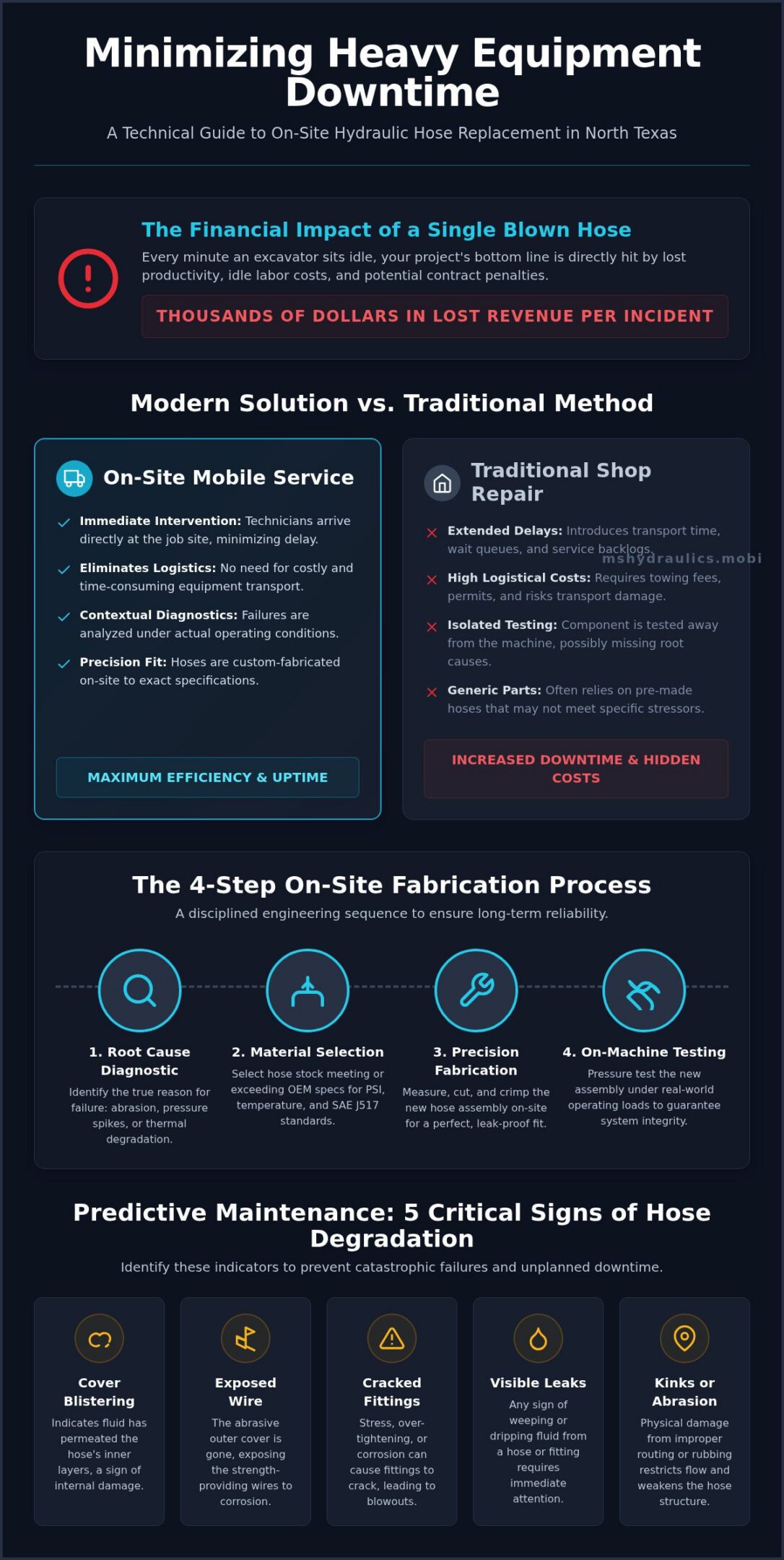
Every minute an excavator sits idle on a North Texas job site because of a blown line, the project’s bottom line takes a direct hit that often exceeds thousands of dollars in lost productivity. You’ve likely experienced the logistical nightmare of transporting disabled heavy equipment to a repair shop while deadlines loom. The intense Texas heat and high-pressure demands frequently cause standard components to fail prematurely. Utilizing a professional service for mobile hydraulic hose replacement allows for immediate, technical intervention directly at the site of the failure, bypassing the need for costly towing and extended delays.
This guide demonstrates how to minimize machinery downtime through expert on-site hydraulic hose fabrication and advanced predictive maintenance strategies. You’ll learn the critical specifications required for high-performance systems and how precision engineering prevents recurring mechanical failures. We provide a technical overview of the latest industry standards and high-value physical parameters, ensuring your fleet remains safe, efficient, and compliant with the rigorous demands of the 2026 industrial landscape. By treating every repair as a technical diagnostic event, you can secure the long-term reliability of your most critical assets.
Key Takeaways
- Quantify the fiscal impact of machinery downtime and understand why on-site technical intervention is the most efficient recovery solution for industrial equipment.
- Master the technical specifications of mobile hydraulic hose replacement, focusing on precision material selection to withstand high PSI and extreme North Texas temperatures.
- Evaluate the cost-efficiency of on-site repairs by comparing direct service fees against the substantial revenue losses generated by idle machinery.
- Identify five critical physical indicators of hose degradation, such as cover blistering and wire exposure, to implement effective predictive maintenance strategies.
- Explore the specialized diagnostic requirements for maintaining heavy assets like excavators and drill rigs to ensure long-term mechanical reliability.
Understanding Mobile Hydraulic Hose Replacement Services
Mobile hydraulic hose replacement is a specialized technical service involving the on-site fabrication and installation of high-pressure lines directly at the machinery’s location. It’s not a mere parts delivery; it’s an engineering intervention designed to restore the mechanical integrity of a hydraulic system without removing the equipment from the job site. Gaining a foundational perspective through Understanding Hydraulic Machinery reveals how integrated these components are to the entire power transmission circuit. In sectors like heavy construction, agriculture, and industrial drilling, the integrity of these lines is non-negotiable. Systems fail. When they do, the speed and precision of the response determine the project’s ultimate profitability.
Standardized, pre-made hoses often fail in demanding environments because they don’t account for specific mechanical stressors or the extreme thermal conditions found in North Texas. Custom-fabricated solutions utilize precise measurements and material grades to ensure compatibility with the existing system. This high-level technical approach ensures that the replacement assembly meets or exceeds the original equipment manufacturer (OEM) specifications for pressure ratings and abrasion resistance.
Critical Role in Minimizing Equipment Downtime
The financial impact of a disabled excavator or drill rig extends far beyond the repair invoice. Project managers must account for idle labor costs, missed contract milestones, and potential liquidated damages. On-site service removes the logistical burden of transporting heavy assets, which often requires specialized trailers and oversized load permits. Professional mobile hydraulic hose replacement also addresses critical safety concerns. Technicians eliminate the temptation for operators to use “field patches,” such as improper couplings or mismatched hoses. These temporary fixes are dangerous; they lead to catastrophic system failures or life-altering fluid injection injuries.
On-Site vs. Shop-Based Hose Replacement
Choosing between a mobile technician and a traditional repair shop involves analyzing total turnaround time and diagnostic depth. Shop-based repairs introduce significant delays through transport logistics and existing service backlogs. Mobile units provide a distinct technical advantage by allowing the technician to test the new assembly under actual operating loads on-site. This real-world testing often identifies secondary system issues that a shop might overlook when the component is isolated from the machine.
- Logistics: Eliminates towing fees and the risk of transport-related damage.
- Diagnostics: Field technicians observe the failure in its operational context, identifying root causes like hose rubbing or heat proximity.
- Efficiency: Direct fabrication at the machine ensures a perfect fit, reducing the risk of secondary leaks from improper routing.
By utilizing a disciplined, on-site approach, operators in Cleburne and the DFW Metroplex maintain a higher standard of equipment availability and safety.
The Technical Process of On-Site Hose Fabrication
A successful mobile hydraulic hose replacement is not a simple parts exchange. It’s a technical sequence that begins with a comprehensive on-site diagnostic to identify the root cause of the initial failure. Technicians must determine if the hose failed due to internal pressure spikes, external abrasion, or thermal degradation. Without this forensic step, a new hose is likely to fail under the same conditions. This diagnostic approach aligns with the OSHA Hydraulic Safety Bulletin, which emphasizes the necessity of identifying leakage hazards before they lead to catastrophic equipment failure.
Precision measurement and material selection follow the diagnostic phase. Technicians utilize specific engineering parameters to select hose stock that matches the PSI and temperature requirements of the machinery. Adhering to SAE J517 standards is mandatory for industrial reliability, as these specifications dictate the minimum performance requirements for various hose constructions. In North Texas, where ambient temperatures frequently stress hydraulic systems, selecting a hose with a higher thermal tolerance is essential for long-term performance. Final pressure testing ensures the integrity of the new assembly before the machine returns to service.
Identifying Fittings and Thread Patterns
Modern hydraulic systems utilize a complex array of fitting standards, including JIC, NPT, ORFS, and various Metric patterns. Precision identification of these thread types is critical to preventing high-pressure leaks. A mismatch of even a few millimeters in thread pitch can lead to a violent separation under load. Ms. Hydraulics LLC maintains a comprehensive inventory of heavy equipment fittings on-site to ensure every replacement matches the original OEM specifications exactly. For operators needing immediate technical support, our on-site diagnostic services provide the necessary expertise to identify and resolve these complex fitting requirements.
Precision Crimping and Pressure Rating Compliance
The science of the crimp involves creating a permanent, high-pressure bond between the hose and the fitting. This process requires specialized hydraulic crimping equipment calibrated to specific diameters. If the crimp is too loose, the fitting may blow off; if it’s too tight, it can damage the hose’s internal wire reinforcement. Achieving the correct crimp diameter is the single most important factor in maintaining the rated PSI of the assembly. This methodical approach ensures that the finished product can withstand the rigorous demands of heavy industrial operations without premature failure.
Evaluating the Cost-Efficiency of Mobile Hose Repair
Analyzing the fiscal impact of a hydraulic failure requires a transition from evaluating invoice totals to assessing total operational expenditure. While shop-based repairs might appear cost-effective on a line-item basis, they often overlook the substantial indirect costs of equipment stagnation. A professional mobile hydraulic hose replacement minimizes these losses by addressing the failure at the source. This immediate intervention prevents secondary wear on pumps and valves that typically occurs when a system operates with compromised pressure or fluid loss. Technical precision in the field ensures that the new assembly integrates seamlessly with existing components, preserving the lifespan of the entire hydraulic circuit.
Adhering to hydraulic hose safety best practices ensures that field repairs meet the same rigorous engineering standards as factory installations. Custom-fabricated hoses outperform generic off-the-shelf alternatives because they are engineered for the specific routing and thermal environment of the machine. This level of technical assurance is vital for avoiding OSHA or MSHA citations. Certified field repairs provide the necessary documentation and safety verification required for high-stakes industrial sites in North Texas, where regulatory compliance is as critical as mechanical performance.
Calculating the Hourly Cost of Machinery Downtime
The true cost of an idle asset includes operator wages, wasted fuel, and the potential for severe project delay penalties. In the North Texas construction and industrial sectors, these variables escalate quickly. Mobile service response times are significantly lower than traditional shop turnarounds, which often involve multi-day backlogs and complex scheduling. For specialized machinery, Expert Mobile Hydraulic Repair in Cleburne, TX provides a structured path to recovery that prioritizes immediate technical intervention over logistical delays. This proactive approach converts hours of potential downtime into minutes of productive operation.
Logistics and Safety Benefits for Field Operations
Loading and unloading a disabled 40-ton excavator or a specialized drill rig onto a trailer presents significant safety risks and potential for structural damage. Mobile repair eliminates these hazards entirely. A technician on-site can inspect the entire hydraulic circuit, identifying worn seals or vibrating lines that might cause the next failure. This holistic approach is essential for high-stakes industries like drilling and mining, where system integrity is a prerequisite for operational safety. By resolving the issue in the field, operators maintain a continuous chain of mechanical reliability and ensure the safety of the surrounding personnel.
Predictive Maintenance: 5 Signs Your Hydraulic Hoses Are Failing
Implementing a predictive maintenance protocol is the most effective method for preventing catastrophic mechanical failures on the job site. In the demanding environmental conditions of North Texas, hydraulic components are subjected to extreme thermal cycles and abrasive particulate matter. Recognizing early indicators of degradation allows operators to schedule a mobile hydraulic hose replacement before a blowout occurs, protecting both the machinery and the surrounding personnel. Technical inspections should focus on these five critical physical parameters.
- External Abrasion: When the outer protective cover wears down to the “exposed wire” danger zone, the hose no longer possesses the structural integrity to contain high-pressure surges.
- Cover Blistering: Bubbles or blisters indicate that the inner tube has failed, allowing pressurized fluid to seep between the layers of the hose construction.
- Fluid Weeping: Moisture around fittings is often a sign of a failing seal or cracked hose end; simply tightening the fitting often exacerbates the underlying structural issue.
- Kinking and Twisting: Physical deformation restricts fluid flow, which generates excessive localized heat and can lead to pump cavitation.
- Thermal Hardening: UV exposure and high operating temperatures cause the elastomer to become brittle; a hardened cover will eventually crack, exposing the reinforcement to corrosion.
External Wear: Abrasion, Cracking, and Bubbling
The specific soil composition and dust levels in the DFW Metroplex accelerate external hose degradation. Fine grit acts as an industrial abrasive, grinding away the outer carcass during every cycle of the machine’s operation. It’s essential to distinguish between cosmetic scuffs and structural failure; any breach that reveals the underlying braid requires immediate intervention. For comprehensive fleet care, following a structured Heavy Equipment Maintenance in Cleburne schedule ensures that these environmental stressors are managed before they compromise system reliability.
Internal Issues: Fluid Leaks and Pressure Fluctuations
Erratic cylinder movement or a sudden loss of lifting power often points to internal hose restrictions or pressure drops. These symptoms suggest that the inner lining may be collapsing or that a pinhole leak has developed. Pinhole leaks are particularly dangerous; they can cause fluid injection injuries, which are medical emergencies requiring immediate surgical attention. Utilizing on-site diagnostics allows technicians to detect these pressure fluctuations using precision gauges before they lead to total pump failure. If you detect any of these indicators, contact our team for mobile hydraulic repair services to secure your equipment’s integrity.
Expert Mobile Hydraulic Solutions in North Texas
Ms. Hydraulics LLC operates with a disciplined, engineering-first approach to mobile hydraulic repair throughout Cleburne and the broader DFW region. Since our founding in 2021, we’ve positioned ourselves as a serious partner for industrial players managing high-value assets. Our technical capabilities extend across specialized machinery, including excavators, skid steers, and industrial drill rigs. A mobile hydraulic hose replacement from our team is treated as a critical assembly event. We ensure that every component meets the rigorous physical and mechanical parameters required for heavy-duty operation. This precision is vital for maintaining the structural integrity of complex hydraulic circuits under extreme load. Our technicians prioritize factual accuracy and engineering expertise to build lasting professional trust.
Serving Cleburne, Granbury, and the DFW Metroplex
We provide technical support for fleets in Granbury, Alvarado, Mansfield, and Waxahachie, ensuring that local operators have access to expert on-site fabrication. Local knowledge of North Texas soil and weather is essential for selecting the correct hose materials. The high ambient temperatures and pervasive dust in this region require elastomers with superior thermal and abrasion resistance to prevent premature cover failure. Our commitment to reliability ensures that local construction and agricultural fleets maintain their schedules despite unexpected mechanical failures. We build long-term relationships through technical excellence and the objective verification of every repair against international standards. This methodical focus on reliability signals our status as a top-tier provider for the region’s most demanding job sites.
Integrated Diagnostics and Custom Hose Assemblies
Our service methodology goes beyond simple parts replacement. By combining hose fabrication with On-Site Diagnostic Services, we identify underlying issues in pumps, valves, or cylinders that might lead to recurring failures. The Ms. Hydraulics LLC advantage lies in our fully equipped mobile lab, which allows for precision field fabrication of custom assemblies. This lab carries a comprehensive inventory of fittings and high-pressure hose stock, enabling us to match OEM specifications exactly. This integrated approach ensures that the entire hydraulic circuit is evaluated and restored to peak efficiency before the machine is cleared for operation. Ms. Hydraulics LLC focuses on maximizing operational uptime through technical precision and the delivery of high-performance custom hose assemblies directly to the job site.
Securing Industrial Reliability through Technical Precision
Maintaining operational efficiency in the North Texas industrial sector requires a disciplined approach to fluid power systems. Precision on-site fabrication and rigorous diagnostics serve as the primary defenses against the compounding costs of machinery downtime. By treating every repair as a technical event rather than a simple parts swap, operators ensure their assets remain compliant with international safety standards and operational demands. Utilizing professional mobile hydraulic hose replacement provides the necessary technical assurance that every assembly meets exact mechanical parameters while bypassing the logistical delays of traditional shop repairs.
Since 2021, Ms. Hydraulics LLC has specialized in heavy equipment maintenance for excavators and drill rigs, providing expert on-site diagnostics across Cleburne, Granbury, and the DFW Metroplex. Our methodical focus on integrity and technical excellence ensures that your fleet remains a dependable asset on every job site. Contact Ms. Hydraulics LLC for 24/7 Mobile Hose Replacement to restore your system’s integrity and keep your projects moving forward with confidence. Your fleet’s mechanical reliability is the foundation of your operational success.
Frequently Asked Questions
How long does a typical mobile hydraulic hose replacement take on-site?
A typical mobile hydraulic hose replacement generally requires between one and two hours to complete once the technician arrives at the machinery. This duration includes the initial diagnostic phase, precision measurement, and the fabrication of the custom assembly. Factors such as the location of the hose within the equipment and the complexity of the fittings can influence the total service time. Our objective is to restore operational status with minimal interruption to your project schedule.
What hydraulic hose sizes and pressure ratings can you fabricate in the field?
Our field units are equipped to fabricate a wide range of hose diameters and pressure ratings suitable for industrial and construction equipment. We carry stock that meets or exceeds SAE J517 standards, including multi-wire spiral hoses designed for high-impulse applications. Our inventory supports various PSI requirements for heavy machinery like drill rigs and excavators. This ensures that every field-fabricated assembly maintains the structural integrity required for high-pressure hydraulic circuits in demanding environments.
Do you provide 24/7 emergency hydraulic repair in the Cleburne and DFW area?
We maintain 24/7 reliability for industrial job sites across Cleburne, Granbury, and the DFW Metroplex to address critical system failures. Our technicians provide rapid response for emergency mobile hydraulic hose replacement, ensuring that equipment downtime is minimized during time-sensitive operations. This service area includes Alvarado, Mansfield, and Waxahachie, where we support construction and agricultural fleets. We prioritize urgent service calls to restore mechanical performance and prevent the compounding costs associated with idle machinery.
Can you replace hoses on all brands of excavators and skid steers?
Our technicians possess the technical expertise to service hydraulic systems on all major brands of excavators, skid steers, and drill rigs. We utilize a comprehensive inventory of fittings, including JIC, ORFS, and Metric standards, to match original equipment manufacturer specifications. Whether your fleet consists of Caterpillar, John Deere, or specialized drilling equipment, we ensure that every replacement assembly integrates seamlessly. This universal compatibility is a core component of our professional service model.
Is it more cost-effective to replace a hose on-site or take the machine to a shop?
On-site repair is generally more cost-effective when you account for the total operational expenditure and the high cost of machinery downtime. Moving heavy equipment to a shop involves significant towing fees and logistical delays that often exceed the cost of the repair itself. Mobile service eliminates these expenses while allowing the technician to test the new hose under actual operating conditions. This approach secures the highest return on investment for industrial players in the North Texas region.
What is the primary cause of hydraulic hose failure in the North Texas climate?
The primary causes of failure in the North Texas region are extreme thermal degradation and external abrasion from pervasive dust and grit. High ambient temperatures accelerate the hardening of elastomer covers, making them brittle and prone to cracking. Additionally, the abrasive nature of local soil compositions can wear down protective layers during high-cycle operations. These environmental stressors require the selection of hoses with superior thermal tolerances and abrasion-resistant carcasses to ensure long-term reliability.
Do your technicians perform system diagnostics during a hose replacement call?
Every service call includes a technical diagnostic phase to identify the root cause of the component failure. We don’t simply replace parts; we evaluate the entire hydraulic circuit for signs of pressure spikes, pump cavitation, or valve malfunctions. This holistic approach prevents recurring issues and ensures the safety of the entire system. By performing on-site diagnostics, our technicians provide the technical assurance that your machinery is operating within its designed physical and mechanical parameters.
How do I know if my hydraulic hose needs a simple fitting repair or a full replacement?
Safety protocols and engineering standards generally dictate a full replacement if the hose carcass shows any signs of structural degradation or leakage. A simple fitting repair is often insufficient if the hose has been subjected to high-pressure surges or thermal hardening. Our technicians inspect for physical indicators such as cover blistering, wire exposure, or fluid weeping around the couplings. If the structural integrity of the assembly is compromised, a complete fabrication is necessary to maintain system safety.