Excavator Hydraulic Repair in Cleburne, TX: A Technical Operator’s Guide
Transporting a forty-ton excavator to a service center just to diagnose a pressure drop is an operational failure that erodes your project margins. When a machine stops moving on a Cleburne job site, the immediate instinct is often to call a heavy hauler. However, the logistical cost and lost time are frequently unnecessary. You understand that every hour of downtime represents thousands in lost productivity and potential liquidated damages. Securing reliable excavator hydraulic repair Cleburne TX requires a shift from reactive hauling to precision on-site diagnostics.
This guide provides the technical framework to master hydraulic diagnostics and repair strategies, ensuring you minimize downtime and maintain peak equipment performance. We examine the critical role of mobile computer diagnostics in identifying root causes without the inefficient guesswork of parts swapping. You’ll learn how integrating on-site hose fabrication and cylinder rebuilds into your maintenance protocol ensures long-term component reliability. By applying these engineering-focused methods, you restore machine functionality rapidly while avoiding the high expense of off-site transport.
Key Takeaways
- Learn to distinguish between closed-loop and open-loop system failures to pinpoint pump issues before they cause total machine immobilization.
- Optimize project budgets by choosing mobile excavator hydraulic repair Cleburne TX to bypass the high costs and logistical complexity of heavy equipment hauling.
- Identify early warning signs of hydraulic overheating and environmental degradation specific to the North Texas climate.
- Establish a technical maintenance protocol centered on fluid analysis and seal integrity to extend the service life of hydraulic cylinders and valves.
- Utilize on-site computer diagnostics and custom hose fabrication to achieve accurate, rapid restoration of machine functionality.
The Complexity of Excavator Hydraulic Systems
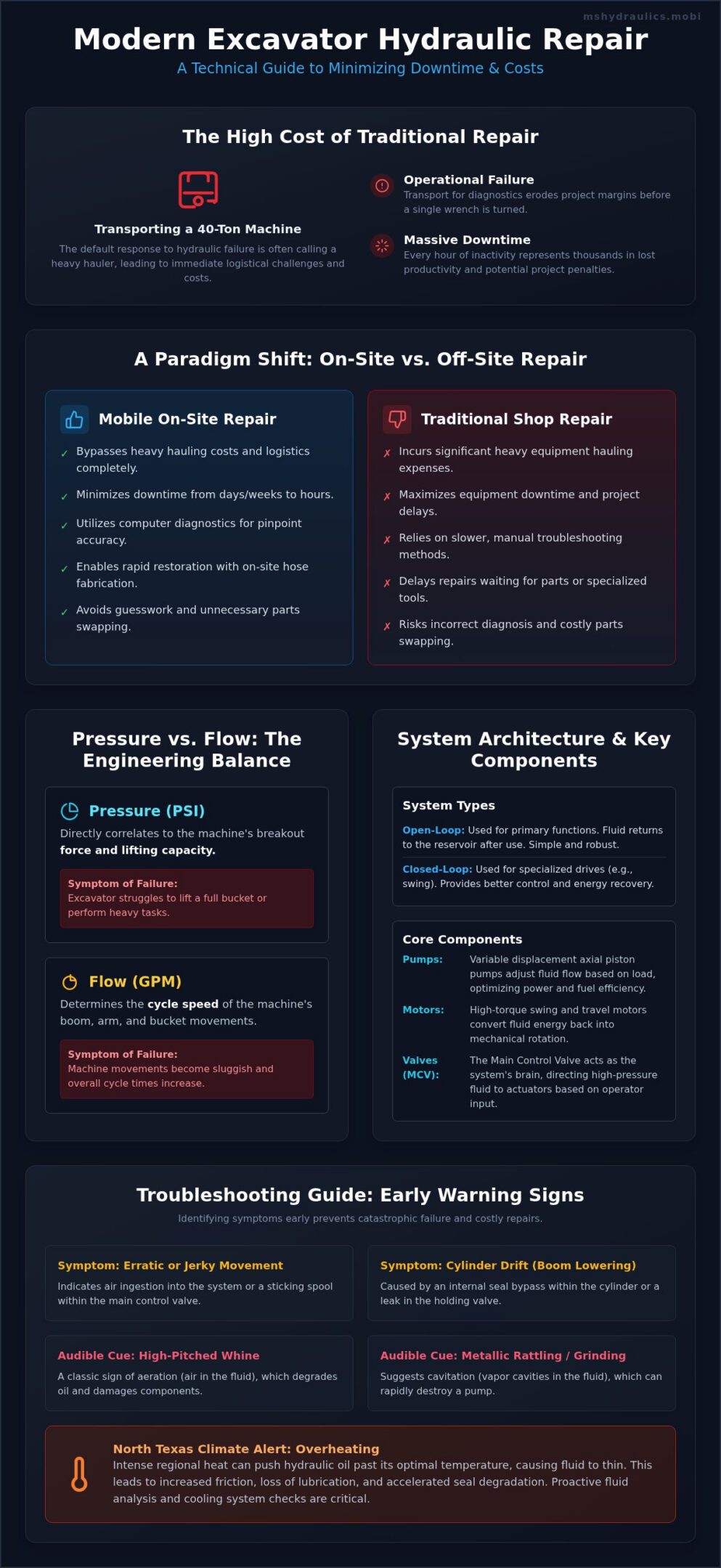
Modern excavators are engineered around complex fluid power circuits designed to translate engine torque into precise mechanical motion. Unlike standard industrial machinery, these systems must manage simultaneous functions like boom lifting, bucket curling, and house swinging while under variable loads. This complexity is why finding specialized excavator hydraulic repair Cleburne TX is critical for maintaining operational uptime. The architecture typically involves a primary engine-driven pump that distributes pressurized fluid through a series of control valves to various actuators. Because these machines operate in high-cycle environments with constant shock loading, they’re more susceptible to hydraulic failure than other heavy equipment. Understanding Hydraulic machinery principles is essential for diagnosing why a system loses power or speed during heavy excavation tasks.
Most modern excavators utilize open-loop systems for primary functions, where fluid returns to a reservoir after passing through the actuators. However, some specialized drives or swing circuits may employ closed-loop configurations to provide better control and energy recovery. This dual-circuit approach requires a deep understanding of how different components interact to maintain system equilibrium.
Key Components: Pumps, Motors, and Valves
Variable displacement axial piston pumps serve as the standard for modern excavation equipment. These pumps use a swash plate to adjust fluid displacement based on load requirements, which optimizes fuel efficiency and power delivery. Swing motors and travel motors are high-torque components that convert this fluid energy back into mechanical rotation. These motors often feature planetary gear reduction systems and are prone to wear due to constant directional changes. The main control valve (MCV) acts as the brain of the machine. It manages the distribution of high-pressure fluid to specific cylinders and motors based on operator input, often utilizing load-sensing technology to balance multiple functions simultaneously.
Pressure and Flow: The Engineering Balance
Precision in hydraulic repair requires a clear distinction between pressure and flow. These two parameters define the machine’s capability:
- Pressure (PSI): This parameter directly correlates to the machine’s breakout force and lifting capacity. If an excavator struggles to lift a full bucket, the issue often lies in a pressure-related failure, such as a faulty relief valve or worn pump seals.
- Flow (GPM): This determines the cycle speed of the machine’s movements. When cycle times become sluggish, it’s usually a sign that the pump’s flow rate has diminished or fluid is bypassing internal components.
Hydraulic efficiency loss in aging excavator systems is the measurable reduction in mechanical output relative to fluid power input, typically caused by internal leakage across worn spool valves, piston seals, or pump rotating groups. Maintaining the delicate balance between flow and pressure is the primary goal of professional excavator hydraulic repair Cleburne TX.
Diagnosing Common Excavator Hydraulic Failures
Accurate diagnosis is the foundation of cost-effective excavator hydraulic repair Cleburne TX. When a machine exhibits slow cycle times, the issue usually stems from a drop in volumetric efficiency within the main pump or internal leakage across control valves. Erratic movement, characterized by jerky boom or bucket functions, often indicates air ingestion or a sticking spool within the main control valve. Unusual noises provide immediate audible data. A high-pitched whine typically signals aeration, while a metallic rattling sound suggests cavitation, both of which can lead to rapid pump destruction if left unaddressed. Utilizing on-site diagnostic services eliminates the ambiguity of manual troubleshooting by providing real-time data from the machine’s internal sensors.
Thermal management is a critical factor for North Texas operators. The intense heat in Cleburne can push hydraulic oil past its optimal operating temperature, causing the fluid to thin and lose its lubricating properties. This leads to increased internal friction and accelerated seal degradation. Following established Preventative maintenance for hydraulic systems helps mitigate these thermal risks. Another frequent issue is cylinder drift, where the boom or arm fails to hold its position. Technicians must determine if the failure is an internal seal bypass within the cylinder or a leak in the holding valve. This distinction is vital to avoid unnecessary component replacement.
Visual and Audible Troubleshooting
Field technicians prioritize identifying the difference between aeration and cavitation. Aeration occurs when air enters the suction line, often through a loose fitting or damaged seal, creating a spongy feel in the controls. Cavitation happens when the pump is starved of fluid, creating vapor bubbles that implode with enough force to pit metal surfaces. Operators should also inspect the boom and bucket cylinders for external fluid weeping, which indicates primary seal failure. In the reservoir, cloudy or milky fluid is a clear indicator of water contamination, while a burnt odor suggests the system has experienced significant overheating.
Advanced Computerized Diagnostics
Modern excavators rely on Electronic Control Modules (ECM) to manage hydraulic flow and pressure. Advanced diagnostic tools interface directly with the ECM to pull error codes related to solenoid failures or sensor inaccuracies. Real-time pressure testing under load allows technicians to observe how the pump performs at peak demand, identifying subtle cracks or wear that don’t appear at idle. Flow meters provide the final verification, measuring the actual gallons per minute delivered to each circuit. This data-driven approach ensures that excavator hydraulic repair Cleburne TX is based on physical evidence rather than trial-and-error parts replacement.
Mobile vs. Shop Repair: Cost-Benefit for Cleburne Operators
Selecting the appropriate environment for excavator hydraulic repair Cleburne TX requires a calculated analysis of total downtime against logistical overhead. For a standard 20-ton excavator, the hidden costs of shop repair begin long before a technician touches the machine. Coordinating heavy-duty transport involves securing specialized trailers, managing oversized load permits, and losing hours to loading and unloading sequences. These logistical hurdles often extend machine downtime by 24 to 48 hours compared to immediate field intervention. Mobile service eliminates these transport variables, allowing repairs to commence within hours of a failure.
On-site hydraulic hose fabrication is a primary driver of field efficiency. When a high-pressure line bursts mid-day, the ability to manufacture a custom replacement at the job site prevents a total work stoppage. Technicians utilize portable, high-capacity crimpers to match OEM specifications for hose diameter and fitting pressure ratings. This immediate restoration of the hydraulic circuit integrity is often the difference between meeting a project milestone and incurring liquidated damages. For those working on structural projects where timing and stability are paramount, check out Crown Leveling Inc. for professional foundation and leveling services. However, mobile repair isn’t universal; certain high-precision tasks, such as cylinder rod re-chroming or complex pump housing machining, still necessitate a controlled shop environment.
A professional mobile service unit functions as a technical laboratory on wheels. These trucks are equipped with advanced diagnostic kits and specialized tools designed for heavy equipment maintenance. Managing environmental risks is a core component of field operations. Technicians employ rigorous spill containment protocols, using vacuum systems and high-capacity absorbent mats to prevent hydraulic fluid from contaminating the job site during component removal. This “in-place” approach also allows for immediate verification of the repair under actual operating loads, ensuring the system reaches peak PSI before the technician leaves the site.
Evaluating Downtime Costs
The financial impact of a stalled excavator is measured by more than just the repair invoice. Operators must account for the hourly loss of an idle machine and the cost of an unproductive crew. While mobile service may carry a field premium, this expense is frequently offset by the elimination of hauling fees and the drastic reduction in total cycle time. Consider the following variables when evaluating the cost-benefit:
- Logistical Savings: Eliminating the need for a lowboy trailer and pilot cars for oversized transport.
- Operator Productivity: Keeping personnel on-task by restoring machine functionality within a single shift.
- Verification Accuracy: Testing hydraulic pump repair under real-world digging conditions rather than on a shop bench.
By prioritizing on-site excavator hydraulic repair Cleburne TX, project managers maintain tighter control over their schedules and avoid the cascading delays associated with off-site transport. Maintaining high-performing machinery is vital for specialized projects, and those needing infrastructure support can check out Texas Septic Solutions for professional septic system installation and repair.
Cleburne’s environmental profile presents unique challenges for hydraulic systems. The combination of abrasive limestone dust and ambient temperatures frequently exceeding 100 degrees accelerates the degradation of seals and fluid. Proactive heavy equipment maintenance is the most effective method to mitigate these risks. Establishing a rigorous hydraulic fluid analysis schedule allows operators to detect metallic wear particles or chemical breakdown before a catastrophic pump failure occurs. Daily walk-around inspections should focus on identifying early indicators of thermal stress or mechanical abrasion. Maintaining a strict schedule prevents the need for emergency excavator hydraulic repair Cleburne TX by catching minor leaks before they lead to system pressure loss.
Fluid Health and Contamination Control
Hydraulic oil viscosity is a critical parameter during North Texas summers. High ambient heat reduces fluid thickness, which compromises the lubricating film between high-speed internal components. This thermal stress often leads to ‘varnishing,’ a condition where oxidized oil deposits adhere to precision valve spools. These deposits cause sluggish response times or total valve sticking. Implementing high-efficiency filtration with proper micron ratings is essential for removing silt-sized particles that bypass standard screens. The ROI of premium filtration is measured by the extended service life of the main hydraulic pump and the reduction in internal component wear.
Cylinder and Hose Care
Hydraulic cylinders require constant monitoring for rod surface integrity. Scoring or chrome pitting provides a pathway for contaminants to enter the system and destroy internal packings. In Cleburne’s arid climate, hose outer jackets are particularly susceptible to UV degradation and abrasion from rocky soil. Operators should inspect for ‘weeping’ at the crimp fittings, which signals imminent hose failure. Properly greasing pivot points is equally vital. Adequate lubrication reduces the mechanical strain on cylinder pins and bushings, ensuring the hydraulic force is applied efficiently without creating parasitic side-loads on the rods.
Training operators to recognize these technical warning signs is the final layer of a robust preventative strategy. If your equipment shows signs of erratic pressure or fluid discoloration, scheduling on-site diagnostic services can identify the root cause before it compromises your project timeline. Consistent attention to these physical parameters ensures that excavator hydraulic repair Cleburne TX remains a planned maintenance event rather than an emergency response.
Ms. Hydraulics: Specialized Excavator Repair in Cleburne
Ms. Hydraulics LLC operates with a disciplined focus on engineering excellence, drawing from over 22 years of mobile repair experience within the North Texas industrial sector. This legacy of service is built on the principle that technical accuracy and operational reliability are the primary metrics of success. Our approach to excavator hydraulic repair Cleburne TX prioritizes accurate root-cause identification to eliminate the redundant replacement of functional components. By maintaining a fleet of specialized mobile units, we provide the technical capabilities of a full-scale service center directly at the job site, ensuring that machine downtime is treated as a critical performance bottleneck that must be resolved with precision.
Equipped for the Field
Our mobile service trucks are engineered to function as autonomous diagnostic and repair centers. Each unit is outfitted with high-capacity portable crimpers and an extensive inventory of specialized fittings, allowing for custom hydraulic hose fabrication while you wait. This immediate capability is essential for restoring high-pressure circuits without the delays of off-site sourcing. Technicians utilize advanced On-Site Diagnostic Services to interface with the excavator’s electronic control modules, providing real-time data on pump efficiency and valve response. This data-driven methodology ensures that every repair, from a simple hose replacement to a complex cylinder rebuild, meets rigorous OEM standards for physical and mechanical parameters.
Serving Johnson County and Beyond
The operational reach of Ms. Hydraulics extends across the key industrial corridors of North Texas, providing rapid response for projects in Cleburne, Alvarado, and Grandbury. We support a diverse range of sectors, including heavy construction, large-scale agriculture, and industrial manufacturing. Our technicians understand the specific environmental stressors of the region and tailor their repair strategies to withstand the local climate. To support long-term equipment health, we offer structured Heavy Equipment Maintenance programs designed to identify wear patterns before they lead to catastrophic system failure. This proactive stance reflects our commitment to integrity-driven relationships, where the focus remains on minimizing your total overhead rather than maximizing parts margins.
Choosing a partner for excavator hydraulic repair Cleburne TX requires a firm that values performance above all else. Ms. Hydraulics provides the technical expertise and mobile infrastructure necessary to maintain the reliability of your most critical assets. We don’t just fix machines; we optimize the mechanical systems that drive your project’s profitability. Our 22-year history in the DFW area serves as the primary evidence of our capability to deliver consistent, high-value results in the most demanding field conditions.
Optimizing Excavator Performance and Uptime
Maintaining hydraulic efficiency requires a transition from reactive component swapping to data-driven diagnostics. The environmental stressors unique to the DFW area, particularly the abrasive dust and extreme heat, demand a structured approach to fluid health and seal integrity. By prioritizing on-site repair over traditional shop transport, operators bypass the logistical complexity and high expense of heavy machinery hauling. This methodology ensures that every hour of machine uptime is maximized through precision engineering rather than guesswork.
Ms. Hydraulics LLC provides the specialized infrastructure to execute these technical strategies directly in the field. Our 22 years of field experience ensure that every assessment of your excavator hydraulic repair Cleburne TX is backed by disciplined industrial expertise. We utilize mobile hose fabrication and computerized heavy equipment diagnostics to restore functionality with minimal disruption to your project timeline. If your equipment exhibits sluggish cycle times or pressure instability, don’t wait for a total system failure. Schedule On-Site Excavator Diagnostic Service to verify your system’s mechanical parameters and secure the long-term reliability of your fleet. Protecting your project margins starts with a dependable hydraulic circuit.
Frequently Asked Questions
How do I know if my excavator’s hydraulic pump is failing?
Sluggish cycle times and audible distress like high-pitched whining or metallic rattling are primary indicators. If your machine doesn’t maintain lifting capacity while the engine holds RPM, it suggests internal wear in the axial piston group. Professional excavator hydraulic repair Cleburne TX involves measuring the pump’s case drain flow to quantify internal leakage. High case drain flow confirms that the pump’s volumetric efficiency has dropped below acceptable operational parameters.
Can you rebuild an excavator cylinder on-site in Cleburne?
Mobile technicians can perform most cylinder rebuilds on-site by replacing the rod seals, piston seals, and wear rings. This process restores the cylinder’s holding capacity and eliminates external fluid loss. If the technician identifies deep scoring or pitting on the rod during disassembly, the rod may require machining in a shop. Performing these rebuilds in the field doesn’t just save time; it eliminates the logistical burden of transporting heavy components.
What is the most common cause of hydraulic hose failure on excavators?
External abrasion and UV-induced degradation are the leading causes of hose failure. In the arid North Texas climate, the outer rubber jacket often becomes brittle, allowing moisture to reach the steel reinforcement layers. This leads to oxidation and structural weakening. Regular inspections for “weeping” at the fittings or visible wire reinforcement can’t be overlooked. These visual checks prevent high-pressure bursts that would otherwise halt your operations during a critical shift.
How often should I perform hydraulic fluid analysis on my fleet?
A rigorous fluid analysis schedule should occur every 500 operating hours to monitor for particulate contamination and chemical oxidation. For machines operating in high-dust environments, increasing this frequency to every 250 hours is advisable. Analysis provides a technical baseline for component wear and fluid health. This proactive data allows you to schedule excavator hydraulic repair Cleburne TX before a minor contamination issue escalates into a complete and costly system failure.
Why is my excavator’s hydraulic system overheating in the summer?
Overheating occurs when the hydraulic oil loses its ability to dissipate heat effectively, often due to high ambient temperatures or restricted airflow through the cooler. Internal friction from thinned oil and worn relief valves also generates significant thermal energy. If your system exceeds its optimal operating range, the fluid oxidizes and seals become brittle. Ensuring your cooling fins aren’t clogged with Cleburne’s limestone dust is a critical daily maintenance task.
Is it better to repair or replace a leaking hydraulic control valve?
The decision depends on the location and severity of the leak. External leaks at the spool seals are generally corrected with a standard seal kit. However, internal bypass caused by spool-to-bore wear usually requires a valve replacement to restore precision control. Technicians use pressure testing to determine if the valve can maintain the specified PSI. Choosing repair over replacement is feasible when the internal tolerances don’t exceed the original OEM limits.
What hydraulic diagnostic tools do you use for heavy equipment?
We utilize advanced computer diagnostic tools that interface directly with the excavator’s electronic control module. This allows us to pull error codes and monitor real-time sensor data, such as pilot pressure and solenoid response. Additionally, we employ high-precision digital flow meters and analog pressure gauges to verify the physical output of pumps and motors. This combination of electronic and mechanical data ensures an accurate diagnosis without unnecessary and expensive parts replacement.
Do you offer emergency mobile hydraulic repair in Johnson County?
We provide mobile hydraulic repair services throughout Johnson County, including Cleburne, Alvarado, and Grandbury. Our service units are outfitted to handle custom hose fabrication and complex diagnostics on-site. This mobile capability is designed to restore machine functionality rapidly, eliminating the need for expensive hauling. We focus on industrial and construction equipment, ensuring that your project doesn’t fall behind schedule despite unexpected and sudden hydraulic component failures.