Skid Steer Maintenance in Mansfield, TX: A Professional Technical Guide
A catastrophic hydraulic failure during a critical grading job in North Texas does more than halt production; it compromises the mechanical integrity of the entire system. Professionals understand that the combination of abrasive particulate matter and extreme thermal cycles creates a high-stress environment for heavy machinery. Implementing the rigorous skid steer maintenance Mansfield operators require is essential to mitigate these specific environmental variables. Most fleet managers recognize that reactive repairs represent the highest cost of ownership, particularly when emergency service calls disrupt project schedules.
This technical guide outlines the protocols necessary to eliminate unexpected hydraulic failures and maximize machine longevity. By adhering to a structured maintenance framework, you’ll ensure zero unplanned downtime and secure the long-term performance of your hydraulic components. We will examine critical parameters for cylinder health, fluid contamination standards, and the documentation practices that protect equipment resale value.
Key Takeaways
- Analyze the correlation between North Texas thermal cycles and the accelerated degradation of hydraulic fluid viscosity and seal integrity.
- Implement hydraulic fluid analysis as a predictive diagnostic tool to identify internal system wear before catastrophic mechanical failure occurs.
- Execute a high-precision daily inspection protocol focused on identifying UV-induced hose fatigue and abrasive wear on critical pivot points.
- Maintain a documented schedule for skid steer maintenance Mansfield to preserve hydraulic component longevity and optimize equipment resale value.
- Follow a systematic cleaning and safety checklist to ensure all structural inspections are performed with maximum visibility for detecting hairline fractures or fluid seepage.
The Importance of Skid Steer Maintenance in Mansfield, Texas
Operational reliability in North Texas depends on understanding the mechanical limits of your equipment. A Skid-steer loader operates under high-pressure conditions that are exacerbated by the specific climate of Mansfield. Failing to adhere to a strict skid steer maintenance Mansfield protocol doesn’t just reduce efficiency; it invites catastrophic system failure. The combination of high ambient temperatures and abrasive particulate matter requires a technician’s focus on fluid integrity and filtration efficiency.
Environmental Challenges in North Texas
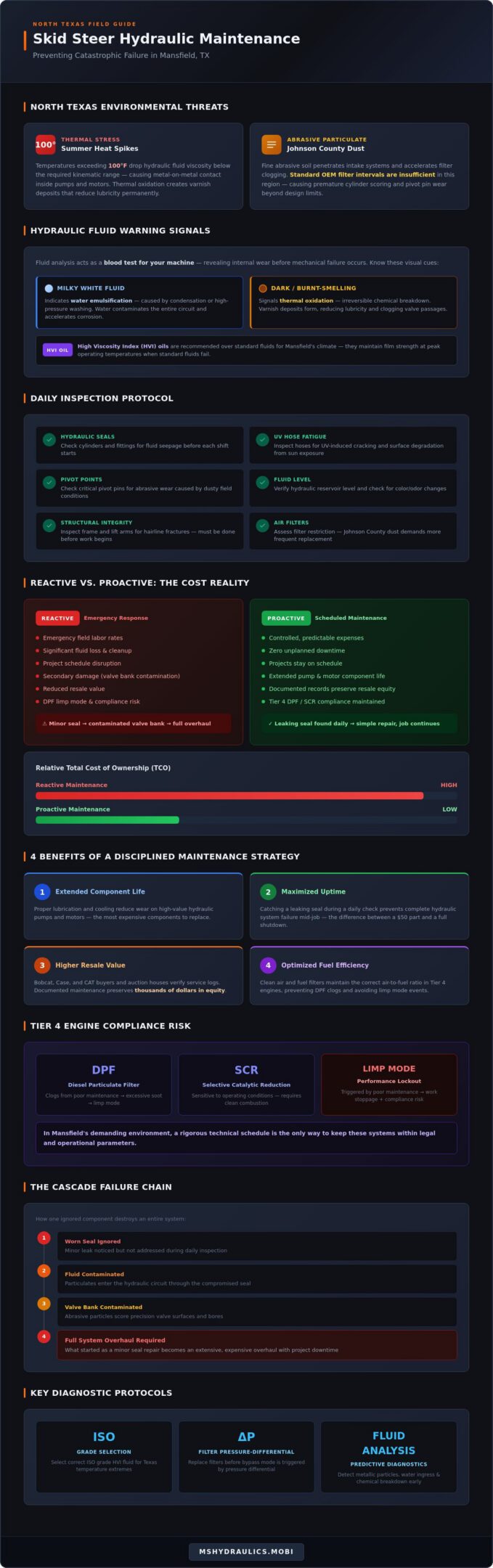
Thermal stress remains the primary threat to machine health during 100°F+ Texas summers. When operating temperatures spike, hydraulic fluid viscosity drops below the required kinematic range, leading to metal-on-metal contact within pumps and motors. For Mansfield operators, thermal degradation is the irreversible chemical breakdown of hydraulic fluid caused by excessive heat, which results in reduced lubricity and the formation of harmful varnish. Simultaneously, Mansfield’s abrasive soil and fine dust accelerate filter clogging. Standard OEM air filter intervals are often insufficient in Johnson County, where high-velocity dust can penetrate intake systems and cause premature cylinder scoring or pivot pin wear.
The Financial Case for Proactive Service
Managing the Total Cost of Ownership (TCO) requires a shift from reactive to predictive maintenance. A scheduled hydraulic hose replacement is a controlled expense. Conversely, an emergency field repair for a burst hose involves high labor rates, significant fluid loss, and project delays. Consistent upkeep also directly impacts the resale value of Bobcat, Case, and CAT units. Professional buyers and auction houses verify service logs to ensure the machine hasn’t been operated under compromised conditions. Documented maintenance can preserve thousands of dollars in equity. Beyond the immediate costs, proactive service prevents secondary damage; for example, a worn seal that goes unaddressed can lead to a contaminated valve bank, turning a minor repair into an extensive overhaul.
Precision maintenance is also critical for maintaining Tier 4 engine compliance. Modern diesel engines utilize complex Diesel Particulate Filters (DPF) and Selective Catalytic Reduction (SCR) systems that are sensitive to operating conditions. Poor maintenance leads to incomplete combustion and excessive soot, which clogs DPFs and triggers “limp mode” events. In Mansfield’s demanding environment, following a rigorous technical schedule is the only way to ensure these systems function within legal and operational parameters. Consider these primary benefits of a disciplined maintenance strategy:
- Extended Component Life: Proper lubrication and cooling reduce the wear rate on high-value hydraulic pumps and motors.
- Maximized Uptime: Identifying a leaking seal during a daily check prevents a complete hydraulic system failure on the job site.
- Higher Resale Value: Comprehensive service records prove to future buyers that the machine was operated within its design limits.
- Optimized Fuel Efficiency: Clean air and fuel filters allow engines to maintain the correct air-to-fuel ratio, reducing consumption.
Critical Hydraulic System Care and Diagnostics
The hydraulic system is the operational core of any compact loader. In the context of skid steer maintenance Mansfield, diagnostic precision is the difference between a simple filter change and a total pump replacement. Think of hydraulic fluid analysis as a blood test for your machine; it reveals the presence of metallic particulates, water ingress, and chemical breakdown before these issues manifest as mechanical failure. Monitoring these parameters ensures that the high-pressure circuits remain within their designed performance envelopes.
Hydraulic Fluid Management
Selecting the correct ISO grade fluid is vital for managing Texas temperature swings. While standard fluids might suffice in temperate climates, Mansfield’s heat often necessitates high-viscosity index (HVI) oils to maintain film strength at peak operating temperatures. Contamination presents clear visual cues that operators shouldn’t ignore. Milky fluid indicates water emulsification, often resulting from condensation or high-pressure washing, while dark, burnt-smelling fluid signals thermal oxidation. Modern high-efficiency filters are designed to capture microscopic contaminants, but they must be replaced according to strict pressure-differential standards to prevent the system from entering bypass mode.
Hose and Fitting Inspection
Hose integrity is frequently compromised by UV exposure and mechanical abrasion during heavy-duty cycles. Utilizing custom hydraulic hose fabrication ensures that replacements meet specific pressure ratings and precise length requirements, which generic off-the-shelf options often fail to provide. Technicians should monitor for “weeping” fittings, which are small damp spots that indicate a failing O-ring or seal. These small leaks are precursors to high-pressure blowouts that can cause significant fluid loss. Proper routing and clamping are equally important to mitigate vibration-induced wear, especially when operating high-flow attachments.
Technical indicators of cylinder seal bypass include “drifting” under load and localized heat generation at the cylinder barrel. Rod scoring, often caused by abrasive dust, creates a path for fluid to escape and allows contaminants to enter the system. Maintaining correct PSI levels is essential for attachment performance. Low pressure results in sluggish operation, while over-pressurization can damage internal valve banks. As noted in this Penn State Extension safety guide, maintaining system pressure within OEM specifications is also a critical safety requirement for load stability. For those experiencing pressure drops or sluggish response times, scheduling on-site diagnostic services can identify the specific valve or pump component at fault before it leads to total system failure.
Daily vs. Periodic Maintenance Intervals
Establishing a disciplined maintenance hierarchy is the most effective way to manage equipment health. For skid steer maintenance Mansfield, these intervals are categorized by operational hours. Each tier addresses specific mechanical stresses, ensuring that minor wear doesn’t escalate into a system-wide failure. Reliability isn’t a matter of luck; it’s the direct result of following a structured technical protocol that accounts for the harsh North Texas environment.
The Operator’s Daily Checklist
A five-minute walk-around inspection provides the first line of defense against unplanned downtime. Technicians must verify engine oil, coolant, and hydraulic reservoir levels before every shift. In Mansfield, where brush clearing and land reclamation are frequent, the cooling package requires constant monitoring. Debris buildup in the radiator fins restricts airflow and triggers thermal events. It’s essential to clear these obstructions to maintain the engine’s thermal equilibrium. This focus on cooling efficiency is a universal priority; for those seeking professional HVAC solutions, you can learn more about Around the Clock Heating and Air Conditioning. Operators should also verify the functional integrity of safety features, including the ROPS (Roll-Over Protective Structure), seat bars, and backup alarms to ensure site compliance and operator safety.
Scheduled Professional Inspections
As the machine reaches higher operational hours, the complexity of the service requirements increases. At the 50-hour mark, focus shifts to high-wear components. Greasing pivot points ensures that abrasive dust doesn’t act as a grinding compound in the bushings. Checking track or tire tension is equally critical. Incorrect tension leads to premature undercarriage wear or catastrophic track failure. To better understand fleet management logistics, Partner Tires provides a comparison of service models; you can read more about the operational differences between mobile installation and corporate tire shops. Moving to the 250 and 500-hour marks, the protocol expands to engine oil and fuel filter replacements. A cooling system flush at these intervals is recommended to remove mineral deposits that impede heat transfer.
The 1000-hour service represents a major technical milestone. This phase involves comprehensive Heavy Equipment Maintenance, including precise valve adjustments and hydraulic pump efficiency tests. Utilizing On-Site Diagnostic Services allows for the detection of internal pump wear that visual inspections miss. For tracked loaders, undercarriage and drive motor audits are mandatory to prevent expensive drivetrain failures. Finally, electrical system testing ensures battery health and alternator output are sufficient to withstand the demands of high-flow attachments. This methodical approach ensures your fleet remains operational and profitable.
Step-by-Step Skid Steer Maintenance Checklist
Executing a comprehensive service protocol requires a controlled environment and specific technical sequences. For operators performing skid steer maintenance Mansfield, the process begins by securing the machine on level ground. You must engage the lift arm support and lower the bucket or attachment completely. A stabilized machine is a prerequisite for any internal diagnostic or fluid exchange. Once secured, clean the chassis and engine compartment thoroughly. Removing accumulated debris and oil is not just for aesthetics; it reveals hidden hairline fractures in the frame or weeping seals that are otherwise obscured by Mansfield’s abrasive dust.
Safety Protocols During Maintenance
Safety is a function of discipline. Always utilize factory-specified lift arm stop bars and high-capacity jack stands when working beneath the machine. Before disconnecting any lines, you must relieve residual hydraulic pressure by cycling the control levers with the engine off. Handling fluids at operating temperature is necessary for proper drainage, but it requires caution to avoid thermal injury. Pressurized cooling systems must be allowed to reach ambient temperature before the cap is removed to prevent the rapid expansion of hot coolant.
When performing fluid exchanges, drain the engine and hydraulic oils while they are warm to ensure that contaminants remain in suspension. Replace all primary and secondary filters simultaneously. Utilizing high-efficiency filters ensures that sub-micron particulates do not reach sensitive valve banks. Lubrication remains the final critical step. Grease every zerk on the machine until fresh lubricant emerges from the seals. This practice purges old, contaminated grease and moisture, providing a clean barrier against the environment.
Attachment-Specific Maintenance
Attachments introduce additional mechanical variables that require specialized attention. High-flow attachments like augers and grapples have their own lubrication requirements and gear oil levels that must be verified. Inspect the quick-attach mechanism for structural wear or deformation, as even minor misalignments can lead to improper engagement and safety risks during operation. Auxiliary hydraulic couplers should be cleaned and lubricated regularly to prevent O-ring damage and ensure a leak-free connection. If you identify excessive wear on your lift cylinders or pins during this process, contact us for professional Mobile Hydraulic Repair to restore your equipment to factory specifications.
- Stabilization: Level ground and mechanical arm locks are mandatory.
- Decontamination: Pressure wash the engine bay to identify structural or fluid leaks.
- Fluid Exchange: Drain at specified temperatures to maximize particulate removal.
- Purge Lubrication: Apply grease until all old lubricant is displaced from the pivot point.
- Attachment Audit: Verify auxiliary coupler integrity and quick-attach locking pin engagement.
Professional Mobile Maintenance Solutions in Mansfield
While an operator can perform daily inspections, complex system restorations require specialized tooling and technical expertise. Ms. Hydraulics LLC provides comprehensive mobile solutions that bring the precision of a controlled shop environment directly to the job site. This approach is essential for maintaining the rigorous skid steer maintenance Mansfield projects demand, particularly in high-output construction and agricultural sectors where machine availability is the primary driver of profitability. Utilizing professional mobile services ensures that every hydraulic circuit is tested and verified according to industry standards.
Eliminating Transport Logistics
The logistical burden of transporting heavy machinery to a central repair facility often involves significant hauling fees and multi-day delays. By utilizing mobile services, fleet managers eliminate these external costs and minimize the recovery time for non-operational units. Our technicians provide direct service to sites in Alvarado, Mansfield, and Grandbury, ensuring that equipment remains within its designated service area. Mobile repair increases project profitability by converting hours of transport and idle time into active production cycles. This efficiency is critical when managing tight deadlines in the North Texas development market, where every hour of downtime represents lost revenue and potential project penalties.
Field-Based Engineering and Rebuilds
Modern mobile diagnostic units are equipped with advanced flow meters and pressure transducers capable of identifying internal circuit leaks with high accuracy. This capability allows Ms. Hydraulics LLC to handle complex heavy equipment cylinder rebuilds in the field. Rather than simply replacing components, our process involves a thorough technical assessment of rod straightness and barrel integrity before seal replacement. This level of field-based engineering ensures that the restored component meets original equipment manufacturer (OEM) performance standards without the need for off-site transport. We focus on physical and mechanical parameters to ensure the longevity of the repair under extreme thermal cycles.
Expertise You Can Trust
Reliability in hydraulic systems is a function of technical competence and precise execution. Our certified technicians specialize in mobile hydraulic systems, utilizing state-of-the-art diagnostic equipment to verify system health. We offer custom preventative maintenance plans tailored to the specific thermal and abrasive challenges of North Texas fleets. These plans move beyond generic service intervals to provide a data-driven approach to machine longevity. In the event of a catastrophic failure, our emergency response protocols ensure that Mansfield operators have access to immediate technical support. This commitment to technical excellence reduces the risk of secondary damage to the hydraulic pump or valve bank, preserving the machine’s market leadership and resale value.
- On-Site Diagnostics: Real-time pressure and flow testing to identify root causes of sluggish performance.
- Mobile Hydraulic Repair: Rapid restoration of system integrity through expert component service.
- Cylinder Restoration: Professional seal replacement and rod polishing performed at the machine’s location.
- Fleet Planning: Structured maintenance schedules designed for the extreme heat of Johnson and Tarrant Counties.
Securing Long-Term Operational Reliability
Maintaining peak performance in North Texas requires a disciplined approach to mechanical upkeep. By prioritizing hydraulic fluid integrity and adhering to rigorous service intervals, operators can effectively mitigate the thermal degradation and abrasive wear common in Johnson County. Implementing the structured skid steer maintenance Mansfield professionals depend on ensures that every component, from the smallest O-ring to the primary pump, operates within its intended engineering parameters. Consistency in these technical protocols is what separates high-performance fleets from those plagued by frequent, costly repairs.
Professional mobile solutions eliminate the logistical challenges of machine transport while providing factory-level precision directly at your job site. Ms. Hydraulics LLC delivers technical expertise through specialized mobile hydraulic repair, including expert hydraulic hose fabrication and comprehensive cylinder rebuilds. Our technicians utilize advanced on-site diagnostics to identify internal system vulnerabilities before they result in catastrophic mechanical failure. Schedule your on-site skid steer maintenance in Mansfield today to minimize machine downtime and protect your equipment’s resale value. It’s the most effective strategy for ensuring your machinery remains a reliable, high-performance asset for your operations.
Frequently Asked Questions
How often should I change the hydraulic fluid in my skid steer?
Most manufacturers recommend a complete hydraulic fluid exchange every 1,000 operational hours. However, you should shorten this interval if fluid analysis reveals high levels of contamination or thermal degradation. Consistent monitoring is a vital part of the skid steer maintenance Mansfield operators perform to ensure system longevity. Operating in high-dust environments or under extreme thermal loads often necessitates more frequent changes to prevent abrasive wear on precision internal components.
What are the signs of a failing hydraulic pump on a skid steer?
Common indicators of a failing hydraulic pump include unusual whining or cavitating noises, decreased cycle times, and excessive heat generation during standard operation. You might also notice a significant loss of power when utilizing high-flow attachments. These symptoms often signal internal component wear or air ingestion within the circuit. If you observe these technical indicators, immediate diagnostic testing is required to prevent a total system failure that could damage the entire hydraulic manifold.
Is it better to use OEM or aftermarket filters for maintenance?
Utilizing OEM filters is generally recommended to ensure compliance with specific micron ratings and pressure-differential standards required by the manufacturer. While aftermarket options may appear cost-effective, they often lack the structural integrity or filtration efficiency necessary for high-pressure hydraulic systems. Modern Tier 4 engines and sensitive valve banks depend on precise filtration to function correctly. Maintaining these specified standards protects your warranty and ensures the mechanical reliability of your equipment.
How do I check for hydraulic leaks safely?
Never use your hands to check for hydraulic leaks; instead, use a piece of cardboard or wood to identify the source of fluid seepage. High-pressure fluid can penetrate the skin, leading to severe injury or fluid injection. Ensure the machine is off and you’ve relieved all residual pressure by cycling the controls before performing a visual inspection. Proper safety equipment, including gloves and eye protection, is mandatory whenever you’re inspecting pressurized hydraulic lines or fittings.
Does the Mansfield, TX climate affect my maintenance schedule?
The North Texas climate significantly impacts maintenance intervals due to extreme thermal cycles and high levels of abrasive particulate matter. Mansfield’s 100°F+ summers accelerate the oxidation of hydraulic fluid and place additional stress on cooling systems. You should inspect air filters and cooling packages more frequently than standard OEM recommendations suggest. This proactive approach to skid steer maintenance Mansfield helps prevent heat-induced seal failures and engine overheating during the most demanding operational months.
What should I do if my skid steer’s hydraulic system is overheating?
Immediately reduce the load and allow the engine to idle if the hydraulic system exceeds its designed operating temperature. Check the cooling package for debris or obstructions that might be restricting airflow through the radiator fins. Operating an overheating machine causes irreversible damage to pump seals and internal valves. Once the system cools, verify fluid levels and inspect the hydraulic oil for signs of thermal breakdown, such as a dark color or burnt odor.
Can I perform a hydraulic cylinder rebuild myself?
While some operators attempt DIY cylinder rebuilds, professional restoration is recommended to ensure proper seal seating and precise rod alignment. Achieving the necessary torque specifications and maintaining a contaminant-free environment is difficult without specialized shop tools. Professional rebuilds also include a technical assessment of the barrel and rod for structural integrity. Incorrect assembly can lead to immediate seal failure or internal bypass, resulting in further downtime and increased repair costs.
How much does typical preventative maintenance cost for a skid steer?
The cost of preventative maintenance varies based on the machine’s service hour milestone and the specific components required for that interval. A standard 50-hour greasing and walk-around inspection is less intensive than a comprehensive 1,000-hour major service. Factors such as fluid volume, filter types, and the need for specialized diagnostics influence the total investment. Consult your service provider for a detailed technical assessment and quote tailored to your specific machine model and operational requirements.