Weekend Heavy Equipment Repair in Mansfield, TX
A machine that stops mid-job on a weekend can leave a crew, farm operation, or production schedule waiting. If you’re searching for weekend heavy equipment repair Mansfield, start by recording the symptoms. What the machine is doing can help frame whether the issue may involve hydraulics, diesel, or electronics, and what information will be useful for an assessment.
It’s understandable to want a clear assessment before arranging transport. On-site diagnostics can help evaluate equipment where it is located, which is useful when moving a heavy machine is difficult or impractical. Ms. Hydraulics LLC provides on-site hydraulic and diesel repair and computer diagnostics across the Dallas-Fort Worth region and surrounding areas, with over 22 years of experience servicing heavy equipment and tractors.
This article explains what to note when a breakdown occurs, how on-site repair and computer diagnostics can inform the next step, and how to describe the problem clearly when requesting support. These details can help make the repair discussion more focused, without treating symptoms as a confirmed diagnosis.
Key Takeaways
- Record equipment details, warning indicators, and operating symptoms so you can describe the breakdown clearly.
- On-site assessment and computer diagnostics can help guide repair decisions without moving equipment to a shop first.
- Consider site access, machine mobility, and the apparent fault when weighing mobile repair against transport for weekend heavy equipment repair Mansfield.
- Prepare a safe, accessible work area before an on-site assessment.
- Ms. Hydraulics LLC serves Mansfield and the wider Dallas-Fort Worth region from Cleburne, with over 22 years of experience servicing heavy equipment and tractors.
Weekend Heavy Equipment Repair in Mansfield, TX: Start With the Breakdown
A weekend failure can interrupt a construction project, farm operation, or industrial schedule. For operators seeking weekend heavy equipment repair Mansfield, a useful first step is to describe what the machine is doing rather than guess at the cause. A leak, warning light, loss of power, or unusual movement is a symptom, not a confirmed diagnosis.
This article concerns Mansfield, Texas, within the Dallas-Fort Worth region, not the separate Mansfield listing in Ohio. Equipment used for excavation, lifting, grading, and material handling varies widely. The Heavy equipment overview provides general context on common machine types and uses. The specific equipment and its operating conditions matter when assessing a failure.
Mobile heavy equipment repair means assessing and repairing machinery at its location, so operators can address faults without first transporting the machine to a shop. When equipment cannot readily be moved, an on-site assessment can help establish a suitable diagnostic path. It does not mean every fault can be diagnosed from a description or resolved in the field.
Which equipment problems may need mobile repair?
Hydraulic oil around a hose or cylinder, a cylinder that moves unevenly, a diesel engine that struggles to start, or an electronic fault indication are all useful observations to report. They do not, by themselves, identify the cause. For example, a loss of hydraulic function may involve more than the component where the symptom first appears.
When moving equipment is difficult, on-site hydraulic and diesel repair can be a practical starting point. An assessment, including computer diagnostics when relevant, helps guide the next repair decision.
When is it safer to stop operating equipment?
Stop operating equipment if it behaves unpredictably, loses control of a function, or presents an apparent safety risk. Follow the site’s safety procedures and the equipment manufacturer’s guidance. Keep personnel clear of a suspected hazard, and don’t attempt temporary fixes on pressurized hydraulic components or active leaks.
When reporting a breakdown, explain what changed, when it began, and whether the condition affects safe operation. This gives the assessment useful context without treating initial observations as a definitive diagnosis.
How Weekend On-Site Diagnostics Identify the Repair Path
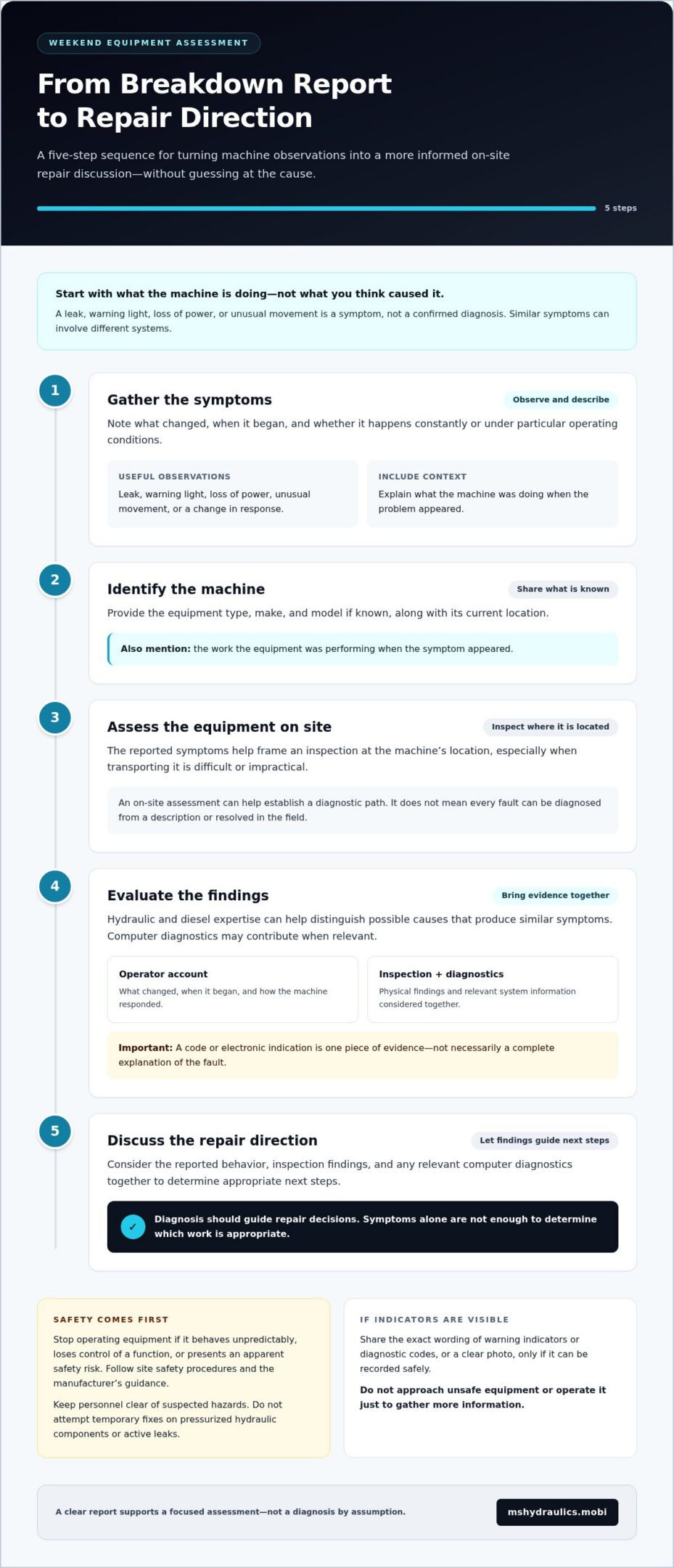
A useful assessment starts with observations, not assumptions. A machine that loses power, moves slowly, or displays a warning may have a hydraulic, diesel, or electronic issue, and symptoms can overlap. For operators seeking weekend heavy equipment repair Mansfield, a clear sequence turns the initial report into a more informed repair discussion without presuming a diagnosis before the equipment is assessed.
Diagnosis should guide repair decisions. Symptoms alone aren’t enough to determine which work is appropriate. An on-site assessment brings the reported behavior together with inspection findings and, where relevant, computer diagnostics.
- Gather the symptoms. Describe what changed, when it began, and whether the condition is constant or occurs under particular operating conditions.
- Identify the machine. Note the equipment type, make, and model if known, along with its location and the work it was doing when the problem appeared.
- Assess the equipment on site. The reported symptoms provide context for inspecting the machine where it is located, especially when transport is difficult.
- Evaluate the findings. Hydraulic and diesel expertise can help distinguish possible causes that produce similar symptoms. Computer diagnostics may also contribute when relevant.
- Discuss the repair direction. Consider the findings together to determine the appropriate next steps.
What information helps assess a machine breakdown?
Prepare the machine type, make, and model if available, along with its current location. Describe the symptom, when it started, and any changes in performance, movement, or response. If warning indicators or diagnostic codes are visible and can be recorded safely, share their exact wording or a clear photo. Don’t approach unsafe equipment or operate it just to gather more information.
How computer diagnostics support repair decisions
Heavy equipment computer diagnostics can provide relevant system information and help narrow an assessment. A code or electronic indication is one piece of evidence, not necessarily a complete explanation of the fault. Findings need to be considered alongside the operator’s account and a physical inspection. Together, they can help distinguish a useful diagnostic lead from a confirmed repair requirement.
Hydraulic and diesel capabilities also matter because similar symptoms can come from different systems. Reduced machine response, for example, doesn’t establish whether the issue is hydraulic, engine-related, or connected to another factor. On-site diagnostic services help assess the equipment before repair decisions are made.
Before describing the problem, gather the machine details and symptom history. Ms. Hydraulics LLC provides on-site diagnostics across the Dallas-Fort Worth region and surrounding areas, including Mansfield, Cleburne, Alvarado, Granbury, Crowley, Arlington, Waxahachie, and Cedar Hill. Share equipment details for on-site diagnostics to help frame the assessment.
Mobile Repair or Equipment Transport: Choosing a Practical Weekend Response
For weekend heavy equipment repair Mansfield, the practical question is not simply whether a machine is running. Consider whether it can be accessed safely, whether it can be moved without creating additional risk, and whether the apparent fault needs specialist assessment. An on-site assessment can help determine a repair direction without assuming that every breakdown can be resolved in the field.
Use these factors to frame the decision:
- Site access: Explain if the machine is in a restricted work area or there’s limited room around it. Access can affect how an assessment is planned.
- Machine mobility: If the equipment is non-operational or difficult to transport, a field assessment may be a practical first step. Don’t operate or move machinery that may be unsafe.
- Apparent fault: Hydraulic symptoms or diesel-related concerns can help identify relevant on-site expertise, but a symptom alone doesn’t establish the cause or repair scope.
- Need for specialist assessment: Visible damage, unclear symptoms, or an electronic fault indication may require closer evaluation before deciding whether work can proceed at the location.
Transport isn’t automatically required, and mobile service isn’t the answer for every fault. The equipment assessment helps determine whether work can proceed at the site or another approach is appropriate. This avoids making a repair or transport decision based only on an initial description.
When on-site hydraulic or diesel repair may fit
When equipment won’t operate and moving it is impractical, an on-site assessment can provide a useful first step. Mobile hydraulic repair and on-site diesel repair allow the concern to be evaluated at the machine’s location. If findings indicate a hydraulic component issue, hydraulic equipment and cylinder repair may be relevant. The assessment determines whether the repair can proceed on site and what work is appropriate.
When the equipment condition changes the next step
Site access, the machine’s position, and visible damage can affect repair planning. A machine blocked by other equipment, positioned on uneven ground, or showing damage around a component may need careful assessment before repair work is considered. Initial diagnostics establish what is observed; repair work follows when the findings support a suitable scope.
Share access constraints and visible conditions when describing the breakdown. Don’t try to reposition or operate damaged equipment to make it easier to assess. Follow site procedures and manufacturer guidance, and leave decisions about handling the machine to a qualified assessment.
Ms. Hydraulics LLC provides mobile repair and on-site diagnostic services across the Dallas-Fort Worth region and surrounding areas. A field assessment can help clarify whether the location, equipment condition, and apparent fault support repair work on site or call for a different plan.
Prepare Your Mansfield Job Site for a Weekend Repair Assessment
Good preparation helps make an on-site assessment more focused. For weekend heavy equipment repair Mansfield, share enough information to identify the machine, locate it, and explain the reported problem. Also consider what a technician will encounter at the site: access routes, ground conditions, nearby activity, and hazards that could affect a safe assessment.
Details to share before the service assessment
Give a clear location in the Mansfield area, including job-site directions or an access point that identifies where the equipment is parked. Provide the equipment type, make, and model if known. Describe what the machine was doing when the issue appeared, when it began, and what changed in its operation afterward.
- Equipment identification: Machine type, make, model, and any available equipment identification details.
- Reported symptoms: Changes in power, movement, response, or operation, and whether the problem is ongoing or intermittent.
- Visible indications: Any hydraulic leak, warning indicator, or diagnostic code that can be observed safely.
- Relevant records: Maintenance notes, recent repair history, or diagnostic information, if readily available.
Keep the description factual. For example, report that a function became slow or a warning appeared rather than assuming which component has failed. The on-site diagnostic services guide explains how field assessment supports repair planning.
Make the work area accessible and safe
Follow site safety procedures and secure the equipment as appropriate under the manufacturer’s guidance. Before the assessment, identify access restrictions, ground conditions, and nearby hazards such as active work areas or other equipment. Share these details in advance so site conditions can be considered when planning the visit.
Don’t attempt repairs or handle pressurized hydraulic lines to prepare the machine. If its position or condition presents a risk, keep people clear and follow established site procedures rather than trying to reposition or operate it.
A clear route to the equipment and an unobstructed view of the affected area can help the assessment proceed efficiently. If the machine is indoors, in a confined work zone, or surrounded by other equipment, explain that when describing the location. Note any site access steps or restrictions that could affect reaching it.
Maintenance and diagnostic records can add useful context, but don’t delay sharing the basic location and symptoms while looking for paperwork. Ms. Hydraulics LLC provides mobile repair and on-site diagnostics across the Dallas-Fort Worth region and surrounding areas. Share your equipment details and job-site location to start a clear repair discussion.
Request Weekend Heavy Equipment Repair for Mansfield-Area Equipment
For operators dealing with a weekend breakdown, Ms. Hydraulics LLC provides mobile heavy equipment repair from Cleburne across the Dallas-Fort Worth region and surrounding areas, including Mansfield. The company has over 22 years of experience servicing heavy equipment and tractors. Services include on-site hydraulic and diesel repair, heavy equipment computer diagnostics, and hydraulic equipment and cylinder repair.
A mobile assessment can help inform the repair direction without first transporting equipment that is difficult to move. Hydraulic or diesel symptoms may point toward different diagnostic paths, while computer diagnostics can add useful information when relevant. Findings from the equipment assessment guide the next steps; the initial description alone doesn’t establish the cause or determine the repair scope.
For equipment with a hydraulic concern, the mobile hydraulic repair guide explains how field service relates to heavy equipment needs. The appropriate approach depends on the machine’s symptoms and assessment findings.
What customers can expect from a service-focused assessment
A service-focused assessment considers reported symptoms alongside diagnostic findings to support informed repair decisions. The goal is to understand the equipment issue and discuss a practical direction, not promise an outcome before inspection. Maintenance advice can also help operators consider equipment care, overhead, and oil use as part of longer-term planning, without implying a specific amount of savings.
Clear communication matters throughout the process. Sharing what the machine was doing, what changed, and any available maintenance or diagnostic history provides useful context for discussing the repair work that may be appropriate.
How to make a repair request clear and actionable
Keep the initial description concise and specific. Include the Mansfield-area location, equipment type, make and model if known, current operating condition, and observed symptoms. Note visible warning indicators, diagnostic information, or relevant maintenance history if readily available. These details help frame the request and assessment.
- Equipment: Type, make, and model if available.
- Location: Job-site location and any access limitations.
- Symptoms: What occurred, when it began, and how operation changed.
- Records: Relevant warning indications, diagnostic findings, or maintenance history.
Ms. Hydraulics LLC’s service approach is grounded in technical assessment and practical repair guidance. Describe your Mansfield-area equipment issue and request on-site hydraulic or diesel repair support.
Turn the Next Step Into a Clear Repair Plan
A weekend breakdown doesn’t have to leave the next decision uncertain. For weekend heavy equipment repair Mansfield, keep a concise record of the machine’s condition, the work it was performing, and any changes in operation. Have relevant maintenance notes ready so they’re available when you request an assessment.
Once you’ve described the issue, an informed evaluation can help identify what the symptoms indicate and which repair path fits. This gives operators a practical basis for planning work, equipment use, and maintenance priorities without assuming the cause before assessment.
Describe your Mansfield equipment issue and request on-site repair.
Frequently Asked Questions
Can I request heavy equipment repair in Mansfield, Texas, over the weekend?
You can contact Ms. Hydraulics LLC to describe a breakdown in Mansfield and request mobile service. The company provides mobile heavy equipment repair across the Dallas-Fort Worth region and surrounding areas, including on-site hydraulic and diesel repair. In your request, state when the breakdown occurred and whether the machine is currently operating. This describes the situation clearly without implying a specific arrival time or repair outcome.
What information should I provide when requesting weekend equipment repair?
Share the machine type, make and model if known, and its exact work location. Describe the symptoms and when they started, such as an engine that began running unevenly during a shift or a function that stopped responding. Include whether the equipment can operate safely and any visible warning indicators or diagnostic codes. Maintenance records can add context, but don’t approach an unsafe machine to collect details.
Can mobile heavy equipment repair be performed at a Mansfield job site?
Yes, Ms. Hydraulics LLC provides mobile hydraulic repair and on-site hydraulic and diesel repair in the Dallas-Fort Worth region and surrounding areas. Whether a specific repair can proceed at the job site depends on the assessment, equipment condition, and site circumstances. Restricted access or a machine positioned in an active work area, for example, may affect planning. Include those details when describing the breakdown; not every fault is suited to on-site repair.
What types of heavy equipment problems can computer diagnostics help assess?
Computer diagnostics can provide useful information about electronic warnings and operating faults in heavy equipment. A warning code may help narrow the assessment, but it doesn’t necessarily identify the full cause or every repair required. A technician considers diagnostic findings alongside machine behavior and inspection. If an indicator appears, record its wording or code only if you can do so safely, and share it as supporting information.
Should I keep operating heavy equipment if a hydraulic leak appears?
Stop operating the machine if the leak or related behavior creates a safety concern, and follow site procedures and the manufacturer’s guidance. Hydraulic systems can remain pressurized, so don’t touch a leaking line or attempt an improvised repair. Keep people clear of the affected area. From a safe position, note where the leak appears and whether equipment function changed, then include those observations in your repair request.
Does Ms. Hydraulics LLC repair diesel and hydraulic equipment?
Yes. Ms. Hydraulics LLC provides on-site hydraulic and diesel repair, hydraulic equipment and cylinder repair, and computer diagnostics for heavy equipment. For a machine in Mansfield or elsewhere in the Dallas-Fort Worth area, describe its current condition and the issue you observed. For example, mention whether the concern involves a hydraulic function, engine behavior, or an electronic warning. That information helps frame the assessment without presuming the cause.