Skid Steer Hydraulic System Overheating: Causes and Damage
Hydraulic overheating is often a warning of restricted cooling airflow, excessive attachment demand, or a fault in the cooling system. For skid steer hydraulic system overheating in Alvarado, the key threshold is sustained operation above 180°F (82°C), which can accelerate fluid breakdown and component wear.
If your skid steer hydraulic system is overheating in Alvarado, the cause may not be obvious. Debris packed into the cooling system can restrict heat transfer, while demanding hydraulic work adds heat. Finding the source matters because continued overheating can damage hydraulic and engine components.
This article covers common causes, how blocked radiators and oil coolers contribute, what overheating can damage, and which signs can help distinguish a cooling problem from a hydraulic fault. It also explains when professional diagnostics and repair can help address the underlying issue.
Key Takeaways
- Compare an attachment’s flow requirements with the skid steer’s auxiliary capacity; a mismatch can send flow through the relief valve and create excess heat.
- Debris-blocked cooling-pack fins can reduce airflow through the cores by 30-50%, limiting heat removal.
- Sustained hydraulic oil temperatures above 180°F (82°C) can accelerate fluid breakdown and component wear.
- Use the 113-140°F (45-60°C) operating range as a diagnostic reference, and assess whether the oil cooler produces a 5-10% temperature drop from inlet to outlet.
What are the main causes of skid steer overheating?
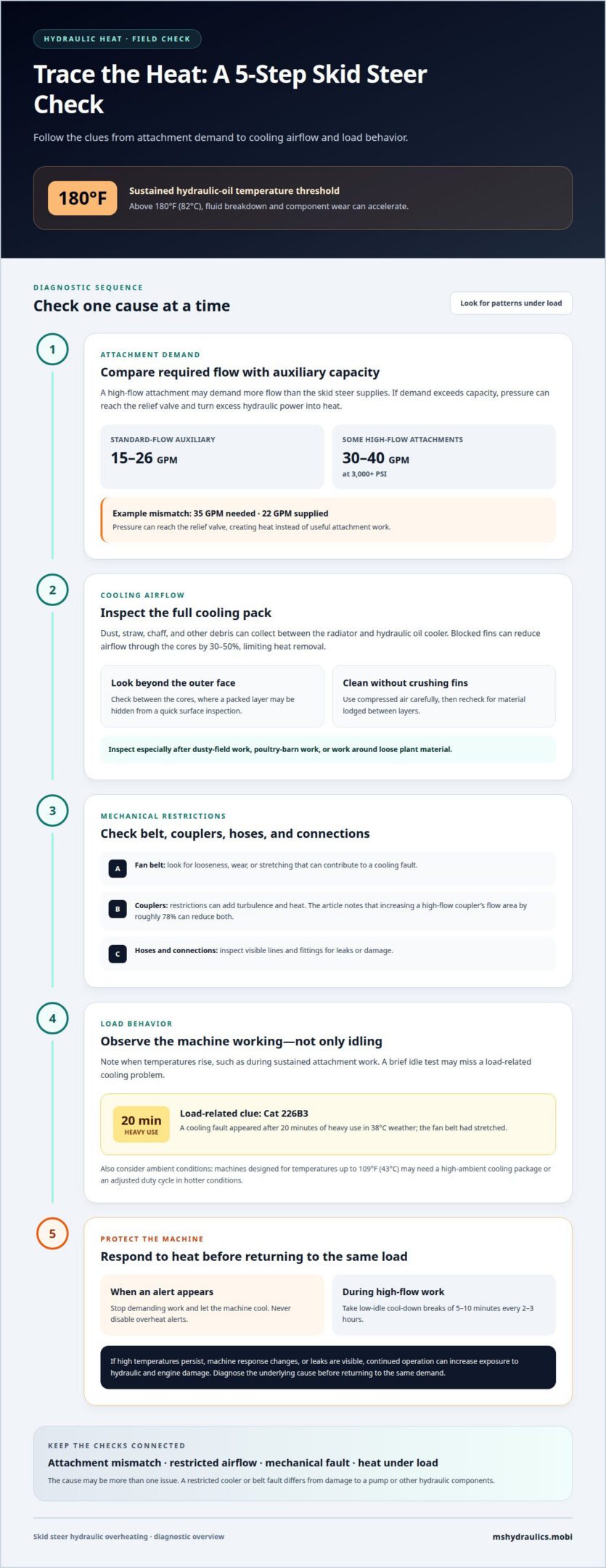
High-flow attachments can demand more hydraulic flow than a skid steer supplies. Some require sustained flow of 30-40 GPM at 3,000+ PSI. A standard-flow auxiliary circuit typically delivers 15-26 GPM. If an attachment needs 35 GPM but the machine delivers 22 GPM, pressure can reach the relief valve. That converts excess hydraulic power into heat rather than useful attachment work. Restricted couplers can add turbulence and heat; increasing a high-flow coupler’s flow area by roughly 78% can reduce both.
To limit heat during heavy use, match attachment flow requirements to machine capacity before operating. During high-flow attachment work, take low-idle cool-down breaks of 5-10 minutes every 2-3 hours. Check for rising temperatures, restricted airflow, and a stretched fan belt when symptoms appear. Machines designed for ambient temperatures up to 109°F (43°C) may need high-ambient cooling packages or adjusted duty cycles in hotter conditions.
Used-machine inspections should focus on evidence of cooling faults under load, not just a brief idle test. Examine the fan belt for looseness or wear, and inspect the radiator and oil cooler for debris or blocked fins. Check hydraulic hoses, couplers, and visible connections for leaks or damage. Ask for operating and maintenance records, then observe the machine working with its attachment. A Cat 226B3 developed a cooling fault after 20 minutes of heavy use in 38°C weather when its fan belt had stretched. That example shows why a short inspection may miss a load-related problem.
Repair exposure depends on the fault and how long the machine continues operating hot. A restricted cooler or belt issue differs from damage to a pump or other hydraulic components. Repair pricing depends on damaged components, required parts, and labor; a quote request establishes the case-specific price. Diagnosing skid steer hydraulic system overheating in Alvarado early can help identify whether attachment demand, cooling airflow, or a mechanical fault is driving the temperature rise.
Clogged radiators and oil coolers
A skid steer cooling pack depends on open passages and steady airflow. Dust, straw, chaff, and other debris can collect between the radiator and hydraulic oil cooler. Blocked cooling-pack fins can reduce airflow through the cores by 30-50%. Less air passing across the heat exchangers means less heat leaves the coolant and hydraulic oil. The machine may then run hot even when its fan and pump are operating.
Inspect the cooling pack regularly, especially after working in dusty fields, poultry barns, or areas with loose plant material. Check between the cores as well as the visible outer face. Debris can form a dense layer deeper in the pack, where a quick surface inspection may miss it. A restricted core can cause overheating to return soon after the machine cools. Note when temperatures rise, such as during sustained attachment work, to help distinguish an airflow restriction from another fault.
Operating examples show how varied the buildup can be. A Bobcat S510 with 1,200 operating hours had compacted straw and fine dust trapped in its oil cooler fins after poultry-farm work. A Case SR130 with 1,800 operating hours had a rust-clogged radiator core and poor-quality aftermarket coolant. Straw and dust restrict airflow externally; rust and coolant condition point to separate concerns within the cooling system. Both cases show why inspection should cover the radiator and oil cooler.
For cooling-pack cleaning, use compressed air carefully and clear debris from the cores without crushing the fins. Reinspect the passages after cleaning, since packed material can remain lodged between layers. If the machine still heats under load, or debris returns quickly, the issue may involve more than surface buildup. A hydraulic system troubleshooting assessment can help identify whether restricted cooling or another hydraulic fault is contributing to overheating.
Engine and hydraulic damage from overheating
Heat changes hydraulic oil before an operator sees a component fail. Skid steer hydraulic oil should not operate above 180°F (82°C) on a sustained basis. Sustained overheating can shorten hydraulic fluid’s service life. Heat accelerates oxidation and reduces the oil’s ability to protect moving surfaces. As lubrication degrades, pumps, valves, cylinders, and motors face increased wear. One severe overheating event can cause internal-component wear equivalent to 500 hours of normal operation.
Engine damage can develop alongside hydraulic wear when excessive heat persists. Consistent operation above 105°C can cause oil breakdown and accelerate wear on engine components. Those outcomes depend on the fault and operating conditions, but continued work while the temperature warning remains active increases exposure. Never disable overheat alerts. They’re designed to help prevent engine and hydraulic damage, not merely interrupt work.
Field cases illustrate how damage can appear in different systems. A New Holland L220 had main-control-valve seals scorched after continuous operation in 42°C ambient heat with a blocked cooler. Damaged seals can compromise valve function and require repair. In another case, a Komatsu SK815-5 engine teardown at 2,100 operating hours found scoring on all cylinders. The machine had been run hot during trenching operations. These examples show that overheating can affect both hydraulic control components and engine internals.
If a temperature alert appears, stop demanding work and let the machine cool. Before returning to the same load, assess whether the heat has affected the hydraulic oil, seals, or engine operation. Persistent high temperatures, changes in machine response, or visible leaks call for diagnosis rather than continued operation. With skid steer hydraulic system overheating in Alvarado, distinguishing fluid deterioration from component damage helps guide the repair. If symptoms persist after addressing the heat source, the pump, motor, valve, or cylinder may need inspection.
How do you diagnose a skid steer hydraulic system that is overheating?
Start by measuring hydraulic oil temperature under normal operating conditions, then compare it with the expected range. The optimal range is 113-140°F (45-60°C). Record whether the reading rises during travel, attachment operation, or after sustained hydraulic demand. That pattern helps distinguish a system-wide cooling issue from heat associated with one circuit or attachment. Use a suitable temperature instrument and consistent measurement points so later readings remain comparable.
Next, assess whether the oil cooler is transferring heat. Compare its inlet and outlet temperatures while the machine is operating under a consistent load. A functioning skid steer hydraulic oil cooler should show a temperature drop of at least 5-10% from its inlet temperature. Little or no drop can indicate restricted airflow, internal restriction, or ineffective heat exchange. Pair that result with a visual inspection of the cooler face and cooling-pack passages.
Check the hydraulic fluid level and condition, then inspect the filter, hoses, and connections for restrictions or leaks. Low fluid can interfere with system operation, while damaged hoses or restricted passages can affect flow and heat generation. Note whether the temperature changes after you stop using the attachment. If the oil cools at idle but heats rapidly under load, record the attachment and operating conditions, then compare its flow demand with the skid steer’s auxiliary capacity.
Finally, review the readings together rather than relying on one temperature value. A hot inlet paired with a meaningful cooler temperature drop points to a different diagnostic path than a hot system with almost no drop. Repeat measurements after cleaning external debris, if present, and note whether results change. Persistent overheating, abnormal machine response, or recurring alerts calls for a more detailed hydraulic assessment. Request help diagnosing hydraulic overheating when temperature checks and visual inspection do not identify the cause.
Ms. Hydraulics: Hydraulic Hose Fabrication
Ms. Hydraulics LLC provides hydraulic hose fabrication for damaged or leaking hoses that may affect flow and contribute to system problems. If overheating continues after you check cooling airflow and attachment demand, inspect hose condition and connection integrity as part of the diagnosis. Identifying a damaged or leaking line helps determine the appropriate repair.
For broader equipment concerns, Ms. Hydraulics LLC provides heavy equipment maintenance and mobile hydraulic repair that include hands-on inspection. Hydraulic cylinder rebuilds may be appropriate when cylinder condition or performance is part of the problem. The right service depends on the symptoms and the component involved, not the temperature reading alone.
Contact Ms. Hydraulics LLC to discuss a skid steer hydraulic issue and the repair support it may require.
Plan the next maintenance decision
Use the overheating pattern to guide your next maintenance decision. Note when the temperature rises, what the machine was doing, and whether the problem returns after cooling. These observations can help distinguish a recurring system fault from a condition tied to a particular task. For skid steer hydraulic system overheating in Alvarado, share those details when discussing a repair so the equipment can be assessed in context.
Ms. Hydraulics LLC provides hydraulic hose fabrication, hydraulic cylinder rebuilds, and heavy equipment maintenance. These services address hose, cylinder, and broader equipment needs related to hydraulic system concerns. The appropriate next step depends on the machine’s symptoms and the components involved.
Contact Ms. Hydraulics LLC for help discussing your skid steer’s overheating concern. A clear account of the operating conditions gives the conversation a practical starting point and helps you move toward an informed repair decision.
Frequently Asked Questions
What are common causes of hydraulic system overheating in a skid steer?
Common causes include attachment demands that exceed auxiliary flow capacity, restricted cooling airflow, and faults that reduce hydraulic efficiency. For skid steer hydraulic system overheating in Alvarado, note whether temperatures rise during a particular attachment task or across different operating conditions. That pattern can help narrow down the source. If performance changes as temperatures rise, a leak, damaged hose, or deteriorating component may also need inspection.
What hydraulic fluid temperature is too high for a skid steer, and what are the safe operating limits?
The optimal hydraulic oil operating range is 113-140°F (45-60°C); sustained operation above 180°F (82°C) is too hot. Treat a reading near or beyond that upper threshold as a reason to stop demanding hydraulic work and assess the system. Temperature readings can vary with operating load, so record the conditions and measurement point. Don’t disable an overheat alert to continue working.
How can a clogged hydraulic cooler, radiator, or filter cause overheating, and how do you check it?
A clogged cooler or radiator restricts heat transfer, while a restricted filter can impede fluid flow and strain the hydraulic circuit. Inspect accessible cooling-pack surfaces and check for uneven airflow or debris packed between cores. Clean the cooling pack and recheck the machine, then compare cooler inlet and outlet temperatures under consistent operating conditions. If overheating continues, a technician can assess internal restrictions and filter condition.
How do low hydraulic fluid, wrong fluid, or leaks lead to skid steer overheating?
Low fluid can disrupt the supply to hydraulic components, while a leak reduces the fluid available to circulate and carry heat. Fluid that doesn’t meet the machine’s specified requirements may also impair lubrication or system performance. Check the reservoir level and inspect hoses, fittings, and cylinders for wetness or visible damage. Use the fluid specified by the machine manufacturer, not an unknown type.
Can you keep operating a skid steer with hot hydraulic fluid, and what damage can result?
Don’t continue demanding work while hydraulic fluid is overheating or an overheat alert is active. Excess heat can degrade fluid and accelerate wear inside pumps, valves, cylinders, and motors. Continued operation may also affect engine components if high temperatures persist. Stop work, let the machine cool, and investigate the cause before returning to the same task. Recurring alerts or changes in machine response call for diagnosis.
What does it cost to repair or replace a skid steer hydraulic cooler, pump, or temperature sensor?
Repair costs depend on the failed component, required parts, labor, and the work needed to identify the fault. Cleaning a cooler differs from replacing it, while pump damage may require additional system repairs. A temperature-sensor fault also needs diagnosis to determine the repair scope. Component condition and repair requirements determine the estimate.