Questions to Ask Your Hydraulic Mechanic to Compare Repair Costs
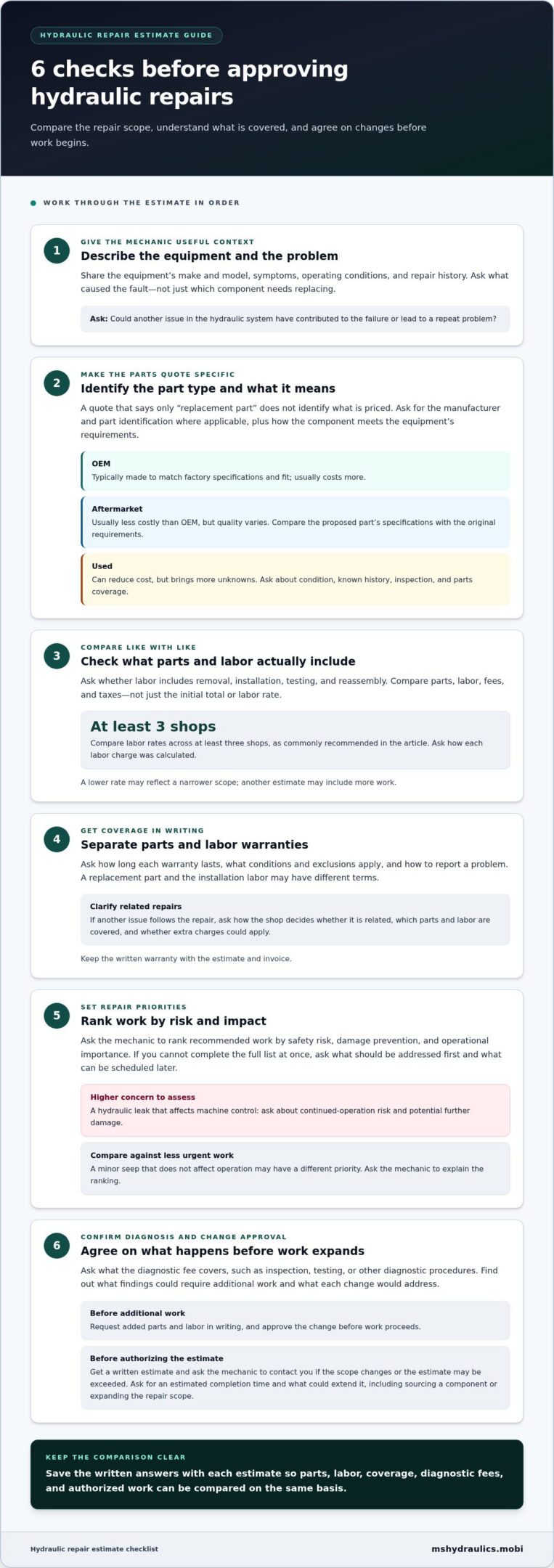
A low repair estimate is hard to compare if it leaves out diagnostic work or warranty terms. The most useful questions to ask your hydraulic mechanic are what parts and labor are included, what the warranty covers, which repairs are urgent, and what the diagnostic fee pays for. Get the answers in writing alongside an estimate before approving the work.
It’s reasonable to want a clear cost comparison before authorizing hydraulic repairs, especially when diagnosis may reveal additional work. A diagnostic fee can cover different steps, so ask whether it includes inspection, testing, or other diagnostic procedures, and whether you’ll approve any additional work before it begins.
This guide covers practical questions about parts, warranty coverage, repair priorities, diagnostic fees, and changes to an estimate. Learn how to compare proposals by scope, identify which work should come first, and clarify coverage before repairs begin.
Key Takeaways
- Ask whether the estimate uses OEM, aftermarket, or used parts, and how the choice affects fit, quality, and repair scope.
- Clarify what parts and labor warranties cover, and how any additional work would be handled before it proceeds.
- Rank recommended repairs by safety risk and potential damage, then ask which work can be scheduled later.
- Find out what diagnostic steps the fee includes and request approval before the repair scope or estimate changes.
- Share the equipment’s make, model, symptoms, operating conditions, and repair history to help narrow the diagnosis.
1. OEM, aftermarket, and used parts
Start with the part itself: ask whether the estimate specifies an original equipment manufacturer (OEM), aftermarket, or used component. These options can differ in cost, fit, quality, and uncertainty. An estimate that lists only “replacement part” doesn’t tell you which option is priced or what you’re comparing.
OEM parts are typically made to match factory specifications and fit, but usually cost more. Ask which manufacturer’s component is proposed and whether it matches the equipment’s requirements. For example, if a hydraulic pump is being replaced, ask whether the quoted pump is OEM and what identifying information appears on the estimate. That gives you a clear basis for comparing the part and scope of work.
Aftermarket parts are made by companies other than the original manufacturer and are usually less costly than OEM parts. Quality varies. Ask for the manufacturer and part identification, then compare the component’s specifications with the original part’s requirements. “Aftermarket” describes the source, not a single quality grade. Ask how the proposed part suits the equipment and repair.
Used parts can reduce costs for some repairs, including body repairs and certain mechanical items, but they involve more unknowns. Ask about the component’s condition, known history, and any parts coverage. For a used valve or cylinder component, clarify what will be inspected and what the estimate excludes. Its value depends on its condition and suitability for the repair. Weigh those details against the added uncertainty, not just the initial quote.
Ask the mechanic to identify the part type, manufacturer where applicable, and related labor in the estimate. Then ask whether choosing another part category changes the repair scope or coverage. These questions to ask your hydraulic mechanic help distinguish a lower parts quote from a genuinely comparable repair. Keep the written answers with each estimate so you can compare the same details.
Ask about relevant hydraulic repair experience and request current proof of insurance, including the named insured and coverage dates. Verify credentials separately. ASE certification is a common mechanic benchmark; according to the National Institute for Automotive Service Excellence, ASE-certified mechanics have at least two years of experience and recertify every five years.
Parts selection also affects safe handling during repair. Some hydraulic fluids can irritate skin or eyes, according to the Agency for Toxic Substances and Disease Registry (ATSDR). Ask how the mechanic will handle fluid exposure and prevent contamination while removing or installing a component.
2. Can You Provide a Warranty?
Ask for written warranty terms before approving a hydraulic repair. A useful comparison separates coverage for replacement parts from coverage for labor. A pump may carry its own parts warranty, while installation work may have different terms. Ask how long each warranty lasts, what conditions apply, and how to report a problem after the repair.
Clarify what happens if the original repair leads to another issue. A mechanic’s warranty or guarantee may cover additional repairs caused by the initial repair at no extra cost. Ask how the shop determines whether a later failure is related, which parts and labor are included, and whether exclusions apply. Keep the written warranty with the estimate and invoice so you can refer to the same terms later.
Additional parts or labor can change the final scope. Ask what findings could require extra work, what each change would address, and how the mechanic will get your approval. For example, a repair may reveal a damaged fitting or related component that needs replacement. Ask for added parts and labor to be documented before work proceeds. This makes estimates easier to compare and helps prevent confusion about authorized work.
Compare labor rates across at least three shops, as commonly recommended for repair comparisons, but don’t choose an estimate by rate alone. Ask whether labor includes removal, installation, testing, and reassembly. A lower rate may reflect a narrower scope, while another estimate may include additional work. Compare parts, labor, fees, and taxes, and ask how the mechanic calculated the labor charge.
Hydraulic repair cost and turnaround depend on the fault, required parts, labor, and whether diagnosis reveals related damage. Ask for an estimated completion time and what could extend it, such as sourcing a component or expanding the repair scope.
Before approving work, request a written estimate and ask the mechanic to contact you if the scope changes or the estimate may be exceeded. Ask whether the warranty covers only the replaced part or also labor and related repairs. These questions to ask your hydraulic mechanic make proposals easier to compare without treating a low initial total as the complete cost.
For a hydraulic repair discussion, review hydraulic repair support as a next step after documenting your questions and estimate requirements.
3. Prioritizing repairs
Ask the mechanic to rank recommended repairs by safety risk, damage prevention, and operational importance. If a hydraulic leak affects machine control, ask whether continued operation could increase risk or cause further damage. Compare it with less urgent work, such as correcting a minor seep that doesn’t affect operation. A clear ranking helps you decide what to authorize first when you can’t complete the full repair list at once.
Ask what caused the fault, not just which component needs replacing. If a pump failed, for example, ask whether diagnosis identified a contributing issue elsewhere in the hydraulic system. The cause matters because replacing a failed component without addressing the source may leave the problem unresolved. Ask what operating conditions or maintenance factors could contribute to a repeat failure, and what practical steps could reduce that risk.
Safety comes first. The Federal Aviation Administration explains that an overheated brake assembly retracting into an aircraft’s main wheel well could damage hydraulic or fuel lines; a rupture could cause a fire. Ask the mechanic to identify comparable equipment-specific hazards, explain whether operating the machine creates a safety concern, and state what precautions are needed before work begins.
If the diagnosis or proposed repair is unclear, ask what alternative approaches are available and how each would address the identified fault. You can also seek a second opinion, especially when estimates recommend different work or the proposed scope is substantial. Give the second mechanic the same symptoms and inspection findings, then compare the diagnosis, repair scope, and stated risks. A useful comparison explains why an approach is recommended, not just what it replaces.
Request a written estimate before approving work. It should itemize parts, labor, fees, and taxes so you can see what the proposed total includes. Ask the mechanic to contact you before exceeding the estimate if inspection changes the scope. Request an estimated completion time and ask what could affect it. A damaged component discovered during disassembly, for example, may change both the work required and the schedule.
Plan around the machine’s role while repairs are underway. Ask when the equipment is expected to be unavailable, whether testing is included before it’s returned, and what milestones affect completion. If an excavator is needed for a scheduled site task, coordinate that task around the estimated downtime or assign other available equipment. For mobile machinery, clarify where the work will take place and how the equipment can be safely accessed.
Before choosing a repair order, ask three direct questions: Which item affects safety? Which delay could cause further damage? Which item most limits essential operations? Record the answers beside each estimate line. This simple comparison turns a long repair list into a documented sequence and preserves the mechanic’s reasoning for each priority.
4. Diagnostic fees
Before authorizing hydraulic troubleshooting, ask whether diagnostic work carries a separate fee. Clarify what the charge covers, which tests the mechanic plans to perform, and whether the findings will be documented. A diagnostic fee is easier to evaluate when it’s tied to specific inspection and testing steps, rather than appearing as an unexplained line on an estimate.
Tests depend on the reported symptom and the equipment. A mechanic may inspect affected components, check for visible leaks or damage, and test system operation to narrow down the fault. Ask which measurements or checks will be used, such as pressure or flow testing when relevant, and what each result can reveal. The mechanic should explain how the findings distinguish a failing component from a problem elsewhere in the system.
Ask whether testing includes operating the equipment under conditions that produce the problem. An intermittent loss of lifting force, for example, may require observing the machine while the symptom occurs. Clarify whether the process includes isolating a suspected component or checking connected parts. These questions to ask your hydraulic mechanic help you understand how each test relates to the reported fault.
Find out what the diagnostic fee excludes. It may cover assessment and testing without including replacement parts or repair labor. Ask how the mechanic will present additional work if testing identifies a failed hose, pump, valve, or cylinder. Request written diagnostic findings and repair recommendations, with separate line items for testing and corrective work. This makes estimates easier to compare.
Ask how the mechanic handles tests that reveal a wider problem. If an initial inspection points to a pump but further testing indicates a valve issue, find out whether the expanded diagnosis needs additional authorization. Agree on how you’ll be contacted before the work changes and what information you’ll receive before approving it. A defined approval step helps you control the scope.
To evaluate diagnostic charges, compare the planned process, not just the total. Ask whether the fee covers inspection, testing, interpretation, and a written explanation. If a test requires equipment setup or access to a difficult component, clarify what work is included. A clear explanation connects each diagnostic step to a question about the fault.
Before scheduling, describe the symptom precisely: when it occurs, what the equipment is doing, and whether it repeats under particular operating conditions. Ask the mechanic to explain the diagnostic sequence and what decision each test supports. These questions to ask your hydraulic mechanic help you understand the fee’s purpose and the evidence behind the repair recommendation.
5. What information should I give a hydraulic mechanic about the equipment and problem?
Start with the machine’s identification details: equipment type, make, model, and serial number. Include the attachment or system involved, such as an excavator boom, skid steer lift, or drill rig circuit. If the identification plate is difficult to access, provide a clear photo. These details help distinguish similar machine configurations and guide the mechanic toward relevant components.
Describe the symptom in observable terms. Say what the machine does, when it happens, and which function is affected. For example, report that the boom lowers under load, steering response changes, or a cylinder moves unevenly. Note whether the issue is constant or intermittent, and whether it appears during startup, warm operation, or a specific task. Avoid diagnosing the cause yourself; specific observations are more useful than guesses.
Explain the conditions around the failure. Tell the mechanic what the equipment was doing when the problem began, whether the load or terrain had changed, and whether the symptom followed transport or maintenance. Mention visible fluid, unusual noise, vibration, heat, or a change in cycle performance. If a hose shows abrasion or a fitting leaks, identify its location without touching pressurized components.
Share relevant service and repair history. Include recent work on the affected circuit, component replacements, fluid changes, or recurring faults. If a pump was recently replaced and the same loss of function returned, say so and provide the invoice or repair notes. Tell the mechanic about any warning indicators and when they appeared. A timeline helps connect the current symptom with earlier work or operating changes.
- Equipment make, model, serial number, and affected attachment
- Function showing the symptom and the conditions when it occurs
- Visible leaks, noise, vibration, heat, or warning indicators
- Recent repairs, maintenance records, and repeated failures
- Photos or video showing the symptom, taken from a safe position
Keep the description factual and organized. A photo showing where a leak is located can help identify the circuit, while a short video may show inconsistent movement. Don’t operate equipment just to record a symptom if its condition creates a safety concern. Tell the mechanic what you observed before stopping operation and why the machine was taken out of service.
Before arranging an inspection, gather the machine details, symptom timeline, and service records in one place. Share your equipment and problem details to begin a repair discussion with the relevant information ready.
Ms. Hydraulics: Hydraulic Hose Fabrication
Ms. Hydraulics provides Hydraulic Hose Fabrication for equipment that needs a damaged hose replaced. Share the machine details, hose location, observed damage, and operating symptoms to frame the repair discussion. If inspection points to a broader issue, Ms. Hydraulics also provides Mobile Hydraulic Repair, Hydraulic Cylinder Rebuilds, and Heavy Equipment Maintenance.
Turn to Ms. Hydraulics when you need hydraulic hose work or related equipment repair. Sharing the symptoms and repair history helps focus the discussion on the equipment’s condition and the work required.
Contact Ms. Hydraulics or visit mshydraulics.mobi to discuss your hydraulic repair needs.
Make the Next Repair Decision With a Clear Record
Use the repair discussion to create a practical record for the equipment file. Keep the approved scope, diagnostic findings, parts information, warranty terms, and completed work together. This gives your maintenance team a reference when similar symptoms appear and helps distinguish a recurring fault from a new one. The questions to ask your hydraulic mechanic can also shape a consistent approval process across machines, so operators know what details to report and decision-makers understand what they’re authorizing.
When hydraulic work is needed, Ms. Hydraulics offers Hydraulic Hose Fabrication, Hydraulic Cylinder Rebuilds, and Heavy Equipment Maintenance. Share the equipment details and observed problem to start a focused repair discussion. Clear information helps establish what work is being considered and supports the next maintenance decision.
Contact Ms. Hydraulics to discuss your equipment’s hydraulic repair needs. A well-documented repair is a strong starting point for the work ahead.
Frequently Asked Questions
Can You Provide a Warranty?
Warranty coverage depends on the repair provider and the work performed. Ask for written terms that distinguish parts coverage from labor coverage, then review exclusions and the process for reporting a concern. For a rebuilt cylinder, clarify whether coverage applies to replacement seals, workmanship, or both. Keep the warranty document with the service record so equipment operators and maintenance staff can refer to the same terms.
How Long Will It Take?
Repair time depends on the fault, inspection findings, parts requirements, and the work needed to test the equipment afterward. Ask what affects the schedule and when you’ll receive updates if the scope changes. For equipment moving between DFW job sites, coordinate access and transport around the estimated downtime. Provide the machine model and symptom details early so the mechanic can plan the initial inspection more effectively.
What Parts Will You Use?
Ask for the proposed part category and identifying details, such as the manufacturer or part number when available. For a hose replacement, clarify that the proposed assembly matches the equipment’s connections and application. If a component choice differs from the original, ask what specifications informed the selection. Keep the part information with the repair record to help identify the installed component during future service or troubleshooting.
What’s the Cost?
The price depends on the fault, diagnostic work, parts, labor, and repair scope, and is provided after a quote request. Ask for a written estimate that separates those factors and explains what the proposed work includes. If inspection reveals additional damage, request an updated scope before approving extra work. For equipment operations in Cleburne, Dallas-Fort Worth, Alvarado, Granbury, Crowley, Arlington, Mansfield, Waxahachie, or Cedar Hill, compare estimates only when each covers the same repair objective and testing.
What are the most common causes of hydraulic system failure?
Hydraulic failures commonly involve fluid contamination, leaks, component wear, overheating, or operating conditions that exceed a component’s intended use. Contaminated fluid, for example, can affect valves and pumps, while a damaged hose can cause fluid loss and reduced system performance. Record when symptoms began and which functions changed. That context helps distinguish a fault in one component from a condition affecting multiple parts of the hydraulic circuit.
Should I repair or replace a hydraulic pump, cylinder, hose, or valve?
Choose repair or replacement based on the component’s condition, the diagnosed cause, and whether the repair can restore reliable operation. A hose with localized damage may need replacement, while a cylinder with serviceable components may be a rebuild candidate. For pumps and valves, ask what inspection findings support either approach. Compare the proposed work, testing, and coverage instead of deciding from the component name alone.
What questions should I ask about replacement parts, warranties, and labor guarantees?
Ask which part will be installed, what the labor charge includes, and whether parts coverage differs from workmanship coverage. These are useful questions to ask your hydraulic mechanic before approving a repair. Request written terms, including exclusions and how related concerns are handled. For example, clarify whether labor is covered if a replacement component is found defective and how the provider determines whether the issue relates to the original repair.
What maintenance should I schedule to prevent future hydraulic system problems?
Build a maintenance plan around the equipment manufacturer’s guidance, operating conditions, and inspection findings. Include checks for fluid and filter condition, hose abrasion, fitting leaks, and cylinder rod damage. Record results and repairs in a service log, then compare new symptoms with earlier entries. For machines used across DFW worksites, consistent records help operators spot changes between inspections and give technicians useful context during scheduled maintenance.