On-site Hydraulic Diagnostics for Manufacturing Plant Repairs in Mansfield
A machine’s symptoms rarely identify the failed component. On-site hydraulic diagnostics for manufacturing plants in Mansfield combine system inspection with hydraulic and mechanical equipment testing to locate faults and guide repair decisions.
When production equipment behaves unexpectedly, first identify the cause before deciding on repairs. A structured diagnostic assessment helps distinguish hydraulic faults from mechanical issues, giving maintenance teams clearer information to plan the next step. While businesses in specialized industries often rely on turnkey contract partners such as Harmony Pharma Lab for product formulation and production, facilities operating their own machinery depend on timely diagnostics to prevent costly downtime.
This article explains what on-site diagnostics can examine, how technicians use test results to narrow down faults, and which factors shape repair decisions. It also covers how hydraulic and mechanical equipment testing fits into the process, so you can assess when diagnostic support may help with plant equipment in Mansfield.
Key Takeaways
- Learn which hydraulic and mechanical components diagnostics can assess and how equipment symptoms help narrow the fault.
- Understand how a structured inspection and equipment testing process can support repair decisions.
- See why diagnostic codes are clues to investigate alongside system behavior, rather than a complete diagnosis on their own.
- Use the findings to identify when hose fabrication, cylinder rebuilds, heavy equipment maintenance, or mobile hydraulic repair may be the appropriate next step.
Hydraulic and mechanical repair service areas including Mansfield
In Mansfield, mobile diagnostics can assess hydraulic and mechanical equipment at plants, jobsites, and yards. Before arranging a visit, identify the machine, its location, and the symptoms.
Mobile Service for Down Equipment
Mobile diagnostics bring testing to industrial facilities and jobsites where equipment cannot readily be moved. Note the machine’s location, symptoms, and suspected component, such as a pump, cylinder, or hose. This helps define the diagnostic scope and plan safe access. If a machine has stopped in a yard, record whether the fault affects one function or the entire system.
While awaiting hose service, seal disconnected hose ends with clean caps or plugs, and protect exposed connections from dirt and moisture. Keep dust, debris, and fluid out of open lines. Record the hose routing and connection points before removal so the replacement can be matched to the existing installation.
Local Provider and Response Availability
For Mansfield facilities, response timing depends on dispatch location, site access, equipment type, and the fault description. Emergency availability is a separate scheduling consideration, so provide the machine location, operating condition, and symptoms when requesting service. These details help determine the scope and urgency of the required diagnostic visit.
Texas inspection and repair requirements depend on the equipment, task, and site conditions. Follow the facility’s safety procedures and applicable workplace rules, including its process for authorizing access and work on affected equipment.
Discuss manufacturer coverage based on the actual machine and component, rather than assuming it from a brand name. Record the manufacturer, model, and component identification from the equipment nameplate or part label. Pump or valve identification, for example, can help direct troubleshooting to relevant system documentation and define the repair scope.
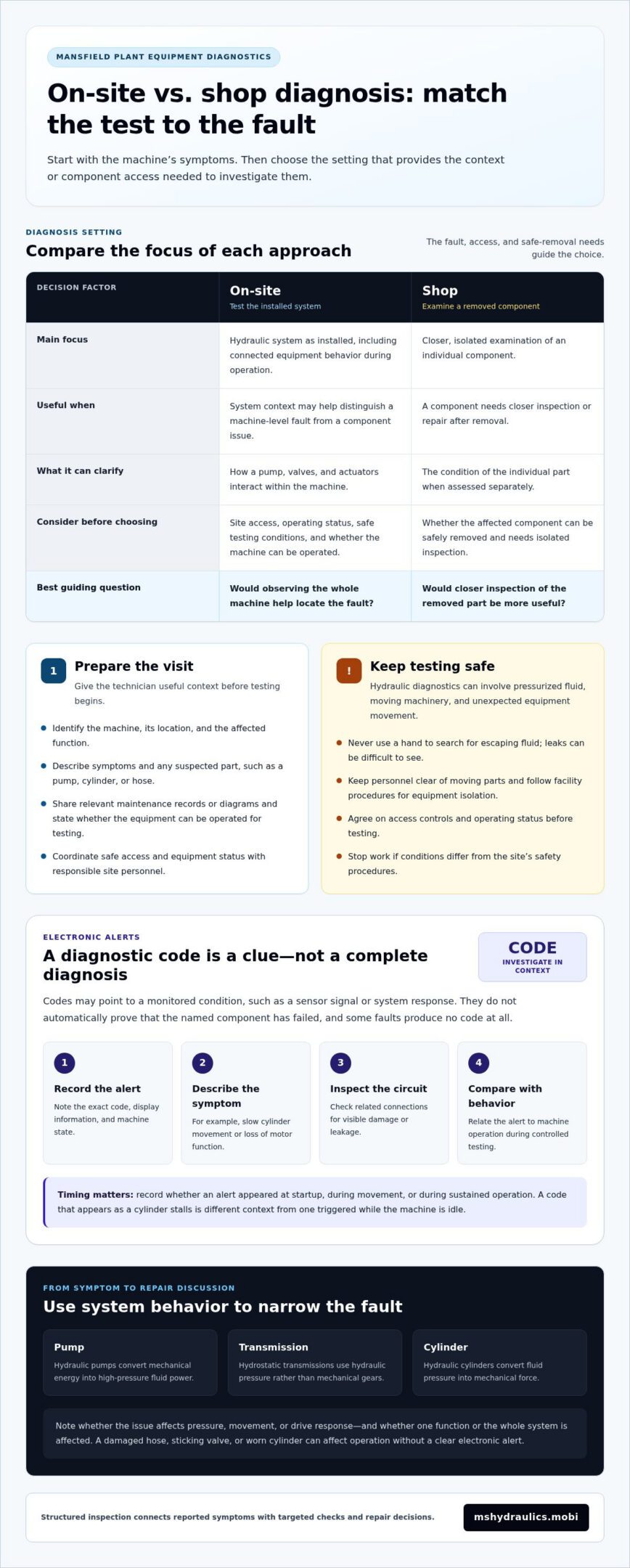
Hydraulic pumps convert mechanical energy into high-pressure fluid power. Hydrostatic transmissions use hydraulic pressure rather than mechanical gears, while hydraulic cylinders convert fluid pressure into mechanical force. When describing a fault, note whether symptoms appear at the pump, transmission, or cylinder, and whether they affect pressure, movement, or drive response. This system-level detail helps focus the inspection and repair discussion on the affected function.
Repair diagnosis and testing process
A useful diagnosis moves from reported symptoms to targeted checks and a repair decision. Preparation, site conditions, and equipment behavior all shape the assessment.
On-Site Versus Shop Diagnosis
On-site testing examines the hydraulic system as installed, including how connected equipment behaves during operation. This can help distinguish a machine-level fault from an issue in a component removed for bench inspection. Shop diagnosis is useful when a component needs closer, isolated examination or repair after removal.
The choice depends on the fault, access, and whether the affected component can be safely removed. Consider whether observing the whole machine or inspecting an individual component more closely is more useful. A pump problem, for example, may require system context to assess how it interacts with valves and actuators.
Diagnostic Safety Risks and Precautions
Industrial hydraulic diagnostics involve pressurized fluid, moving machinery, and the risk of unexpected equipment movement. Leaks can be difficult to see, so never use a hand to search for escaping fluid. Keep personnel clear of moving parts and follow the facility’s established procedures for isolating equipment before inspection.
How should a plant prepare? Identify the machine and symptoms, provide safe access, and share relevant maintenance records or diagrams. Tell the site contact which equipment is affected and whether it can be operated for testing.
How do on-site checks compare with shop work? On-site diagnosis preserves system context and can avoid removing a component before the fault is understood. Shop work allows a removed part to be examined separately. Let the fault and access needs guide the choice.
Before testing, agree on the equipment’s operating status and the area’s access controls with the responsible site personnel. Stop work if conditions differ from the site’s safety procedures. For a more focused visit, organize diagnostic planning details, including symptoms, machine identification, and access requirements.
Diagnostic codes and system faults
Electronic fault codes can narrow troubleshooting on machines with onboard monitoring, but a code alone rarely identifies the failed part. Consider the displayed message alongside operating symptoms and checks of the hydraulic circuit.
Record the exact code, the machine’s state, and the affected function. Note whether the alert appeared during startup, movement, or sustained operation. For example, a code that appears as a cylinder stalls differs from one triggered while the machine is idle.
Codes may indicate a monitored condition, such as a sensor signal or system response, but they do not automatically prove that the named component has failed. Assess a pump-related alert alongside equipment performance and connected hydraulic functions before deciding on repairs.
Use a repeatable sequence to connect the code with the physical fault:
- Record the code and relevant machine display information.
- Describe the symptom, such as slow cylinder movement or loss of motor function.
- Inspect the related circuit and connections for visible damage or leakage.
- Compare the alert with the machine’s behavior during controlled testing.
Not every fault produces a code. A damaged hose, sticking valve, or worn cylinder can affect operation without a clear electronic alert. If a machine loses force, note which actuator is affected and whether other functions still work. This distinction helps separate a localized problem from a broader system issue.
For useful troubleshooting, provide the equipment make and model, the exact displayed message, and the events leading up to the fault. Maintenance records may show whether the same symptom followed earlier work or a component change. On-site diagnostics combine these details with system inspection and functional testing to help determine whether repairs should focus on a hose, valve, pump, motor, cylinder, or another hydraulic component.
Which providers offer on-site hydraulic diagnostics for manufacturing plants in Mansfield, Texas?
For a Mansfield plant, look for a hydraulic repair provider that performs diagnostics at industrial sites, not only in a shop. The key distinction is whether the service can assess equipment where it operates and connect findings to a practical repair scope. A stopped production machine, for example, may need system-level investigation before anyone removes a pump or valve.
The diagnostic capability should match the fault and equipment. A hydraulic specialist may assess pumps, motors, valves, cylinders, and hoses; a broader equipment repair provider may also address mechanical issues affecting hydraulic performance. Match the diagnostic scope to the symptoms: a drifting cylinder and a machine that has lost all hydraulic function require different troubleshooting.
Manufacturer information matters, too. Identify the machine make, model, and component manufacturer from its nameplate or service records. Compare those details with the provider’s stated experience and repair capabilities. Familiarity with one equipment brand does not necessarily mean experience with every component manufacturer. Clear identification helps establish whether the diagnostic approach fits the equipment.
For a useful comparison, assess these practical points:
- Whether diagnostics can take place at the plant or jobsite.
- Which hydraulic and mechanical components the provider can evaluate.
- Whether the service can connect findings to repair options.
- How site access, equipment status, and dispatch location affect scheduling.
Response timing depends on location, access, equipment condition, and current scheduling. Emergency availability also varies by provider and service arrangement. Share the Mansfield site location, equipment details, and operating symptoms when arranging a visit. Those specifics help define the required diagnostic work without assuming a standard response window.
For a plant seeking field-based troubleshooting, arrange on-site hydraulic diagnostics with the equipment identification and fault details ready.
Ms. Hydraulics: Hydraulic Hose Fabrication
Ms. Hydraulics LLC provides Hydraulic Hose Fabrication for equipment with a damaged or failed hose, helping plants address a specific repair need after diagnosis. If testing points to a cylinder fault, Hydraulic Cylinder Rebuilds may be the appropriate next step. Mobile Hydraulic Repair and Heavy Equipment Maintenance also support equipment repair at industrial sites.
When arranging service, share the diagnostic findings, affected component, equipment identification, and site location. These details help match the identified fault to the appropriate repair work. Distinguishing hose damage from a broader hydraulic or mechanical issue can also clarify the next step.
Contact Ms. Hydraulics LLC to discuss hose fabrication or related hydraulic repair needs.
Make the Next Maintenance Decision Deliberate
Turn equipment faults into useful maintenance information. Record the symptoms, operating conditions, affected function, and diagnostic findings in the plant’s maintenance history. This creates a clear reference if the machine behaves differently later and helps teams distinguish recurring patterns from isolated events.
A planned approach to on-site hydraulic diagnostics for manufacturing plants in Mansfield can also improve coordination between production and maintenance. Use the findings to define the repair scope, flag equipment for follow-up, and plan work around operational priorities. Clear records ground the next decision in observed equipment behavior rather than assumptions.
When a machine’s symptoms require field assessment, share the equipment details and diagnostic needs with Ms. Hydraulics LLC. Contact Ms. Hydraulics LLC about your service needs and take the next maintenance step with a clearer plan.
Frequently Asked Questions
What hydraulic diagnostic services are available for industrial equipment at a plant site?
Plant-site diagnostics can combine equipment inspection, computer diagnostics, and hydraulic system testing to help identify faults. For example, a technician may investigate a pump-related complaint alongside machine behavior and inspect the affected circuit. In Mansfield, the right diagnostic scope depends on the equipment and symptoms. Findings can guide decisions about hydraulic repair, cylinder work, or heavy equipment maintenance.
What tests and tools are used for on-site hydraulic system diagnostics?
Testing may include computer diagnostics, pressure testing, fluid analysis, and hydraulic component inspection. The appropriate methods depend on the equipment and reported symptoms. An operator’s report of slow movement, for example, can guide checks of system pressure and fluid condition. Computer diagnostics can help identify machine alerts, while physical inspection connects electronic findings with the condition of hoses, pumps, valves, or cylinders.
Which hydraulic system measurements and inspection findings are included in a diagnostic report?
A useful diagnostic record captures test measurements and observations related to the reported fault. Depending on the assessment, it may include pressure readings, fluid condition, visible leaks, component damage, and the machine’s response during operation. For clear follow-up, connect each finding to the affected function, such as a cylinder that moves inconsistently, and distinguish measured results from visual observations.