On-site Heavy Machinery Fluid Changes in Alvarado
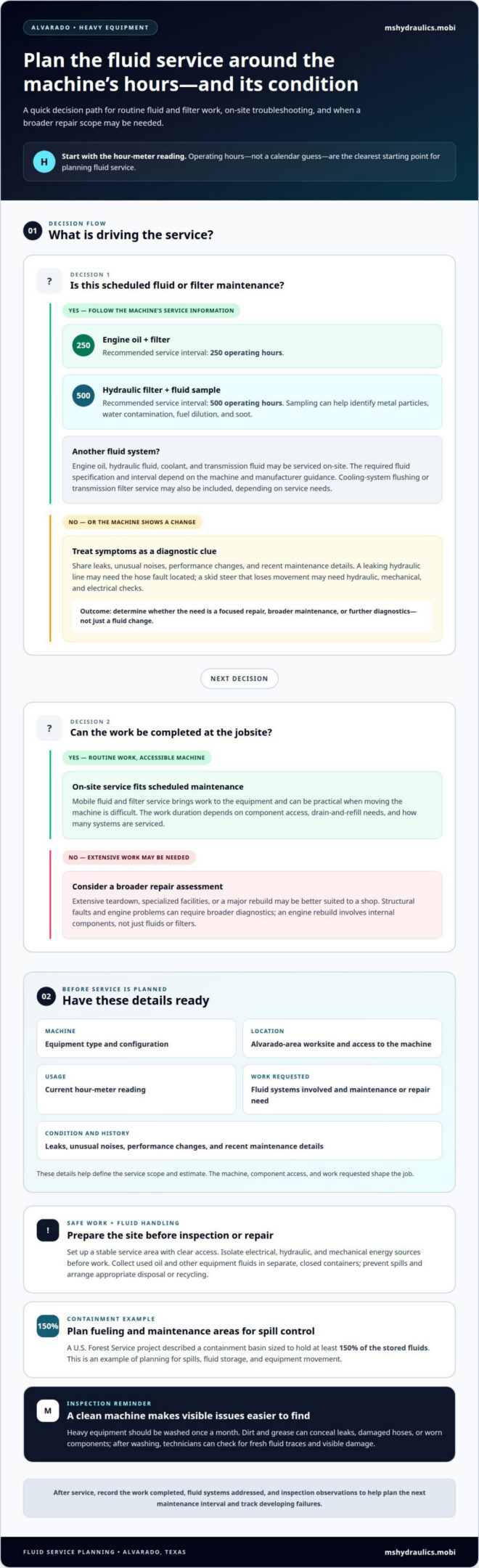
Operating hours, not a calendar guess, are the clearest starting point for planning fluid service. For an on-site fluid change for heavy machinery in Alvarado, recommended intervals are 250 operating hours for engine oil and its filter, and 500 operating hours for hydraulic filter replacement and fluid sampling. These intervals give equipment managers a practical basis for organizing routine maintenance.
To arrange an on-site fluid change for heavy machinery in Alvarado, have the machine type, worksite location, hour-meter reading, and requested service details ready. Describe any leaks, unusual noises, or performance changes to help distinguish routine maintenance from a repair need. This guide explains how to plan on-site heavy equipment repair, fluid and filter service, and fluid changes in Alvarado, and what information helps define the work at the jobsite.
Key Takeaways
- Organize a service appointment by preparing the machine details, worksite location, and the maintenance or repair need.
- Use operating hours and equipment condition to plan fluid and filter service around the machine’s workload.
- Recognize when a fluid change is only part of the job and on-site diagnostics or equipment maintenance may also be needed.
- Learn how fluid handling, jobsite conditions, and the type of repair shape on-site service planning.
On-site heavy equipment repair
Field repairs bring diagnostic work to construction and earthmoving equipment at the jobsite. An excavator with a leaking hydraulic line, for example, may need the hose fault located before repairs begin. A skid steer that loses movement may require checks of its hydraulic, mechanical, and electrical systems. Identifying the failure helps determine whether the need is a focused repair or broader maintenance.
Before maintenance, technicians should isolate electrical, hydraulic, and mechanical energy sources to reduce exposure to stored energy during inspection or repair. Service trucks bring tools and repair materials to equipment that cannot readily leave the site. The repair scope depends on the failure, machine configuration, and access to the affected component.
Equipment washing also supports inspection. Dirt and grease can conceal leaks, damaged hoses, or worn components, so a clean surface makes these conditions easier to identify. Heavy equipment should be washed once a month. After washing, technicians can examine the machine for fresh fluid traces and visible damage, then determine whether a repair or further diagnostics are needed.
Fueling at a worksite requires controlled fluid handling. The U.S. Forest Service describes a project that planned fueling and equipment maintenance in a containment basin sized to hold at least 150% of the stored fluids. This example highlights why fueling and maintenance areas need to account for spills, fluid storage, and equipment movement.
Diesel service may involve routine checks, fault diagnosis, or substantial engine work. An engine rebuild is a distinct repair scope from a fluid change because it involves internal engine components. A breakdown can become urgent for contractors when work depends on a machine that is no longer running. Addressing a failure at the site can avoid moving an inoperable machine, though extensive damage may require a broader assessment.
Routine on-site fluid and filter service
Mobile fluid service brings scheduled maintenance to the equipment’s worksite. Planning around operating hours, machine access, and fluid requirements helps define the work.
Scheduling and Estimates
To arrange service, provide the equipment type, Alvarado-area worksite, hour-meter reading, and requested maintenance. Include the fluid systems involved and any visible leaks or performance changes. These details help define the service scope and estimate, which depends on the machine, access to components, and work requested. Mobile equipment service providers handle appointments in Alvarado and surrounding areas. For this type of work, mobile fluid and filter service is the relevant appointment.
For service scheduling, start a service request with the machine and site details.
Change Timing and Manufacturer Guidance
On-site changes can include engine oil, hydraulic fluid, coolant, and transmission fluid. The required fluid specification and service interval depend on the machine and its manufacturer guidance, so the correct reference is the equipment’s service information. Cooling-system flushing and transmission filter service may be included in scheduled maintenance, depending on the machine’s service needs. The time required for a fluid change depends on component access, drain and refill needs, and the number of systems serviced. Those factors determine the work duration, not a single interval that applies to every machine.
Used-Fluid Collection and Disposal
In Texas, collect used oil and other equipment fluids in separate, closed containers, prevent spills, and arrange appropriate disposal or recycling. Keep fluid streams separate because contamination can affect how they are handled. During service, technicians can identify and contain drained fluids and keep them separate during collection. A planned collection process helps control spills and keeps used fluids out of soil and stormwater.
Mobile field technicians can perform routine fluid changes at the jobsite, where the equipment is located. This makes on-site service a practical option for scheduled maintenance when moving the machine is difficult.
On-site fluid and filter changes
Mobile fluid changes keep routine service at the machine, avoiding transport to a repair shop for scheduled work. A shop setting may be more suitable when equipment needs extensive teardown, specialized facilities, or a major rebuild.
Before work begins, technicians prepare a stable service area with clear access to the machine and fluid components. They isolate electrical, hydraulic, and mechanical energy sources, then manage fluid handling to reduce spill risks.
Service starts by identifying the machine and the fluid system involved. For hydraulic maintenance, technicians can replace the hydraulic filter and take a fluid sample at 500 operating hours. Sampling can help identify metal particles, water contamination, fuel dilution, and soot. These findings provide diagnostic information about fluid condition and possible internal wear.
Operators can support accurate routine service by sharing the hour-meter reading, equipment symptoms, and recent maintenance details. Technicians use the machine’s service information to match fluid and filter requirements to its configuration. The work depends on component access, the number of systems involved, and whether inspection reveals a separate fault.
On-site service can reduce downtime associated with transporting industrial equipment, particularly when the machine remains accessible at the jobsite. It does not replace every repair: a structural fault or engine problem may require broader diagnostics, and a rebuild involves more than changing fluids or filters. The service scope should distinguish scheduled maintenance from corrective repair.
After service, technicians can record the work completed, fluid systems addressed, and inspection observations. This gives operators a reference for planning the next maintenance interval and tracking developing failures. If contamination recurs or samples show abnormal results, follow-up diagnostics can help determine whether the cause is fluid condition, a component fault, or a wider maintenance need.
What on-site fluid change services for heavy machinery are available in Alvarado, Texas?
For equipment working in Alvarado, on-site service can cover scheduled fluid and filter maintenance at the machine’s location. The work may include draining and replacing fluids, changing applicable filters, and inspecting accessible components during service.
The service scope starts with the machine type and maintenance need. An excavator, skid steer, or drill rig may have different access points and fluid systems. Technicians use the equipment details and hour-meter reading to plan service tasks and determine whether the request is routine maintenance or needs further diagnosis.
Before work begins, the service area needs enough room to reach the machine’s service points and manage drained fluids. Technicians identify the components involved, prepare for fluid collection, and follow the equipment’s applicable specifications. If inspection reveals a leak or damaged component, they assess whether it relates to the planned maintenance or needs separate repair work.
On-site diagnostics can help when a machine has a symptom alongside its scheduled service. For example, a hydraulic system that responds inconsistently may need assessment beyond a fluid change. Diagnosis helps distinguish a maintenance task from a component fault involving a pump, valve, or cylinder. Fluid replacement alone will not correct mechanical damage.
Contractors coordinating multiple machines can group service by location and required work. Share each machine’s type, jobsite address, hour-meter reading, and symptoms when arranging an appointment. These details help define the scope in advance and clarify whether the work involves fluid maintenance, inspection, or a separate repair.
For an Alvarado machine that needs fluid maintenance or assessment, request on-site equipment service with its details and jobsite location.
Ms. Hydraulics LLC provides mobile hydraulic repair in Alvarado and the DFW region. For a hydraulic hose issue, the company can assess the repair need and provide hydraulic hose manufacturing.
Ms. Hydraulics: Heavy Equipment Maintenance
Ms. Hydraulics provides heavy equipment maintenance and on-site diagnostic services for equipment requiring scheduled attention or assessment of a developing fault. Use these services when fluid maintenance coincides with a performance concern or inspection points to a hydraulic issue that needs diagnosis.
For a damaged hydraulic hose, Ms. Hydraulics provides hydraulic hose manufacturing to address the hose-related repair need. Hydraulic cylinder rebuilds are appropriate when a cylinder needs rebuild work rather than routine fluid maintenance. Separating maintenance from component repair helps define the right scope for heavy machinery in Alvarado.
To discuss equipment maintenance or diagnostics, contact Ms. Hydraulics with the machine type, worksite location, and service need.
Plan the Next Service Around Equipment Needs
Use the next maintenance interval as a planning point, not just a reminder to change fluid. A clear record of machine symptoms, completed work, and operating conditions can help show when routine service should become a broader repair assessment. This distinction matters when a fluid concern coincides with a performance change or recurring component issue.
For an on-site fluid change for heavy machinery in Alvarado, organize the machine information and service objective before arranging the work. Be ready to explain which equipment needs attention, what has changed in its operation, and whether the request is for preventive maintenance or a fault-related service. Ms. Hydraulics also handles needs beyond fluid service, including heavy equipment maintenance and hydraulic component work.
Discuss your equipment service needs with Ms. Hydraulics and take the next step toward a clear maintenance plan.
Frequently Asked Questions
How can I schedule a service appointment?
Contact Ms. Hydraulics LLC with the equipment’s location and the service you need. Explain whether you’re arranging routine maintenance or responding to a hydraulic or diesel issue. If several machines need attention, include their types and worksite locations so the request covers the full scope. For a developing fault, describe when it occurs and how it affects equipment operation.
How much does an on-site heavy equipment fluid change cost in Alvarado, TX?
The cost depends on the service scope and is provided after a quote request. Factors include the equipment and fluid systems involved, the labor needed, and whether the request also includes diagnostics or repair. Hydraulic hose fabrication and cylinder rebuilds have separate work requirements. Describe the requested maintenance and any related symptoms so the quote reflects the job.
Are there minimum service-call fees or travel charges for mobile fluid changes near Alvarado?
Mobile hydraulic repair labor charges include travel time, and emergency response fees apply to field service calls. The total charge depends on the work requested and whether the call is an emergency. Include the jobsite location and equipment issue in your service request so the quote can account for the relevant travel and labor.
What information is needed to schedule an on-site fluid change for heavy machinery?
For an on-site fluid change for heavy machinery in Alvarado, provide the machine’s make and model, worksite location, and requested fluid service. Include recent maintenance details and note any leaks, warning indicators, or performance changes. Mention attachments or limited access around service points as well. This information helps define the work and identify related diagnostic needs.