Mobile Hydraulic Mechanic Service in DFW: Repair Response and Timing
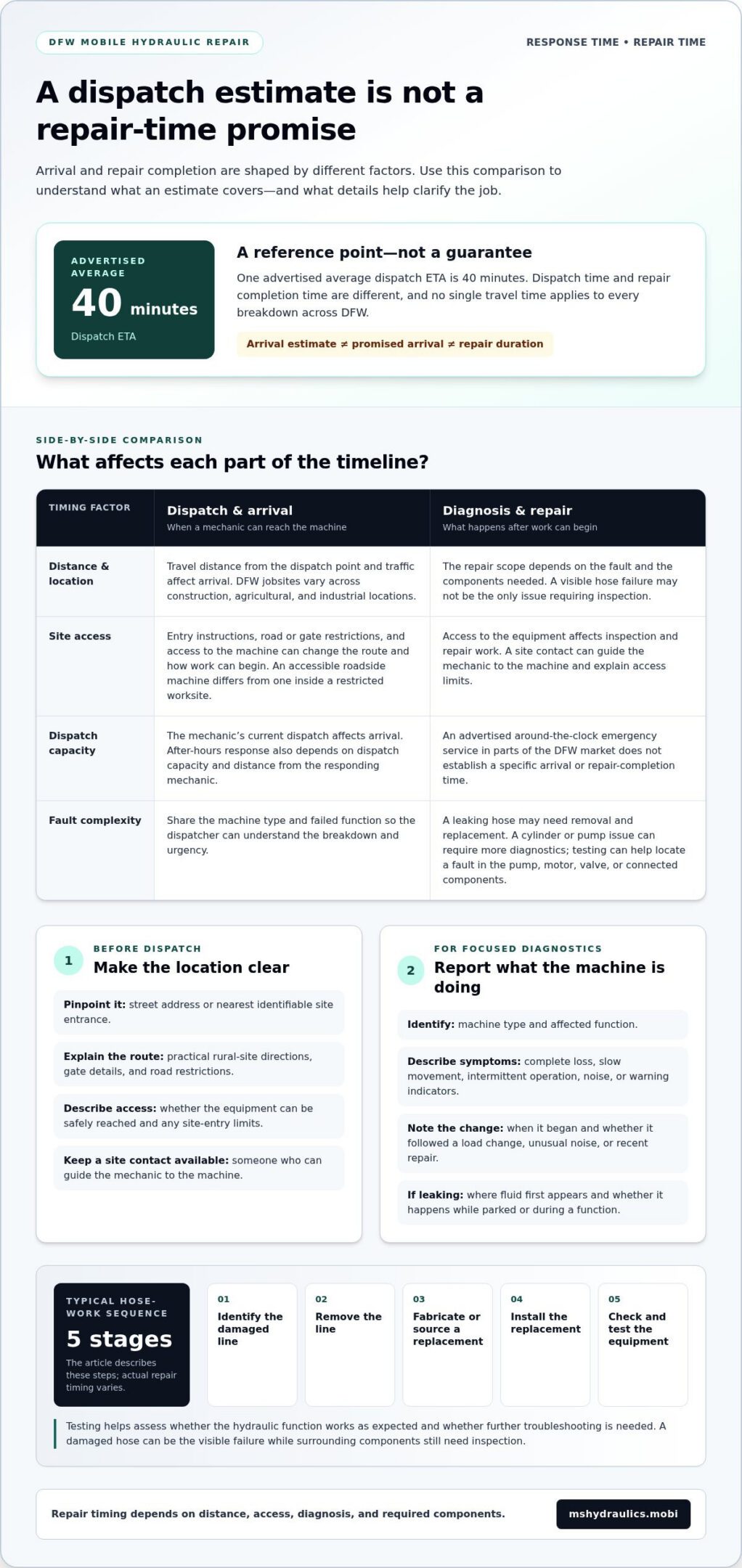
There’s no single guaranteed response time for a mobile hydraulic mechanic in DFW. One advertised average dispatch ETA is 40 minutes, but dispatch time and repair completion time are different: location, technician availability, access to the machine, and the fault’s complexity all affect when work can begin and finish.
When equipment is down, every minute can disrupt a job. A guaranteed response time for a mobile hydraulic mechanic in DFW is useful only when you know what it covers. A dispatch estimate is not the same as a promised arrival, and neither tells you how long diagnosis or repair will take.
This article explains how emergency dispatch and on-site diagnostics affect hydraulic repair timing in DFW, what information helps a mechanic assess the problem, and what can extend a repair once work begins. It also explains how after-hours calls fit into the process, so you can plan when equipment failure interrupts operations.
Key Takeaways
- For construction, agriculture, and industrial equipment, identify the machine, failed function, and visible symptoms to help clarify the repair scope.
- Share what changed before the failure and whether the equipment can be safely accessed; these details help guide on-site diagnostics.
- Keep the breakdown location and site access instructions ready when arranging emergency dispatch.
- After-hours calls are more useful when you can clearly describe the equipment, hydraulic issue, and urgency.
- When a damaged hose is the fault, Ms. Hydraulics LLC hydraulic hose fabrication can address that repair need; cylinder or broader equipment issues may call for a different repair approach.
How quickly can I get hydraulic repairs?
Repair timing depends on dispatch distance, equipment access, diagnosis, and the components needed. Mobile mechanics serve jobsites across DFW, but travel distance and site conditions affect arrival.
Factors Affecting Response Time
Location is only one factor. Traffic, site access, and the mechanic’s current dispatch also affect arrival. Equipment beside an accessible road presents different conditions from a machine inside a restricted worksite. When reporting a breakdown, provide the exact location, entry instructions, and equipment type.
Fault complexity affects repair time after arrival. A leaking hydraulic hose may need to be removed and replaced, while a cylinder or pump problem can require more diagnostics. For construction, agricultural, and industrial equipment, identify the machine, the affected function, and visible symptoms. This helps distinguish an isolated hose repair from a broader component failure.
Emergency Mobile Repair Availability
Emergency mobile hydraulic hose repair is advertised around the clock in parts of the DFW market. Advertised availability does not establish a specific arrival or repair-completion time. For an emergency mobile diesel repair request, give the dispatcher the breakdown location, machine type, and whether the equipment is stopping active work.
After-hours response depends on dispatch capacity and the site’s distance from the responding mechanic. A failed line on an accessible excavator presents different conditions from a breakdown that requires restricted-site entry. Keep a site contact available to guide the mechanic to the machine and explain access limits.
DFW Service Area and Distance Limits
Mobile mechanics serve equipment at jobsites across DFW, including construction, agricultural, and industrial locations. Travel distance from the dispatch point, traffic, and site access all influence arrival. No single travel time applies to every breakdown across the metro area.
When reporting a location, provide the street address or nearest identifiable site entrance. For a rural jobsite, add practical directions and note any gate or road restrictions. These details help the mechanic assess the route and find the equipment.
On-site hose work typically involves identifying and removing the damaged line, fabricating or sourcing a replacement, and installing it. The technician then checks the repair and tests the equipment. A damaged hose may be the visible failure, but surrounding components may also need inspection before the machine returns to work.
Repair pricing follows a quote request and depends on the diagnosis, parts, labor, and site access. Before work begins, ask for the repair scope and which components it includes. Testing after installation helps assess whether the hydraulic function works as expected and whether further troubleshooting is needed.
Troubleshooting and diagnostics
Accurate troubleshooting starts with the machine’s symptoms, operating conditions, and recent changes. Note whether a function stopped completely, moves slowly, or works intermittently. Record when the issue began and whether it followed a load change, unusual noise, or visible fluid loss. These details help focus the inspection before components are tested or removed.
Describe the affected function precisely. For example, report whether an excavator’s boom, travel function, or attachment behaves differently. Also identify warning indicators, fluid around the machine, and any recent hose or fitting work. Share this information immediately when arranging a repair service. A clear symptom history helps separate a hydraulic fault from a control or mechanical issue.
Pump and Motor Fault Diagnosis
Pump and motor diagnosis considers symptoms across the hydraulic circuit, not just one component. A pump problem may show up as weak or inconsistent movement, while a motor fault may affect a particular drive or attachment function. Technicians compare the reported behavior with inspection findings and system test results to locate the change in performance.
Tell the mechanic which functions still work and whether the problem changes under load. A pump issue affecting several functions suggests a different diagnostic path from a motor problem limited to one movement. Testing helps determine whether the fault is in the pump, motor, valve, or connected components.
Hydraulic System and Leak Diagnosis
System diagnostics trace fluid movement through the machine’s connected components. An inspection can include the reservoir area, visible hose routing, fittings, cylinders, and valves, as well as signs of contamination or leakage. A wet fitting may indicate a connection issue, while fluid along a hose can point to abrasion or damage. The location and pattern guide further checks.
If there is a leak, identify where fluid first appears, not just where it collects. Fluid can travel along a hose or frame before dripping. Note whether leakage occurs while parked or during a particular function. This helps focus the inspection and determine whether the repair involves a hose, fitting, or another component.
What to Record Before Inspection
Before the mechanic arrives, prepare a concise fault report:
- Machine type and the function affected.
- Symptoms, including noise, slow movement, or loss of function.
- Visible fluid location and any recent repair or operating change.
Keep the machine’s operating history factual; avoid guessing at the failed part. A complete report supports focused on-site testing and clearer repair decisions. For a suspected hose failure, on-site hydraulic diagnostics can help identify the fault and the repair required.
Advertised average mobile mechanic arrival time
DFW listings cite a 40-minute average dispatch ETA and a 36-minute average response time for mobile truck repair. These are advertised averages, not a guaranteed arrival time or a repair-completion estimate.
Advertised Arrival-Time Claims
An average describes reported performance across service calls, not the arrival time for a particular machine. A dispatch estimate can change with the technician’s location, traffic, call volume, and jobsite access. Repair time begins after arrival and depends on diagnosis, parts, and the work required.
For hydraulic hose repair, distinguish arrival time from replacement time. The technician may need to identify the failed hose, inspect its fittings, and determine the correct replacement before installation. Details about the machine, failure, and location help the dispatcher understand the request.
Mechanic Options With Guaranteed Response Times
In Dallas-Fort Worth, advertised mobile-service figures include average response times, but an average is not a stated guarantee. The figures of 40 minutes and 36 minutes describe separate advertised benchmarks; they don’t establish a guaranteed response time for every mobile hydraulic mechanic in DFW.
Before relying on a response-time claim, check what it promises: dispatch or arrival, when the clock starts, and which service area it covers. A county boundary, traffic, or a restricted jobsite entrance can affect how an advertised timeframe applies.
While waiting, note the machine’s location, equipment type, affected function, and visible symptoms. Say whether a hose is leaking, a function has stopped, or performance changes under load. Provide clear entrance directions and a site contact’s details so the mechanic can find the equipment without avoidable delays.
When arranging an emergency call, gather the machine’s make and model, recent repair history, and any visible component markings. Don’t guess which part failed. A concise report helps the dispatcher distinguish a hose issue from a pump, motor, or valve concern.
To assess a response-time guarantee, review the written terms for the service covered, when the clock starts, the geographic boundary, and any exceptions. Confirm whether the stated time means a callback, dispatch, or mechanic arrival. A rapid dispatch estimate, for example, does not mean hydraulic hose repair or replacement will be completed within that period.
Coverage terms matter across a metro area. A service provider may define coverage by named cities, a county, or a travel boundary. Match the jobsite address to the stated area, then compare it with the specific response commitment. This helps distinguish advertised averages from guarantees when choosing a repair service.
After-hours phone availability
After-hours phone access and mechanic arrival are separate parts of an emergency hydraulic repair. A Fort Worth service listing reports four rescuers on call right now, but that figure describes Fort Worth at the time represented, not every DFW location.
For a night breakdown, the first call should establish the equipment, failure, location, and urgency. A tractor with a leaking mobile hydraulic hose requires different details from a cylinder that has stopped moving. Describe the symptom and affected function rather than naming a suspected failed component.
Phone availability can help start triage outside regular business hours. It does not, by itself, establish a dispatch time, arrival time, or repair-completion time. Ask what happens after the call: whether the issue is recorded, what information dispatch needs, and whether the next step is a callback or field response. These are separate stages.
Prepare these details before calling:
- Equipment type, make, and model, if known.
- Jobsite address, entrance instructions, and a reachable site contact.
- Hydraulic function affected, visible leakage, and any change in machine operation.
- Whether a hose, fitting, cylinder, or other component appears involved.
A concise description helps the person taking the call distinguish a hose failure from a broader hydraulic problem. For example, say that a loader’s lift function stopped after fluid appeared near a hose connection. Avoid guessing at the cause. Inspection determines whether the fault involves the hose, fittings, cylinder, or another component.
After-hours calls also benefit from a clear account of recent events. Mention whether the machine was working under load, whether the symptom began suddenly, and whether the same function has failed before. For a fleet, identify the exact unit and worksite. This prevents confusion when several machines are operating at different locations.
Phone triage can help organize a response, but diagnosis still depends on inspecting the equipment and testing the affected system. A reported hose leak may require hose replacement, while slow movement can involve another component. Give accurate symptoms and site directions so the repair service can assess the request and plan the next step.
For a late call, keep the line available after sharing the breakdown details. A reachable contact can clarify gate access, equipment location, or changes in the machine’s condition. Across DFW, these practical details help connect an after-hours call with the appropriate response process.
Emergency mobile hydraulic dispatch
Emergency dispatch starts with a clear fault report and precise breakdown location. The dispatcher needs the machine type, affected function, visible leaks, and access instructions. An excavator with a damaged boom hose requires different preparation from a machine that will not travel. Clear details help route the call and prepare for likely repair needs.
Provide the site address, nearest entrance, gate instructions, and a contact who can guide arriving trucks. At a large worksite, identify the machine’s location by work zone or nearby landmark. Mention whether the machine is blocking active operations and whether it can be approached safely. These details help reduce avoidable delays after dispatch.
Parts readiness can influence whether a repair is completed during the first visit. Mobile repair trucks are listed with more than 1,000 fittings, and some are equipped to fabricate hoses up to 2 inches and 6-wire. A damaged hose’s dimensions, routing, and connection details help technicians prepare. A pump or motor failure may require a different diagnostic and parts plan.
On arrival, the technician assesses the fault, confirms the affected components, and determines the repair scope. A hose failure may involve removing the damaged assembly, fabricating a replacement, installing it, and testing the machine’s hydraulic function. A more complex failure may require further troubleshooting before the repair path is clear. Dispatch time and repair duration are separate stages.
Market service listings report that mobile repair trucks diagnose and resolve 95% of emergency failures on the first trip. That figure is an advertised service claim, not a result guaranteed for every breakdown. The machine’s condition, fault complexity, access, and parts required all affect the work. Accurate information before dispatch helps technicians prepare for the reported problem.
Before the mechanic arrives, keep the equipment identification and any hose or component markings accessible. Tell the site contact which symptoms were reported and direct them to the machine. Avoid operating equipment with an active hydraulic leak, as continued use can complicate inspection and repair. For an excavator, note which function failed and whether other hydraulic functions still work.
For a mobile hydraulic repair request, contact the repair team with the machine type, location, and fault details so dispatch can assess the call.
Ms. Hydraulics: Hydraulic Hose Fabrication
Ms. Hydraulics LLC provides hydraulic hose fabrication for equipment with a damaged or failed hose. When inspection identifies the hose as the fault, fabrication supports its replacement as part of returning the machine to service. For broader issues, the company provides mobile hydraulic repair, hydraulic cylinder rebuilds, and heavy equipment maintenance.
When describing the repair need, share the machine type, affected function, breakdown location, and visible symptoms. These details help define the work, whether it involves a hose assembly or a larger equipment problem.
Contact Ms. Hydraulics LLC or visit mshydraulics.mobi to discuss your hydraulic repair needs.
Prepare your next repair request
A breakdown is easier to manage when the person arranging service has a clear work order: machine identification, affected function, site access, and impact on operations. Keep these details available for follow-up calls, and record any symptom changes while the equipment is out of service. This creates a useful handoff from dispatch to on-site diagnosis.
A guaranteed response time for a mobile hydraulic mechanic in DFW needs context: dispatch, arrival, diagnosis, and completed repair are separate milestones. Use the specific commitment and its coverage terms when planning equipment and crew decisions.
Ms. Hydraulics LLC supports equipment needs with Hydraulic Hose Fabrication, Hydraulic Cylinder Rebuilds, and Heavy Equipment Maintenance. When arranging hydraulic repair, share the machine details and symptoms so the service request starts with relevant information.
Contact Ms. Hydraulics LLC for service and take the next step toward resolving your equipment issue.
Frequently Asked Questions
Mobile Hydraulics or a Local Shop: Which Is Faster?
Mobile repair can save transport time when a disabled machine cannot reach a shop. A shop may be more efficient for work requiring stationary equipment or extended component disassembly. For a machine at a Cleburne jobsite, compare the time needed to arrange transport with the mechanic’s travel and on-site work. The faster option depends on the fault, location, access, and repair method.
What is the turnaround time for repairs?
Turnaround depends on the diagnosed fault, repair scope, and parts required. Replacing a hose assembly differs from rebuilding a cylinder that needs disassembly and inspection. The timeline can also change if testing reveals another issue after the initial repair. For a useful work plan, separate diagnosis, parts sourcing, repair, and operational testing rather than treating the job as one arrival-to-finish estimate.
What response-time guarantees do DFW mobile hydraulic repair companies offer?
DFW companies may advertise response estimates, but there is no single guarantee for the region. Read the exact commitment and identify what it measures: a callback, dispatch, or arrival. A written promise to return a call, for example, does not mean a mechanic will reach a Mansfield site by that time. Keep the wording with the service record so dispatch expectations remain clear.
Do DFW mobile hydraulic mechanics guarantee arrival time or only a callback time?
The stated commitment determines whether it covers arrival or only a callback. These are different milestones, so record the wording and the time the call was placed. If dispatch provides an updated estimate, note it separately from the original commitment. This creates a clear service timeline for fleet supervisors coordinating equipment, operators, and work schedules across DFW.
How do DFW mobile hydraulic mechanic response times compare with local heavy-equipment dealers and repair shops?
There is no reliable universal ranking for mobile mechanics, dealers, and repair shops. Mobile service avoids transporting an inoperable machine, while a shop can handle work requiring fixed facilities. A dealer may be relevant when equipment-specific diagnostics or parts are central to the job. Compare the full repair process, including transport, diagnosis, parts, and testing, for the machine’s location.
What information should I provide to get an accurate mobile hydraulic mechanic ETA?
Provide the exact jobsite address, machine make and model, and affected function. Include any displayed error codes and describe when the symptom occurs, such as during lifting or travel. A clear photo of a visible leak or hose marking can help identify the issue. For a site near Arlington, include the correct entrance and access instructions.
What exclusions or conditions can void a guaranteed response time, such as traffic, weather, or parts availability?
Written terms determine whether traffic, severe weather, restricted site access, or parts availability affects a response commitment. These factors can delay travel or repair, but their effect on a guarantee depends on its stated conditions. Review how the terms define the service area, timing trigger, and exclusions. Keep a copy with the dispatch record for clear follow-up.