Hydraulic System Troubleshooting in Cedar Hill: A Technical Diagnostic Guide
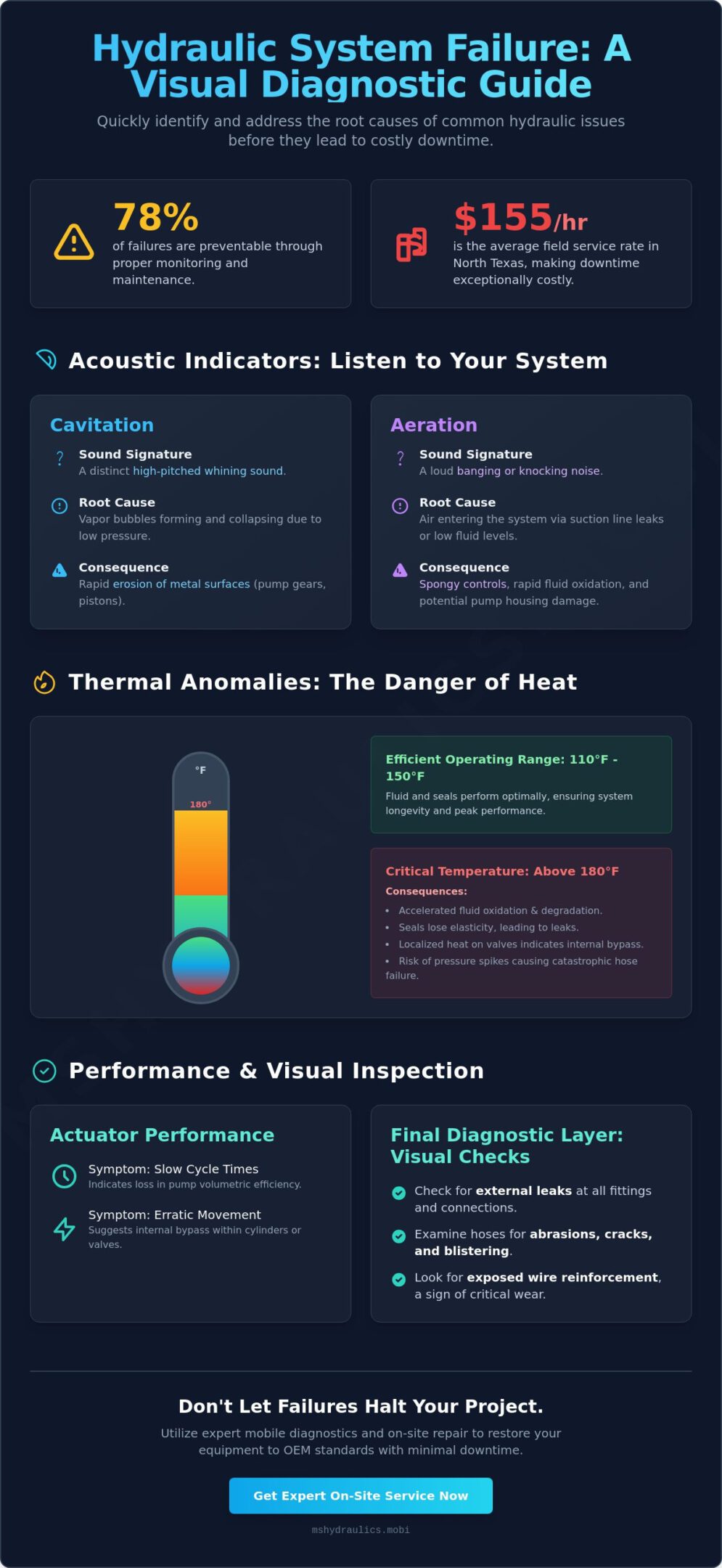
Did you know that 78% of hydraulic system failures are preventable through rigorous monitoring and adherence to technical safety standards? For operators in North Texas, an unexpected breakdown is more than a mechanical failure; it’s a direct hit to your project’s bottom line. With regional field service rates reaching $155.00 per hour as of May 2026, any delay in hydraulic system troubleshooting Cedar Hill equipment leads to compounding costs. You’ve likely faced the frustration of inaccurate diagnostics that result in unnecessary parts replacement while the root cause remains unaddressed.
Reliability is built on engineering precision rather than trial and error. This technical guide provides a systematic diagnostic framework designed to identify failures quickly and restore your machinery to OEM specifications. We’ll examine critical parameters such as pressure and displacement while ensuring your maintenance protocols align with Texas Commission on Environmental Quality standards. From interpreting system data to utilizing local disposal resources like the Kwik Car on Belt Line, you’ll gain the expertise required to eliminate recurring failures and maintain operational excellence.
Key Takeaways
- Learn to distinguish between cavitation and aeration by analyzing specific acoustic signatures and thermal irregularities before they compromise system seal integrity.
- Implement a data-driven diagnostic framework that utilizes OEM performance specifications to establish a precise baseline for system efficiency and component health.
- Master the technical steps for hydraulic system troubleshooting Cedar Hill equipment to accurately identify volumetric efficiency loss in pumps and internal leakage in directional control valves.
- Develop mitigation strategies for North Texas environmental stressors, including high ambient temperatures and particulate contamination, to extend the service life of critical filtration components.
- Understand the advantages of utilizing mobile diagnostic capabilities and on-site hose fabrication to restore heavy machinery to certified operational standards with minimal site disruption.
Identifying Common Hydraulic System Failure Symptoms
Effective hydraulic system troubleshooting Cedar Hill requires an analytical approach to component behavior and performance data. In fluid power systems, the first indicators of mechanical distress are often sensory rather than digital. Technicians must distinguish between normal operational harmonics and specific sounds that signal internal component degradation. Early detection of these symptoms prevents the 78% of failures that stem from avoidable maintenance oversights and improper fluid management.
Acoustic Indicators of Component Stress
A high-pitched whining sound typically signals pump cavitation. Cavitation is the formation of vapor bubbles in fluid that occurs when local pressure drops below the fluid’s vapor pressure. When these bubbles collapse, they create micro-jets that erode metal surfaces, specifically pump gears and pistons. Conversely, aeration produces a distinct banging or knocking sound. This occurs when air enters the system through suction line leaks or low reservoir levels. Aeration leads to spongy control response and rapid fluid degradation through oxidation; it’s a destructive force that can quickly compromise pump housing integrity.
Thermal and Pressure Anomalies
Monitoring operating temperatures is critical for maintaining seal integrity. Most industrial systems operate efficiently between 110°F and 150°F. When temperatures exceed 180°F, fluid oxidation accelerates and seals lose their elasticity. Technicians should use infrared thermometers to scan directional control valves. A localized heat signature often identifies internal bypass where high-pressure fluid leaks past a worn spool. These thermal irregularities frequently precede pressure spikes that cause catastrophic failure in hydraulic hoses. Unchecked spikes can exceed the rated working pressure of the hose, leading to bursts and immediate site downtime.
Technical diagnostics must also account for actuator performance. Slow cycle times or erratic cylinder movement often suggest a loss in pump volumetric efficiency or internal bypass within the cylinder itself. A rigorous visual inspection protocol serves as the final diagnostic layer. During hydraulic system troubleshooting Cedar Hill, inspectors must look for external leaks at fittings and examine hoses for abrasions that expose the wire reinforcement. Identifying these symptoms ensures that repairs address the root cause rather than merely treating the visible failure. This methodical observation is the foundation of restoring equipment to its original OEM specifications.
The Systematic Approach to Hydraulic Diagnostics
Reviewing Original Equipment Manufacturer (OEM) performance specifications is the mandatory starting point for any technical intervention. Without a baseline for pressure, displacement, and cycle times, diagnostic efforts remain speculative. Professional on-site diagnostic services rely on comparing live system data against these factory-certified benchmarks. This disciplined methodology ensures that technicians don’t replace functioning components based on visual assumptions. The diagnostic process follows a logical sequence to eliminate variables:
- Establish OEM baselines for pressure and flow.
- Conduct a visual circuit inspection for external leaks.
- Isolate sub-systems through operational load tests.
- Verify component health via precision flow meters and pressure gauges.
Phase 1: Non-Invasive Data Collection
Before deploying instrumentation, technicians must conduct a comprehensive assessment of the system’s current state. This begins with fluid analysis, checking for aeration, water contamination, or particulate matter. Reviewing heavy equipment maintenance logs is equally vital. Patterns of recurring hose failures or gradual pressure drops often point to systemic issues rather than isolated component wear. Technicians must also verify that control linkages are properly adjusted and that relief valve settings haven’t been tampered with by unauthorized personnel.
Phase 2: Technical Pressure Testing
Once the baseline is established, the transition to invasive testing requires precision and strict adherence to safety protocols. High-pressure systems can store significant energy; therefore, connecting gauges to designated diagnostic ports is the only acceptable method for data acquisition. Utilizing systematic diagnostic procedures allows for a clear distinction between static pressure and dynamic flow issues. While a pump might reach its relief setting under static conditions, it may fail to maintain required flow under load, indicating a loss in volumetric efficiency.
Differentiating between these two states is essential for accurate hydraulic system troubleshooting Cedar Hill. A system that shows correct static pressure but experiences slow cycle times usually suffers from internal leakage or a worn pump. Operational tests should isolate specific sub-systems by capping off circuits and monitoring pressure decay over time. This methodical isolation narrows the root cause to a single valve, cylinder, or motor. It prevents the high costs associated with “shotgun” parts replacement where multiple components are swapped in hopes of a fix. Data analysis must remain objective; every PSI and GPM reading provides a clear narrative regarding the internal health of the machine. By following this structured path, operators move from reactive guessing to proactive, engineering-based solutions.
Troubleshooting Key Components: Pumps, Valves, and Cylinders
Component-level analysis is the next phase in hydraulic system troubleshooting Cedar Hill projects. Once the circuit has been isolated, technicians must evaluate the performance of individual assets against their design parameters. Pumps, for instance, rarely fail catastrophically without warning. Instead, they experience a gradual loss of volumetric efficiency due to internal slippage. This occurs when fluid bypasses the rotating group and returns to the suction side or case drain. If a pump’s case drain flow exceeds 10% of its rated output, the unit requires immediate service to prevent heat generation and total system failure.
Hydraulic Cylinder Diagnostic Procedures
Cylinders are prone to internal seal bypass, which manifests as drift or the inability to hold a load. A standard drift test involves extending the cylinder under load and measuring the retraction over a specific interval, such as 15 minutes. If movement exceeds OEM tolerances, it indicates that high-pressure fluid is bypassing the piston seal. During an inspection, technicians must also check rod surfaces for longitudinal scoring. Deep scratches often introduce contaminants into the system, necessitating a heavy equipment cylinder rebuild to restore the rod’s chrome finish and seal integrity.
Pump and Valve Malfunctions
Directional control valves and relief valves are the precision regulators of any circuit. Stuck spools or internal leakage often stem from fluid contamination. Adherence to ISO 4406 cleanliness codes is the primary factor in preventing silt-sized particles from causing abrasive wear on valve spools and internal bore surfaces. Relief valves are particularly sensitive; a weakened spring or eroded poppet can cause the valve to open at sub-optimal pressures, leading to a significant drop in system torque and speed. In gear pumps, worn wear plates allow fluid to bypass the gear teeth, which drastically reduces the unit’s ability to maintain pressure under load.
Hydraulic motors require a similar diagnostic logic, focusing on torque output versus input flow. A motor that consumes its rated flow but fails to produce expected torque is likely suffering from internal wear in the piston or vane assembly. By quantifying these losses, operators can make informed decisions regarding component replacement versus repair. This level of technical scrutiny is essential for maintaining the high-pressure demands of modern industrial machinery in North Texas. Precise identification of these failure points ensures that maintenance resources are allocated effectively, preventing the “shotgun” approach to parts replacement.
Environmental Factors Affecting Cedar Hill Hydraulic Performance
The North Texas climate presents specific stressors that complicate hydraulic system troubleshooting Cedar Hill operations. Industrial machinery operating in the Dallas-Fort Worth metroplex must account for ambient temperatures that frequently exceed 100°F during summer months. These external conditions directly impact fluid viscosity and the thermal equilibrium of the entire circuit. When environmental factors aren’t managed, the rate of component wear accelerates, leading to premature failure of pumps and seals that would otherwise meet their full service life.
Heat Management and Fluid Degradation
Thermal stability is a primary concern for high-pressure systems. For most mineral-based hydraulic fluids, 140°F represents a critical threshold. Once the reservoir temperature exceeds this point, the rate of fluid oxidation doubles for every 18°F increase. This chemical breakdown results in “varnish,” a sticky residue that coats internal valve surfaces and restricts spool movement. To mitigate this, technicians must verify the efficiency of oil coolers and the functionality of thermal bypass valves. A malfunctioning bypass valve can trap heat within the circuit, causing the fluid to lose its lubricating film strength and leading to metal-on-metal contact within the pump’s rotating group.
Contamination Control in the Field
Cedar Hill job sites are often characterized by high levels of airborne dust and particulate matter. These abrasive particles are the primary cause of internal component scoring. When silica-based dust enters the system through damaged cylinder rod seals or inadequate breathers, it acts as a lapping compound. This destroys the precision-machined tolerances of directional control valves and gear pumps. Breather filters must be inspected frequently; a clogged breather can create a vacuum in the reservoir, pulling unfiltered air and moisture through the pump’s shaft seal. Moisture ingression is particularly problematic in humid Texas conditions, as it leads to fluid emulsification and the corrosion of internal steel components.
Selecting the correct fluid viscosity is essential for maintaining system pressure across variable Texas seasons. While a lighter ISO VG 46 might suffice in cooler months, the extreme heat of a North Texas summer often necessitates a transition to ISO VG 68 to maintain adequate volumetric efficiency. If you suspect thermal degradation or particulate contamination, schedule on-site diagnostic services to perform a comprehensive fluid analysis before component failure occurs. Proactive monitoring of these environmental variables is the most effective way to prevent recurring system issues and maintain OEM performance standards on the job site.
Expert Mobile Hydraulic Repair Services in Cedar Hill
When technical diagnostics reveal a critical component failure, the logistical challenge of transporting heavy machinery often exacerbates project delays. Professional hydraulic system troubleshooting Cedar Hill services bridge this gap by deploying advanced diagnostic laboratories directly to the job site. For operators of specialized agricultural or industrial machinery, the ability to explore Jaltest MHE (Material Handling Equipment) Kit provides the necessary software-based insights to resolve complex electronic-hydraulic interface issues. This mobile approach eliminates the high costs and safety risks associated with moving non-operational equipment. By performing repairs in the field, technicians can observe the system under actual working loads, ensuring that the root cause of the failure is fully resolved before the machine returns to service.
The field service units operated by Ms. Hydraulics LLC are equipped with specialized tools for custom hydraulic hose fabrication, allowing for the immediate replacement of compromised lines with precision-matched fittings. Whether the asset is a compact skid steer or a large-scale drill rig, the technical requirements for pressure and flow remain absolute. We maintain a rigorous focus on restoring equipment to its original performance parameters. This commitment to engineering excellence ensures that every repair isn’t just a temporary fix but a long-term restoration of the machine’s operational capacity.
Rapid Response Mobile Diagnostics
Downtime on a Cedar Hill construction site is a measurable financial loss. With current field service rates reaching $155.00 per hour as of May 2026, efficiency in part identification and installation is paramount. Our service trucks carry a comprehensive hydraulic parts inventory, including high-pressure seals, relief valves, and filtration elements. This preparation allows for immediate corrective action following the diagnostic phase. By centralizing the repair process on-site, we reduce the total time to restoration by approximately 40% compared to traditional shop-based models.
Why Choose Ms. Hydraulics LLC for Cedar Hill Repairs
Founded in 2021, Ms. Hydraulics LLC has established itself as a technical authority in North Texas fluid power systems. We don’t believe in the “shotgun” approach to parts replacement; our technicians rely on data-driven hydraulic system troubleshooting Cedar Hill to provide accurate, transparent solutions. Every repair we perform follows a disciplined protocol to ensure the longevity of the repair and the safety of the operator. Our technical staff ensures that every component restoration and system calibration adheres strictly to ISO standards for quality and reliability. This professional decorum and engineering focus position us as a dependable partner for industrial players who value precision and performance above all else. We’re committed to minimizing your downtime through factual accuracy and certified mechanical expertise.
Optimizing Hydraulic Reliability on the Job Site
Maintaining peak performance in fluid power systems requires more than reactive maintenance. It demands a disciplined adherence to diagnostic frameworks that account for both mechanical wear and environmental stressors like the 100°F North Texas summers. By transitioning from speculative parts replacement to data-driven hydraulic system troubleshooting Cedar Hill, operators can significantly reduce the frequency of catastrophic failures. This systematic approach ensures that every component, from high-pressure hoses to complex directional control valves, operates within its certified OEM parameters.
Precision engineering remains the standard for modern industrial success. Our team provides on-site technician labor for rapid diagnostics and custom hydraulic hose fabrication directly at your location. We also perform expert cylinder rebuilds featuring precision testing to verify seal integrity under full load. Don’t let mechanical downtime compromise your project’s timeline or budget. Schedule Mobile Hydraulic Troubleshooting in Cedar Hill today to restore your equipment to peak efficiency. Your machinery is the backbone of your operation; let’s ensure it remains dependable and productive.
Frequently Asked Questions
How do I know if my hydraulic pump is failing?
A failing hydraulic pump typically manifests through a measurable loss in volumetric efficiency or an increase in case drain flow beyond 10% of its rated output. You’ll notice slower cycle times and increased noise levels, specifically high-pitched whining. These symptoms indicate internal wear on gears or pistons, which prevents the unit from maintaining required flow under load. Precise flow meter testing is necessary to quantify this degradation before total mechanical failure occurs.
What are the most common causes of hydraulic system failure in Cedar Hill?
The primary causes include fluid contamination and thermal distress exacerbated by North Texas summers. High levels of airborne dust on local construction sites often bypass inadequate breathers, leading to abrasive wear on precision components. When performing hydraulic system troubleshooting Cedar Hill equipment, technicians frequently identify oxidized fluid as a secondary cause. This occurs when reservoir temperatures exceed 140°F, causing additive depletion and seal hardening.
Can I perform hydraulic troubleshooting without specialized gauges?
Accurate diagnostics are impossible without calibrated pressure gauges and flow meters. While sensory indicators like heat or noise provide initial clues, they don’t provide the data required to distinguish between a worn pump and a leaking relief valve. Relying on guesswork often leads to the unnecessary replacement of functioning components. Technical data regarding PSI and GPM is the only way to verify that a system meets its original OEM specifications.
How often should I change hydraulic filters on heavy equipment in North Texas?
Most manufacturers recommend filter changes every 500 operational hours, but Cedar Hill’s dusty environment often requires shorter intervals. Monitoring the filter bypass indicator is the most reliable method for determining service needs. Maintaining ISO 4406 cleanliness codes is critical for protecting valve spools. If your equipment operates in high-particulate areas, consider implementing a 250-hour inspection cycle to prevent silt-sized particles from entering the high-pressure circuit.
What is the difference between cavitation and aeration in a hydraulic system?
Cavitation involves the formation and collapse of vapor bubbles due to low pressure at the pump inlet, producing a high-pitched whine. Aeration occurs when outside air enters the system through suction line leaks or low reservoir levels, resulting in a distinct banging sound. Both conditions are destructive. Cavitation erodes metal surfaces through micro-jets, while aeration leads to spongy control response and rapid fluid oxidation.
Is it better to repair or replace a leaking hydraulic cylinder?
Repairing or rebuilding a cylinder is generally more cost-effective than replacement, provided the barrel and rod aren’t structurally compromised. A professional rebuild involves honing the barrel and replacing all seals with high-performance materials. If the rod shows longitudinal scoring, it can often be re-chromed to restore its finish. Rebuilding typically costs 50% to 70% of the price of a new unit while restoring the component to original performance standards.
How much does a mobile hydraulic diagnostic service call cost?
Based on industry rates as of May 2026, field service for hydraulic repairs is approximately $155.00 per hour. Travel time is typically billed at $100.00 per hour for locations over one hour from the service facility. If emergency repairs are required before 7:00 AM or after 4:30 PM, overtime rates increase to $232.50 per hour. These rates ensure that a qualified technician with specialized diagnostic equipment is available on-site to minimize your downtime.
What should I do if my hydraulic system starts overheating?
Shut down the equipment immediately to prevent fluid oxidation and seal damage. Check the oil cooler for debris and verify that the cooling fan is operational. Overheating is often caused by internal bypass, where high-pressure fluid leaks past a worn component and generates heat. If the fluid smells burnt or has darkened, it has likely lost its lubricating properties and requires a full system flush and replacement to protect the remaining components.