Hydraulic Fluid Contamination Symptoms and What They Mean
A change in hydraulic fluid’s appearance or in equipment movement can signal contamination. The symptoms of hydraulic fluid contamination include cloudy or milky fluid, foam, unusual pump noise, and sluggish or jerky movement. Contamination occurs when unwanted material, such as water, air, or particles, enters the fluid.
It’s natural to look for a clear sign before deciding what to do, but no single symptom identifies every cause. Cloudiness can point to water, while foam may indicate air. Changes in movement or noise can signal that system performance is affected.
This article explains what contamination is, what common symptoms may indicate, and how visual checks, reservoir and filter inspections, and maintenance records can help clarify the issue. It also covers how contaminants enter hydraulic systems, so you can understand why a symptom may return even after the fluid has been changed.
Key Takeaways
- Cloudy fluid, foam, unusual pump sounds, or erratic movement can point to different contamination types; interpreting the combination helps narrow the cause.
- Contamination and fluid degradation are related but distinct, and either can impair system performance or contribute to component wear.
- Inspect fluid appearance, reservoir condition, filter pressure trends, and recent maintenance history; laboratory testing can help identify what visual checks cannot.
- Dust, moisture, air, service work, and fluid handling can all introduce contaminants, so finding the entry path matters when symptoms return.
What Is Hydraulic Fluid Contamination?
Hydraulic fluid contamination occurs when unwanted material enters the fluid; degradation is chemical breakdown. The symptoms of hydraulic fluid contamination depend on whether water, air, particles, or incompatible fluid is present.
Contaminant Types
Contaminants include particles, water, air, silica, metal, and incompatible fluids, all of which can interfere with operating components. Abrasive particles accelerate wear, while water reduces lubricity and can contribute to corrosion or cavitation. Silica can enter as airborne dust, and metal particles may come from component wear. Mixing fluids with different additive packages can cause sludge, varnish, viscosity changes, or unpredictable performance.
Cloudy Fluid and Other Appearance Clues
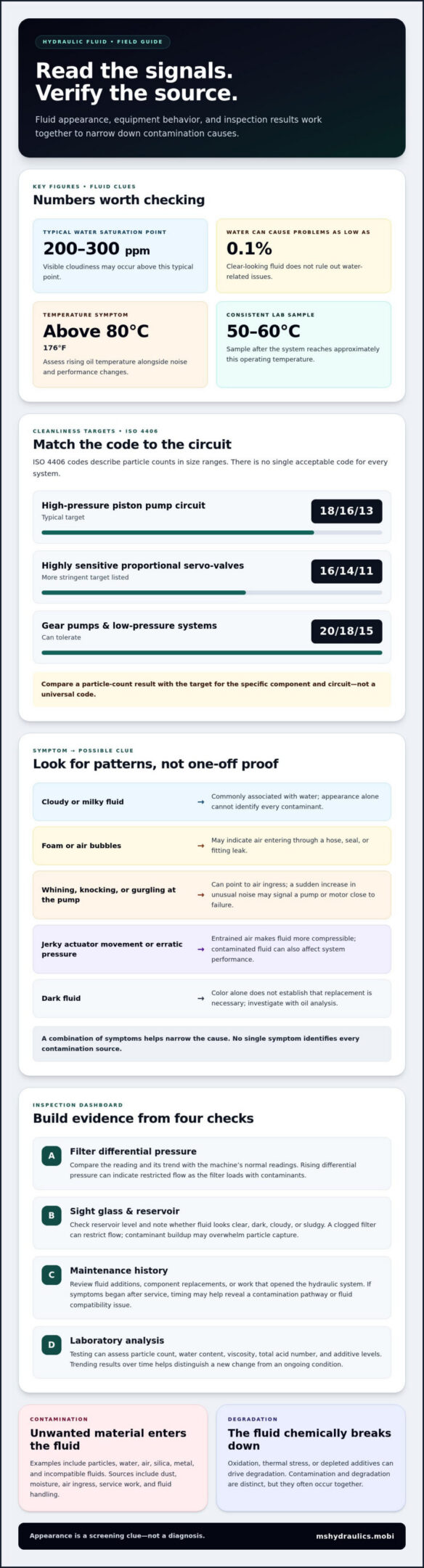
Cloudy or milky hydraulic fluid is an appearance clue commonly associated with water contamination. Emulsified water can make oil hazy, and visible cloudiness may occur above the fluid’s typical water saturation point of 200-300 ppm. Water can also cause problems at concentrations as low as 0.1%. Appearance alone cannot identify every contaminant: dirt or metal particles may require a fluid sample and particle analysis to detect.
Cleanliness Levels and ISO Codes
ISO 4406 codes describe fluid cleanliness by counting particles in size ranges; there is no single acceptable code for every system. A typical target for a high-pressure piston pump circuit is ISO 4406 code 18/16/13, while highly sensitive proportional servo-valves require 16/14/11. Gear pumps and low-pressure systems can tolerate 20/18/15. Compare results with the target for the specific component and circuit.
Foaming, Bubbles, Noise, and Temperature
Foam or air bubbles can indicate air entering the fluid, often through leaks in hoses, seals, or fittings. Entrained air makes fluid more compressible, which can produce erratic pressure and jerky actuator movement. Whining, knocking, or gurgling at the pump can also point to air ingress. A rising oil temperature above 80°C (176°F) is another contamination symptom; assess it alongside noise and performance changes.
Degradation, transient malfunctions, and catastrophic failure
Contamination and degradation are distinct processes, but they often occur together. Their combined effects can turn intermittent performance changes into component damage and system failure.
Internal Wear and Corrosion
Abrasive particles circulating between close-fitting hydraulic components accelerate internal wear. Water reduces lubricity and contributes to corrosion, while poor lubrication can increase metal particle generation. These effects may be more pronounced during component break-in, after replacement, or when lubrication is inadequate. As surfaces wear, new particles enter the fluid, creating a cycle that can impair a pump, valve, or cylinder.
Fluid Degradation and Incompatible Fluids
Fluid degradation is chemical breakdown caused by oxidation, thermal stress, or depleted additives. Heat and oxygen can break down protective additives, while water and pressure can accelerate deterioration. Incompatible fluids may react, producing sludge, varnish, odor, or viscosity changes. Oxidation can also increase acidity and gradually damage seals through swelling, hardening, or cracking. Following the equipment manufacturer’s service intervals and avoiding fluid mixing help limit these causes.
Transient Malfunctions and System Failure
Transient malfunctions are temporary performance changes, such as intermittent valve sticking or jerky cylinder movement. Contaminated fluid can also make pumps louder, plug filters faster, and raise operating temperatures. If abrasive wear, oxidation, or blockage continues, pressure and precision may decline until components fail. A sudden increase in unusual system noise can signal that a pump or motor may be close to failure. Addressing the underlying cause matters, since changing the fluid alone cannot stop persistent heat or water intrusion.
Damage and Safety Risks
Contaminated fluid can reduce system performance, damage internal components, increase maintenance needs, and create safety hazards when equipment moves unpredictably or loses force. For example, erratic actuator movement can affect controlled operation, while corrosion and wear can progress before an obvious breakdown. If contamination-related wear affects a pump, hydraulic pump repair addresses the damaged component; correcting the contamination source is also essential to limit recurring degradation.
Filter pressure, fluid appearance, reservoir, and maintenance-history checks
Start by checking filter differential pressure and comparing its trend with the machine’s normal readings. A rising differential can indicate restricted flow as a filter loads with contaminants. Check the sight glass and reservoir level, and note whether the fluid looks clear, dark, cloudy, or sludgy. A clogged filter can restrict flow, while contaminant buildup may overwhelm its ability to capture particles effectively.
Appearance is a screening clue, not a diagnosis. Dark fluid alone doesn’t establish that replacement is necessary; investigate discoloration with oil analysis. Review recent maintenance records for fluid additions, component replacements, or work that opened the hydraulic system. If symptoms began after service, the timing can help identify a possible contamination pathway or fluid compatibility issue.
Laboratory analysis can assess particle count, water content, viscosity, total acid number, and additive levels. For example, compare a particle-count result with the cleanliness target for the specific circuit, rather than applying one code to every machine. A sample taken after the system reaches approximately 50-60°C operating temperature can support consistent testing. Trending results over time helps distinguish a new change from ongoing exposure.
If fitted, inspect the case drain filter for accumulated debris and relate the findings to recent component work. Follow the equipment manufacturer’s fluid and filter service intervals, and replace hydraulic filters regularly. After a major overhaul or rebuild, flushing can remove built-in contamination before operation resumes. Off-line filtration is another method used before recommissioning. When changing fluid type, drain and flush the system first. Recurring symptoms after an oil change may indicate that the contamination source remains active. Review the maintenance history and system condition rather than relying on fresh fluid alone.
Sources of hydraulic fluid contamination
Contamination can begin before fluid reaches a machine. New hydraulic oil straight from a drum can contain 500,000 particles per 100 ml that are 5 µm or larger, with a typical cleanliness level around ISO 21/19/16. Manufacturing and assembly can also leave metal, weld residue, fibers, finishing granules, or assembly lubricants inside new equipment. A clean-looking supply does not establish its condition.
During operation, damaged or unsuitable breathers can admit airborne dust and moisture. Worn seals can let external contaminants enter, while leaks in hoses, seals, and fittings can draw air into the fluid. Dusty repairs or servicing can also expose open components to particles. Keep the hydraulic system sealed except during maintenance, and clean equipment thoroughly before opening it. These steps reduce exposure at common access points.
Internal wear is another source of contamination: operating components generate fine metal particles, particularly during break-in, after component replacement, or when lubrication is poor. Water may enter through seals, breathers, or storage, then promote corrosion and sludge. If symptoms return after fluid replacement, investigate the entry route rather than treating new oil as the complete fix. Review recent service, fluid handling, breather and seal condition, and operating temperature to narrow down the likely source.
If contamination keeps returning, get help addressing hydraulic system issues before the same entry path affects replacement fluid.
Ms. Hydraulics: Hydraulic Hose Fabrication
Ms. Hydraulics LLC provides hydraulic hose fabrication for equipment with damaged or worn hoses that may allow leaks or air into the hydraulic system. If contamination symptoms coincide with hose damage, a fabricated replacement can address that potential entry point. Recurring symptoms or unexplained performance changes may call for mobile hydraulic repair or heavy equipment maintenance to assess the equipment and identify related repair needs. Hydraulic cylinder rebuilds are available when cylinder condition is part of the issue. Resolving contamination means addressing its source as well as affected components, so match the service to the observed fault. Contact Ms. Hydraulics LLC to discuss hose fabrication or repair support for your equipment.
Use Your Findings to Plan the Next Service
Turn equipment observations into a useful maintenance record. Note when performance changes, what work occurred beforehand, and whether the issue returns after service. Over time, this record helps technicians spot recurring patterns and focus on the underlying cause, rather than repeatedly responding to the same visible effect.
The symptoms of hydraulic fluid contamination are signals to investigate in context, not automatic instructions to replace fluid. Consider fluid findings alongside equipment behavior and maintenance history before deciding what action the system needs. A consistent record also helps teams communicate a fault clearly and compare future changes with established operating behavior.
When hydraulic equipment needs repair support, Ms. Hydraulics LLC can help determine a practical next step based on the issue. Contact Ms. Hydraulics for help and move forward with a clearer plan for your equipment.
Frequently Asked Questions
What’s the difference between contamination and degrading?
Contamination means foreign material has entered the fluid; degradation means the fluid’s chemistry or performance has deteriorated. The two can occur together, so one observation may not distinguish them. For example, water can enter as a contaminant and contribute to fluid breakdown. Analysis of viscosity, water content, acidity, and additive levels can help clarify which condition is affecting the system.
What are the common symptoms of contaminated hydraulic fluid?
Common signs include changes in equipment movement, pressure stability, operating noise, filter behavior, or fluid appearance. Compare the machine’s current behavior with its normal pattern under similar operating conditions. Record when the change began and whether it occurs continuously or intermittently. This context can help distinguish a persistent fluid issue from a symptom tied to a particular operating cycle.
What does cloudy or milky hydraulic oil indicate?
Cloudy or milky oil commonly indicates water dispersed in the fluid, but appearance cannot show how much water is present. A water-content test, such as Karl Fischer titration, can quantify moisture in a sample. If cloudiness appears after service or fluid addition, include that timing in the diagnostic record. This can help connect the visible change to handling, storage, or maintenance.
How does contaminated hydraulic fluid affect pressure, flow, and equipment performance?
Contamination can restrict flow through filters or valves, reducing the pressure available to actuators. Air can also make fluid more compressible, contributing to inconsistent pressure response. Operators may notice slower movement, reduced force, or less precise control. Compare the affected function with other circuits: a localized problem can help narrow the focus to a component or flow path.
How do you test hydraulic fluid for contamination?
Laboratory analysis can measure particle count, water content, viscosity, total acid number, and wear metals. Particle counts can be reported using ISO 4406 cleanliness codes, while Karl Fischer titration measures water. Inductively coupled plasma spectroscopy can assess wear metals. Compare results with the machine’s circuit requirements and previous samples; a trend can reveal a developing change that one result alone may not show.
What steps should you take if you suspect hydraulic fluid contamination?
Record the observed change, operating conditions, and recent maintenance before making adjustments. Inspect accessible fluid and filter indicators, then arrange representative fluid analysis to identify particles, water, or wear metals. Review recent repairs and fluid handling for possible entry points. Correcting the source is essential: replacing fluid without addressing ongoing ingress can allow the same problem to recur.