How to Inspect Hydraulic Equipment During a Cleburne Plant Audit
Hydraulic contamination can damage equipment before a visible failure makes the problem obvious. A hydraulic system audit for a manufacturing plant in Cleburne should verify operating pressure and temperature with calibrated instruments, assess pump performance, examine fluid condition, and review inspection records. These checks can reveal warning signs such as abnormal heat, unusual pump noise, leaks, or inconsistent valve operation.
Pressure and performance matter, but fluid cleanliness and inspection history are also essential. This guide explains how to assess these areas during a plant audit, what to record, and when findings call for closer technical assessment. It also shows how to connect hydraulic observations with equipment condition, maintenance priorities, and plant operations.
Key Takeaways
- Use calibrated instruments to compare pressure and temperature readings with equipment specifications, and investigate abnormal pump noise or inconsistent valve response.
- Set inspection intervals for pressure checks, fluid analysis, and component reviews, then document findings so changes and developing trends are visible.
- Assess reservoir level and fluid appearance alongside sample results to spot signs of contamination or degradation before they affect equipment performance.
- Include hydraulic equipment condition in the wider plant audit to connect maintenance needs with process performance, resource use, and operational priorities.
Pressure verification and pump performance
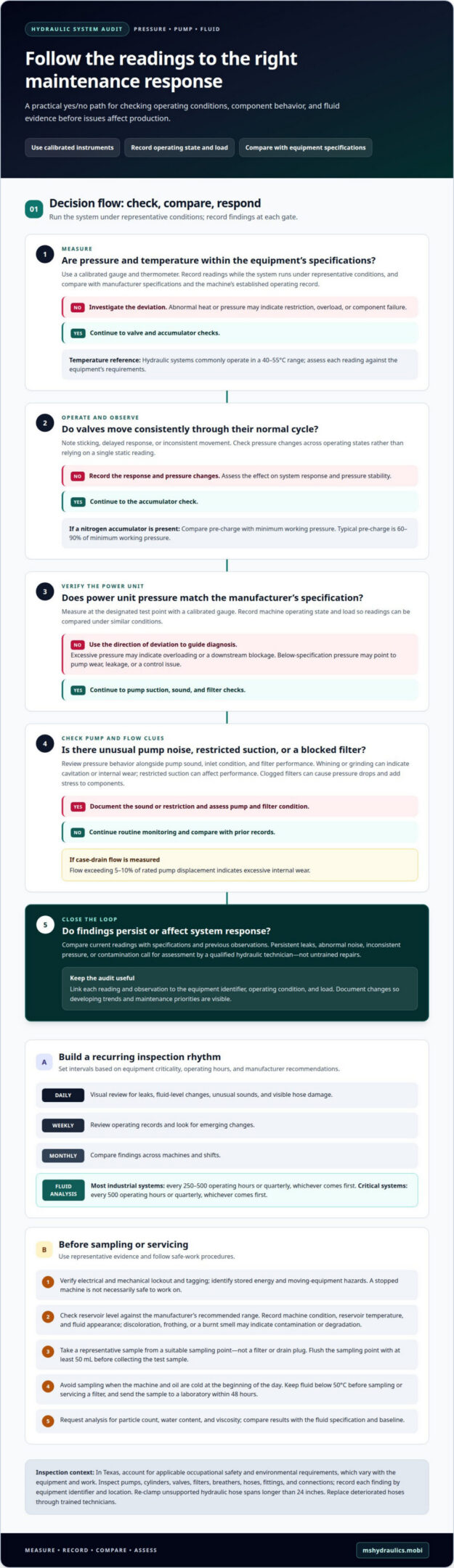
Compare pressure and temperature readings with equipment specifications using calibrated gauges and thermometers. Excessive heat or pressure, or signs of pump strain, may point to blockages, overloading, or failing components before they interrupt production. Early detection supports more focused maintenance and efficient operation.
-
Monitor System Pressure and Temperature
Record operating pressure and temperature with calibrated instruments while the system runs under representative conditions. Compare the readings with the equipment manufacturer’s specifications and the machine’s established operating record. Hydraulic systems commonly operate in a 40-55°C temperature range, but assess each reading against the equipment’s requirements. Investigate abnormal heat or pressure for signs of restriction, overload, or component failure.
-
Test Valves, Accumulators, and Pressure
Operate each valve through its normal cycle and note sticking, delayed response, or inconsistent movement. Check pressure changes across operating states rather than relying on a single static reading. For a nitrogen accumulator, compare pre-charge with minimum working pressure; typical pre-charge is 60-90% of that pressure. Record deviations and assess their effect on system response and pressure stability.
-
Verify Power Unit Operating Pressure
Measure hydraulic power unit pressure with a calibrated gauge at the designated test point, then compare the reading with the manufacturer’s specification. Record the machine’s operating state and load so future readings can be compared under similar conditions. Excessive pressure may indicate overloading or a downstream blockage. A reading below specification may point to pump wear, leakage, or a control issue that needs further diagnosis.
-
Check Hydraulic Pressures and Pump Suction
Review pressure behavior alongside pump sound, inlet condition, and filter performance. Whining or grinding can indicate cavitation or internal wear; restricted pump suction can also affect performance. Check filters for blockage, since clogged filters can cause pressure drops and add stress to components. Where case-drain flow is measured, flow exceeding 5-10% of rated pump displacement indicates excessive internal wear.
Daily, weekly, monthly, and quarterly hydraulic inspections
Set inspection intervals according to equipment criticality, operating hours, and manufacturer recommendations. In Texas, account for applicable occupational safety and environmental requirements, which vary with the equipment and work. Verify electrical and mechanical lockout and tagging before work begins.
-
Schedule Recurring Inspection Checks
Set a daily visual review for leaks, fluid level changes, unusual sounds, and visible hose damage. Use weekly checks to review operating records and identify emerging changes. Schedule monthly comparisons of findings across machines and shifts. For most industrial systems, fluid analysis is recommended every 250-500 operating hours or quarterly, whichever comes first. Critical systems should be sampled every 500 operating hours or quarterly, whichever comes first.
-
Apply Lockout and Pre-Inspection Safety
Before inspection, verify electrical and mechanical lockout and proper tagging. Confirm the equipment is safe to approach, then follow the plant’s applicable safety and environmental procedures. Identify stored energy and moving-equipment hazards in the work area. These precautions help reduce exposure during inspection. A stopped machine is not necessarily safe to work on.
-
Inspect Hydraulic Equipment Condition
Inspect pumps, cylinders, valves, filters, and breathers, and record visible damage, leaks, unusual noise, or inconsistent operation. Check cylinder rods for bending, cracked or flaking chrome, and leaking seals, which can allow dirt into the system. Compare filter condition and replacement records with manufacturer recommendations. Persistent leaks, abnormal noise, inconsistent pressure, or contamination call for assessment by a qualified hydraulic technician, not untrained repairs.
-
Check Hoses, Fittings, and Connections
Inspect hose covers, fittings, clamps, and connection points for deterioration, looseness, leaks, or unsupported spans. Record each finding by equipment identifier and location, then assign follow-up actions. Re-clamp unsupported hydraulic hose spans longer than 24 inches. Replace deteriorated hoses through trained technicians. Compare new inspection records with prior observations to distinguish a recurring leak from a new condition and prioritize maintenance accordingly.
Reservoir, fluid level, and temperature checks
Assess fluid condition using the reservoir and a representative oil sample. Record fluid levels, temperature, visible changes, and laboratory results, comparing them with equipment specifications and previous analysis.
- Check the reservoir fluid level against the manufacturer’s recommended range, and record it along with the machine’s operating condition. Look for discoloration, frothing, or a burnt smell, which may indicate contamination or fluid degradation. Record reservoir temperature too, since abnormal readings can help explain changes in fluid condition or system behavior. Link each observation to the machine identifier so future comparisons are useful.
- Collect a representative sample from a suitable sampling point, not from a filter or drain plug. Flush the sampling point with at least 50 mL before collecting the test sample, and avoid sampling when the machine and oil are cold at the beginning of the day. Keep hydraulic fluid below 50°C before sampling or servicing a filter, then send the sample to a laboratory within 48 hours.
- Request analysis for particle count, water content, and viscosity, then compare results with the fluid specification and baseline. The ISO 4406 cleanliness code uses three range numbers; 19/17/14 is a target for general industrial hydraulic systems. A water content below 200 ppm is a target, while levels above 500 ppm are an action level for most mineral hydraulic oils. Milky fluid typically indicates water above 1,000 ppm.
- Use the results to set or review a Hydraulic Fluid Index (HFI) target for the system. Compare each sample with earlier results, including particle contamination, water, and viscosity changes, rather than treating one result as a complete diagnosis. For new hydraulic systems, sample after the first 50-100 operating hours to establish a baseline and detect break-in contamination. Document corrective actions alongside each result.
Industrial plant audit scope
Define the audit by the hydraulic equipment in scope and its role in production, then connect the findings to wider plant operations.
-
Define the Plant Audit Scope
List the hydraulic assets, production processes, and support systems included in the audit. Assess equipment condition alongside manufacturing processes, resource management, and productivity. An industrial plant audit can also review compliance with applicable safety and environmental requirements. Link hydraulic findings to production impacts, such as recurring interruptions or inefficient energy use, rather than treating each machine in isolation.
Review maintenance records for early signs of wear or malfunction. Consider energy use, resource consumption, and opportunities for equipment upgrades or process changes. Periodic audits can identify preventive maintenance needs before an emerging issue disrupts operations. Many industrial audits take place annually or more often in high-risk or rapidly changing industries. Significant operational changes or abnormal events can also trigger an audit.
-
Estimate Audit Duration
Set the audit schedule according to its scope, asset count, equipment access, and production schedule. No single duration applies to every manufacturing plant. Reviewing a limited group of hydraulic assets differs from assessing production processes, resource use, and plant-wide equipment condition. Sampling and laboratory analysis can also affect when findings are available.
Separate on-site inspection time from follow-up analysis and reporting. Access restrictions, operating schedules, and record quality shape the inspection sequence. For instance, equipment checks may need to fit around active production, while an abnormal event may call for a focused assessment. The final report should document observed conditions and recommended actions for performance or reliability. Use the scope and required deliverables to set a realistic schedule.
For hydraulic equipment maintenance identified during an audit, discuss maintenance needs with Ms. Hydraulics LLC.
Ms. Hydraulics
Ms. Hydraulics LLC helps address hydraulic equipment issues identified during manufacturing plant audits. When findings point to recurring leaks, worn components, or performance problems, its on-site diagnostic services can help assess the affected equipment. Depending on the condition, the next step may be mobile hydraulic repair, heavy equipment maintenance, hydraulic hose manufacturing, or cylinder rebuilding.
When arranging support, share the inspection findings, equipment symptoms, and operating context. This helps focus attention on the affected hydraulic components and maintenance needs. Ms. Hydraulics LLC is a practical resource when an audit identifies repair or maintenance work beyond routine plant inspection. Contact Ms. Hydraulics LLC for help with hydraulic equipment findings.
Turn Audit Findings Into the Next Maintenance Decision
A hydraulic system audit for a manufacturing plant in Cleburne is most useful when findings lead to clear, assigned follow-up actions. Prioritize each issue by equipment condition, its role in production, and evidence of a developing trend. Record the responsible maintenance action and how completion will be documented. This keeps audit results connected to ongoing plant decisions rather than leaving them as a one-time report.
Use the findings to distinguish routine follow-up from conditions that need technical assessment. If a hydraulic problem affects equipment reliability or requires repair, Ms. Hydraulics LLC can help determine an appropriate next step for the machinery. Audit records provide a practical starting point for that discussion, including the equipment involved and observed symptoms.
For help acting on hydraulic equipment findings, contact Ms. Hydraulics. A clear next step can help keep maintenance planning focused and informed.
Frequently Asked Questions
Is Contamination Quietly Destroying Your Hydraulic Systems?
Contamination can impair hydraulic performance before a leak or shutdown reveals the cause. Fine particles, water, or air in the fluid may contribute to wear or inconsistent operation. A gradual change in a machine’s cycle behavior after maintenance or fluid handling can be a useful diagnostic clue. Compare symptoms across shifts and similar equipment before treating an isolated event as a system-wide problem.
What does a hydraulic system audit for a manufacturing plant include?
A hydraulic system audit for a manufacturing plant in Cleburne assesses equipment, operating conditions, maintenance evidence, and production impact. Auditors can compare similar machines to distinguish an isolated fault from a recurring issue across a production line. The scope can also examine whether operational changes or abnormal events came before a performance problem. This context helps connect equipment observations with practical maintenance priorities.
How do auditors assess hydraulic fluid condition, contamination, and filtration?
Combine fluid analysis with equipment observations and filter-maintenance history. Assess particle count, water content, and viscosity against fluid requirements and previous results. Filter-service timing adds useful context: a worsening sample after maintenance may warrant examination of handling practices or contamination entry points. This helps identify whether the response should focus on filtration, fluid condition, or another system issue.
What measurements and records should a plant prepare for a hydraulic audit?
Useful records include asset identifiers, operating conditions, previous pressure and temperature readings, fluid-analysis results, filter changes, and maintenance work orders. Note when symptoms began and whether they followed a repair, process change, or unusual operating event. For example, linking a recurring issue to a machine and work order makes it easier to trace equipment history and assess the pattern.
How often should manufacturing plants schedule hydraulic system audits?
Many industrial plant audits take place annually or more often in high-risk or rapidly changing industries. A hydraulic system audit for a manufacturing plant in Cleburne can also follow a significant operational change or abnormal event, either of which may alter equipment demands or reveal maintenance concerns. Set timing according to plant risk, process changes, and equipment condition. This schedule is separate from routine inspection and fluid-analysis intervals.
What Texas and federal safety regulations apply to industrial hydraulic systems?
Industrial plant audits assess compliance with applicable occupational health and safety and environmental requirements. Before equipment work, verify electrical and mechanical lockout and tagging, and follow the plant’s applicable safety and environmental procedures.