How to Maintain Cotton Stripper Hydraulics Before and After Harvest
A hydraulic leak or low fluid level can turn a morning start into avoidable downtime. Preventative maintenance for cotton stripper hydraulics in Alvarado starts with checking hydraulic oil and other fluid levels before starting the engine, then inspecting beneath the machine for fresh leaks. Hoses, connections, cylinders, and nearby areas also need attention because demanding harvest work can lead to wear and contamination.
Daily checks are important, but the inspection schedule should also reflect the machine’s duty cycle, field exposure, condition, and service history. This guide covers morning checks, how operating conditions shape inspection frequency, and how cleaning and lubrication support reliability before, during, and after harvest. It also explains how early attention to leaks, hose wear, and other changes can help identify maintenance needs before they become unexpected breakdowns.
Key Takeaways
- During harvest, schedule cotton picker cleaning at least once daily, with more frequent cleaning when field conditions cause buildup.
- Keep grease tanks full and operate the onboard lubrication system at the intervals in the operator’s manual.
- Use wear patterns, contamination, alignment, and performance changes to spot developing maintenance needs before equipment fails.
- Include pre- and post-harvest inspections, with attention to debris buildup and hydraulic lines in areas near the engine and conveyor.
Inspection frequency based on operating conditions
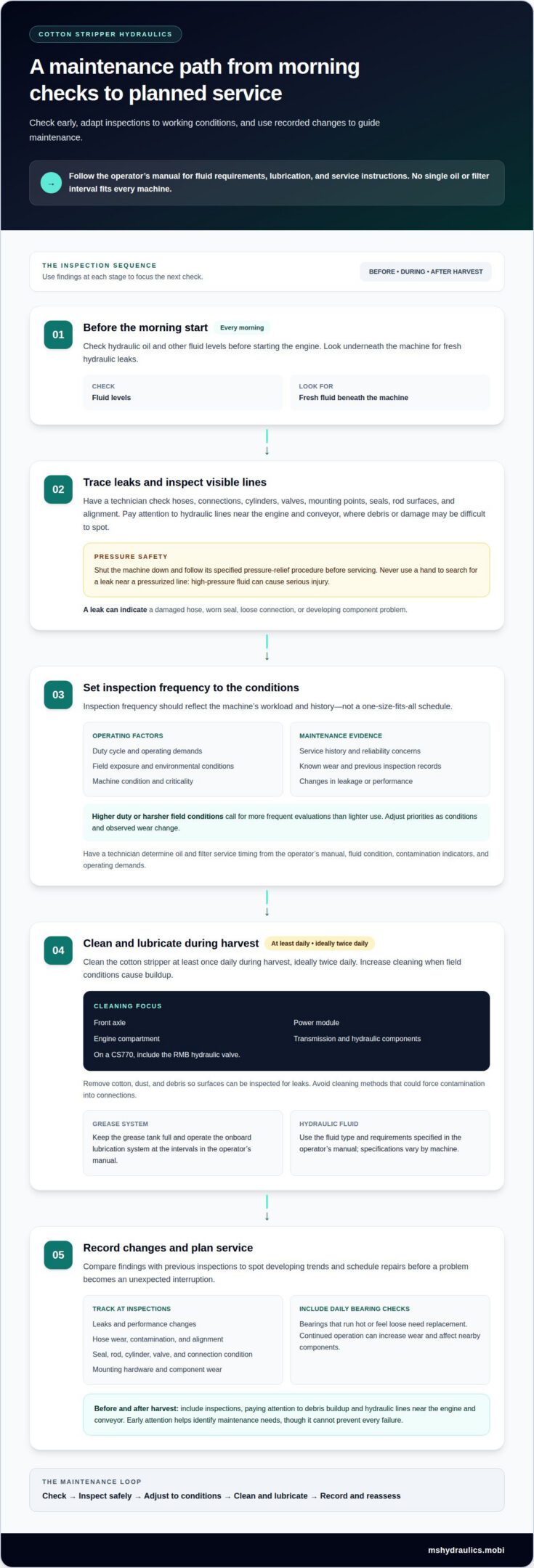
Set the inspection schedule according to duty cycle, field exposure, service history, and machine condition. Before each morning start, check fluid levels and look underneath the machine for fresh hydraulic leaks.
-
How Professionals Inspect for Hydraulic Fluid Leaks
Have a technician inspect beneath the cotton stripper and trace fresh fluid around hoses, connections, cylinders, valves, and mounting points. A leak may point to a damaged hose, worn seal, loose connection, or developing component problem. Changes in leak patterns or operating performance can also reveal gradual deterioration before a breakdown.
Before servicing, shut the machine down and follow its specified pressure-relief procedure. Never put a hand near a pressurized line to search for a suspected leak. High-pressure fluid can cause serious injury. Inspect visible hydraulic lines near the engine and conveyor, especially where debris or damage may be difficult to spot.
-
How Professionals Schedule Hydraulic System Inspections
Schedule inspections based on duty cycle, environmental exposure, machine criticality, service history, and known reliability concerns. High-duty operation or harsh field conditions call for more frequent evaluations than lighter use. A technician can use maintenance records and operating schedules to set priorities, then adjust the plan as conditions or observed wear change.
A hydraulic system inspection can cover seals, rod surfaces, hose wear, connections, mounting alignment, component wear, and signs of contamination. Investigate cotton stripper symptoms such as leakage or changes in performance. Possible causes include deteriorating seals, hose damage, contamination, or alignment problems. Compare findings with previous inspection records to spot developing trends.
-
How Professionals Determine Oil and Filter Change Timing
Have a technician determine oil and filter service timing using the machine’s operator’s manual, fluid condition, contamination indicators, and operating demands. No single change interval suits every cotton stripper, so follow the manufacturer’s instructions rather than an unsupported schedule. Heavy use and environmental exposure also affect inspection priorities.
Check hydraulic oil and other fluid levels each morning before starting the engine. If you find a low level, contamination, or a change in system performance, investigate the cause before returning the machine to work. A technician can assess fluid and filtration condition and determine whether service or further diagnosis is appropriate.
Cleaning and lubrication procedures
Effective preventative maintenance for cotton stripper hydraulics in Alvarado includes professional cleaning and lubrication based on the machine’s operator’s manual. During harvest, clean the cotton stripper at least once daily, ideally twice daily.
-
How Professionals Clean Hydraulic System Components
Arrange for a technician to remove cotton, dust, and debris from hydraulic areas, including the front axle, power module, and engine compartment. On a CS770, the cleaning procedure also includes the RMB hydraulic valve. Debris around these components can obscure leaks or interfere with inspection, so the technician examines surfaces after cleaning.
As part of preventative maintenance for cotton stripper hydraulics in Alvarado, clean the machine during harvest at least once daily, ideally twice daily, paying attention to field buildup. Cleaning should include the transmission and hydraulic components, not just exposed body panels. Avoid methods that could force contamination into connections.
-
How Professionals Lubricate Cotton Stripper Components
Have a technician confirm that the grease tank is full and operate the onboard lubrication system at the intervals specified in the operator’s manual. Follow those instructions for servicing the machine’s lubrication points instead of relying on a generic schedule.
Hydraulic fluid specifications vary by cotton stripper. Use the fluid type and requirements stated in the operator’s manual rather than assuming one specification suits every model. During service, a technician can assess fluid condition and contamination indicators and identify whether the system needs further attention.
For professional attention to contaminated or damaged hydraulic components, arrange hydraulic system service as part of the maintenance plan.
Equipment reliability and downtime
Preventive maintenance can identify developing hydraulic problems early, allowing repairs to be scheduled before an unexpected breakdown interrupts harvest. It cannot prevent every failure.
- Have a technician assess hydraulic cylinders, rods, seals, hoses, valves, power units, mounting hardware, and connections. Gradual changes in seal condition, rod surfaces, or mounting hardware can indicate deterioration before a component fails. Recording these findings helps distinguish new damage from an established wear pattern.
- Include a daily bearing check in the maintenance plan. Bearings that run hot or feel loose need replacement, since continued operation can increase wear and affect nearby components. Document each finding alongside hydraulic inspection results for a clearer picture of the machine’s overall reliability.
- Track changes in hydraulic performance, leakage, contamination indicators, and component alignment at each inspection. For example, a developing leak alongside a damaged hose or deteriorating seal gives maintenance staff specific evidence to investigate. Addressing these signs early can help plan repairs before a failure causes unexpected downtime.
- Assess hydraulic hose condition in context rather than treating service life as fixed. The working environment, site damage, wear, and the number of impulses experienced by the hose assembly all affect its condition. A hose exposed to field damage may need attention sooner than one working under less demanding conditions.
- Use equipment inventories, operating schedules, service history, duty cycles, and maintenance records to set inspection priorities. High-duty machines, harsh environmental exposure, and known reliability concerns warrant closer evaluation. Update priorities as technicians document new wear, contamination, alignment issues, or performance changes during scheduled service.
Preventive maintenance before and after cotton harvest
Plan inspections before and after harvest, and maintain the cotton stripper during daily operation. Focus on hydraulic lines and debris-prone areas where buildup can hide damage or create hazards.
- Arrange a pre-harvest inspection of the hydraulic system, engine compartment, and areas beneath the accumulator and conveyor belt. These locations are near sensors and flammable hydraulic lines, so debris removal and close examination matter. Check hoses, connections, and visible oil lines, and record damage or leakage for repair before field work begins.
- Include the bur extractor and header in the pre-season maintenance plan. Their service is part of cotton harvester care, alongside checks of hydraulic components that may face sustained operating demands. Use service history to identify recurring concerns and prioritize parts that showed wear during the previous harvest.
- During harvest, continue daily checks and cleaning, focusing on the engine compartment, beneath the accumulator, and under the conveyor belt. Cotton buildup in these areas can obscure hydraulic lines or sensors. Clean and inspect these spaces as part of the routine, then record leaks, damage, or changes that need follow-up.
- After harvest, inspect the same areas and document their condition before storage or further service. Repair leaking fuel or oil lines immediately, then clean affected surfaces. Record hose damage, mounting concerns, and other observed wear so the next pre-harvest inspection can address known issues using the maintenance history.
For a professional pre- or post-harvest equipment assessment, schedule heavy equipment maintenance.
Ms. Hydraulics: Heavy Equipment Maintenance
Ms. Hydraulics LLC provides heavy equipment maintenance for cotton strippers requiring professional hydraulic inspection or service before or after harvest. Technicians can assess system condition and identify issues involving hoses, cylinders, and related hydraulic components. This work is relevant when inspections reveal damage, leakage, wear, or performance changes that need repair rather than routine cleaning alone.
Hydraulic Hose Fabrication can address a damaged hose assembly. Hydraulic Cylinder Rebuilds are appropriate when a cylinder needs rebuilding, while Mobile Hydraulic Repair supports repair at the equipment location. The right service depends on the component and its condition.
Share the machine’s service history and a clear description of operating changes or damage to focus the assessment. Contact Ms. Hydraulics LLC to discuss heavy equipment maintenance for your cotton stripper.
Plan Ahead for the Next Harvest
A useful maintenance plan carries forward what each inspection reveals. Organize service records by machine, note emerging issues, and use those findings to guide the next maintenance discussion. This builds continuity between harvest seasons and helps direct professional attention to components that need it.
For preventative maintenance for cotton stripper hydraulics in Alvarado, match the machine’s needs with the right technical service. Bring its service history and a clear description of operating changes or damage. This context helps guide a focused assessment and determine appropriate repair or maintenance work.
Ms. Hydraulics LLC can discuss the equipment’s needs and relevant next steps. Contact Ms. Hydraulics LLC to plan professional support for your cotton stripper and prepare for the work ahead.
Frequently Asked Questions
What does a professional check first during a morning hydraulic inspection?
Check hydraulic oil and other fluid levels before starting the engine, then look underneath for fresh leaks. Note any change from the machine’s usual operating condition. Recording a new wet area near a hose or a change in hydraulic performance gives a service technician a useful starting point for diagnosis.
How do professionals inspect cotton stripper hydraulic hoses, fittings, cylinders, and pumps for wear or leaks?
Inspect hoses for visible wear or damage, fittings and connections for leaks, and cylinders for seal or rod-surface deterioration. Consider pump and system performance, noting changes that could indicate a developing fault. Compare findings with service records to determine whether a condition is new or part of a recurring wear pattern.
What steps do professionals take to safely check and maintain cotton stripper hydraulics?
Follow the cotton stripper operator’s manual and machine-specific service procedures. Before inspecting a suspected leak, shut down the equipment and follow the specified pressure-relief procedure. Keep hands away from suspected pressurized leaks, and do not disturb damaged hydraulic components before assessing them. Document visible condition and operating concerns for planned maintenance or repair.
Where can cotton stripper hydraulic service and parts be found near Alvarado, Texas?
Ms. Hydraulics LLC provides mobile hydraulic repair, heavy equipment maintenance, hydraulic hose fabrication, and cylinder rebuilds in Alvarado and the surrounding DFW region. Based in Cleburne, the company supports local agricultural equipment needs. For a damaged hose assembly or cylinder that needs repair, these services provide professional hydraulic support for cotton strippers and other heavy equipment.
Are there seasonal maintenance recommendations for cotton strippers in North Texas?
Yes. Plan professional inspections before harvest, routine cleaning and condition checks during field work, and a post-harvest assessment to document wear before the next season. In North Texas, set inspection priorities according to field exposure, operating demands, and the machine’s service history. Cotton buildup near hydraulic lines or sensors is one seasonal condition to watch.