How to Diagnose Hydraulic System Electrical Problems On-Site in Cedar Hill
An electrical symptom doesn’t always point to an electrical fault. On-site diagnostics for hydraulic system electrical problems in Cedar Hill begin by documenting the machine’s symptoms and maintenance history, then checking electrical supply and controls alongside hydraulic and mechanical performance. Comparing test results with manufacturer specifications helps identify where the fault originates.
Intermittent movement, low power, unusual heat, noise, or a service code can all provide useful clues, but no single observation confirms the cause. On-site diagnostics for hydraulic system electrical problems in Cedar Hill should consider when the symptom occurs, what has changed, and whether the machine’s electrical signals match its hydraulic response.
This guide explains how operator observations and maintenance records help focus an inspection, how technicians compare measurements with equipment specifications, and how on-site checks help distinguish electrical, mechanical, and hydraulic faults. A sound diagnosis relies on measured system behavior, not assumptions based on a single symptom.
Key Takeaways
- Record when symptoms occur and review maintenance history to help identify changes in machine performance.
- Interpret pressure, flow, and temperature readings against the machine manufacturer’s specifications.
- Use electrical, mechanical, and hydraulic checks together to narrow down the source of a malfunction.
- On-site diagnostics can assess mobile machinery in its operating environment and guide the next repair decision.
How a technician gathers maintenance history and operator observations
- Establish the symptom timeline. The technician asks the operator which function changed, when it began, and under what operating conditions. Record whether a cylinder moves slowly, a motor stops intermittently, or a warning code appears. Note whether the issue occurs at startup, under load, or after warm-up. Hydraulic diagnosis begins with identifying symptoms alongside the operator, not guessing from one signal.
- Review maintenance records against normal performance. Service dates, replaced components, fluid changes, previous leaks, and recurring electrical faults help establish a baseline. Compare recorded cycle behavior and performance with the current complaint. If a positioning problem follows a repair, for example, that circuit or component may deserve closer attention. Accurate records can reveal changes before a failure causes extended downtime.
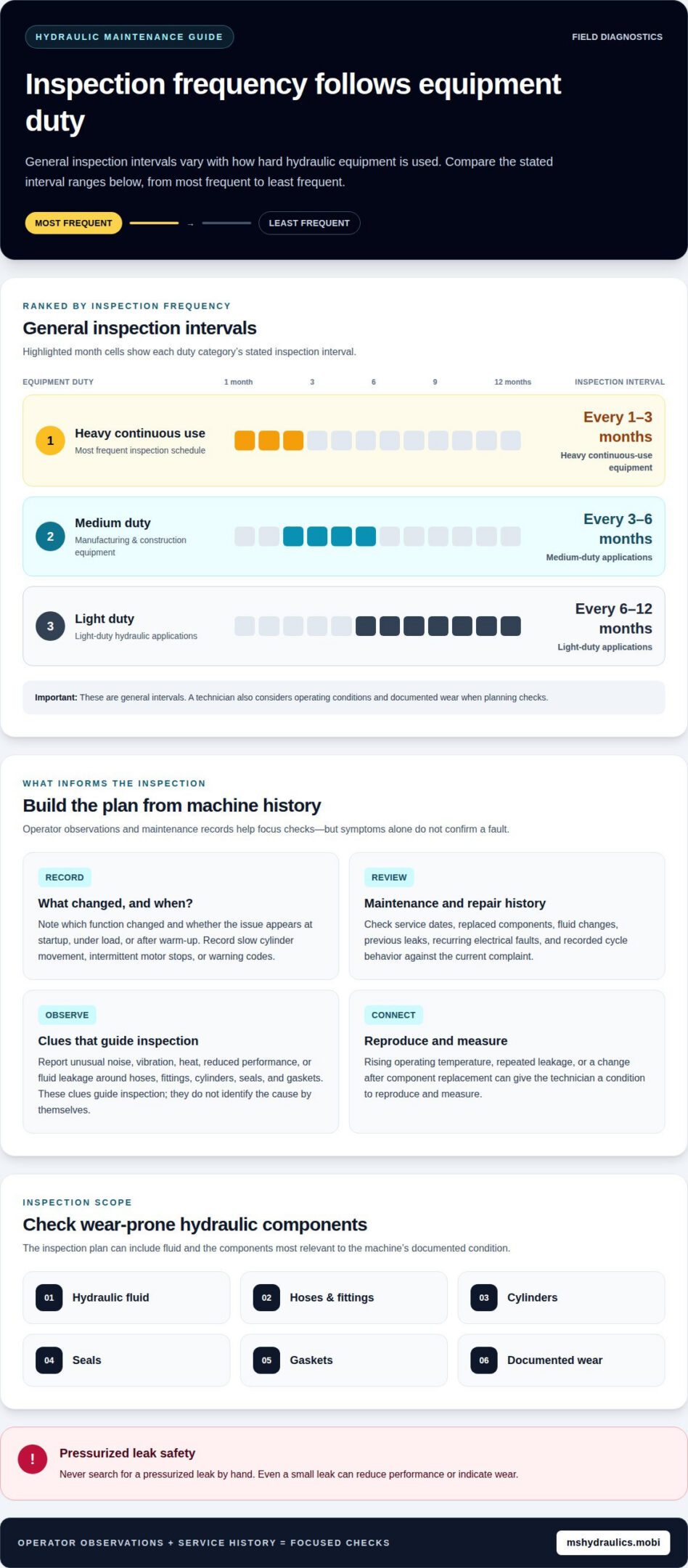
- Document observations that may point to a developing fault. Ask operators to report unusual noise, vibration, heat, or reduced performance promptly. These symptoms help guide an inspection, but don’t identify the cause on their own. Note fluid leakage around hoses, fittings, cylinders, seals, or gaskets. Even a small leak can reduce performance or indicate wear. Never search for a pressurized leak by hand.
- Use inspection history to plan preventive maintenance. General inspection intervals vary by duty: light-duty hydraulic applications are inspected every six to twelve months, medium-duty manufacturing and construction equipment every three to six months, and heavy continuous-use equipment every one to three months. A technician considers operating conditions and documented wear when planning checks of fluid, hoses, fittings, cylinders, seals, and gaskets.
- Connect the history to the next controlled checks. Rising operating temperature, repeated leakage, or a change after component replacement gives the technician a condition to reproduce and measure. Preventive maintenance and troubleshooting can uncover developing problems, help plan repairs, and reduce unplanned downtime. The operator’s notes on timing can help distinguish an intermittent electrical issue from a mechanical or hydraulic change.
How technicians compare test results with manufacturer specifications
- Identify the correct specifications. Before testing, the technician matches the machine and component to the manufacturer’s service information. Specifications define expected pressure, flow, operating temperature, and rated RPM. A valve or actuator reading is meaningful only when compared with its applicable limits. Symptoms help guide the test, while the documented operating range helps determine whether the results indicate a fault.
- Test under specified conditions. Hydraulic and hydrostatic tests should be performed at operating temperature and rated RPM, following manufacturer specifications. Cold-fluid readings or incorrect engine speed can distort results. The technician records the conditions for each measurement and repeats a test when a reading conflicts with machine behavior. This helps distinguish a genuine change from a result affected by testing conditions.
- Keep pressure and flow measurements distinct. Pressure shows whether the system develops expected force and responds to load. Flow measures fluid movement and can reveal a different performance issue. A system may have acceptable pressure but still deliver inadequate flow to an actuator. Technicians compare each measurement with the relevant specification rather than treating pressure and flow as interchangeable.
- Trace deviations through the circuit. Pressure testing can show where pressure is lost and how readings change under different loads. During a comprehensive test, technicians monitor maximum pressure for 15 minutes while checking connection points for leakage. If one section runs hotter than comparable lines, that difference becomes a clue for further investigation, not an immediate diagnosis.
- Use measured deviations to guide next steps. A pump measured at more than 15% below its rated flow may need rebuilding or replacement. Technicians interpret that result alongside pressure, temperature, and machine response before recommending work. If testing points to a valve fault, hydraulic valve repair may address the component issue. Documenting readings also establishes a baseline for future comparisons.
How technicians distinguish mechanical, electrical, and hydraulic faults
Before electrical troubleshooting, technicians assess pressure hazards and the risk of unintended machine movement. According to the U.S. Bureau of Mines, pressure loss through check valves or seal leaks can cause hydraulically applied parking brakes to slip, creating a vehicle movement risk.
- Confirm the failed function. The technician identifies which movement or component stopped responding, then checks whether the symptom is consistent. A cylinder that won’t move may have an electrical command issue, mechanical binding, or insufficient hydraulic force. The symptom narrows the troubleshooting path but does not establish the fault by itself.
- Trace the electrical command. For a function controlled by a solenoid, switch, or sensor, technicians examine the wiring, electrical supply, and control signals. They determine whether the command reaches the relevant component. A missing or unstable signal points to a possible electrical fault; a correct signal shifts attention to mechanical and hydraulic checks.
- Check for mechanical resistance. Technicians assess whether linkages and driven components move as expected and whether anything obstructs the actuator. A mechanical fault can prevent movement even when the electrical command and hydraulic supply are present. Comparing the affected component with another operating function can help narrow down the source.
- Assess hydraulic response. Pressure testing shows whether pumps, valves, and cylinders operate within their designed range. A system requiring 3,000 psi but reaching only 2,000 psi has a pressure problem. The technician considers hydraulic fluid condition and measured system response to determine whether pressure delivery can meet machine demand.
- Compare evidence before identifying the fault. A function that receives the expected electrical signal but fails to develop required pressure suggests a different cause from a missing command. Technicians combine signal checks, component inspection, and hydraulic measurements to determine whether the evidence points to an electrical, mechanical, or hydraulic fault. This avoids replacing components based on symptoms alone.
On-site diagnostics for mobile machinery
For Cedar Hill operators, on-site diagnostics for hydraulic system electrical problems in Cedar Hill assess equipment where the symptoms occur. Technicians use pressure gauges, flow meters, temperature-measuring devices, and OEM specialty tools to evaluate mobile machinery.
-
Compare Mobile Diagnostics With Shop Repair
Describe where the machine is located and which function is affected so the technician can assess it in place. On-site testing allows controls, connections, and fittings to be inspected in the machine’s operating environment, where the reported symptom can be reproduced. Major cylinder strip-down, machining, or specialist component assessment may call for shop repair. The key question is whether the fault can be isolated in the field or requires workshop work.
-
How technicians troubleshoot hydraulic system components
Have the technician trace the command path from switches and sensors through wiring and control signals to solenoids, valves, and pumps. Pressure, flow, case-drain, and temperature tests help assess component response. In one intermittent motor-stoppage example, a supply-voltage drop below 21 volts caused the pump to de-stroke to zero flow. Technicians also inspect hoses and fittings for damage or leakage before considering adjustments.
-
Hydraulic electrical problems a mobile technician can diagnose on site
Report low power, creeping in neutral, unusual noise or heat, or service codes. On-site diagnostics for hydraulic system electrical problems in Cedar Hill can investigate the electrical supply, wiring, switches, sensors, solenoids, and control signals when a machine function stops. The technician checks whether power reaches the drive system and whether the hydraulic response matches the command. Measured results guide further investigation of suspected relief valves and other components.
Diagnosis can include checking power to drive systems, sensory inspections, and pressure, flow, case-drain, and temperature tests. The next steps may involve pump or valve repair, replacement or adjustment, or further diagnosis. On-site diagnosis can help operators of construction, manufacturing, material-handling, waste and recycling, agricultural, airport and logistics, plant and fleet, and specialist hydraulic equipment. Identifying a developing fault early can help make repairs easier to schedule before an unexpected breakdown.
Ms. Hydraulics LLC: On-Site Diagnostic Services
Ms. Hydraulics LLC provides On-Site Diagnostic Services for hydraulic and electrical faults affecting mobile equipment in Cleburne, the Dallas-Fort Worth region, and surrounding areas, including Cedar Hill. Turn to the service when a machine’s symptoms persist, recur intermittently, or remain unexplained after initial checks. Technicians assess the equipment at its location and use the findings to guide the next repair decision.
Depending on the diagnosis, related work may include Hydraulic Hose Fabrication, Hydraulic Cylinder Rebuilds, or Heavy Equipment Maintenance. Matching diagnosis to the relevant repair helps address the identified issue rather than treating every symptom as the same fault. Clear notes about when the problem occurs can also focus the assessment.
For on-site diagnostic support for your equipment, contact Ms. Hydraulics LLC.
Turn diagnostic evidence into a clear next step
A useful diagnosis gives you a practical basis for deciding what to do next. When arranging on-site diagnostics for hydraulic system electrical problems in Cedar Hill, describe the machine’s symptoms and the conditions under which they occur. That context helps connect test findings to the equipment’s actual demands and supports a considered repair decision.
Keep the machine’s performance and reliability in view after the immediate fault is addressed. A recurring symptom can disrupt operating plans, while a clear assessment helps determine whether further component work or maintenance is appropriate. Ms. Hydraulics LLC can assess hydraulic system problems on-site and help identify the next step for your equipment.
Discuss your diagnostic needs with Ms. Hydraulics LLC, and move forward with a clearer plan for your machine.
Frequently Asked Questions
Quick Answer: What Is Hydraulic System Diagnostics?
Hydraulic system diagnostics combine symptom review, equipment inspection, and measured tests to identify the source of a performance problem. Technicians use the findings to distinguish a control or electrical issue from a mechanical fault or hydraulic delivery problem. For example, a machine that loses one function may need circuit-level testing before component replacement is considered. The diagnosis supports a focused repair decision.
Can Electrical Problems Look Like Hydraulic Faults?
Yes. An electrical fault can interrupt a hydraulic function and resemble weak pressure or a failed actuator. For example, a damaged connector or inconsistent sensor input may keep a valve solenoid from receiving the intended command, even if the hydraulic components remain serviceable. Technicians compare the electrical command with the machine’s response, then test the affected circuit and function to distinguish the causes.
How Does Early Diagnosis Prevent Emergency Downtime?
Early diagnosis can give maintenance teams time to plan corrective work before a developing issue stops a machine during production. A recurring warning or change in response can prompt inspection while equipment is still operating, helping the team schedule work around machine use. A record of how the fault progressed also gives technicians useful context if symptoms return or become more pronounced.
What information should I provide when booking on-site hydraulic diagnostics?
Provide the machine type, make and model, exact location in Cedar Hill, and the affected function. Describe when the problem occurs, how often it appears, and whether it followed a repair or maintenance task. Share displayed service codes and relevant maintenance records. These details help the technician prepare to assess the equipment in its actual work setting.