Hydraulic System Audits for Construction Fleets in Cleburne
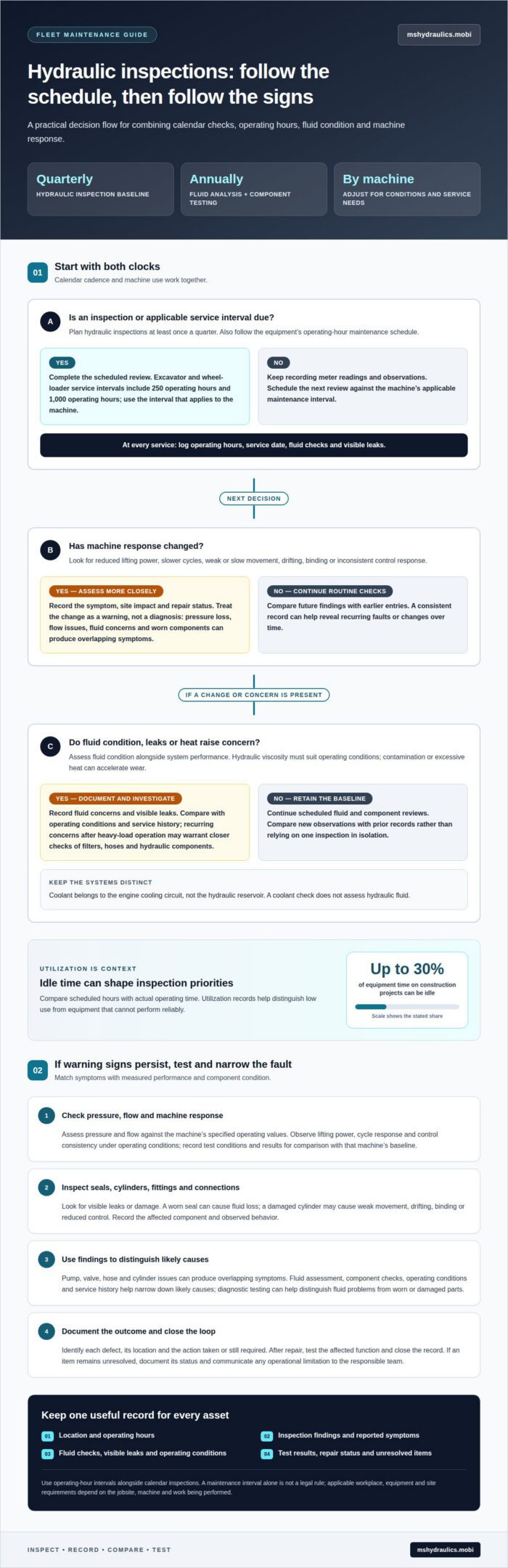
Plan hydraulic system inspections at least once a quarter, with fluid analysis and component testing annually. A hydraulic system audit for a construction fleet in Cleburne can use that schedule as a starting point, adjusted for each machine’s operating conditions and service needs.
Regular checks matter because pressure loss, contaminated fluid, leaks, worn components, and excess heat can affect machine performance. Changes in lifting power, cycle speed, or control response may be early warnings, not just inconveniences.
This guide explains how often to inspect fleet hydraulics and what to assess during each review. Learn which pressure, fluid, wear, and temperature signs deserve attention, how operating-hour maintenance intervals fit the schedule, and when diagnostic testing can help pinpoint a developing fault. The goal is a practical routine that helps fleet managers identify problems early and make informed maintenance decisions for equipment working across Cleburne-area jobsites.
Key Takeaways
- Use operating-hour maintenance intervals alongside calendar-based inspections to plan service around how each machine works.
- Watch for changes in lift strength, cycle speed, or control response; these can point to pressure, flow, or component problems.
- Assess fluid cleanliness and temperature as part of a system review, since contamination and excess heat can accelerate wear.
- Use diagnostic testing to narrow down developing faults, then match repairs to the affected hoses, cylinders, or other hydraulic components.
Maintenance frequency and fluid-change warning signs
Use the machine’s operating-hour schedule as well as its calendar-based service plan. Scheduled maintenance intervals for excavators and wheel loaders include 250 operating hours and 1,000 operating hours. Record each machine’s meter reading at service, then schedule the next inspection against its applicable maintenance interval. This approach helps fleet managers plan work around actual use rather than relying only on a shared fleet calendar.
Let fluid condition guide service decisions. Hydraulic fluid viscosity must suit the machine’s operating conditions, while contamination or excessive heat can accelerate component wear. During a service review, assess fluid condition alongside system performance. Fluid issues may coincide with slower movement, reduced lifting power, or inconsistent control. These changes offer useful clues, but do not identify a single cause on their own.
- Log operating hours, service dates, fluid checks, and visible leaks for each machine.
- Record changes in cycle speed, lifting response, and operating conditions.
- Compare inspection findings with earlier entries to identify recurring faults.
A consistent maintenance log connects warning signs to a machine’s work history. For example, recurring fluid concerns after heavy-load operation may warrant closer inspection of filters, hoses, and hydraulic components. Use the record to prioritize diagnostics and plan repairs before a developing fault interrupts scheduled work. Document visible leaks for assessment, since fluid loss can affect system efficiency and performance.
Hydraulic maintenance and testing can combine fluid assessment, component checks, and fault diagnosis. Technicians use symptoms, operating conditions, and service history to narrow down likely causes. Pump, valve, hose, and cylinder issues can produce overlapping symptoms, so testing helps distinguish fluid problems from worn or damaged components. This supports targeted repair decisions and consistent maintenance planning across heavy equipment.
How often should I have my hydraulic system inspected?
For most industrial applications, schedule a hydraulic inspection at least once a quarter, with fluid analysis and component testing annually. Increase attention when operating conditions change, a machine handles heavier loads, or its response becomes slow or weak. Follow the equipment’s maintenance schedule too, since service needs vary by machine and duty cycle.
Fleet managers can combine in-house checks with third-party inspections. In-house reviews provide regular observations from operators, while an independent technical inspection can add diagnostic testing and a separate assessment of recurring faults. Compare the records, test findings, and repair recommendations to decide which issues need action.
Texas or federal workplace and equipment requirements may apply to hydraulic inspections and repairs, depending on the jobsite, machine, and work being performed. Follow applicable equipment procedures and site safety controls. A maintenance interval alone is not a legal rule.
Track fleet condition across sites with a record for each asset. Include its location, operating hours, inspection findings, reported symptoms, and repair status. Shared records can show whether several machines have similar faults or whether one excavator needs attention while other equipment remains available. Include support vehicles such as service trucks when they affect maintenance coverage.
Utilization adds context to inspection priorities. Compare scheduled hours with actual operating time, then identify machines with frequent idle periods or heavy duty cycles. Up to 30% of equipment time on construction projects can be idle, so utilization records help separate low use from a machine that cannot perform reliably. A slow boom, weak lift, or inconsistent attachment response warrants a closer hydraulic assessment.
Record the fault, site impact, and repair status to prioritize diagnostics. For a mobile assessment of symptoms across job sites, arrange an on-site equipment review.
Hydraulic system inspection and performance testing
A useful inspection combines visual checks with performance testing under operating conditions. Technicians document findings, compare machine response, and identify defects that need follow-up.
System Performance Testing
Technicians assess system pressure and flow against the machine’s specified operating values. They observe lifting power, cycle response, and control consistency during operation. Reduced lifting power, slow cycles, or irregular movement can indicate pressure loss, flow issues, or worn components. Record test conditions and results so future diagnostics can be compared with a clear machine-specific baseline.
Seal and Cylinder Inspections
Inspect hydraulic seals, cylinder surfaces, fittings, and connection points for visible leaks or damage. A worn seal can cause fluid loss, while a damaged cylinder may cause weak movement, drifting, binding, or reduced control. Technicians can assess these symptoms alongside cylinder operation before deciding whether repair or replacement is appropriate. Record the affected component and its observed behavior in the inspection report.
Completing an inspection requires more than marking a machine as checked. The report should identify each defect, its location, and the action taken or still required. Close the record after completing the repair and testing the affected function. If a vehicle returns to service with an unresolved item, document its status and communicate any operational limitation to the responsible team.
Keep coolant checks separate from hydraulic-fluid checks. Coolant belongs to the engine’s cooling circuit, not the hydraulic reservoir, so inspecting one does not assess the other. Follow the vehicle’s maintenance procedure for coolant condition and flushing, and record that service separately. This distinction helps technicians avoid confusing an engine-temperature concern with hydraulic heat or fluid contamination.
Use inspection findings to prioritize repairs and track recurring defects across machines. A repeat leak at the same connection, for example, deserves further examination rather than another unexplained closure. Clear records show whether defects have been resolved and help maintenance teams plan the next diagnostic step.
Pressure, fluid contamination, component wear, and temperature checks
A hydraulic audit combines pressure and temperature checks with fluid and component assessments. For hoses, cylinders, pumps, and fluid, technicians inspect visible condition, test function, and record defects for follow-up.
Pressure and Temperature Checks
Measure system pressure during operation and compare results with the equipment’s specified requirements. Pressure loss can reduce performance under load and indicate a deeper system problem. Monitor fluid temperature as well: the stated optimal monitoring range is 120-140°F, while hydraulic fluid degrades substantially above 140°F. Record readings alongside the machine’s operating conditions.
Contamination, Degradation, and Leak Detection
Inspect the reservoir, hoses, fittings, and seals for visible leaks or fluid changes. Contamination and excess heat can accelerate wear and reduce efficiency. A leak of one drop per second wastes 420 gallons of hydraulic fluid yearly. Fix visible leaks promptly, then assess whether fluid loss or contamination has affected system operation.
Fluid Quality and Contamination Control
Assess fluid cleanliness using ISO 4406, which provides a contamination classification. Check that fluid viscosity suits the machine’s operating conditions and that filters are functioning as intended. Suction filters protect pumps from larger contaminants; pressure filters deliver clean fluid to vital components. Air breathers help limit contamination entering from the atmosphere.
Hose, Cylinder, and Pump Audits
Inspect hoses for leaks and visible damage, then assess cylinder movement for drifting, binding, or weak operation. Test pumps and valves when pressure loss or irregular movement appears. Review fluid condition and temperature with these findings to connect symptoms to possible component wear. Document each defect and the diagnostic or repair step needed to restore correct functioning. Arrange hydraulic system diagnostics for a focused assessment of a developing fault.
Ms. Hydraulics LLC
Ms. Hydraulics LLC helps construction fleets address hydraulic faults and maintenance needs identified during inspections. Its Heavy Equipment Maintenance and Mobile Hydraulic Repair services support assessment and repair of machinery at jobsites. When an inspection identifies a damaged hose or cylinder, Hydraulic Hose Fabrication or Hydraulic Cylinder Rebuilds can address the affected component.
Contact Ms. Hydraulics LLC when performance changes, visible damage, or inspection findings call for professional attention. Notes about the machine, symptoms, and operating conditions can help focus the service discussion. Discuss hydraulic maintenance or repair for your fleet with the team.
Build the Next Inspection Into Your Fleet Plan
Turn audit findings into a repeatable maintenance process. Assign responsibility for recording defects, tracking repair status, and carrying unresolved issues into the next service review. This continuity helps fleet managers connect a machine’s symptoms with its operating history instead of treating every inspection as an isolated event.
A hydraulic system audit for a construction fleet in Cleburne can also identify which equipment needs closer attention before upcoming work. Share the machine’s symptoms, inspection notes, and relevant operating conditions when planning the next diagnostic step. Ms. Hydraulics LLC assesses hydraulic service needs and determines an appropriate repair path, including Heavy Equipment Maintenance, Hydraulic Hose Fabrication, or Hydraulic Cylinder Rebuilds.
Contact Ms. Hydraulics LLC to discuss your fleet and its hydraulic maintenance needs. A clear next step can help your team move from inspection findings to a practical service plan.
Frequently Asked Questions
How can construction companies reduce equipment downtime?
Reduce downtime by coordinating maintenance with job schedules and preparing repair information before a machine stops working. Keep fault reports linked to the specific asset, including its site, recent symptoms, and work performed. If an excavator develops weak control during a critical task, pause its use and arrange a diagnosis rather than continuing to operate it under changing conditions. Clear records support timely service decisions.
What does a hydraulic system audit for construction equipment include?
A hydraulic system audit for a construction fleet in Cleburne assesses system condition and operating performance, then records findings to support repair decisions. It can include machine identification, service-history review, component assessment, fluid checks, and functional testing. The report should distinguish observed symptoms from diagnosed faults and identify follow-up actions. Organizing records by asset helps maintenance teams track recurring issues across jobsites.
Which hydraulic components should be inspected on a construction fleet?
Include hoses, fittings, seals, cylinders, pumps, valves, filters, and the reservoir in the inspection scope. Pay attention to how connected components work together: a drifting cylinder, for example, may need assessment beyond its visible exterior. Also check for fluid loss and changes in machine response. Recording the affected component and its location makes repair planning more precise.
How often should construction fleet hydraulic systems be audited?
A hydraulic system audit for a construction fleet in Cleburne can follow the general inspection schedule for industrial applications: inspect at least once a quarter, with fluid analysis and component testing annually. Use the equipment’s operating-hour maintenance schedule alongside that routine, since workloads vary between machines. Reassess sooner after a performance change, visible leak, or repair that affects system operation.
Which hydraulic repair and inspection providers serve Cleburne and Johnson County?
Based in Cleburne, Ms. Hydraulics LLC provides mobile hydraulic repair, on-site diagnostics, and heavy equipment maintenance across the Dallas-Fort Worth region and surrounding communities, including Alvarado, Granbury, Crowley, Arlington, Mansfield, Waxahachie, and Cedar Hill. Fleet managers can discuss inspection findings and equipment symptoms to identify the hydraulic service their machinery needs.
What are common signs of hydraulic system failure in construction equipment?
Common warning signs include reduced lifting power, slow or inconsistent movement, drifting cylinders, binding, visible leaks, and loss of control. A machine that responds differently under load also warrants assessment. These symptoms can stem from pressure loss, flow problems, contamination, or worn components, so a symptom alone may not identify the failed part. Record when and how the change occurs to support diagnosis.