Prevent hydraulic system failure with practical maintenance
Small hydraulic problems can escalate into equipment damage, lost productivity, and safety hazards. To understand how to avoid catastrophic hydraulic system failure, follow the equipment manufacturer’s fluid and filter intervals, maintain the correct fluid level, and inspect hoses, seals, and fittings for wear or leaks. Monitor pressure and temperature, and investigate unusual changes instead of continuing to operate without identifying the cause.
Preventive maintenance is most effective when routine checks are paired with prompt attention to early warning signs. This article explains the maintenance tasks that help protect hydraulic components, how contamination or sticking can affect valve performance, and what changes in sound, movement, or system readings warrant a closer look. It also covers high-pressure fluid hazards and the possible consequences of ignoring developing faults, so you can make informed decisions about keeping equipment operating reliably.
Key Takeaways
- Recognize how contaminated fluid and sticking valves can disrupt hydraulic response, and identify the warning signs that need investigation.
- Use routine condition checks and maintenance records to catch developing faults before they interrupt equipment operation.
- Keep clear of suspected high-pressure leaks; a pinhole spray can cause a serious injection injury.
- Acting on early signs can help limit pressure loss, component damage, safety exposure, and unplanned downtime.
1. Common valve problems, including contamination and sticking
Contamination can make a hydraulic valve stick, respond slowly, or fail to seal. Particles may obstruct a spool’s movement or damage the close-fitting internal surfaces that regulate flow. Dirt around fittings can enter during maintenance, while water and chemicals can degrade hydraulic fluid. In dusty or wet conditions, clean handling and prompt attention to damaged seals help limit contamination.
Check fluid appearance during routine inspections. Discolored or milky fluid can signal contamination and needs investigation, not dismissal as a normal change. Low fluid levels can also allow air into the system. Air bubbles may cause aeration and cavitation, leading to pressure loss and added wear on pumps and other components. Knocking or whining alongside erratic valve response is a reason to stop and investigate.
Relief valves have specific failure modes: dirt or debris can prevent proper sealing. A valve that leaks internally may allow pressure to fall, while one that sticks can interfere with pressure control. Inspect for leaks and visible wear, and include valve operation and pressure settings in maintenance checks. Don’t compensate for poor performance by changing a setting before identifying the cause.
Control contamination at its source. Keep fluid containers, fill points, and service tools clean, and replace filters at the equipment manufacturer’s recommended intervals. In demanding repair and overhaul environments, utilizing dedicated industrial cleaning equipment from suppliers such as The Global One Group helps ensure disassembled valves, fittings, and hardware are thoroughly cleared of grit before reassembly. Use filtration suited to the system and follow the manufacturer’s fluid requirements. If fluid appears cloudy or discolored, or a valve sticks repeatedly, investigate fluid condition and possible contamination sources before returning the equipment to normal operation. Early diagnosis can help prevent internal damage and unplanned downtime.
2. WHAT PREVENTIVE HYDRAULIC SYSTEM MAINTENANCE SHOULD I DO?
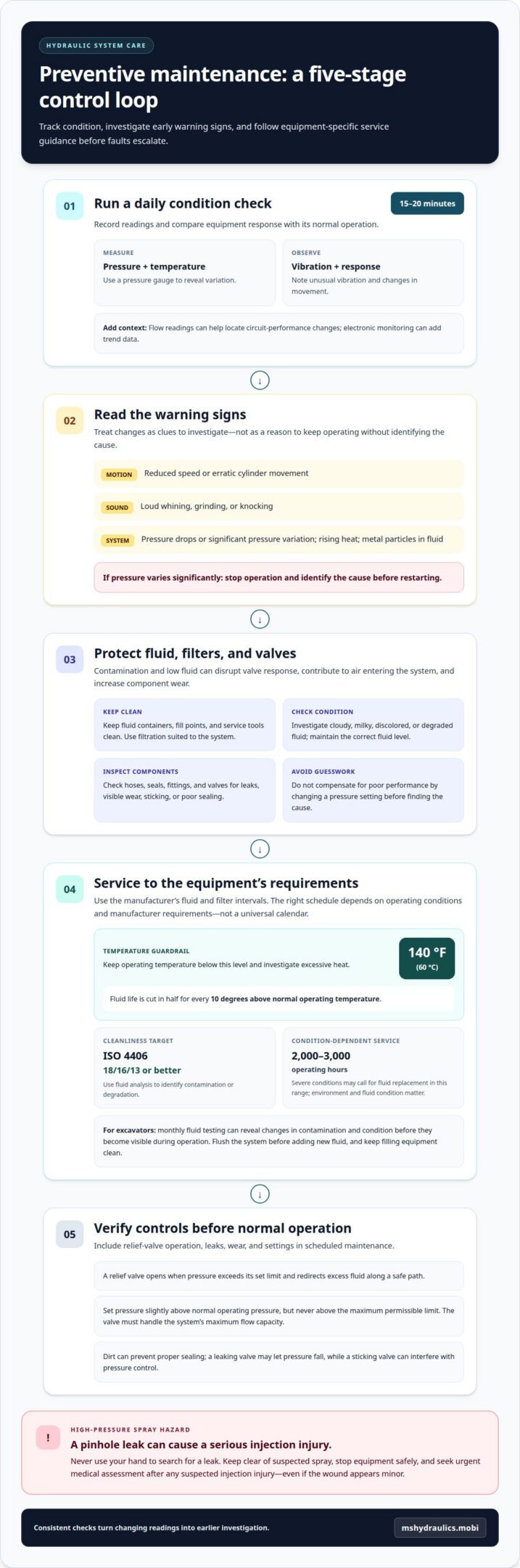
Knowing how to avoid catastrophic hydraulic system failure starts with tracking system condition over time. A daily check lasting 15-20 minutes can record pressure and temperature, note unusual vibration, and compare equipment response with normal operation. A pressure gauge reveals variation, while flow readings can help locate changes in circuit performance. Electronic monitoring adds trend data, helping maintenance teams investigate gradual changes before alarms appear.
Reduced speed, erratic cylinder movement, and pressure drops can signal developing faults. Loud whining or grinding, rising heat, and metal particles in hydraulic fluid can point to pump problems. If pressure varies significantly, stop operation and identify the cause before restarting. Avoid abrupt movements during sudden load changes, and keep loads within the equipment’s operating limits to reduce pressure spikes.
Relief valves open when pressure exceeds their set limit, redirecting excess fluid along a safe path. Set pressure slightly above normal operating pressure, but never above the maximum permissible limit. The valve must also handle the system’s maximum flow capacity. Include valve operation, leaks, wear, and settings in scheduled maintenance, since dirt can prevent proper sealing.
Follow the equipment manufacturer’s intervals for fluid and filter changes, and monitor pressure and temperature during daily checks. Fluid analysis and regular inspections can reveal degradation between service intervals. The right schedule depends on operating conditions and manufacturer requirements, not a universal calendar. Consistent maintenance is a practical part of how to avoid catastrophic hydraulic system failure.
Preventive maintenance helps keep work planned, while emergency repairs can add downtime and secondary component damage. Total costs depend on the equipment, fault, parts, labor, and interruption to operations. Service pricing depends on the specific job and is provided after a quote request.
In the United States, apply relevant OSHA workplace requirements and equipment-specific industry guidance. Applicable provisions depend on the machine, task, and hazards. For persistent pressure changes, hydraulic system diagnostics can help identify the cause before operation resumes. Applying these checks consistently supports informed maintenance decisions and helps teams avoid catastrophic hydraulic system failure.
3. High-pressure fluid injection and spray hazards
A pinhole leak can release hydraulic fluid as a high-pressure spray. The opening may be difficult to see, but injected fluid can cause serious injury and complications such as septicemia. Never use your hand to search for a leak. Keep clear of suspected spray, stop the equipment safely, and seek urgent medical assessment after any suspected injection injury, even if the wound appears minor.
Temperature control also protects fluid condition. Hydraulic fluid life is cut in half for every 10 degrees above normal operating temperature. Keep operating temperature below 140 °F (60°C), and investigate excessive heat rather than treating it as normal. Low fluid levels, degraded fluid, and excessive pump stress can contribute to overheating, which may damage components and accelerate breakdown.
Use pressure readings and fluid cleanliness together to assess system condition. The recommended cleanliness target is ISO 4406 level 18/16/13 or better. Maintain correct fluid levels, replace filters at the equipment manufacturer’s intervals, and use fluid analysis to identify contamination or degradation. For excavators, monthly fluid testing can reveal changes in contamination and condition before they become visible during operation.
Replace hydraulic fluid according to the equipment manufacturer’s guidance and working conditions. Severe conditions may call for replacement at 2,000-3,000 operating hours; the operating environment and fluid condition influence the appropriate interval. Flush the system before adding new fluid, and keep filling equipment clean to limit contamination during service. Include relief-valve operation in maintenance testing, since a valve that fails to open or seal correctly can affect system pressure.
These checks reduce equipment risks and exposure to spray hazards. If fluid is leaking, pressure is unstable, or temperature continues to rise, stop operation and identify the cause before restarting. Prompt attention can limit further damage and prevent a developing fault from becoming a breakdown.
4. Consequences of hydraulic system failure
Hydraulic failure can reduce lifting force, slow machine cycles, or stop work entirely. On a construction site, a leaking line may leave an excavator unable to lift or move material. Pressure loss can also reduce control, making continued operation unsafe. Stop work when performance changes sharply, and identify the fault before restarting.
Small leaks can lead to larger mechanical problems. Lost fluid reduces system pressure, while contamination entering through a damaged hose can wear pumps and valves. Excessive heat may cause fluid breakdown and damage internal components. Ignoring early faults can turn a repairable issue into a broader system breakdown, leaving more equipment unavailable and delaying more work.
Hydraulic fluid also creates exposure risks. Leaks can cause burns, bruising, or abrasions, while a high-pressure spray can penetrate the skin. Keep people clear of leaking equipment, shut it down safely, and never use a hand to locate a suspected pinhole. Any suspected injection injury requires immediate medical attention, even when the visible wound seems minor. Beyond medical care, individuals harmed by severe industrial equipment failures often turn to legal resources such as McGuire Injury Law to understand their rights and pursue injury claims.
Inspect hoses and fittings before operation. Look for abrasion, cracking, bulges, damp areas, loose connections, and contact with sharp edges or moving parts. Check for fluid beneath the machine and note changes after operation. Don’t tighten or handle a pressurized connection. Recurring leaks or visible hose damage call for prompt assessment and replacement when needed.
The costly consequence is not limited to parts. An unplanned stop can disrupt the work sequence, delay dependent tasks, and reduce available machine capacity. Proactive inspection helps crews act while a fault is localized, rather than waiting for a complete breakdown. Record recurring leaks, pressure loss, and overheating so technicians can trace patterns and address causes. For hose damage or leaking fittings, arrange hydraulic hose fabrication to restore the affected line before returning equipment to service.
Ms. Hydraulics: Hydraulic Hose Fabrication
Ms. Hydraulics LLC provides hydraulic hose fabrication for equipment with damaged, leaking, or worn hoses. A compromised hose can cause fluid loss, pressure changes, and downtime, so replace it when inspection shows that continued operation is unsafe. Hydraulic hose fabrication addresses the affected line as part of restoring the machine’s hydraulic function.
For related equipment needs, Ms. Hydraulics LLC also provides mobile hydraulic repair, heavy equipment maintenance, and hydraulic cylinder rebuilds. These services address repair and maintenance needs when a hose problem is part of a broader hydraulic fault or equipment concern.
Contact Ms. Hydraulics LLC to discuss hydraulic hose fabrication or related repair needs.
Make the next maintenance decision deliberate
A reliable maintenance plan turns observations into action. Assign clear responsibility for recording abnormal readings, reporting changes in machine behavior, and deciding when equipment must stop for assessment. Tie those decisions to the equipment’s operating requirements and maintenance history, making recurring faults easier to recognize and address.
This is the practical core of how to avoid catastrophic hydraulic system failure: act on evidence while the problem is still manageable. If the cause is unclear, a focused diagnostic assessment can help distinguish an isolated hose issue from a developing fault elsewhere in the system. That distinction supports a suitable repair decision and gives teams better information for planning next steps.
For help assessing a hydraulic concern or planning repair work, contact Ms. Hydraulics LLC. A prompt, informed decision can help keep equipment and work plans moving in the right direction.
Frequently Asked Questions
WHAT PREVENTIVE HYDRAULIC SYSTEM MAINTENANCE SHOULD I DO?
Build maintenance around the machine’s operating history and manufacturer guidance. Record fluid additions, filter changes, repairs, and recurring symptoms in one service log. For example, if an attachment slows only after extended operation, that pattern gives technicians useful context beyond a single pressure reading. Consistent records help distinguish a new fault from a longstanding performance variation and guide a more targeted inspection.
DOES SLUGGISH OPERATION MEAN I HAVE HYDRAULIC ISSUES?
Sluggish operation can indicate a hydraulic issue, but it doesn’t identify the failed part on its own. Compare the same function under similar loads and operating conditions, then note whether the change affects one attachment or several machine functions. A single slow cylinder suggests a different diagnostic path from a machine-wide slowdown. Stop operation if performance changes sharply or control becomes unreliable.
HOW DO YOU DETERMINE IF YOUR MACHINE HAS HYDRAULIC LEAKS?
Look for fresh fluid around the machine, damp hose surfaces, and residue near connection points, but never touch a pressurized leak to find it. A leak can leave fluid beneath parked equipment or collect around a fitting after operation. If fluid appears without an obvious source, technicians can inspect the system and trace the leak safely before further use.
How do relief valves prevent catastrophic failures?
Relief valves limit excessive pressure by opening at their set threshold and directing fluid away from the pressurized circuit. This helps protect components when a load or flow condition raises pressure. A valve that sticks, leaks, or has an unsuitable setting may not protect the system as intended. Testing its operation helps identify faults before they contribute to component damage.
IS OVERHEATING SERIOUS FOR HYDRAULIC SYSTEMS?
Yes. Excessive heat can degrade hydraulic fluid and damage system components, so rising temperature needs investigation. Consider whether the machine is working under unusual load, has restricted airflow around cooling components, or shows changes in fluid level or performance. Record when the temperature rises and which functions are active. This operating context helps narrow down the cause instead of treating heat as an isolated symptom.
WHICH SOUNDS MAY INDICATE A BIGGER PROBLEM?
New knocking, whining, banging, or grinding sounds can signal a developing hydraulic or mechanical fault. Note when the sound occurs, such as during startup, steering, lifting, or movement of a particular attachment. A noise paired with vibration, changed movement, or reduced control deserves prompt attention. Stop operation if the sound is severe or the machine behaves unpredictably, then have the cause assessed.