On-Site Hydraulic Valve Testing and Startup in Waxahachie
A new valve package is not ready for service just because it has been installed. On-site hydraulic valve testing and calibration in Waxahachie can include startup checks, control-setting adjustments, and functional verification under operating conditions, so the system’s response is assessed before routine use.
That distinction matters because a valve that does not respond as intended can affect the wider hydraulic circuit. Key questions include what gets checked at startup, how results are documented, and how a technician distinguishes a valve fault from an issue elsewhere in the system.
This guide explains startup checks, field repair records, relevant testing standards, and common control-valve diagnostic steps. It also covers when on-site evaluation is useful, what shapes the scope of the work, and how valve repair and mobile diagnostics fit when testing identifies a fault.
Key Takeaways
- Learn what technicians assess during valve-package startup and how trim condition can affect calibration.
- See which details make field repair records useful for tracking work and planning preventative maintenance.
- Understand how applicable testing standards guide verification, and how diagnostic checks help isolate control-valve faults.
- Recognize when a hydraulic repair or maintenance service can address related equipment issues identified during field evaluation.
Do you handle startup and calibration on new valve packages?
Industrial hydraulic service firms that provide mobile diagnostics and valve repair can perform on-site hydraulic valve testing and calibration in Waxahachie, TX. Technicians can assess directional, pressure-control, and flow-control valves, selecting a test method suited to the valve’s function and package requirements.
Startup checks confirm that the installed valve responds as intended within its hydraulic circuit. Calibration adjusts control settings to achieve the required operating response, while repair addresses defects that prevent reliable function. Before on-site hydraulic valve testing and calibration in Waxahachie, define the package’s expected response.
Control Valve Repair and Calibration
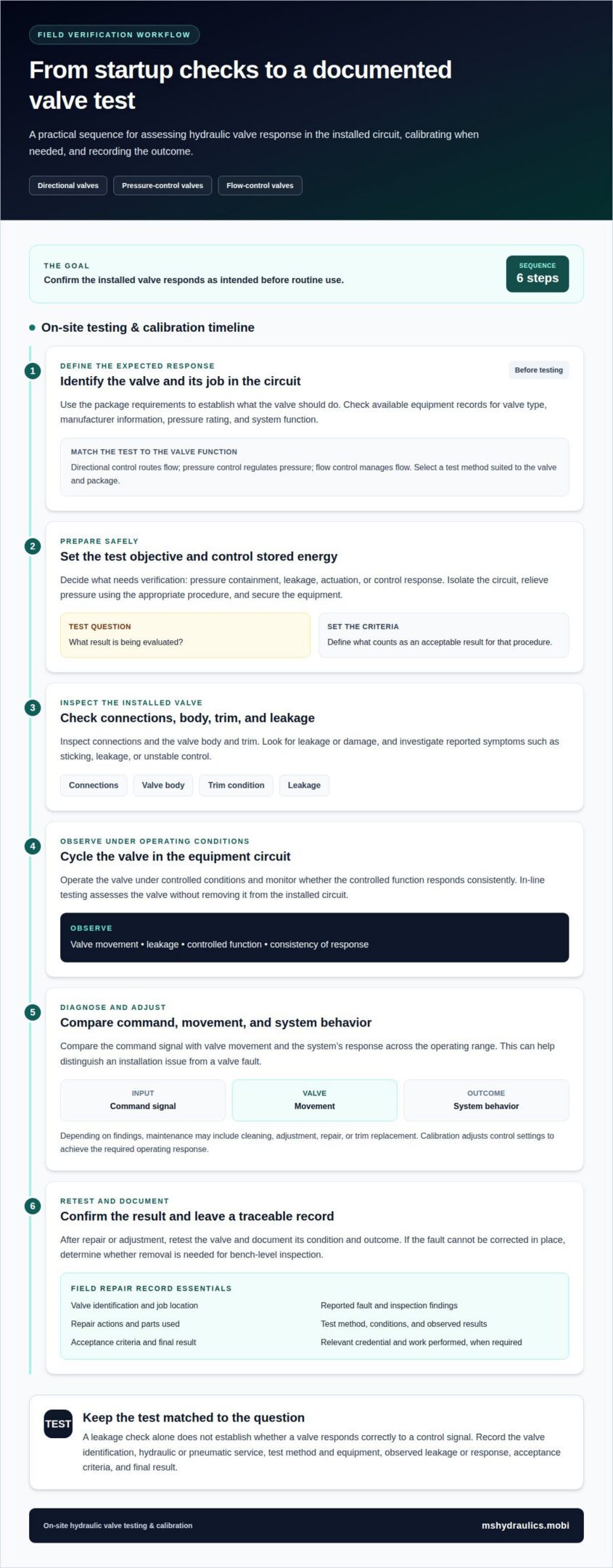
Control valve repair starts with investigating an incorrect response, such as sticking, leakage, or unstable control. Technicians inspect the valve body and trim, then determine whether cleaning, repair, or trim replacement is appropriate.
After repair, calibration checks the valve’s response across its operating range. Compare the command signal with valve movement and system behavior, then record adjustments and results. For a new package, this sequence can help distinguish an installation issue from a valve fault.
On-Site Testing and Maintenance
On-site testing evaluates the valve within the equipment circuit, using operating conditions and observed response to guide diagnosis. A technician can inspect connections, check for leakage, and cycle the valve while monitoring whether the controlled function responds consistently.
Depending on inspection findings, maintenance may include cleaning, adjustment, or replacement of worn components. Repair records should identify the valve, reported fault, findings, actions, parts replaced, and post-repair results. If the work scope requires certified personnel, the records should identify the relevant credential and work performed.
Hydrofluoric acid service requires a process-valve assessment. Records should identify the process fluid, valve materials, seal condition, repair scope, and test method. These details distinguish specialized acid-service work from routine hydraulic valve testing, where severe-service applications often rely on industrial valve suppliers such as ogvalves.com to meet strict operational demands.
In-Line Valve Testing
In-line testing assesses a valve without removing it from the installed circuit. Technicians observe its response during controlled operation and compare it with its intended function, such as directing flow or regulating pressure.
If testing indicates a fault, on-site repair may address accessible components or adjustments. Retest the valve after repair, then document its condition and the outcome. The key decision is whether the fault can be corrected in place or requires removal for bench-level inspection.
What documentation comes with a field repair?
A useful field repair record connects the reported fault with the work performed and the equipment’s condition afterward. It should identify the valve, job location, findings, repair actions, parts used, and test results. This gives maintenance teams a traceable account of the service visit.
When requesting a hydraulic valve service quote, provide the valve make and model, equipment type, symptoms, site location, and available photos or service records. Include operating conditions and whether the machine can be safely shut down for inspection. These details help define the work needed.
Local service locations include Waxahachie and Dallas. Dallas is 26 miles from Waxahachie. Include the job address so travel and site-access details can be considered when planning field service.
For preventive maintenance, records can track inspection findings, leakage, changes in response, and recommended follow-up. This provides a basis for comparison at later visits, particularly when the same equipment operates at different locations. A clear service history can also help identify recurring faults.
Pressure-test records should state whether testing took place in the field or shop, describe the test setup, and include observed results and acceptance criteria. Keep the test conditions with the record so later assessments can be compared consistently. For field service, note diagnostic equipment or replacement components used when relevant to the repair.
If field machining is performed, document the component, work completed, and resulting inspection or test. For an urgent field call, record the reported time, dispatch details, arrival, and work sequence. This documents the event without implying a specific response commitment.
Before a field visit, organize equipment identification, fault history, access details, and prior repair records. These materials help technicians understand the job and make the final report more useful. For related field repair information, see hydraulic service details.
Applicable valve testing standards
Choose a test procedure based on valve design, service conditions, and the purpose of verification. A hydraulic pressure-control valve and a pneumatic directional valve have different functions, so their test criteria should match their components and operating medium. The work record should name the procedure and explain what result is considered acceptable.
Before testing, use available equipment records to identify the valve type, manufacturer information, pressure rating, and system function. Then define the test objective: checking pressure containment, leakage, actuation, or control response. For example, a test for external leakage does not establish whether a valve responds correctly to a control signal. Match the procedure to the question being evaluated.
Record the criteria and conditions used so another technician can interpret the result:
- Valve identification and hydraulic or pneumatic service
- Test method and equipment used
- Observed leakage, movement, or control response
- Acceptance criteria and final result
Safety starts with controlling stored energy. Isolate the circuit, relieve pressure using the appropriate procedure, and secure equipment against unexpected movement before handling components. During a pressure test, use barriers where needed, increase pressure in a controlled manner, and inspect for leaks without placing hands near suspected leak points. High-pressure fluid can penetrate skin, and sudden movement can expose nearby workers to impact hazards.
For on-site testing, document limits imposed by the installed circuit, such as restricted access to connections or an inability to isolate the valve. If the test cannot reproduce the required conditions, record what was assessed and what remained outside the test scope. Clear criteria, observed results, and safety controls make the record useful for maintenance planning and later comparisons.
Control valve diagnostics
Begin diagnosis by connecting the reported symptom to the valve’s function. A directional valve may fail to shift, while a pressure-control valve may produce an unstable system response. During on-site hydraulic valve testing and calibration in Waxahachie, record the operating condition, control input, and machine behavior before changing settings.
Next, compare the command with the valve’s actual response. Check electrical or mechanical inputs, connections, hydraulic supply, and return paths. If a command reaches the valve but it does not move accordingly, inspect for sticking components, contamination, or internal wear. If the valve moves but the machine function remains weak, trace the circuit beyond the valve before assigning the fault.
Use a consistent diagnostic sequence:
- Confirm the symptom and operating condition.
- Inspect the valve, connections, and related circuit components.
- Compare control input with valve and equipment response.
- Document findings before adjustment or repair.
For example, slow cylinder movement can result from restricted flow, a valve that does not open fully, or a separate cylinder problem. Observing the circuit during on-site hydraulic valve testing and calibration in Waxahachie helps distinguish these causes. A pressure-control complaint also calls for checking the input and the circuit’s response.
Record the valve identification, observed condition, diagnostic steps, adjustments, and final functional check. This creates a useful baseline for later troubleshooting and links recurring symptoms with earlier findings. If the fault remains after adjustment, document the result rather than treating the adjustment as a completed repair.
Accurate diagnosis can prevent replacing a sound valve when the cause lies elsewhere in the hydraulic circuit. For a control valve that needs field evaluation or repair, request hydraulic diagnostic support.
Ms. Hydraulics: Hydraulic Hose Fabrication
Ms. Hydraulics provides hydraulic hose manufacturing for equipment where a damaged or unsuitable hose affects hydraulic operation. When testing identifies a hose-related issue, a fabricated replacement hose can address the need. A cylinder concern may call for a rebuild, while broader equipment problems may require maintenance or mobile hydraulic repair.
These services are relevant when inspection points beyond valve settings to another part of the hydraulic system. Sharing the equipment type, observed symptoms, and field findings helps clarify the repair need.
Contact Ms. Hydraulics to discuss the work, or visit mshydraulics.mobi.
Put the Next Service Step in Motion
A commissioning decision is most useful when it becomes part of the equipment’s operating plan. Assign responsibility for tracking valve behavior, documenting changes, and escalating recurring symptoms. This handoff helps maintenance teams connect future performance concerns with the system’s operating history.
For equipment in Waxahachie, plan on-site hydraulic valve testing and calibration around the specific operating issue and the machine’s role. A clear description of the equipment and its symptoms gives the service discussion a practical starting point.
Ms. Hydraulics can discuss hydraulic service needs, including hose fabrication, cylinder rebuilds, and heavy equipment maintenance. Contact Ms. Hydraulics to discuss service and take the next step toward addressing your equipment’s needs.
Frequently Asked Questions
What equipment and procedures are used for on-site hydraulic valve testing?
Technicians typically use pressure gauges, flow-measurement equipment, and suitable diagnostic tools to evaluate a valve in its circuit. The procedure begins by identifying the valve’s function and the symptom, then checking its response under controlled operation. For example, a pressure-control issue calls for observing pressure behavior, while a slow actuator requires assessing flow and related circuit performance.
How quickly can a technician provide on-site hydraulic valve service near Waxahachie?
Service timing depends on the job location, equipment access, reported fault, and technician scheduling. Ms. Hydraulics serves Waxahachie, Cleburne, and other communities in the Dallas-Fort Worth area. Provide the site address, equipment type, and a clear description of the symptom so the service request can be scoped around the actual field conditions.
What standards or calibration certificates do local hydraulic valve services provide?
Applicable test criteria depend on valve design, function, and operating conditions. A service report and a formal calibration certificate are different records: a report can describe the work and results, while a certificate documents calibration against defined criteria. Before relying on a document for quality records, identify which record your maintenance or project process requires and what traceability it must include.
How does on-site testing compare with sending a hydraulic valve to a repair shop?
On-site testing evaluates the valve in its installed circuit, preserving the connection to the equipment’s actual operating behavior. Shop evaluation allows a removed valve to be inspected separately and may suit faults that require disassembly or specialized repair. The deciding factor is whether the symptom depends on the wider circuit or the valve itself.
Do local providers serve nearby areas such as Ennis, Midlothian, and Dallas?
Local service locations include Waxahachie and Dallas.