Deciding Whether to Repair or Replace Your Skid Steer Motor
Replacement makes sense when damage or wear makes repair impractical; repair is preferable when the fault is limited and the motor can be restored. For mobile hydraulic motor replacement for skid steers in Alvarado, start with compatibility, not appearance. The machine’s make and model, motor displacement, pressure requirements, mounting, shaft, and port configuration all matter.
A motor that looks similar may still be incompatible, and a poor match can affect machine performance. This guide covers the specifications to identify, how to weigh repair against replacement, and how hydraulic motor brands and skid steer models shape the decision. You’ll have a practical basis for choosing the right approach for your machine.
Key Takeaways
- Separate travel motors from other hydraulic motor applications before narrowing replacement options by skid steer make and model.
- Use the fault’s cause and the motor’s repair condition to weigh rebuilding against installing a replacement.
- Assess replacement cost by considering motor compatibility and the work required, rather than relying on a single general price.
- Learn when mobile hydraulic repair and on-site diagnostics can help assess a motor problem at the machine.
Identifying the correct replacement hydraulic motor
Start with the skid steer’s make, model, serial information, and motor identification. Record the installed motor’s part number before comparing replacements. The machine model alone may not identify every configuration. Note whether the motor drives travel, an attachment, or another hydraulic function.
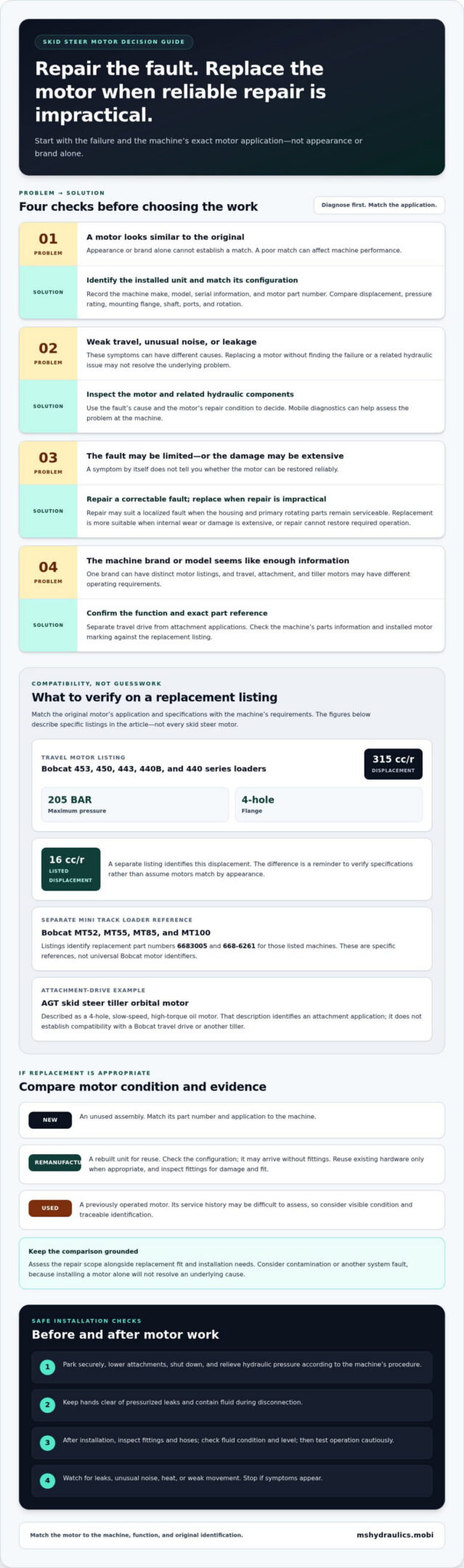
For mobile hydraulic motor replacement for skid steers in Alvarado, compatibility depends on matching the original motor’s application and specifications. Compare displacement, pressure rating, mounting flange, shaft, ports, and rotation. A travel motor listing for Bobcat 453, 450, 443, 440B, and 440 series loaders specifies 315 cc/r displacement, 205 BAR maximum pressure, and a 4-hole flange. Those figures describe that listing, not every skid steer motor.
A separate hydraulic motor listing identifies 16 cc/r displacement. This difference shows why appearance or brand alone can’t establish a match. Before approving mobile hydraulic motor replacement for skid steers in Alvarado, compare the replacement’s specifications with the machine’s requirements and the original motor’s identification. Also distinguish a hydraulic motor from a pump: a pump converts mechanical power into hydraulic energy, while a motor converts hydraulic pressure and flow into angular displacement and torque.
- Match the make, model, serial information, and motor part number.
- Compare displacement, pressure, flange, shaft, ports, and rotation.
- Confirm that the replacement performs the same hydraulic function.
Warranty coverage follows each supplier’s written terms, including exclusions and claim conditions. A listed core deposit is refundable when the old core is returned within 30 days.
Before replacement, park securely, lower attachments, shut down, and relieve hydraulic pressure according to the machine’s procedure. Keep hands clear of pressurized leaks, and contain fluid during disconnection. After installation, inspect fittings and hoses, check fluid condition and level, then test operation cautiously. Watch for leaks, unusual noise, heat, or weak movement, and stop if symptoms appear.
Hydraulic motor brands and compatible skid steer makes
A machine brand does not identify every compatible motor. Bobcat loaders and mini track loaders, for example, have distinct motor listings and part references. Match the exact machine model and motor application before comparing manufacturers. A travel motor, attachment motor, and tiller motor may have different operating requirements.
Bobcat MT52, MT55, MT85, and MT100 mini track loader listings identify replacement part numbers 6683005 and 668-6261. Treat these numbers as specific references for those listed machines, not as universal Bobcat motor identifiers. Check the machine’s parts information and the installed motor marking against the replacement listing.
Application matters beyond the loader itself. An orbital motor listed for an AGT skid steer tiller is described as a 4-hole, slow-speed, high-torque oil motor. That description points to an attachment drive application. It doesn’t establish compatibility with a Bobcat travel drive or another tiller. Compare the complete motor configuration and intended function.
- Record the skid steer make, model, and motor part number.
- Separate travel-drive needs from attachment applications, such as an AGT tiller.
- Compare the replacement listing’s part references and configuration with the installed unit.
Around Alvarado, mobile hydraulic repair can help diagnose and replace a skid steer motor at the machine. Replacement time depends on access, machine configuration, mounting condition, and whether diagnosis reveals related hydraulic issues. These factors shape the work and time required, so no single duration applies to every machine.
For a compatibility assessment, provide the machine model and motor identification through hydraulic motor troubleshooting. That information helps distinguish a matching replacement from a motor intended for another Bobcat model or attachment.
Keep the stated price tied to the loader compatibility it covers when reviewing replacement options. It does not establish that the motor fits a different Bobcat model or an attachment application. Confirm that the machine and motor application match the listing before using the price for comparison. This keeps the amount linked to the specified drive motor replacement, rather than treating it as a general price for skid steer motors.
Hydraulic motor repair versus replacement
Choose repair when inspection finds a correctable fault; replace the motor when damage affects core components or reliable repair is impractical. For new, remanufactured, or used units, prioritize application fit, condition, and the machine’s operating requirements.
Repair or Replacement Considerations
A repair assessment should identify the failure, not just the symptom. Weak travel, unusual noise, and leakage can have different causes, so inspect the motor and related hydraulic components before deciding on the work. Repair may suit a localized fault if the housing and primary rotating parts remain serviceable.
Replacement is more suitable when internal wear or damage is extensive, or repair cannot restore the required operation. Compare the repair scope with replacement fit and installation needs. Also consider whether contamination or another system fault contributed to the failure: installing a motor alone will not resolve an underlying cause.
New, Remanufactured, or Used Motors
A new motor is an unused assembly; a remanufactured unit has been rebuilt for reuse, while a used motor has operated previously. In every case, match the part number and application, then weigh condition, available documentation, and the implications of an uncertain service history.
A remanufactured motor may arrive without fittings, so reuse existing hardware when appropriate. Inspect fittings for damage and confirm they suit the replacement configuration. A used motor’s past operating conditions can be difficult to assess, making visible condition and traceable identification important.
Compare these factors before selecting a path:
- Failure location and extent of internal damage.
- Condition of the housing, shaft, and connection points.
- Replacement identification and fit for the skid steer application.
- Potential for related contamination or system faults.
If the machine has paired drive motors, assess wear on both sides. Replacing only one may leave different wear conditions across the drive system. Consider the affected motor and its counterpart, rather than judging the failed unit in isolation.
LPS recommends replacing drive motors in pairs to help prevent uneven wear and unplanned downtime. This reinforces the importance of assessing both sides before choosing a replacement.
What is the typical price of a replacement skid steer hydraulic motor?
There is no single typical price for every skid steer motor. Application, replacement type, compatibility, and installation work all affect the total. For example, a travel motor for a Bobcat loader may differ from an attachment motor in design and replacement requirements.
For a useful estimate, identify the machine make and model, motor part number, and intended function. These details help distinguish the correct motor from similar-looking alternatives. A configuration mismatch can change which replacement fits, so the estimate should reflect the actual machine and motor combination.
The replacement unit is only one cost factor. New, remanufactured, and used motors are different purchase options, and the condition of existing fittings can affect the work required. A remanufactured motor may arrive without fittings, so the condition and suitability of reusable hardware can affect the final scope.
Installation needs also affect the total. Work may include removing the failed unit, preparing mounting surfaces, connecting hydraulic lines, and testing operation. If inspection finds a related hose, valve, pump, or contamination issue, addressing it may expand the work beyond a motor swap. Machine access and configuration also shape the installation.
- Provide the skid steer make, model, and motor identification.
- Specify whether the motor drives travel or an attachment.
- Compare new, remanufactured, and used options for the application.
- Include installation needs and related hydraulic repairs in the scope.
The price depends on the specific job and is provided after a quote request, based on motor type, compatibility, replacement condition, and required labor or related repairs. A complete estimate should describe the motor and work included, so you can compare the proposed scope with the machine’s needs.
For a case-specific estimate, request a hydraulic motor replacement quote with the machine and motor details available.
Ms. Hydraulics: Hydraulic Hose Fabrication
Ms. Hydraulics LLC provides mobile hydraulic repair for skid steer motor issues that require diagnosis or repair at the machine. If a damaged hose is involved, its Hydraulic Hose Fabrication service can address the hydraulic connection. The right service depends on the fault: motor damage may call for Hydraulic Motor Repair, while a hose problem requires attention to the line and fittings.
Share the machine’s make, model, motor identification, and symptoms to help focus the diagnosis. Contact Ms. Hydraulics LLC to discuss your skid steer’s hydraulic motor or hose needs in Alvarado and the surrounding DFW area.
Put the Next Repair Decision in Motion
A motor issue can also point to broader maintenance needs. Before returning a skid steer to demanding work, consider whether its hydraulic connections or other equipment systems need attention alongside the motor. This keeps the next step focused on the machine’s actual condition, rather than treating one component as the entire repair.
For mobile hydraulic motor replacement for skid steers in Alvarado, Ms. Hydraulics LLC can also address related equipment needs through Hydraulic Hose Fabrication, Hydraulic Cylinder Rebuilds, and Heavy Equipment Maintenance. These services are relevant when inspection identifies a hose, cylinder, or wider maintenance concern. Service is available in Cleburne, Alvarado, and the Dallas-Fort Worth area.
Bring the machine’s identifying details and a clear description of its symptoms to the service discussion. That gives the repair team useful context for determining the appropriate next step. Contact Ms. Hydraulics LLC for service to discuss your skid steer’s hydraulic needs and move forward with a focused repair plan.
Frequently Asked Questions
Which hydraulic motors fit common skid steer makes and models?
Compatibility is model- and application-specific. A replacement listing identifies Bobcat 753, 763, 773, and 7753 skid steer loaders as compatible with a hydraulic drive motor. That doesn’t mean the same motor fits every Bobcat or another manufacturer’s machine. For Alvarado-area equipment, match the listing to the exact loader and drive function before selecting a motor.
How can I identify the correct replacement hydraulic motor by serial number or part number?
Use the skid steer’s serial number to identify its configuration, then compare the installed motor’s tag or stamped part number with the replacement reference. Check that the reference applies to the same function, such as travel drive rather than an attachment. If labels are worn, record the machine identification and motor details together; neither identifier alone may distinguish the correct assembly.
What are the signs a skid steer hydraulic motor needs replacement rather than repair?
Replacement may be needed if inspection finds a cracked housing, severe internal wear, or shaft damage that prevents restoration. Persistent loss of drive after related hydraulic faults are addressed also calls for motor assessment. Symptoms alone do not identify the failed component: weak movement can involve the pump, valve, hose, or motor. Diagnosis should isolate the fault before you decide whether the motor can be repaired.