Get Buy-In by Weighing Proactive Hydraulic Maintenance Costs and Benefits
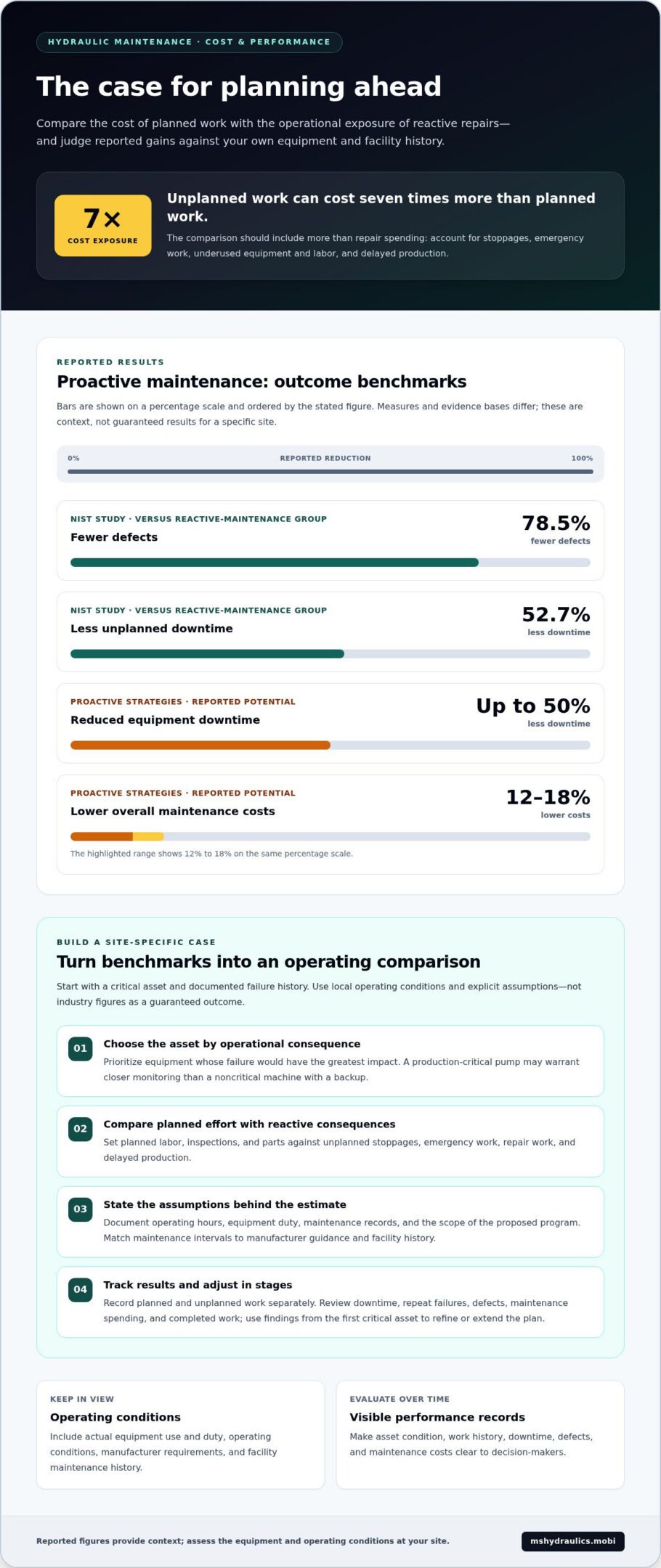
Unplanned work can cost seven times more than planned work. Getting buy-in for a proactive hydraulic maintenance program starts with weighing planned maintenance activities against the operational exposure of reactive repairs; proactive programs can reduce overall maintenance costs by 12–18% and equipment downtime by up to 50%.
It’s reasonable to ask whether scheduled inspections, fluid analysis, and temperature monitoring justify the resources they require. The case is strongest when it ties those activities to actual operating conditions, equipment performance, and the cost of interruptions, rather than relying on a general argument for preventive work.
This article explains how to compare proactive and reactive maintenance, assess equipment use and manufacturer requirements, and use fluid condition and temperature data to spot developing problems. It also shows how maintenance history, performance measures, and clear cost tracking can help managers evaluate a program and make a practical case for support.
Key Takeaways
- Compare planned maintenance effort with the operational impact of unplanned repairs to make the investment case concrete.
- Use equipment duty cycles, operating conditions, manufacturer guidance, and facility history to shape maintenance intervals.
- Track fluid condition and system temperature to spot developing issues before they affect hydraulic performance.
- Give decision-makers visibility into work history, asset condition, and maintenance costs so they can evaluate program results.
- In a National Institute of Standards and Technology (NIST) study, manufacturers relying more heavily on predictive and preventive maintenance had 52.7% less unplanned downtime and 78.5% fewer defects than the reactive-maintenance group.
1. What Are the Benefits & Costs of Proactive Maintenance Strategies?
A hydraulic failure can cost more than the repair itself. Unplanned work is seven times more expensive than planned work, and production interruptions can leave equipment and labor underused. For mining operations, the National Institute for Occupational Safety and Health (NIOSH) identifies breakdowns and maintenance delays as contributors to lost production and higher operating costs. The comparison, then, should include more than repair spending.
Predictive and preventive maintenance can improve that comparison. Manufacturers relying more heavily on these approaches had 52.7% less unplanned downtime and 78.5% fewer defects than the study’s reactive-maintenance group, according to the National Institute of Standards and Technology (NIST). Proactive strategies can reduce overall maintenance costs by 12–18% compared with reactive approaches, and decrease equipment downtime by up to 50%. Treat these figures as context, then assess the equipment and operating conditions at your site.
For U.S. operations, assess applicable workplace safety requirements alongside the manufacturer’s maintenance instructions. Requirements vary by equipment, task, and worksite, so document the relevant considerations for each system instead of assuming one maintenance rule applies to every hydraulic asset.
To present a proposal to leadership, start with a critical asset and its documented failure history. Compare planned labor, inspections, and parts with the effects of unplanned stoppages, emergency work, and delayed production. State the assumptions behind the comparison, including operating hours, equipment duty, and maintenance records. Then define the scope, assign technicians, and decide how to track downtime, defects, and completed work.
Prioritize assets where failure would have the greatest operational consequences. A pump serving a production-critical function may need closer monitoring than a noncritical machine with a backup. Estimate the potential return by comparing program effort with possible reductions in breakdowns, repair work, and lost operating time. Use facility history to refine the estimate, not industry figures as a guaranteed outcome for your site.
Make performance visible after approval. Record planned and unplanned work separately, then review downtime, repeat failures, defects, and maintenance spending. If the first phase reduces emergency interventions on a critical asset, use that evidence to adjust the plan or extend it to other equipment. This staged approach links investment to measurable operating results without assuming every machine needs the same level of attention.
2. Assessing operating conditions and manufacturer requirements
Set maintenance intervals from the machine’s duty, manufacturer guidance, and facility history. A usage-based plan might schedule service every 1,000 runtime hours; a calendar-based task might occur every month. These are planning examples, not universal intervals. Match each task to the equipment’s operating conditions and the manufacturer’s requirements, then adjust scheduled work when inspection findings or operating history indicate a change.
Start by recording how the hydraulic system operates across its work cycle. Determine whether it runs at maximum flow and pressure for at least 70% of operating time. Sustained high demand affects the maintenance plan differently from intermittent use. Record load, cycle behavior, ambient conditions, and operating hours so technicians can identify whether wear or performance changes relate to the machine’s actual duty.
Establish a baseline before interpreting later readings. Take hydraulic-machine readings on a couple of average-temperature days, then compare them with readings on the hottest and coldest days of the year. Record the same operating measures under comparable conditions. A baseline helps the maintenance team recognize changes without treating a single reading as proof of failure.
For maintenance intervals and inspections, follow the manufacturer’s schedule and facility history, adding seasonal checks when operating conditions call for them. Hydraulic systems should receive regular maintenance at least annually. Visually inspect hoses, fittings, seals, and reservoirs for wear, leaks, damage, and corrosion. Replace or clean filters, breathers, and strainers to limit contaminant entry, and use inspection findings to plan the next task.
Standard operating procedures make inspections repeatable. Keep each procedure current and specific to the machine, with clear inspection points, readings to record, and steps for documenting abnormal conditions. For example, a technician using the same hose-and-fitting checklist can consistently record visible wear and leaks across shifts. Use manufacturer instructions to shape the procedure and facility history to identify recurring problems.
A computerized maintenance management system (CMMS) can centralize schedules, work orders, checklists, and spare-parts inventory. Give each asset an identifier, link its manufacturer requirements, and record completed inspections against that machine. Managers can then spot overdue tasks and recurring findings instead of relying on separate logs. Even for a small fleet, consistent records help distinguish planned work from reactive repairs.
Train operators to report changes in sound, movement, leakage, or cycle performance through the established work-order process. Train maintenance personnel on revised workflows and any condition-monitoring tools they will use. Involve technicians as procedures are developed, since their experience can reveal impractical inspection steps before rollout. A weekly rotating-parts lubrication task, when specified by the manufacturer, is one example staff can schedule and document.
Keep the assessment tied to observed machine condition and documented requirements. If field inspection or repair is needed to address a hydraulic issue, hydraulic system maintenance support can be a practical next step.
3. Hydraulic fluid analysis and temperature control
Hydraulic fluid carries power through the system, so its condition can reveal developing wear or contamination. Take fluid samples once a month and test viscosity, contamination, and chemical composition. Compare each result with the manufacturer’s specifications and previous samples. A change in viscosity, for example, can signal that fluid condition needs investigation before performance deteriorates.
Sampling is useful only when results are consistent. Use the same sampling point and procedure, label each sample with the machine and date, and record operating conditions. That context helps technicians distinguish a meaningful trend from differences in sampling or equipment duty. Pair laboratory results with regular machine readings, taken each day or shift, to spot changes early.
Monitor the hydraulic components and indicators that reveal system condition: hoses, fittings, seals, reservoirs, pumps, motors, valves, and cylinders. Track oil-analysis results, temperature, vibration, and operating performance, including flow and pressure where relevant. Proactive maintenance programs can use vibration, temperature, and oil-analysis sensors. Condition-based maintenance monitors performance and condition metrics in real time, so teams can schedule work before a problem develops.
Clean fluid matters. For most hydraulic systems, filter fluid to 10 microns absolute or less. Use a portable filter pump rated at 3 microns absolute when adding fluid. These filtration steps reduce the chance of introducing contaminants during transfer. Record filter changes and fluid additions alongside analysis results, so a later sample can be interpreted against the maintenance history.
Predictive maintenance uses sensor data and analysis to anticipate potential failures, helping teams schedule repairs during planned downtime. Predictive analytics software can use machine-learning algorithms to forecast failures, but incoming data still needs interpretation. A data analyst may help assess patterns and refine algorithms. This approach is most useful when data quality, sensor performance, and maintenance records are reliable enough to support decisions.
When a failure occurs, investigate its cause rather than treating the damaged component as the whole problem. Review fluid results, temperature and vibration trends, operating conditions, recent repairs, and related work orders. Check whether contamination, overheating, or another recurring condition preceded the failure. Document the evidence, identify a corrective action, and monitor the same indicators to see whether the issue returns. Root-cause analysis turns each repair into information that can improve maintenance strategies.
4. Management visibility into maintenance performance
Managers need operating evidence to assess whether a maintenance strategy supports reliability. Build a dashboard around asset condition, completed work, repeat failures, downtime, and operating maintenance costs. A computerized maintenance management system (CMMS) can display asset-health data and alert managers when attention is needed. Define planned work, unplanned work, and downtime consistently so comparisons remain meaningful across assets and reporting periods.
Start with maintenance history. Review work orders, failure descriptions, parts replaced, and the time spent restoring operation. Compare records by machine and failure type to identify recurring problems. Review team performance alongside equipment data: completed scheduled tasks, open work orders, and repeat repairs can reveal where workload or processes need attention. Regularly analyzing maintenance history, team performance, and operating costs helps refine the program.
Pump performance can make changes in condition visible through measurable output. In an illustrative example, a 100%-efficient pump operates at 60 bar and supplies 100 lpm to a cylinder, completing a lift in a 5-second cycle. A 50%-efficient pump still operating at 60 bar delivers 50 lpm, and the same lift takes 10 seconds. Tracking pressure, flow, and cycle time over time can reveal performance loss that pressure alone may miss.
When monitoring a pump, compare readings taken under similar operating conditions. Record the machine, load, pressure, flow, cycle time, and date with each reading. A change in cycle time may indicate reduced output, while the other readings help explain what changed. Compare results with the machine’s baseline and manufacturer requirements, then link abnormalities to inspections and work orders. This creates a traceable path from a performance signal to maintenance action.
Failure data can support a business case by connecting recurring faults to operational consequences. A focused pilot on a critical asset lets managers compare its documented baseline with later failures, downtime, defects, and maintenance work. Present the scope, staff effort, parts usage, and observed changes together. Consider operating conditions before attributing differences to the pilot.
For leaders, getting buy-in for a proactive hydraulic maintenance program depends on evidence they can interpret and act on. At each management review, examine dashboard alerts, overdue work, repeat failures, and cost trends, then assign an owner and next action. If the pilot improves a relevant measure, use its records to decide whether to continue or expand the approach. If it does not, investigate the maintenance method, task timing, and data quality.
Getting buy-in for a proactive hydraulic maintenance program also means showing how information leads to decisions. Document which assets need attention, why they were prioritized, and what evidence the next review will assess. A CMMS dashboard can bring asset-health alerts and work history into one view, helping managers connect maintenance activity with industrial reliability and downtime rather than relying on isolated reports.
5. Proactive maintenance compared with reactive maintenance
Reactive maintenance begins after a hydraulic component fails. The team responds to the immediate fault, restores operation, and replaces or repairs damaged parts. Proactive maintenance starts earlier: organizations schedule inspections and corrective work based on manufacturer guidance, operating history, and equipment condition. The difference is not simply planned versus unplanned labor. It is whether maintenance decisions come before a failure disrupts production.
Consider a hydraulic machine that develops a leak during a production run. A reactive response addresses the leak after an interruption, while a proactive approach uses inspection findings to schedule corrective work before the leak becomes a breakdown. Planned work also gives teams time to coordinate technicians, parts, and access. Scheduling maintenance in advance helps ensure the necessary labor and inventory are available.
Preventive maintenance does not mean replacing every component on a fixed schedule. It applies manufacturer recommendations and observed condition to decide what needs inspection, adjustment, or replacement. This distinction matters: unnecessary replacement consumes parts and labor, while delaying a repair after clear signs of deterioration can increase the chance of failure. A sound strategy links each task to a specific component, condition, and maintenance record.
Proactive work can also support asset life. Addressing hidden operating inefficiencies and correcting developing faults can extend equipment asset lifespan by 20–40%. The value depends on how the equipment is used and maintained, so review service history and condition trends rather than assuming every asset will gain the same benefit. Protecting serviceable equipment can help organizations defer replacement decisions while keeping operating performance under review.
Reactive maintenance still has a place for unexpected faults that cannot be planned. The practical questions are how much work remains reactive, which failures recur, and whether scheduled inspections can identify deterioration earlier. Review work orders by component and cause, then prioritize recurring failures on critical equipment. These records help distinguish a one-off repair from a pattern that calls for a change in maintenance timing or method.
To compare approaches, track the same measures before and after a planned maintenance change: unplanned downtime, repeat failures, defects, repair work, and parts use. Account for operating conditions, since changes in load or duty can affect results. If an inspection leads to a scheduled repair before failure, document both the finding and the action. This evidence shows leadership how preventive work changes the timing and nature of maintenance, not just the work calendar.
The decision is to use reactive repairs for unexpected faults while reducing avoidable failures through condition-informed planning. A maintenance review can identify the hydraulic issues that need investigation and help clarify the next step. Discuss your hydraulic maintenance needs when you’re ready to address a specific equipment concern.
Ms. Hydraulics: Hydraulic Hose Fabrication
Ms. Hydraulics LLC provides Hydraulic Hose Fabrication for equipment needing a replacement hose during planned maintenance or repair. Addressing worn or damaged hoses helps maintenance teams act on inspection findings before a leak interrupts work.
If a hose issue points to a wider equipment problem, Ms. Hydraulics LLC also offers Hydraulic Cylinder Rebuilds, Heavy Equipment Maintenance, and Mobile Hydraulic Repair. These services address cylinder repairs, equipment maintenance, and hydraulic repair needs identified during an inspection or after a breakdown.
For hydraulic hose fabrication or equipment repair, contact Ms. Hydraulics LLC to discuss the work.
Turn the Maintenance Case Into a Practical Next Step
A case for getting buy-in for a proactive hydraulic maintenance program is more actionable when it identifies the equipment concern, the work needed, and who will oversee follow-up. Use this framework to turn a general maintenance proposal into a clear operational decision. Record the issue, its effect on equipment use, and the repair or maintenance action under consideration. This gives decision-makers a practical basis for setting priorities and assigning responsibility.
When hydraulic equipment needs hands-on support, Ms. Hydraulics LLC offers Hydraulic Hose Fabrication, Hydraulic Cylinder Rebuilds, and Heavy Equipment Maintenance. These services can address hose needs, cylinder repairs, and broader equipment maintenance as part of an operational plan.
Discuss the hydraulic work your equipment requires with Ms. Hydraulics LLC. Contact Ms. Hydraulics LLC to take the next step toward a maintenance approach grounded in your operating needs.
Frequently Asked Questions
What Are the Benefits & Costs of Proactive Maintenance Strategies?
Proactive maintenance shifts attention from emergency response to planned intervention, but its value depends on matching tasks to asset risk. Start by identifying equipment whose failure would interrupt a critical process, then compare proposed inspection and repair work with the operational consequences. For example, a machine with recurring leaks may need a different plan from a backup unit with stable performance. This prioritization directs maintenance resources where they matter most.
What are the business benefits of proactive hydraulic maintenance?
Proactive hydraulic maintenance can help businesses plan work around production needs and evaluate maintenance spending more clearly. It can also show which assets need attention, which parts may be required, and when technicians can complete scheduled work. For example, coordinating a cylinder inspection with a planned equipment pause can reduce disruption compared with waiting for an unexpected fault to dictate the timing.
How much do hydraulic system failures and unplanned downtime cost?
The cost depends on how long the interruption lasts and how it affects production, labor, repair work, and delivery commitments. Treat that range as broad industrial context, not a hydraulic repair quote or a prediction for an individual site. To estimate local impact, calculate lost output and added labor for a specific stoppage.
What is the typical cost of a proactive hydraulic maintenance program?
A program’s cost depends on its scope, asset condition, inspection frequency, labor, fluid testing, monitoring equipment, and parts. For equipment in Cleburne, Dallas-Fort Worth, Alvarado, Granbury, Crowley, Arlington, Mansfield, Waxahachie, or Cedar Hill, define the assets and tasks first so the proposal reflects actual operating needs. Service pricing depends on the case and is provided after a quote request; the work scope and parts required affect the estimate.
How do you calculate ROI for preventive hydraulic maintenance?
Compare the program’s total planned costs with the value of avoided losses over the same period. Include scheduled labor, inspection or testing expenses, and parts, then compare them with avoided repair work, unplanned downtime, and lost production. Use facility records to estimate those effects. For example, if an inspection identifies a developing hose issue before production is interrupted, record the inspection effort and resulting corrective work for a transparent comparison.
How does proactive hydraulic maintenance compare with reactive maintenance?
Proactive maintenance uses inspections, operating data, and scheduled tasks to address developing issues; reactive maintenance responds after a fault occurs. Organizations need both approaches because inspections cannot anticipate every failure. A practical policy schedules recurring tasks for known wear patterns and retains a response process for unexpected faults. Review repair records afterward, then use recurring causes to refine inspection points and work timing.
What safety and environmental risks can hydraulic maintenance prevent?
Routine inspection and timely repair can help reduce exposure to hydraulic leaks, damaged hoses, and uncontrolled fluid release. A leak can create a slip hazard and allow fluid to reach surrounding surfaces or drains. Maintenance teams should follow site safety procedures, isolate equipment as required, and contain spills promptly. For example, inspecting hose connections and reservoirs can help identify visible leaks before equipment returns to operation.