Hydraulic Cylinder Resealing in Granbury: Technical Restoration & Field Repair
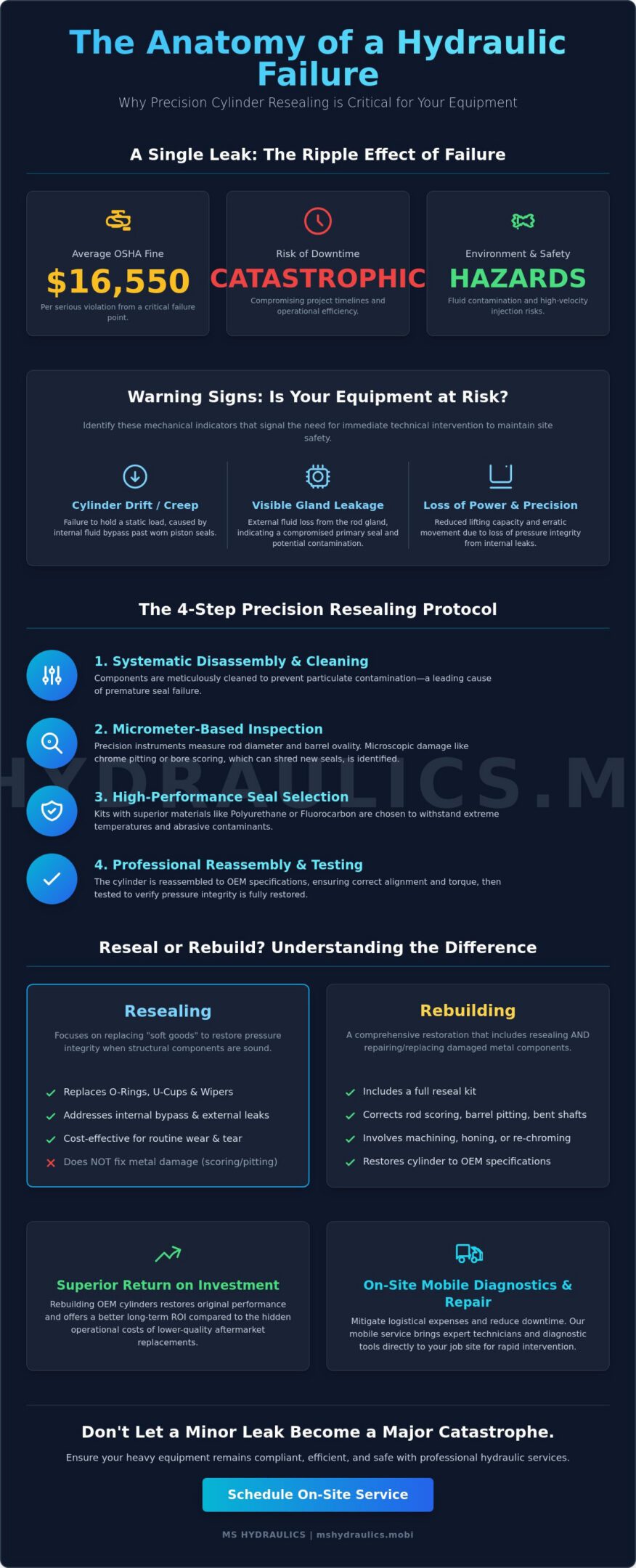
A leaking hydraulic seal is not merely a maintenance nuisance; it is a critical failure point that can lead to OSHA fines averaging $16,550 per serious violation. You recognize that fluid loss on a Granbury job site involves more than the cost of hydraulic oil. It represents a significant risk of catastrophic downtime and environmental contamination. When a standard repair fails, it’s often because the process neglected the precise mechanical tolerances required for a lasting seal.
Professional hydraulic cylinder resealing Granbury services provide the technical restoration necessary to return equipment to its original engineering specifications. This article outlines the mechanical precision required to minimize downtime and prevent the recurring failures associated with low-quality components. We will detail the diagnostic benchmarks, seal kit selection criteria, and technical field repair strategies that ensure your heavy equipment remains compliant and operationally efficient. Discover how disciplined maintenance standards restore performance and safeguard your project timelines.
Key Takeaways
- Learn the systematic disassembly and micrometer-based inspection protocols required to ensure internal components meet original engineering specifications.
- Understand how professional hydraulic cylinder resealing Granbury restores pressure-holding integrity to prevent fluid loss and environmental hazards on active job sites.
- Evaluate the return on investment of rebuilding existing OEM cylinders compared to the potential hidden operational costs of utilizing lower-quality aftermarket replacements.
- Identify critical mechanical indicators, such as cylinder drift and gland leakage, that signal the need for immediate technical intervention to maintain site safety.
- Explore the advantages of on-site mobile repair and diagnostic services to mitigate the logistical expenses associated with transporting heavy equipment for off-site maintenance.
Understanding Hydraulic Cylinder Resealing in Granbury, TX
A hydraulic cylinder operates as a linear actuator, converting hydrostatic energy into mechanical force through the containment of pressurized fluid. Over time, the internal sealing elements that maintain this pressure inevitably degrade due to friction, heat, and mechanical stress. Hydraulic cylinder resealing Granbury protocols involve the systematic replacement of these internal components to restore the unit’s pressure-holding integrity. For operators in North Central Texas, this isn’t just routine maintenance; it’s a critical intervention required to keep construction and agricultural machinery operational under demanding field conditions. Without effective seals, the precision and power of the entire hydraulic system are compromised.
Granbury’s specific environmental conditions necessitate a rigorous approach to seal maintenance. The fine particulate matter and abrasive soil common in the region act as contaminants that can breach the system if wiper seals fail. Additionally, the extreme thermal cycles of the Texas climate can cause standard seal materials to harden and crack. High-performance materials like polyurethane or fluorocarbon are often required to maintain a secure interface between moving parts. Implementing a professional resealing strategy ensures that these environmental factors don’t lead to catastrophic equipment failure or significant environmental hazards from fluid discharge.
Resealing vs. Rebuilding: Key Distinctions
Distinguishing between a standard reseal and a comprehensive heavy equipment cylinder rebuild is essential for effective fleet management. Resealing focuses primarily on “soft goods,” which include O-rings, U-cups, wipers, and wear bands. These components prevent fluid from bypassing the piston or leaking from the rod gland. Conversely, a rebuild addresses structural damage to the metal components themselves. If diagnostic data reveals rod scoring, barrel pitting, or bent shafts, a simple seal replacement won’t suffice. Technicians use micrometer measurements and borescope inspections to determine if the cylinder requires structural machining or merely a new seal kit to return to service.
The Critical Role of Pressure Integrity
Pressure integrity is the foundation of hydraulic performance. When seals fail, the system experiences internal bypass, where fluid slips past the piston seals. This results in “drift” or “creep,” where the cylinder fails to hold a static load, significantly reducing lifting capacity and operational precision. High-pressure hydraulic systems, often operating at 3,000 PSI or higher, place immense stress on the seal interface. If the seal’s material properties have degraded, the risk of a high-velocity fluid injection injury or mechanical collapse increases. Maintaining these standards is vital for meeting industrial safety requirements and ensuring the longevity of the heavy equipment’s primary power systems.
The Technical Process: Precision Resealing for Heavy Equipment
Precision in hydraulic cylinder resealing Granbury operations begins with a sterile disassembly process. Every component is cleaned to remove hydraulic fluid residue and environmental grit. This prevents particulate contamination from entering the system during reassembly, which is a leading cause of premature seal failure. Technicians then perform a rigorous visual and mechanical evaluation of all internal surfaces to ensure they meet original equipment manufacturer specifications. A systematic approach ensures that every variable, from surface finish to component alignment, is verified before the new seal kit is installed.
Inspection and Surface Analysis
Surface analysis is the most critical phase of the restoration process. Technicians use micrometers to measure rod diameter and check for barrel ovality, ensuring the cylinder remains within tight mechanical tolerances. Even microscopic rod damage or chrome pitting can shred a new seal kit within hours of operation. Identifying internal bore scoring or gland fatigue early prevents recurring failures and costly secondary repairs. If the initial inspection reveals excessive wear beyond simple seal degradation, our team can transition to on-site diagnostic services to evaluate the entire hydraulic circuit for underlying issues.
Seal Selection and Installation
Selecting the correct seal compound is based on specific application parameters like operating temperature and fluid type. Nitrile is common for standard operations, while Viton is selected for high-heat environments. Polyurethane offers superior abrasion resistance for heavy-duty construction equipment. Installation requires specialized tools to prevent “nicking” the seal edges, which causes immediate bypass. We utilize torque multipliers to secure the piston nut to exact manufacturer specifications, ensuring the internal assembly remains stable under high-cycle stress.
Post-assembly pressure testing verifies that the unit maintains its integrity under full load. This testing phase is essential for confirming that the actuator is ready for field deployment without the risk of internal bypass or external leakage. This technical rigor aligns with OSHA guidelines on hydraulic maintenance, which emphasize that regular inspections and technical repairs are vital for operational safety and equipment longevity. A successful test provides the verification needed to return the machinery to the job site with confidence in its performance.
Rebuilding vs. Replacing: Cost-Benefit Analysis for Local Operators
Deciding whether to refurbish an existing actuator or invest in a new unit requires a data-driven approach to asset management. For most industrial applications, executing a technical hydraulic cylinder resealing Granbury strategy allows operators to leverage the structural integrity of existing OEM components while minimizing capital expenditure. Original equipment manufacturers typically utilize high-grade alloys and precision-honed barrels that often exceed the specifications of budget aftermarket replacements. By replacing only the soft goods and wear components, you preserve the high-value steel that constitutes the bulk of the cylinder’s manufacturing cost.
Lead times represent a critical variable in this economic equation. Ordering a new cylinder from a catalog often involves shipping delays that can extend for weeks; especially for specialized or legacy machinery. Conversely, local repair services focus on rapid turnaround, often returning a unit to service in a fraction of the time required for international procurement. Integrating these repairs into broader Heavy Equipment Maintenance protocols ensures that resealed units achieve a service life comparable to new components, effectively maximizing the return on investment for the original asset.
When Resealing is the Most Efficient Choice
Resealing is the primary recommendation when the cylinder’s structural components, such as the rod and barrel, remain within nominal mechanical tolerances. This approach is significantly more cost-effective than a total replacement, often costing a small percentage of a new unit’s price. Beyond the financial savings, refurbishing existing assets reduces the environmental impact of industrial waste. It also ensures that the equipment maintains its original fitting and hydraulic port configurations, avoiding the mounting complications that sometimes occur with aftermarket “universal” cylinders.
When Replacement Becomes Necessary
There are specific technical thresholds where replacement becomes the only viable engineering path. Catastrophic failures, such as a cracked barrel, a severely bent rod, or deep internal scoring that exceeds honing limits, often make repair costs exceed the value of a new unit. Strategic fleet management involves assessing the age and duty cycle of the component. If the metal has reached its fatigue limit or if custom machining costs are projected to approach the price of a modern replacement, retiring the aging cylinder is the safer, more reliable option for long-term site operations.
Critical Indicators: When Your Granbury Job Site Needs Immediate Resealing
Recognizing the early signs of hydraulic failure is essential for preventing total system collapse. Visible fluid discharge from the rod gland area is a primary indicator that the primary seal has lost its elastic profile. Another critical symptom is cylinder “drift,” where an actuator fails to maintain a static load position. This usually indicates an internal bypass at the piston seal, allowing high-pressure fluid to migrate to the low-pressure side. If you notice jerky or spongy movements, the system is likely ingesting air through degraded seals. Discolored or milky hydraulic fluid signals that the seals have either overheated or permitted moisture and particulate matter to infiltrate the circuit.
Identifying the Root Cause of Failure
In North Texas, environmental contamination remains the most frequent cause of seal failure. Fine abrasive grit breaches the wiper seal and scores the internal surfaces. Heat-related hardening is another factor; sustained high-temperature operation causes seal compounds to lose their flexibility and crack. Mechanical side-loading, often caused by misaligned pins or worn bushings, places uneven pressure on the wear rings, leading to accelerated seal degradation. Identifying these root causes is as important as the hydraulic cylinder resealing Granbury process itself, as it prevents the new seal kit from failing under the same conditions.
The Danger of Ignoring Small Leaks
Neglecting minor leaks creates a cascading effect of mechanical damage. A small external leak often precedes a catastrophic pressure loss that can destroy hydraulic pumps. Beyond mechanical risks, fluid discharge on Granbury job sites creates environmental hazards and non-compliance with OSHA standards. Utilizing On-Site Diagnostic Services allows for the early detection of these issues before they escalate into expensive repairs. For immediate assistance with system evaluation, schedule a technical diagnostic review to ensure your equipment remains within safe operating parameters.
Professional Hydraulic Cylinder Services by Ms. Hydraulics
Securing reliable maintenance for high-pressure actuators requires a partner capable of executing precision repairs in diverse environments. Ms. Hydraulics provides specialized hydraulic cylinder resealing Granbury services designed to meet the rigorous demands of industrial and construction operations. By prioritizing technical integrity and engineering accuracy, we ensure that every restored component meets or exceeds its original performance parameters. Our service model is built on providing comprehensive support that extends beyond simple part replacement, incorporating advanced diagnostic protocols into every field engagement.
The logistical challenge of transporting heavy machinery often complicates the maintenance schedule for local operators. We address the “Mobile vs. Shop” debate by providing robust Mobile Hydraulic Repair capabilities that bring shop-level precision directly to your job site. This approach eliminates the excessive costs and downtime associated with equipment transport, allowing for immediate technical intervention. Whether the equipment is located in Granbury, Cleburne, or across the DFW Metroplex, our technicians arrive equipped with the specialized tools and seal kits necessary to restore system integrity on-site.
Why Granbury Fleets Trust Ms. Hydraulics
Our team brings decades of experience to the maintenance of complex machinery, including excavators, skid steers, and specialized drill rigs. We understand that hydraulic systems are the lifeblood of these machines, requiring a disciplined approach to every repair. Granbury fleets rely on our services because we provide:
- Access to high-performance seal compounds tailored for North Texas environmental conditions.
- Precision field machining and on-site diagnostic verification.
- A structured workflow focused on minimizing operational disruptions.
- Technical expertise in a wide range of OEM specifications and configurations.
Getting Started with Your Cylinder Repair
To ensure the most efficient service delivery, operators should prepare their equipment by clearing the area around the affected cylinder to provide safe access for our technicians. Providing the OEM make and model information allows our team to pre-source the correct seal kits and technical documentation before arriving on-site. This level of preparation is vital for maintaining the quick turnaround times that our clients expect. If you’ve identified leakage or performance degradation, don’t wait for a catastrophic failure to occur. Schedule your on-site diagnostic or resealing service today to verify your system’s integrity and protect your project timelines.
Restore Operational Efficiency with Technical Precision
Maintaining hydraulic integrity requires more than basic component replacement; it demands a rigorous adherence to mechanical tolerances and application-specific material selection. Identifying critical failure indicators like cylinder drift or external leakage early prevents the escalating costs of pump damage and project delays. Professional hydraulic cylinder resealing Granbury protocols ensure that your heavy equipment remains compliant with safety standards while maximizing the service life of original OEM assets.
Ms. Hydraulics has provided expert technicians and mobile on-site repair for heavy equipment across North Texas since 2021. Our disciplined approach to field diagnostics and technical restoration helps your fleet maintain peak performance without the logistical burden of equipment transport. It’s essential to address seal wear before it compromises the entire hydraulic circuit. Request Professional Hydraulic Cylinder Resealing in Granbury to secure your machinery’s reliability. We look forward to supporting your operational goals through engineering excellence.
Frequently Asked Questions
How long does it typically take to reseal a hydraulic cylinder?
Standard resealing procedures for industrial actuators typically range from four to eight hours. This duration accounts for systematic disassembly, component cleaning, and precision installation of the new seal kit. Larger or more complex multi-stage cylinders may require additional time for technical verification. Providing specific OEM data in advance allows technicians to streamline the process and minimize site downtime.
Can a hydraulic cylinder be resealed while still on the machine?
Technical personnel can sometimes replace external gland seals while the cylinder remains mounted; however, a comprehensive reseal usually requires removal. Full disassembly is necessary to clean the barrel and inspect the piston surfaces for internal wear. Performing these operations in a controlled environment prevents particulate contamination from entering the hydraulic circuit. This methodical approach ensures the long-term integrity of the hydraulic cylinder resealing Granbury project.
What causes a hydraulic cylinder to start leaking after a short time?
Premature seal failure is frequently caused by particulate contamination or improper installation techniques that nick the seal edges. If the rod has microscopic scoring or the barrel is out of round, the new seals will degrade rapidly under pressure. Additionally, using low-quality aftermarket seal kits that don’t meet OEM material specifications often leads to early breakdown. Ensuring the mechanical tolerances of the rod and barrel are verified before reassembly is critical for longevity.
Is it worth resealing a cylinder with a slightly scratched rod?
Resealing a cylinder with visible rod damage is generally not an effective maintenance strategy. Even minor scratches or chrome pitting act as abrasives that quickly compromise the integrity of new U-cups and wipers. In these instances, the rod must be polished or re-chromed to meet surface finish requirements. Ignoring rod damage leads to recurring leaks and environmental hazards, making a technical evaluation of the rod surface essential before proceeding with any resealing operation.
What is the difference between a seal kit and a custom seal?
A standard seal kit contains a pre-packaged set of O-rings, wipers, and seals designed for a specific OEM model. Custom seals are engineered for non-standard or obsolete equipment where standard kits are unavailable. These bespoke components are machined from specific materials like reinforced polyurethane to fit unique mechanical parameters. While most hydraulic cylinder resealing Granbury tasks utilize high-quality kits, custom solutions provide a viable path for restoring legacy industrial assets.
How do I know if my cylinder needs a reseal or a full rebuild?
A reseal is appropriate when the primary issue involves external leakage or internal bypass caused by soft-good degradation. If a technical inspection reveals structural damage like bent rods, cracked pistons, or deeply scored barrels, a full hydraulic cylinder rebuild is required. Diagnostic data, such as pressure testing results and micrometer measurements, determine which path is necessary. Rebuilding addresses the mechanical failure of metal components that a simple seal replacement cannot fix.
Does Ms. Hydraulics provide 24/7 emergency repair in Granbury?
Ms. Hydraulics offers scheduled on-site diagnostic services and mobile repairs during standard operational windows. While we prioritize rapid response to minimize equipment downtime, you should verify current availability for specific interventions by contacting our service department directly. Our focus remains on delivering technical precision and engineering expertise to fleets across the DFW Metroplex. We recommend establishing a preventative maintenance schedule to identify critical indicators before they escalate into emergency failures.
What information do I need to provide for a resealing quote?
To provide an accurate technical quote, you must provide the original equipment manufacturer make, model, and serial number of the machine. Identifying the specific function of the cylinder, such as boom, bucket, or steering, is also helpful. This data allows technicians to source the correct seal kit and review technical specifications before arriving on-site. Clear information regarding the symptoms of failure, such as the location of the leak or the presence of cylinder drift, further refines the diagnostic process.