How Much Does Hydraulic Hose Repair Cost? A Professional Cost Analysis (2026)
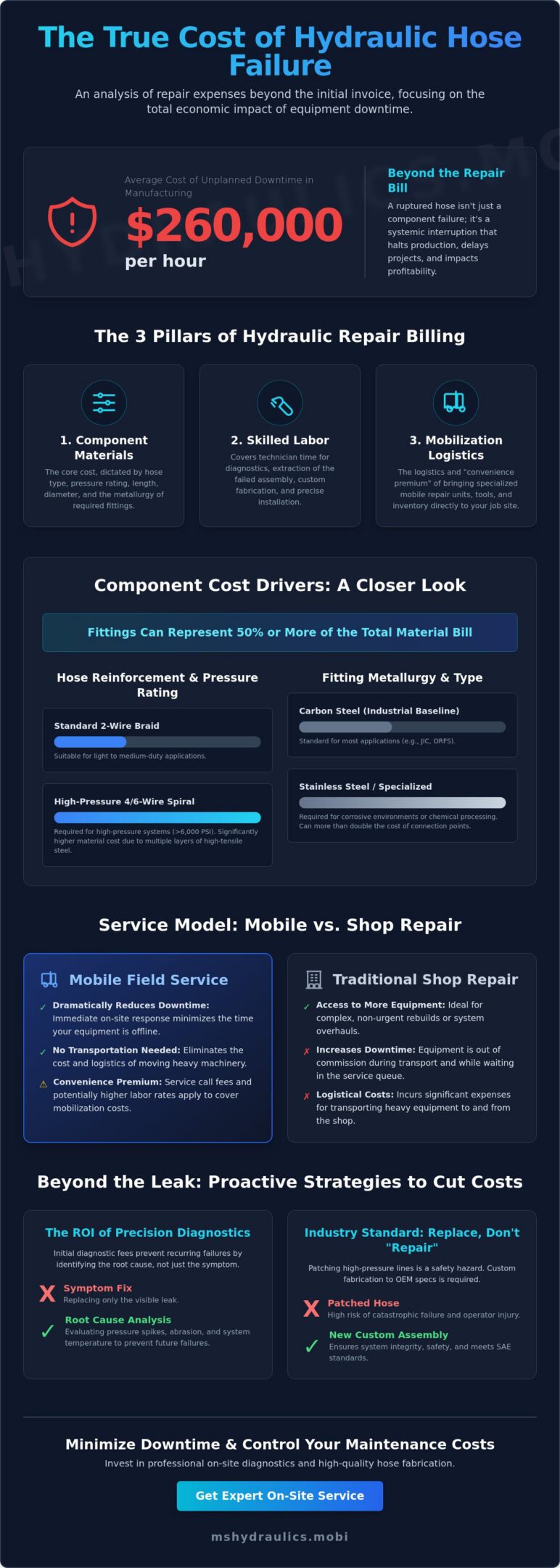
In the manufacturing sector, unplanned downtime now averages approximately $260,000 per hour. When a critical line fails, the immediate operational question is how much does hydraulic hose repair cost, yet the final invoice represents only a fraction of the total economic impact. You recognize that a ruptured hose is not merely a mechanical failure; it’s a systemic interruption that threatens project timelines and organizational profitability. Confusion regarding service call fees and component markups often complicates the budgeting process for essential maintenance.
This professional analysis provides a technical breakdown of the variables influencing repair expenses, from specific material requirements to the logistical premiums of mobile hydraulic repair. We’ll examine the engineering factors that dictate component pricing, including pressure ratings and fitting metallurgy, alongside the measurable ROI of high-quality fabrication. This guide delivers the data necessary to evaluate service quotes and implement strategies that reduce your total cost of ownership through enhanced system reliability and precision diagnostics. By understanding the relationship between component specifications and operational longevity, you can better manage the fiscal demands of heavy equipment maintenance.
Key Takeaways
- Identify the three technical pillars of hydraulic billing to ensure accurate budgeting for upcoming maintenance cycles.
- Analyze the impact of fitting metallurgy and hose pressure ratings on the final material invoice.
- Compare the convenience premiums of mobile field service with traditional shop rates to optimize your repair strategy.
- Understand how much does hydraulic hose repair cost by breaking down the expenses of custom fabrication and technical labor.
- Measure the opportunity cost of equipment downtime against why it’s vital to invest in precision on-site diagnostic services.
Understanding the Variables of Hydraulic Hose Repair Costs
Calculating the financial requirements for fluid power maintenance requires a granular look at operational variables. When fleet managers ask how much does hydraulic hose repair cost, the answer depends on three technical pillars: component materials, skilled labor, and mobilization logistics. Each factor scales based on the complexity of the machinery and the environment where the failure occurred. Components include the hose stock and the specific fittings required for the application. Labor covers the time for extraction, fabrication, and installation. Mobilization involves the logistics of bringing specialized equipment and inventory to the machine’s location through mobile hydraulic repair units.
In industrial applications, “repair” is often a misnomer. Because of the high pressures involved, industry standards dictate the custom fabrication of a new assembly rather than a patch or temporary fix. This process ensures the assembly meets original equipment manufacturer (OEM) specifications and maintains system integrity. Understanding the principles of hydraulics is essential for recognizing why material integrity cannot be compromised. SAE J517 standards govern the construction and performance of these assemblies, ensuring they handle specific temperature and pressure ranges. High-pressure systems require four or six-wire spiral reinforcement. These additional layers of high-tensile steel increase material costs compared to standard two-wire braided options.
The Distinction Between Hose Repair and Replacement
Patching a high-pressure line is statistically likely to result in catastrophic failure and presents extreme safety risks to operators. Burst pressure is defined as the maximum pressure a hose can withstand before physical rupture occurs, typically rated at four times the working pressure. If a hose fails, the surrounding lines have likely been exposed to the same environmental stressors. While replacing a single hose addresses the immediate leak, a complete system overhaul might be more cost-effective if the entire kit has reached its five-to-seven-year service life. Proactive replacement reduces the cumulative cost of multiple service calls.
Initial Diagnostic Fees and Inspection Costs
Professional on-site diagnostic services involve more than just identifying a visible leak. Technicians evaluate system temperature, pressure spikes, and external abrasion patterns. These diagnostic fees cover the technician’s time and the use of specialized testing equipment. Identifying the root cause, such as a failing pump or a misaligned mounting bracket, prevents recurring hose failure expenses. Expert diagnostics protect against secondary component damage, ensuring that a simple hose issue doesn’t escalate into a more expensive hydraulic motor or pump failure. Precision in the diagnostic phase is the most effective way to control the total cost of ownership for heavy equipment.
Component Breakdown: Fittings, Hose Material, and Labor Rates
Technical specifications dictate the financial requirements of any fluid power assembly. When assessing how much does hydraulic hose repair cost, the physical dimensions of the hose; specifically its inner diameter and total length; serve as the primary material variables. A standard half-inch hose utilized in light construction equipment is significantly less resource-intensive than a two-inch high-pressure suction line for industrial machinery. In the North Texas environment, the choice between standard rubber covers and high-abrasion resistant materials is critical. High-abrasion covers are engineered to withstand intense UV exposure and constant mechanical friction, which increases the initial material expense but extends the component’s service life.
Fittings often represent 50% or more of the total fabrication bill. Specialized connectors such as O-Ring Face Seal (ORFS), JIC 37-degree flares, or heavy-duty Caterpillar-style flanges require precision machining and specific metallurgy to maintain seal integrity under load. While standard-pressure carbon steel fittings are the industrial baseline, high-pressure applications exceeding 6,000 psi require specialized heavy-wall connectors. In corrosive environments or specific chemical processing applications, the transition to stainless steel fittings serves as a major cost driver, often doubling the price of the connection points compared to carbon steel alternatives.
Labor allocation varies based on the delivery method and the technical complexity of the installation. Shop-based hydraulic hose fabrication generally maintains a lower hourly rate due to the controlled environment and centralized inventory. Conversely, field technician rates in the Dallas-Fort Worth metroplex include the overhead of specialized service vehicles and the advanced diagnostic tools required for on-site execution. These rates reflect the high level of expertise needed to perform precision repairs in non-standardized field conditions.
Material Specifications and the STAMP Method
Industry professionals utilize the STAMP method; Size, Temperature, Application, Material, and Pressure; to ensure every assembly meets exact operational requirements. High-pressure systems often necessitate 4-wire or 6-wire spiral reinforcement rather than standard braided wire. These spiral-wound layers provide the structural rigidity required to prevent hose expansion and premature fatigue. The price premium for these reinforced hoses is a direct result of the increased steel content and the complexity of the manufacturing process required to meet global safety standards.
Labor Allocation for Fabrication and Installation
Standard time estimates for repair involve more than just crimping fittings onto a hose. Technicians must account for the complexity of the machine’s layout, which often includes difficult access points and the removal of protective guarding or structural plates. A professional repair includes critical verification steps such as system bleeding to remove entrapped air and rigorous pressure testing. These procedures ensure the new assembly performs within the established safety parameters, preventing secondary failures that could arise from improper installation or air contamination in the hydraulic circuit.
Mobile Service vs. Shop Repair: Evaluating the Convenience Premium
Deciding between a fixed-location shop and mobile hydraulic repair is a strategic choice that impacts both the immediate invoice and long-term project viability. While shop-based repairs might offer a lower hourly labor rate, the logistical requirements of moving heavy machinery often negate those savings. A critical factor in determining how much does hydraulic hose repair cost is the mobilization fee, which typically ranges from $50 to $150. This fee covers the deployment of a specialized service vehicle equipped with the inventory and tooling necessary to perform high-pressure hose fabrication at the machine’s location. For emergency or after-hours service, industry standards indicate a premium of 1.5 to 2 times the standard labor rate, reflecting the technical readiness required for rapid response.
In North Texas industrial hubs, the availability of on-site diagnostic services allows for immediate fault identification without removing the asset from the production line. This efficiency is vital when you consider that unplanned downtime in manufacturing can cost $260,000 per hour. Mobile units function as self-contained workshops, reducing the need for multiple trips to source specific fittings or hose stock. This model prioritizes the restoration of mechanical function over the convenience of a centralized shop, ensuring that the repair aligns with the operational pace of the job site.
Cost Structure of Mobile Hydraulic Repair
The mobilization fee encompasses more than just travel time. It accounts for fuel surcharges, vehicle maintenance, and the maintenance of a mobile inventory that meets SAE standards. Performing repairs on-site also mitigates environmental risks. Transporting a machine with a compromised hydraulic circuit increases the likelihood of fluid leaks and environmental contamination. By containing the failure at the point of origin, operators avoid the secondary costs associated with environmental remediation and hazardous material cleanup during transport.
Hidden Costs of Transporting Heavy Equipment
Transporting an excavator or drill rig to a repair facility involves significant “hidden” expenses that are often overlooked. Heavy-haul trucking fees for lowboy trailers can exceed the cost of the hose assembly itself. The labor cost of idle operators adds a persistent drain on the budget; it’s a financial leak that’s often larger than the mechanical one. For small businesses, this downtime can cost up to $427 per minute. When you evaluate how much does hydraulic hose repair cost, the total logistics bill for off-site service frequently surpasses the premium paid for a mobile technician to perform an immediate, on-site intervention.
The True Cost of Downtime: Why Immediate Repair Often Saves Money
The fiscal impact of mechanical failure is rarely limited to the line-item costs of parts and labor. When evaluating how much does hydraulic hose repair cost, you must integrate the opportunity cost of idle assets into the total equation. A precision-fabricated hose assembly requires a modest financial commitment, yet it serves as a necessary safeguard against production losses that can exceed $5,000 per day for an idle excavator or drill rig. Delaying a repair to wait for a weekend service window introduces systemic risk that often outweighs any perceived savings. Operating a compromised system allows for air ingestion and fluid contamination, which frequently escalates into the need for expensive hydraulic pump repair or specialized valve replacement.
“Quick fixes” such as temporary sleeves or unauthorized couplings represent a significant liability for international industrial players. These makeshift solutions lack the verification of SAE-standard fabrication and can cause sudden pressure drops or erratic actuator movement. The internal scoring caused by contaminated fluid or pump cavitation can turn a simple hose replacement into a more complex hydraulic cylinder rebuild. In the North Texas industrial corridor, project managers recognize that technical integrity is the only reliable way to maintain a competitive market position and ensure operator safety.
Quantifying Machine Idling Losses
Data from the manufacturing and construction sectors indicates that unplanned downtime carries a heavy financial burden. For small businesses, these losses can reach $427 per minute. On large-scale infrastructure projects, a single hose failure triggers a cascade of delays that can lead to severe contractual penalties. Immediate mobile hydraulic repair is not merely a mechanical fix; it’s a strategic investment in project continuity. By restoring mechanical function on-site, you eliminate the compounding costs of operator idleness and project stagnation that occur when a machine is removed from the field.
Preventative Maintenance as a Cost-Reduction Strategy
Implementing a structured schedule for heavy equipment maintenance in Cleburne and the surrounding Dallas-Fort Worth area provides a measurable return on investment. Regular inspections allow technicians to identify “weeping” hoses or cover abrasions before they result in a high-pressure burst. Spectrometric fluid analysis provides a quantitative assessment of particulate contamination, identifying chemical shifts that predict internal hose degradation before a catastrophic rupture occurs. This proactive approach ensures that your fleet remains within its optimal performance parameters while reducing the total cost of ownership over the machine’s lifecycle. If your equipment exhibits signs of fluid loss, contact Ms. Hydraulics for professional mobile hydraulic repair to restore operational status.
Professional Hose Fabrication and Repair in North Texas
Ms. Hydraulics LLC utilizes technical precision to optimize how much does hydraulic hose repair cost for industrial partners and fleet managers. By implementing advanced crimping technology and high-tensile reinforcement materials, the company ensures that every custom assembly meets or exceeds original equipment manufacturer specifications. This focus on engineering excellence prevents the repetitive failure cycles that frequently inflate long-term maintenance budgets. Local expertise in Cleburne, Dallas, and Fort Worth provides a distinct logistical advantage. Our technicians understand the specific rigors of the North Texas industrial landscape, where heat and mechanical friction demand high-abrasion resistant covers. This regional specialization allows for faster mobilization and more accurate component selection based on verified physical and mechanical parameters.
Our Approach to Mobile Fabrication
Each mobile unit functions as a fully integrated workshop, equipped with a comprehensive range of hoses and fittings that adhere to SAE standards. These vehicles are designed to eliminate the delays associated with parts sourcing, which is a primary driver of increased labor costs. Expert technicians use On-Site Diagnostic Services for Heavy Equipment to identify the root cause of hydraulic failure before fabrication begins. This systematic verification process ensures that the new assembly is not subjected to the same stressors that caused the previous rupture. It’s a disciplined approach that values modern efficiency and long-standing stability, providing stakeholders with predictable outcomes in complex field environments.
Contact Ms. Hydraulics for an Accurate Quote
To obtain a precise analysis of your repair needs, please have specific technical data ready for our dispatch team. Essential information includes the machine model, the hose’s physical location on the equipment, and detailed failure symptoms like visible abrasion or fitting leaks. This data allows our technicians to prepare the correct metallurgy and pressure-rated hose stock before arriving on-site. Ms. Hydraulics provides extensive coverage across Johnson County and the surrounding areas, including Alvarado, Granbury, and Crowley. For professional intervention that aligns with the highest industry standards, Contact Ms. Hydraulics for Expert Mobile Repair. Our services ensure that your heavy equipment maintenance remains consistent with the precision required for major international operations.
Optimizing Fluid Power Reliability and Operational Budgets
Technical precision in hydraulic systems is the primary defense against escalating maintenance expenses. While the immediate question of how much does hydraulic hose repair cost is central to procurement, the integration of high-grade metallurgy and SAE-standard fabrication remains the most effective method for controlling the total cost of ownership. You’ve identified that the financial burden of a failed line is dominated by machine idling losses; this makes rapid, on-site intervention a strategic necessity. By prioritizing verified components and expert diagnostics, organizations protect their mechanical assets and maintain project continuity in demanding environments.
Ms. Hydraulics LLC provides expert mobile technicians serving Cleburne and the broader DFW Metroplex. Our team specializes in on-site fabrication using premium-grade materials and fittings to ensure your equipment meets its required operational parameters. We remain focused on minimizing downtime for construction and agricultural fleets through disciplined service and technical excellence. Request an On-Site Hydraulic Repair Quote to restore your system’s integrity and performance. We look forward to helping you maintain the rigorous standards your operations demand.
Frequently Asked Questions
Is it cheaper to repair or replace a hydraulic hose?
Replacement is the standard industry practice for high-pressure fluid power systems. While a minor fitting adjustment might seem more economical, the physical degradation of the hose carcass usually requires the custom fabrication of a new assembly to meet safety standards. When you calculate how much does hydraulic hose repair cost, you’ll find that a new assembly provides a significantly higher return on investment by preventing immediate re-failure and potential operator injury.
How much is a typical service call fee for mobile hydraulic repair in Texas?
Service call fees in the Texas market reflect the logistical requirements of deploying a specialized service vehicle to a machine’s location. This mobilization fee covers the technician’s travel time, fuel surcharges, and the maintenance of a mobile inventory. These fees vary based on the distance from the technician’s hub to the job site in regions like Cleburne or the wider DFW Metroplex.
What factors make one hydraulic hose more expensive than another?
Material specifications such as the number of wire reinforcement layers and the durability of the outer cover are the primary cost drivers. A six-wire spiral hose engineered for ultra-high pressure applications is more resource-intensive than a standard two-wire braided hose. Additionally, specialized fittings with complex metallurgy, such as stainless steel or high-pressure flange connectors, can significantly impact how much does hydraulic hose repair cost for specialized industrial machinery.
Can I save money by removing the hose myself and bringing it to a shop?
Removing the hose yourself eliminates the on-site labor and mobilization fees, but it introduces the risk of system contamination and incorrect routing. Professional technicians perform critical verification steps, including system bleeding and pressure testing, during the installation process. These expert services reduce the total cost of ownership by ensuring the new assembly performs within its established safety parameters and doesn’t lead to secondary component failure.
How long does a professional on-site hydraulic hose repair usually take?
Most on-site repairs are completed within a structured timeframe of one to two hours. This duration depends on the accessibility of the hose and the complexity of the machine’s guarding or structural plates. The process includes a diagnostic phase, the extraction of the failed assembly, precision fabrication of the new hose, and final system testing to verify mechanical integrity.
Are emergency after-hours hydraulic repairs significantly more expensive?
Emergency services carry a technical premium that reflects the readiness required for rapid response outside of standard operational hours. These rates account for the specialized logistical demands of deploying a technician and mobile unit on short notice. While the hourly rate is higher, the investment often prevents much larger losses associated with project stagnation and contractual penalties on time-sensitive construction sites.
What happens if I ignore a small leak in a hydraulic hose?
Ignoring a minor leak leads to persistent fluid loss, environmental contamination, and eventual system failure. Small “weeping” leaks are often precursors to a high-pressure burst, which can cause catastrophic damage to hydraulic pumps or motors. Proactive intervention at the first sign of fluid loss is the most effective way to manage heavy equipment maintenance and prevent expensive unplanned downtime.
Does the type of hydraulic fluid used affect the repair cost?
The fluid type doesn’t change the fabrication process itself, but specialized fluids like fire-resistant or biodegradable options may require specific hose materials and seal types. Using a hose that’s chemically incompatible with the system fluid causes rapid internal degradation and premature failure. Ensuring that the hose and fittings are rated for your specific fluid type is essential for maintaining long-standing stability and reliability.